Thursday 22 September marks the mythical British mid-harvest festival of Mabon, heralding the arrival of the autumn equinox which in 2022 is on 23 September.
During an equinox, the Suncrosses what we call the “celestial equator”—an imaginary extension of Earth’s equator line into space. The equinox occurs precisely when the Sun’s center passes through this line.
In the Northern Hemisphere, when the Sun crosses the equator going from north to south, this marks the autumnal equinox and when it crosses from south to north, this marks the vernal equinox. This is reversed in the Southern Hemisphere.
Now we leave the zodiac sign of Virgo, the Queen of the Harvest, and enter the astrological territory of Libra The Scales, representing the ever changing balance of day and night, represented in Tarot by The Justice card.
From The Legacy of The Divine Tarot
Libra is the only Zodiac constellation represented by an inanimate object, and not by an animal or a mythological character. The stars that represent the scales of justice are borrowed from the constellation of Scorpio next door, the claws of the Scorpion.
Those born under Libra are famously cool in temperament, intellectual, and can be somewhat emotionally detached but also volatile. According to the Roman writer Marcus Manilius, Roman judges were born under the sign of Libra. The moon was said to have been in Libra when Rome was founded, and therefore the Roman empire itself (at least, according to Manilius) began on a just and balanced foundation. Or at least, a legalized, rational, process based system.
The first harvest festival of the year was Lammas (‘Loaf Mass Tide) celebrated on the first of August. This later second harvest, Mabon, ends on 29 September.
Mabon ap Modron, -Mabon the son of Modron, was a figure from Welsh mythology who by the tenth century AD, and the first written record of him in an old Welsh poem, had became associated with the story of King Arthur. In these stories, he was one of Arthur’s war band, but the roots are much older.
The origin of the name, Mabon is related to the Romano- British god Maponos, whose name means “Great Son”; his mother Modron, in turn, is likely related to the Gaulish goddess Dea Matrona. (modern word Matron) (Via Wiki)
The Empress from The Legacy of The Divine Tarot
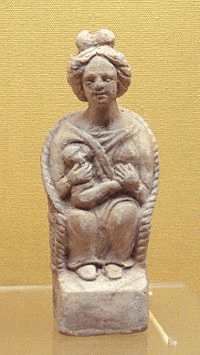
Dea Matrona was the Divine Mother Goddess. The River Marne in France was named in her honour and Gaulish religious images included mass produced inexpensive terracotta statues for domestic use in household shrines. These little statues showed mother goddesses nursing babies or holding fruits, other foods, or small dogs in their laps.
Mabon may be a semi-fictionalized festival. The name is not known to have been associated with this late harvest before the 1970’s, and may be at least in part, a Neo-Pagan confection.
But there is only humility and gratitude, in seeing stories in the seasons, honouring the great earth mother, whether we think of her as Modron, Virgo, Astrea, Demeter, Gaia or Persephone, or simply as the earth itself.
All stories grow out of some real soil.
The stories are all true.
Dea Matrona
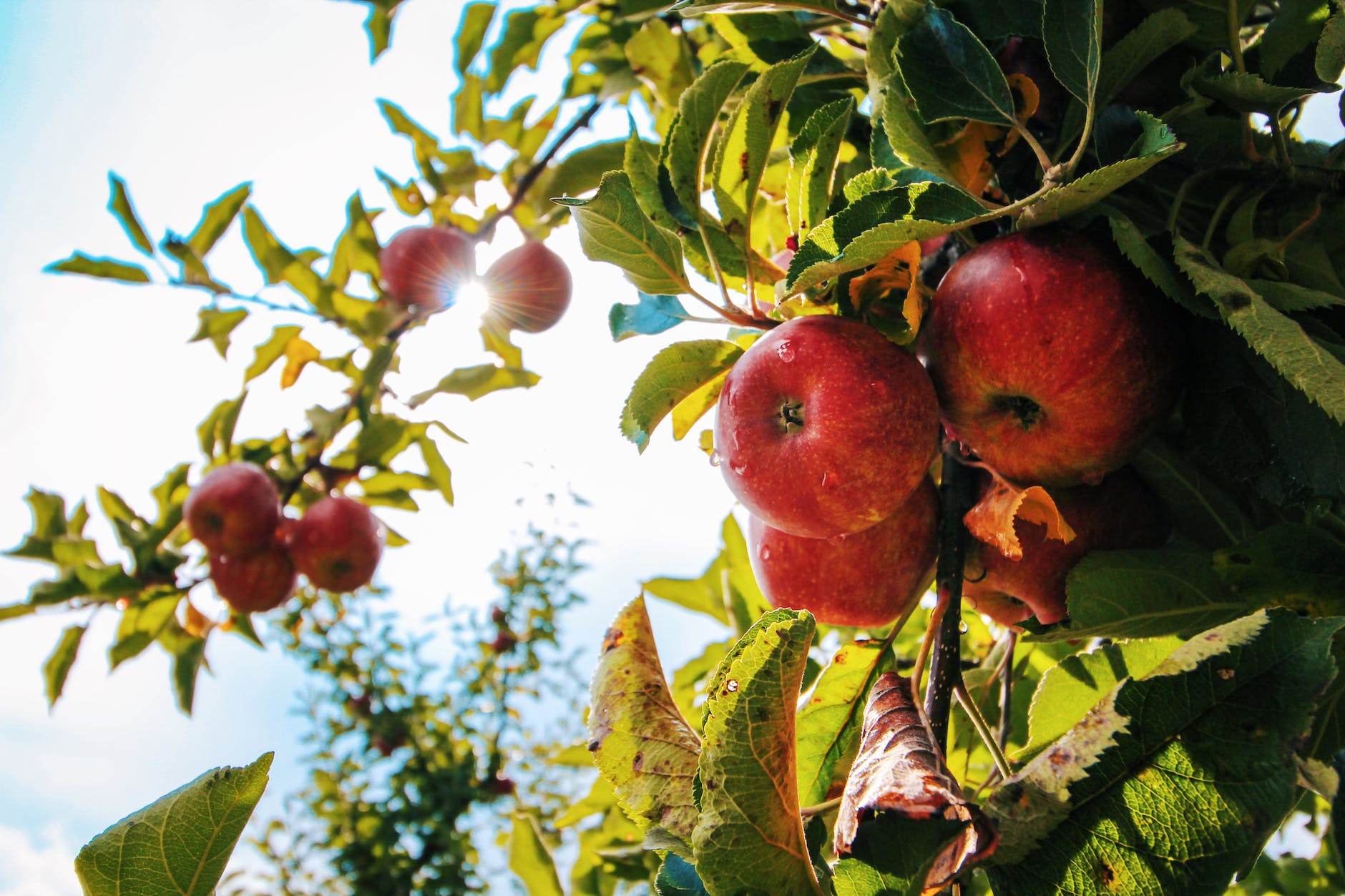
The fall or autumn equinox is especially associated with apple picking. Bring on the scrumping, the crumble and the cider.
The best cider vinegar still contains the living ‘mother.’ This vinegar is made through a two-step process. First, yeast is added to apple juice to break down the sugars and turn them into alcohol. Then, bacteria is added, converting the alcohol into acetic acid. This bacteria is what is known as the mother, This is the catalyst that gives rise to the vinegar. Many apple cider vinegars have the mother removed because it gives the vinegar a cloudy appearance and some people think it’s gone bad. Not so. The mother is the best bit, the most nutritious element.
“The ceremonies you have seen today are ancient, and some of their origins are veiled in the mists of the past. But their spirit and their meaning shine through the ages never, perhaps, more brightly than now.”-Queen Elizabeth, Cape Town, 1947
I drew a card at random, just to see what I would get and I drew the Wheel of Fortune.
From The Legacy Tarot
Change will and must come, even as we resist it, fear it or mourn it. This card is associated with both the ancient Greek father of the gods of Mount Olympus, and with the giant planet Jupiter, which basically says, let go, let it be and go large.
Rolling with the punches.
Love shows itself more in adversity than in prosperity; as light does, which shines most where the place is darkest. I love those who can smile in trouble, who can gather strength from distress, and grow brave by reflection. ‘Tis the business of little minds to shrink.’
-Leonardo Da Vinci
Wikipedia: This portrait attributed to Francesco Melzi, c. 1515–1518, is the only certain contemporary depiction of Leonardo
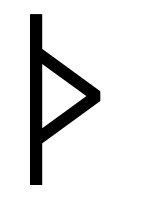
The Wheel of Fortune is associated with the classical figure of Lady Luck. It is also associated with our British proto-Germanic roots, the Norse thunder god Thor, his great war hammer Mjölnir and the Thorn rune, THURISAZ.
Public Domain. Detail, Thor fights The Midgard Serpent by Emil Dopler, 1905
The thorn rune stands for the sound ‘th’ in the rune alphabet. This is a runic glyph and letter of both attack and defense. It is the war hammer of Thor, but it is also a hedge of thorns for keeping out the enemy. The invocation of Thurisaz is also directed in magical workings for success in matters of the law, and for focus and concentration when studying for examinations.
The Hawthorn and the Blackthorn have many superstitions attached to them in British folklore. The Hawthorn is occasionally benevolent, the Blackthorn more frequently ominous.
Lady Luck was known to the ancient Greeks as Tyche. She was the daughter of Aphrodite and Hermes or she may have been one of the Oceanids, a daughter of Oceanus. The Encyclopaedia Britannica says that that the first dice were invented by a prince called Palamedes and were offered as a tribute to Tyche in seeking her favour.
Public Domain. Tyche with her baby son Plutus, god of Wealth, 2nd century Ad, Museum of Istanbul
One look at this statue reminds us of, well, whom? The world has always been globalist. For good and ill, by means of travel, trade and war.
We live with the daily conundrum of The Wheel of Fortune, Fortuna’s Wheel. We are subject to events over which we have no control. But we can position ourselves. We can plan and prepare. We can choose how to respond.
We are seeing it in ceremonial action at this time. The Queen’s funeral has been planned for over many years. The Queen herself was consulted about the design of the hearse, agreeing to the lighting, so that the coffin could still be seen transported back to London in the hours of darkness.
The death of the Queen was planned for, anticipated – and yet, for all that, and as with even the most peaceful deaths at a good old age, it may be still experienced as a shock, both emotional and environmental.
Symbols are the currency of the collective psyche. The zeitgeist changes but the roots go deeper. There will be a new face on our coins and banknotes, and on our stamps. These are tiny changes, and yet, like a rearrangement of our oldest family furniture, they will take getting used to.
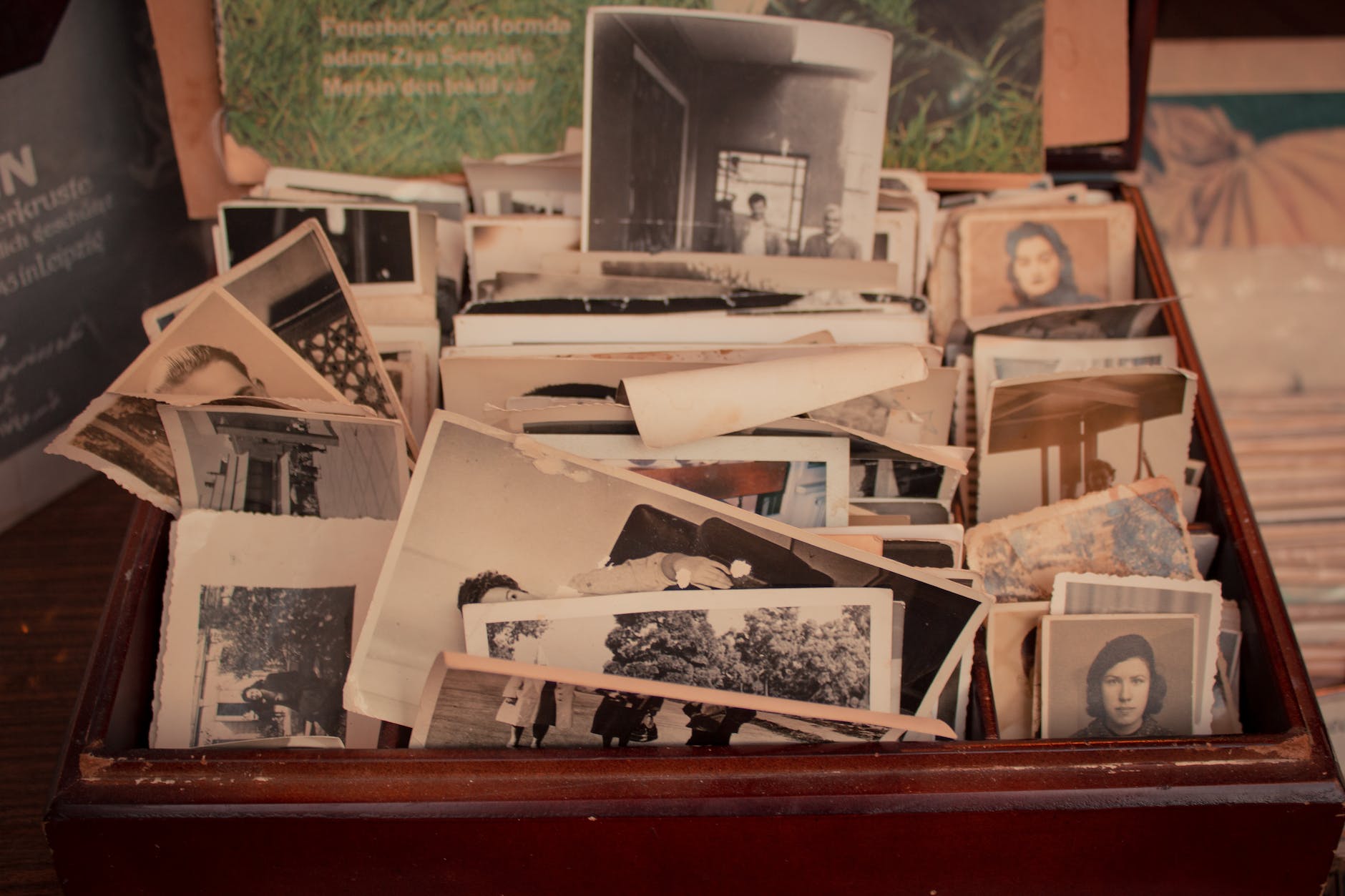
I’m spending a lot of time down memory lane this week, not only because of the death of the Queen, but I’ve been sorting through a box of old family photographs.
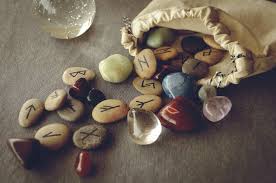
The word ‘rune’ comes from the old Germanic, ‘runa’ or ‘runo’ meaning a secret thing, a mystery. The northern peoples saw the Earth, its forces and all things in nature seen as living forces or spirits to be honoured and respected. The runes were and still are used for psychic readings and advice- divination -or used for magical purposes and good luck – seidr.
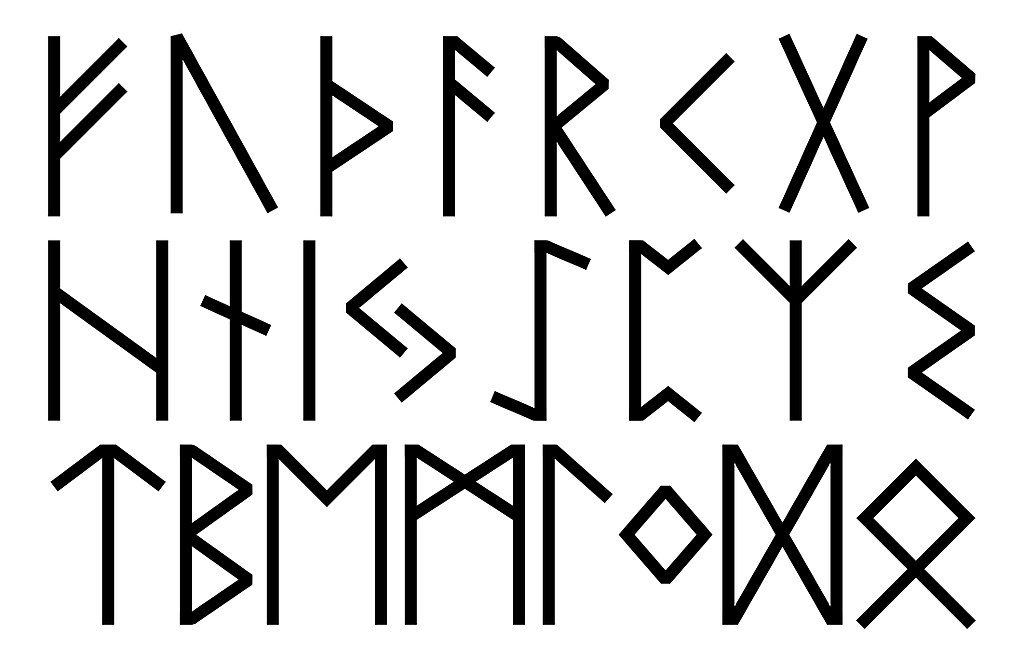
Runes were the first systems of writing developed and used by the Norse and other Germanic peoples. These runic alphabets are known as “futharks” after the first six runes (Fehu, Uruz, Thurisaz, Ansuz, Raidho, and Kenaz) – just as the word “alphabet” comes from the names of the first two Semitic letters (Aleph, Beth).
There are three rune alphabets or futharks: the Elder, Younger and Saxon futharks. The 24-character Elder Futhark was the first fully-formed runic alphabet, dating back, so far as we know, to the first century CE/AD, though it may have been in development from about 200 BCE.
Today we are working with the Elder Futhark, illustrated below.
The more specific the question, the more specific and detailed the reading. Here, we have no specific question., so the findings are very general. The reader is looking for the feel of things, the tone, and for challenges, opportunities or guidance contained within the runes selected blindly and at random.
Review -April rune reading
In a rune reading done late March 2022, the runes talked about a highly volatile, tense and unstable month to come in April 2022.
The reader wrote, “Thurisaz is the Thorn rune, symbolizing the hammer of Thor, the Norse god of Thunder and Thursdays. This rune is known as the rune of chaos, such as we have all been witnessing at extreme levels in recent weeks. Thurisaz talks about ‘thorny issues’- major challenges. It describes or forecasts situations of defence, attack and storms. This may also refer to other related natural events, such as floods or tsunamis in April.”
12-14 April we witnessed floods in South Africa, Kwazulu, Durban, 12-14 April as reported here in the ‘The New York Times’ 19 April 2022:-
Nearly 4,000 homes have been destroyed and more than twice as many damaged in the Durban area after a week of punishing rains and mudslides. The death toll is now 448, with about four dozen people unaccounted for.
Runes, like astrology, like Tarot or card reading, may be used for guidance and advice, for forecasting/prediction or for both. Many readers nowadays use runes purely for personal guidance. The problem with forecasting is, we will not always like it, and what can we do about it anyway? The answer to this can only be that forewarned is forearmed. The forecast may turn out to be wrong. It may prove to be unduly pessimistic, and if we are feeling anxious or depressed, this may only add to the weight of our burden.
The best way to use psychic prediction is to treat is as a hint , see how it fits with your own assessment and gut feeling, and for the rest, time will tell. If a weather forecaster says it’s sunny outside right now, and there is not a cloud in the sky, but the weather forecaster tells us there is a new weather front on the way and it’s going to rain later, we can decide whether or not to go out and if we do, whether to take a raincoat.
Runecastfor May 2022
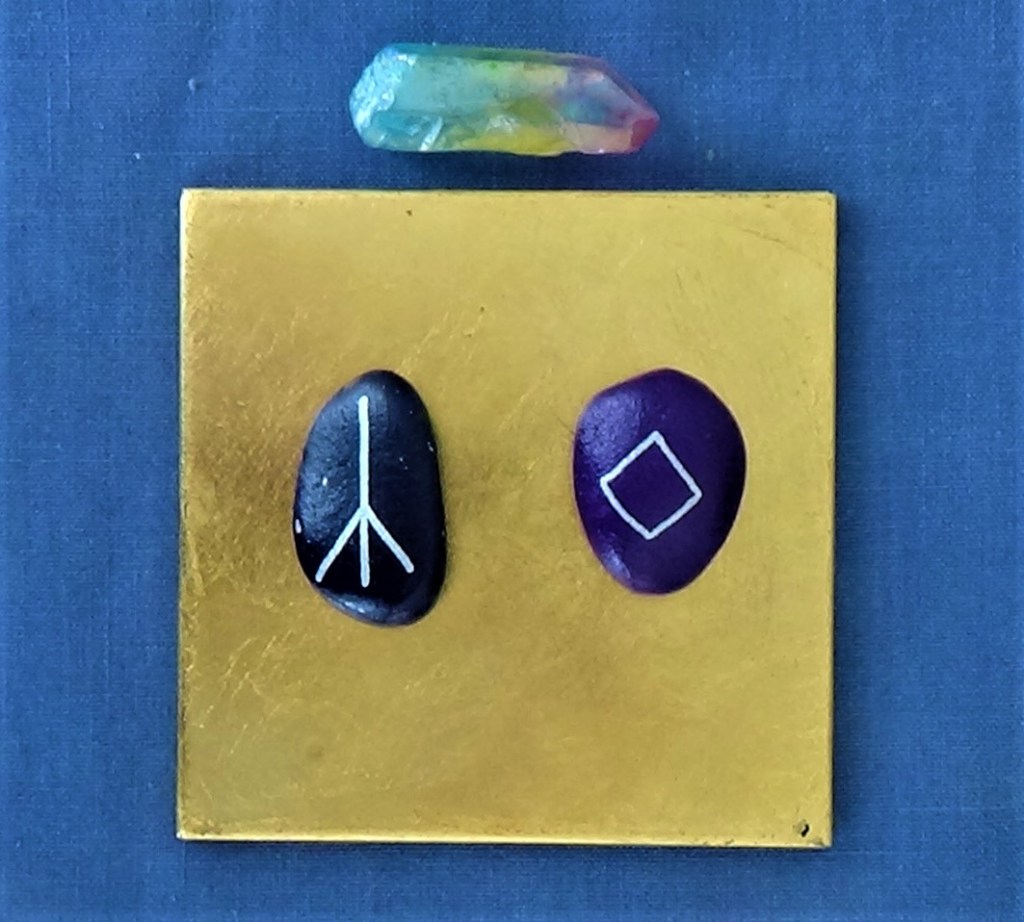
We have drawn two runes for this coming month, Elhaz and Ingwaz, choosing these runes to represent the general tone and dynamic in world affairs and in our personal affairs as well this month.
Such a reading will obviously be general in scope but there are seasons in events, just as there are different seasons in the year. We have times that are quieter than others. Then we have times of mass general turmoil, as with World Wars 1 and 11 for instance, 1939-1945, and these things tend to go in cycles. We are currently in a cycle of which began in 2019 and which astrologers suggest will calm down 2025/2026.
IMG Katie-Ellen Hazeldine
Elhaz/Algiz/Eohl
KEYWORDS: Protection, guardian, awakening, courage, defence, acting on our instinct
The rune on the left, Elhaz the Elk is also known as Eohl or Algiz.
It means The Elk or The Sedge, or even, The Elk-Sedge. The runes were inspired by things familiar in the landscapes inhabited by these various northern peoples. The wild antlered elk was still roaming wild in northern Europe at that time. The sedge is a grass-like plant that grows on wet ground, found in temperate and colder climates.
Here, Elhaz has been drawn reversed (merkstave.) First let us imagine it turned upright. Now you see the ‘antlers’ and you can see that this rune also looks like rather a person raising their arms to heaven in appeal for help, or else making an invocation.
Elhaz is a rune of general protection, very powerful but the power comes from the mind of the person using it to protect themselves or another. It will not remove all obstacles. We cannot and will not always be comfortable and safe in this life. Sometimes we struggle. Sometimes we need to stand up for ourselves and fight our own corner. We will never arrive at our full power if we always run away from a fight. Viking warriors used to decorate their shields with this rune but some still died in battle. The Vikings did not take this as a sign that the rune had no power, but instead as a sign that this was the warrior’s time to die; that The Norns or Fates had decreed it. It is worth noting, that the Norns, although they scratched our names and destinies in the bark of the World Tree at the moment of our birth, did allow scope for a mortal to change their own destiny, unlike the Fates of Greek mythology. The Norns saw the future in more fluid terms, less a fixed destiny, more of ‘becoming,’ or that which should be.
Personal Reflection
Elhaz reversed is a sign of vulnerability or warns us that we may be making a sacrifice with no gain. Perhaps this month we need to watch out that we are not misled by others or possibly conned out of our money, or made a scapegoat for someone else’s mistakes. Elhaz reversed warns us to pay attention to our surroundings, not to take our own safety for granted, and not to make any big moves too soon in a new relationship. We need to give it more time, and learn more about this person. Everyone makes mistakes. But we must learn from any past mistakes or be doomed to repeat them.
There may be a person to avoid this month or an offer which should be refused. The classic advice applies with Elhaz reversed. If it seems too good to be true, it probably is.
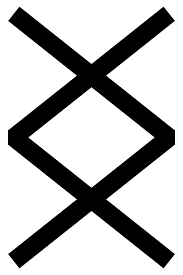
The rune on the right, Ingwaz is also known as Ing or Inguz. It may look like a simple diamond, as illustrated above. Alternatively it may look like this:
The word Ingwaz means literally ‘god-seed’. This rune, Ingwaz, Inguz or Ing, comes from an ancient god image Ing, which was an older name for Freyr, a later Swedish Viking god of virility, fertility and agriculture, like another famous pre- Christian figure of mythology, The Green Man.
The Green Man, Rochester Cathedral via Wiki
Ingwaz is talking about the earth itself; the planting of seeds, germination and new life. It is talking about fertility, in this case especially masculine fertility. But it may also be talking in a more abstract sense as in, planting the seeds of a new idea.
Ingwaz is a favourable rune of positive action, unity, agreements, and peace, although the situation may require plenty of careful treatment, and enough time and space to flourish. Ingwaz is all about ‘doing.’
‘Ing’ is in constant use in modern English as a language participle “-ing” adding action to a verb. We say ‘Go-ing’, ‘Read-ing’, ‘See-ing etc. The addition of “ing” represents action.
Ingwaz suggests a successful conclusion in solving a problem at hand. Ingwaz can signify milestone events, such as a new baby or a new job. It cannot be reversed. It looks the same right way up as it does upside down so it has no negative meaning unless it is surrounded by negative runes. Here, it has been drawn opposite Elhaz reversed, a negative meaning of danger. The appearance of Ingwaz in this context offers a faint glimmer of hope for diplomatic efforts to bear some fruit in May. But if not, this fiery rune promises a very determined and courageous on-going resistance to attack, wherever it is being waged by one state against another.
Ingwaz the ‘seed’ is by extension also to do with agriculture-food. Looking at Ingwaz in relation to our first rune, Elhaz merkstave, we can see that issues to do with food supplies, shortages and increases in the cost of food will be featuring large in the news this coming month, as Russia’s war on Ukraine affects exports globally, but especially Egypt and Africa.
The danger of Elhaz drawn reversed married up with the vital spark of Ing can mean sudden fiery events in May 2022, such as rockets and missiles, as we are so horrifically seeing, or wildfire such as we have witnessed in New Mexico already this month.
It may also be worth noting that 10 May big bold Jupiter, the ‘Greater Benefic’ an optimistic, generous, benevolent planet in astrological terms, left deep watery Pisces and moved into bold, fiery, hyperactive Aries, where it stays until 28 October 2022. This is big, bold, active energy for good or bad,
Generally, this planetary transit is understood as a positive influence, happening only every 11 or 12 years, although the potential for disruption is self evident. World War 1 and World War 11 both began during a Jupiter in Aries transit, but that also meant of course, a number of such transits in between these events with no war, so let us not worry too much.
Personal Reflection
Ingwaz is a powerfully positive rune in general. It tends to bring an easing of something that has been worrying us. There may be a sense of relief about something this coming month or a sense of excitement, pride or accomplishment for a problem sorted or a job well done, or a new project coming over the horizon.
Ingwaz is a positive rune in relationships, starting a family or launching a new project or venture if that is what we are looking for. It brings a boost of energy, physical and mental.
Ingwaz indicates that this coming month is a good time for home improvements on the one hand, spring cleaning, maintenance and upgrades, and at the other end of the scale, taking into account the challenges in this coming month signified by, Elhaz reversed, do we need to review our safeguarding, home security or our personal security?
In our personal lives, this rune is has a particularly masculine energy. It signifies good times, new love relationships and weddings. We could see that a project starts coming together. With care, discipline and patience, this rune says it will bear fruit.
30 April is also known as May Eve, marking May Day and the beginning of the ancient Celt festival of Beltane.
Beltane begins at dusk on 30 April and is matched by its European counterpart, Walpurgis Nacht, or St Walpurga’s Night in Germanic tradition.
Origins
The two greatest Celtic festivals were Samhain (Halloween) marking the start of winter, and Beltane (April 30/May 1) marking the start of summer.
Beltane ‘the fires of Bel’ began as an ancient fire festival celebrated since at least the Dark Ages if not long before. The celebrations began at dusk on April 30th when great bonfires were lit to welcome the height of spring now associated with the zodiac sign of Taurus the Bull, representing the fertility of spring in full bloom.”
Traditionally,” writes Glennie Kindred (inSacred Celebrations), “all fires in the community were put out…
February was added to the older Julian calendar in the 700’s BCE when two new months were added to create the new Gregorian calendar, matching it up more closely with the actual length of the Earth’s journey round the sun.
But the Anglo Saxons called February Sōlmōnath, from sōl n Old English word for wet sand or mud, alluding to the weather this time of year and the effects of rain and snow melt. The romantic Solway Firth between North West England and South West Scotland is actually the massive tidal ‘Mud way’, rather than the ‘Sun way.’
The northern English scholar monk , saint Bede, wrote that February was celebrated as “the month of cakes,” when ritual offerings of savory cakes and loaves of bread were made to ensure a good year’s harvest.
But is the fire festival of Imbolc and Brigid is a more ancient celebration in Gaelic Britain, including Ireland, Scotland, swathes of Northern England and the Isle of Man.
Brigid’s fire festival began as a neolithic festival marking the 1/2 way point between the winter solstice (Yule) and the spring equinox (Beltane.)
Imbolc spans 1-2 February, celebrating the arrival of Brigid, the Divine Feminine, and the harbinger of the coming of spring and the first lambs, so vital to survival of those early communities. Brigid’s name means ‘Exalted One’.
Brigid From The Sacred Circle Tarot
‘Imbolc’ is thought to mean ‘in the belly’ referring to the precious ewes in lamb Soon is the time of the first lambs although the start of the lambing season varies by up to two weeks in any given year.
Brigid was a powerful protector of women in childbirth, as well as the safe birthing of precious livestock. She was not only a goddess of the Tuatha Dé Danann, The Tribe of the Gods, but a triple goddess of healers, poets and smiths.
Via Wiki Riders of the Sidhe, the Tuatha de Dannan
“The Tuatha de Danaan, the people of the (mother) goddess Danu in Celtic mythology; a race inhabiting Ireland before the arrival of the Milesians (the ancestors of the modern Irish). They were said to have been skilled in magic, and the earliest reference to them relates that, after they were banished from heaven because of their knowledge, they descended on Ireland in a cloud of mist. They were thought to have disappeared into the hills when overcome by the Milesians. The Leabhar Gabhála (Book of Invasions), a fictitious history of Ireland from the earliest times, treats them as actual people, and they were so regarded by native historians up to the 17th century. In popular legend they have become associated with the numerous fairies still supposed to inhabit the Irish landscape”. From The Encylopedia Britannica
Brigid was said to visit one’s home at Imbolc. People would make a bed for her, and leave food and drink and items of clothing outside in the hope of receiving her blessings, petitioning her to protect homes and livestock.
This was a time for feasting and visits to sacred wells, and a time for ritual divination. A St Brigid’s cross is made from rushes and was placed in doorways to protect the home from harm, representing the wheel of the seasons.
Spring is fierce in its quickening of new shoots. Spring is initiation. Spring is fire, just as Aries the Ram of the zodiac, though bot starting until later, in late March, is a fire sign.
The old Norse rune ING or INGUZ is a fire sign rune, associated with male fertility, vitality and recovery from sickness. This powerful protective rune can also be noticed incorporated into pargeting, used in half-timbered buildings in Britain and northern Europe
The people would light bonfires on the hilltops by night, and by day might run cattle through the smoke of lower lying bonfires, asking divine protection for the livestock.
Imbolc was a key moment in weather forecasting. This was the time when The Cailleach —the divine crone of Gaelic tradition—gathered firewood for the rest of the winter. If the Cailleach knew the winter was going to last a good while longer, she’d make sure of good weather during Imbolc and would use it to gather more firewood to top up her stores. Bad weather at Imbolc was good news. The Cailleach wasn’t worried about running out of firewood. She had turned over and gone back to sleep and the worst of winter was almost over.
Via Pinterest
‘Dark sacred night’…yes, but when the dark goes on too long, we shout back at the dark, fighting back with the Promethean gift of fire.
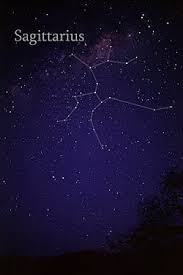
Why is this time of year associated with Sagittarius the Archer? Two thousand years ago and more, the ancients looked up at this time of year and studied a constellation overhead that they decided represented the image of a man with a bow and arrow.
But the zodiac signs were cast in stone by Ptolemy in the 2 century AD and these dates remain unchanged, based on his arithmetic model of the zodiac. The astrology has parted company with the astronomy which inspired it, due to the wobble of the earth,and the effect known as the precession of the equinoxes.
The constellation of Sagittarius is now visible in the northern hemisphere in summer until September, and is visible in the winter in the southern hemisphere.
To find out where and how to see the constellation VIEW HERE.
But the zodiac dates endure, and the story and the meaning endure.
This was the time of year when the men of the family group went a hunting, to to catch, to kill, to cure and to store meat for the coming winter.
Common associations
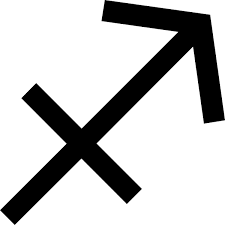
Symbol:
Date of Birth: Nov 22 to Dec 21
Ruling planet: Jupiter
Element:Fire
Key phrase: I seek
Body: Thighs
Birth Stone: Topaz, Citrine, Turquoise
Colour: Light Blue
Tarot card: Temperance: Timing, Moderation, Education, Solstice, Healing of Chiron
Public Domain: Rider-Waite
More about the Astronomy
Source :Wiki
Sagittarius, the zodiac sign inspired by the constellation of Sagittarius, from the Latin meaning Archer, was recorded in the 2nd century by the Greek astronomer Ptolemy.
The constellation of Sagittarius is near the centre of our galaxy, the spiral Milky Way, mainly visible in the southern hemisphere June-November. In the Northern hemisphere the constellation is low on the horizon from August to October.
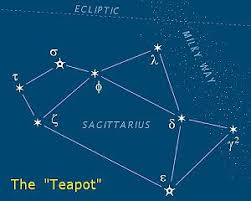
Sagittarius has a nickname, ‘The Teapot’ on account of its vaguely teapot-shaped star pattern, or asterism.
To find The Teapot
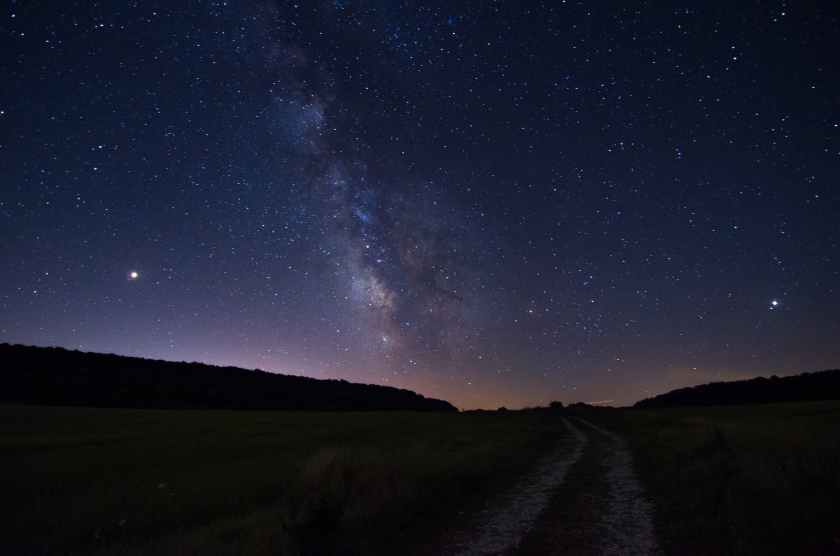
The best time to look is in August or September, somewhere really dark. Locate the hazy band of The Milky Way stretching right across the sky. Looking in the northern hemisphere, the Milk Way seems to bulge as it descends to the southern horizon. This ‘bulge’ is roughly about the middle of the Milky Way and is contained within the boundaries of the constellation Sagittarius.
Photo by u200bu0468u0477u047bu048f u046au0454u0459u0469u04e1u04c4u047bu0487u0477 on Pexels.com
Sagittarius contains a massive star-forming region, the Omega Nebula, home to the bright blue hyper-giant Pistol Star, one of the brightest stars in the Milky Way. The Pistol Star was discovered with the Hubble Space telescope in 1930, and is largely hidden in the dust of its own nebula.
It is 100 times as massive as our Sun, and 10,000,000 times as bright.
Mythology
Sagittarius is the ninth sign in the Zodiac, not to be confused with the constellation itself, and represents those born between Nov. 22 and the advent of winter solstice, Dec. 21.
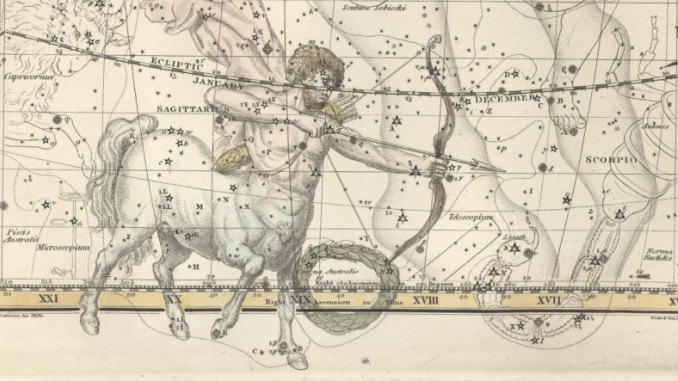
Sagittarius is nowadays generally associated with the ancient Greek story of Chiron. But the story is far, far older, and goes back to a Babylonian god, Pabilsag, and even further back than that.
Public Domain: Celestial Atlas 1822
Pabilsag and the Solstice
Pabilsag was the ancient Babylonian name for what we now call Sagittarius, handed down to the Greeks through the Sumerians and Kassites.
The Sumerian word ‘Pabil’ means ‘ancestor or relative’. Combined with the final element sag, meaning ‘chief, head, tip or foremost,’ his name can be translated as the ‘Chief Ancestor’ or ‘Forefather’.
Just as we were hunters at the dawn of human civilization.
Here, 3 millennia BC, we we have a winged centaur type figure, and yes, he is an archer too, and his arrow points at the heart of Scorpio, the red star Antares, but he also has a scorpion’s tail as the wheel of the Zodiac turns, and as Sagittarius gallops in, we leave Scorpio behind.
The distinction of Sagittarius, though, is that he is a solitary hunter. He does not work as one of a team to being down the really big prey. He is an individualist, working alone, just as many a hunter or trapper still hunts alone in winter.
Sagittarius – Psychopomp
The constellation of Sagittarius-Pabilsag is within the Milky Way, rising from the southern regions close to the horizon into the higher reaches of the skies.
This section of the Milky Way represents a symbolic bridge or a rainbow for the souls of the dead on their way to the afterlife, as the arrival of Capricorn draws near, marking the advent of the winter solstice. so that Sagittarius, or Pabilsag, is a psychopomp; a guardian and a guide to the dying year, and also to the souls of the dying as the sun sinks ever lower.
Chiron the wounded Centaur
Most modern versions of the story refer back to much later, classical variants of the old Babylonian myths, and say that Sagittarius represents the gentle, cultured centaur, Chiron, who was accidentally shot by Herakles with a poison arrow.
The centaurs in general were a rough lot, hard drinking, hard fighting, not remotely glamorous. It has been suggested that the legend of the centaurs rose from perfectly mortal, mounted ancient Greek cowboys.
But whatever the centaurs were, Chiron ‘the wisest and justest of the centaurs’ was something very different, representing a hope for the centaurs, and for Humanity itself, as collectively it strives to rise above the ever present tyranny of the Id and its own worst nature.
Here he is, trying to teach Achilles to control his temper, learning to play the lyre. Chiron had many other pupils, as well, including Asclepius, Ajax, Achilles, Theseus, Jason, Peleus, Perseus, and Phoenix. And Herakles, who brought about his death, when he was sent there to be schooled with Chiron.
Herakles had previously lost his temper with Linus, his music tutor back home. Linus, criticised his playing, and Herakles responded by smashing his lyre over the teachers head, killing him. Though in some accounts it was a stool.
Now Chiron, wounded by the poison arrow, was left in terrible pain. He was wise in the ways of medicine, none wiser, but he could not heal himself, and none could help him. Nor could he die, being Immortal.
Still, he carried on until he could bear it no more, and he asked Zeus to release him from Immortality so that he could die and be free of pain.
Zeus placed him in the heavens and the story goes, placed him there as Sagittarius.
However, Chiron already has another constellation, Centaurus, and in addition, there is another classical version of the story of Sagittarius, referring instead to Krotos, a satyr who lived on Mount Helicon with the Muses.
Krotos the Cultivated Satyr
Krotos was the son of Pan and Eupheme, and his mother had nursed the Muses. He was a renowned archer, hunter, horse rider – hence a possible source of confusion with the centaur, and besides all this, a devotee of his childhood companions, The Muses and their arts.
Krotos means ‘One who Claps his hands.’ He was credited by the Greeks with not only having invented archery, but introducing the convention of applause at artistic performances.
In this version of the story it was the Muses who, when Krotos died, asked Zeus to place him among the stars, which he did, transforming him into the constellation Sagittarius, says this variant of the zodiac story.
So Sagittarius is either the cultured wounded healer, Chiron, already represented in the constellation Centaurus, or he is the cultured satyr, Krotos; goaty, horse-riding archer, culture vulture and hunter extraordinaire.
There is a secondary link here, Krotos the Satyr linking Sagittarius with Capricorn, the next sign coming up, sun sinking to the winter solstice.
Chiron or Krotos?
Take your pick.
Or you can go Babylonian with Pabilsag.
The Muses
Sagittarius is keenly intuitive, and usually has a marked talent, a gift, in the field of the Arts. Winston Churchill for example, was a Sagittarius subject and probably psychic. He was certainly subject to visions and feelings of premonition, and he also painted.
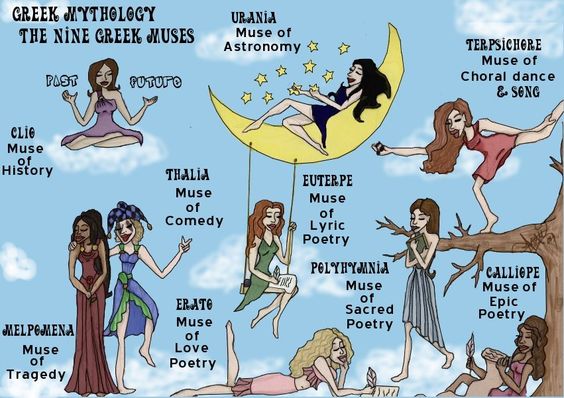
Delphi said there were three Muses. But c 600 BC Hesiod wrote in his Theogony that there were Nine Muses, the daughters of Zeus and Mnemosyne (Memory personified) and this is the version that has generally stuck.
The Muses were not necessarily benign. They were touchy, sensitive to human hubris, and liable to exact vengeance of anyone they decided was getting too far above themselves.
Image via Greekmythology.com
Kalliope ‘She of the Lovely Voice’ was the muse of epic poetry. Also of Diplomacy.
Klio ‘She Who Proclaims’ was the muse of history.
Erato ‘The Lovely One’ was the muse of love poetry.
Euterpe ‘She Who Pleases’ was the muse of music.
Melpomene ‘She Who Sings’ was the muse of tragedy.
Polyhymnia ‘She of the Many Hymns’ was the muse of sacred poetry.
Terpsichore ‘She Who Delights to Dance’ was the muse of dance.
Thalia ‘The Cheerful One’ was the muse of comedy
Urania ‘The Heavenly One’ was the goddess of astronomy, astrology, and later, Christian poetry.
Sagittarius: The Astrological Personality
Of course there is no such thing as THE Sagittarius personality. Everyone is unique. We are speaking here of an archetype.
Sagittarius is ruled overall by the planet Jupiter, and rules the Ninth House of philosophy, law, travel, higher study, and the second life partner when we have one. The seventh house rules the choice of a first life partner. In any second choice we are looking to learn more, and to expand our inner horizons from meeting with a mind that is very different to our own. A third choice of life partner is said to be ruled by the eleventh house of group identity.
Sagittarius zodiac sign subjects need constant adventures to stay interested. Freedom is of the utmost importance to them. Movement. Travel. Space and room for manoeuver. Likewise they allow space and freedom to their partners.
The archetype of Sagittarius is brave, lively, warm, optimistic, curious, adventurous, rational, but also insightful, even visionary.
These are generally astute, clever and capable people. But they need career flexibility, and they may refuse to fail to apply themselves if bored. Like Gemini, they are prone to restlessness. They may fail to stick at a job or a succession of jobs, and may struggle financially long term in consequence.
Hence their challenge, but also their guiding light is the idea of Temperance,personified in the Tarot and symbolising patience, prudence, and the art of good timing.
They can do ‘domestic’. It’s not that. But you wouldn’t really call it how they roll.
And they do tend to roll, place to place, job to job, and a rolling stone gathers no moss. The problem being, other things it doesn’t gather either, like a steady home life, or steady income, or savings or other means of security in old age, if Sagittarius does not balance the need for freedom , space and independence with prudence and good timing.
Sagittarius tends to have lots of friends. More than almost anyone else, so much so, family and friends can feel neglected at times, forgotten, when Sagittarius goes off yet again, devil may care, to share experiences with new best friends.
Sagittarius must have inspiration, and the freedom to follow it, and to roam. But this humanitarian, kindly, if restless rolling stone sooner or later almost always comes rolling home again, expecting to find their loved ones exactly where they left them. And usually, they are. Though others do not enjoy being taken for granted, and this may need care.
Sagittarius will be the star of this show. But what they really need for domestic happiness, is a quietly confident, self-reliant partner who has plenty of interests themselves; and much life experience.
Did the Norse celebrate Halloween? Plus a message from the runes for you…
Public Domain
What we know of Norse Mythology comes largely from the Eddas, two collections of writings from assorted anonymous writers, dating around 1250 CE.
All Hallows Eve, Halloween or Samhain is a Gaelic custom, not Norse. The Norse peoples did mark this time of year, although in a different way, with Álfablót – the Elf Ritual.
Elves were associated with burial mounds (also known as barrows) as it was believed that they lived in or around them, and more than this, elves were associated with the souls of the dead, rather than fairies in the other sense of the word, as a supernatural entity that was never human.
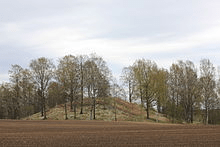
Rakni’s burial mound, Noway, Public Domain
It is the largest burial mound in Scandinavia, 77 metres in diameter and over 15 metres in height. There are a number of stories associated with it, one associated with a roving sea-King Raki or Ragnar. Skull fragments were found inside it, of a man aged between 20 and 25 but there were no grave goods. The mound has been dated to the sixth century to the time of the great migration after the collapse of the Roman Empire.
It is possible that this chieftain was an ancestor of Rollo, the Norse ancestor of William the Conqueror.
Like the modern Halloween, Álfablót originally marked the general end of autumn, although it may technically be celebrated on any day around this time. However in recent years, it has been predominantly practiced on or close to 31st October (Halloween/Samhain).
Traditionally, Álfablót almost certainly involved an animal sacrifice, (blood) Records suggest this may even have been a (highly valuable) bull. It was intended as a sacrifice to the elves, asking for protection from the ancestors. Connected with this, the elves were also associated with fertility.
A chief difference here is, unlike Halloween/Samhain, Álfablót was not a community celebration. It was a private ritual performed at the homesteads. Strangers were not permitted to take part or even watch.
Old Norse Runes
What runes do we drawn this Halloween Álfablót 2022?
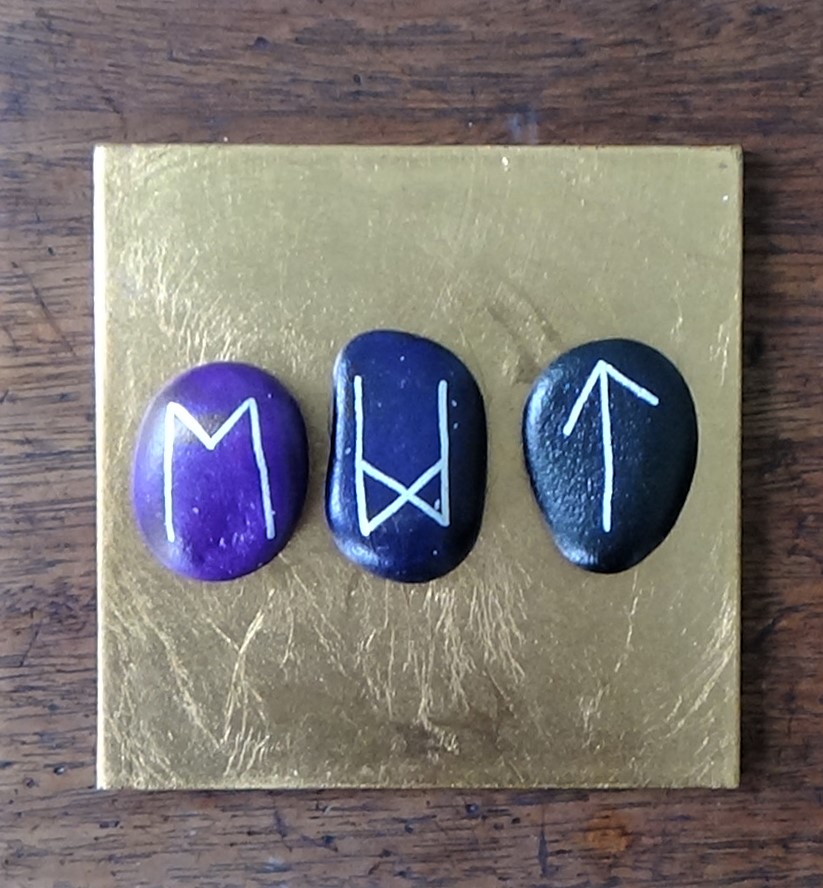
Ehwaz The Horse transport, journey progress
Mannaz Merkstave Communication difficulties, trouble with fellow man
Tiwaz Justice, Law and War (spear)
The message is not a cheerful one, I am sorry to say, but it will easily be understood why not in the context of the war in Ukraine and a lot more besides.
One might reasonably say, but the dead do us no harm? It is the living we need to watch for. Well, that depends upon their legacy, and the memories they leave behind. Jewish graves read ‘may their memory be a blessing.’
The rune of mankind has been drawn merkstave. This advice is a downer. In these days of travelling far afield almost at the drop of a hat, don’t be too quick at this time to get on your ‘horse’ and ride off to the lands of ‘strangers’.
Don’t be too quick to share your opinions with your neighbour, or all and sundry.
You do not know what they may be struggling with when you enter their space. Beware of the horses coming to your door carrying strangers. Some will come as friends, and honour us with their arrival. But not every stranger comes as a friend. The history books warn, it is a friendly fool that can’t tell friend from foe.
Why do you travel? What do you bring to the places you visit, for the sustenance of the people who live there?
Who is this that is coming now? Why do they come? What do they seek? What do they offer? Is it a fair just and lawful exchange? Or is this a hunting trip? What is the prey? What is the prize?
This grim counsel goes against our powerful instinct of hospitality and kindness to strangers. But that bottom line was always there, and the runes are reminding us.
The Viking raid on Lindisfarne in 793 sent a shock wave through Europe. But this was just the start of something bigger. What was driving it? In part, changes to the laws of inheritance in Scandinavia, younger sons, now dispossessed of family farms, had to go in search of their own fortunes.
So they did.
The Viking Raid on Lindisfarne
Another way of looking at these runes in terms of comment or advice about the cosmic weather right now, which is, beware of joining the crowd.
Beware of crowds. This, following the tragedy in Seoul where 150 or more people have died in a crush at a Halloween celebration. And the death toll is still rising, following the collapse of a bridge in India killing over 141 people who were celebrating Diwali, the festival of lights.
This also refers to getting into arguments on social media, and avoid gossip at this time. Stay clear of group-think.
The runes here are reflecting the fact that fiery Mars, planet of war, has just moved into the zodiac domain of Gemini, the sign of communications and siblings, and it will stay there, appparently moving backwards or retrograde, until 12 January 2023. There will be spectacular events. One can see how this combination may represent aeroplanes, missiles or indeed any kind of projectile. The threat of a nuclear attack is real, though I haven’t been shown that it will happen.
Contagion travels by the same token, suggesting an inevitable rise of flu and covid cases starting now, at least in the northern hemisphere.
There are many kinds of ghosts. There are the whirling leaves that used to be buds. There are the echoes of the distant past. There are the ghosts of our hopes, not all of which can ever be realized, the grief, the fears and memories of the living.
But Jupiter is returning to Pisces and this brings a promise of good cheer. Even in desperate times we see a Ukrainian soldier rescuing a hamster in a cage, the hamster obliviously running in its wheel. The soldier places it in the back of the truck, returns for two rabbits.
In such moments rests the hope for humanity.
Death is the theme for the season- and this is an unusually tricky Halloween season, caught between the partial solar in Scorpio on 25 October, and the upcoming Lunar eclipse in Taurus on 8 November.






















 True Tarot Tales