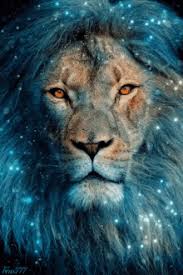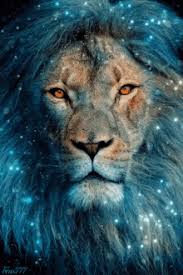
Salutations, Star Lion Leo

Today 22 July, we leave the zodiac sign of Cancer, the mysterious and elusive Crab in the Starry zodiac sea, the sign of the zenith of the summer, and we move into the astrological sign of Leo the celestial lion. Most of us know our zodiac or sun sign, but what does it actually look like in the night sky, and what’s the story behind it? It’s time to roll out the red carpet for the star-lion, Leo…

Common Associations

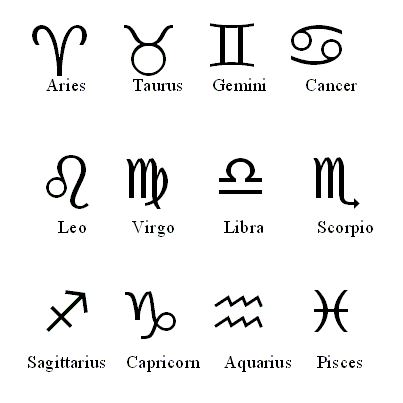
Zodiac Symbol of Leo

Dates: 22-23 July-23 August

Symbol: Lion

Element: Fire

Metal: Gold

Position: Fixed

Ruler: The Sun

Body: Heart and spine

Trees: Palm trees, laurel, walnuts, olive trees, lemon and orange trees.

Plants: Marigolds, sunflowers, dandelions, (dents de lion =lion’s teeth) celandines, passion flowers

Gemstones: Peridot, carnelian, ruby, onyx

Peridot By Rob Lavinsky, iRocks.com – CC-BY-SA-3.0, CC BY-SA 3.0, https://commons.wikimedia.org/w/index.php?curid=10478407

Key phrase: I love

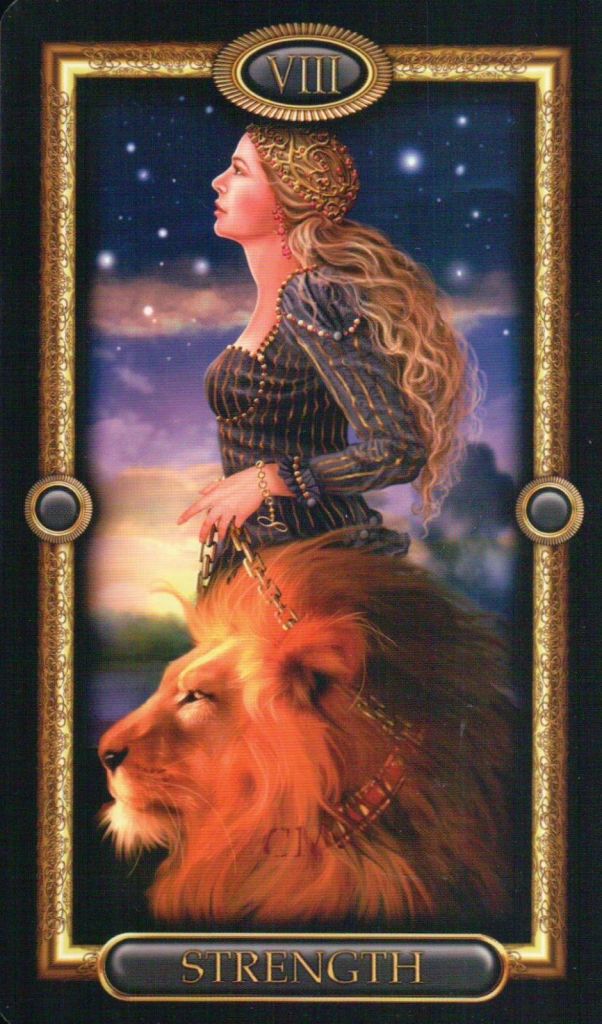
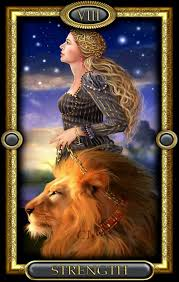
Tarot card: Strength

The Gilded Tarot Royale, Ciro Marchetti

The Lady and the Lion. Perhaps it is Una. Or perhaps her name is Leona or Leonora, for the lion is also the lioness. Her hold on the leash could not be lighter. She is controlling the lion, but only because it is allowing it, not fighting her restraint, signifying that the lion is also a part of herself. This is just as one would imagine, a very welcome card of better health, signifying recovery if someone has been ill.

Astronomy

Leo is one of the 48 constellations described by the 2nd-century astronomer Ptolemy, and one of the 88 modern constellations recognised by NASA today, between the neighbouring constellations of Cancer to the west and Virgo to the east.

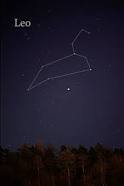
Leo is the 12th largest constellations, and one of the most easily recognizable due to its many bright stars, and a distinctive shape suggesting a crouching lion, apparently facing right.

The bright light in the sky beneath Leo as seen in the photo below is Jupiter.

Wiki

The best time to see the Lion is Spring in the northern hemisphere, from around the March equinox. In early April, the constellation Leo reaches its high point for the night around 10 p.m. By around May 1, Leo reaches his high point for the night around 8 p.m. local time  In early May, the Lion begins to set in the west around 2 a.m. local time and by June, Leo is descending in the west in the evening, drifting progressively westward.

By late July and into early August, the Lion is beginning to fade into the sunset, returning to the eastern sky and visible before dawn around late September or October.

Look out for the Big Dipper, Leo is below it. You are looking for a backwards question mark pattern called the Sickle; and you can see its curve outlines the Lion’s mane.

Leo’s brightest star, Regulus, or Alpha Leonis, ‘The King Star,’ is the heart of the celestial lion, a sparkling blue-white star at the bottom of the backwards question mark pattern. Regulus, means “little king” or “prince” in Latin. The star’s Greek name, Basiliscos, has the same meaning, while the Arabic name is Qalb al-Asad, meaning literally “the heart of the lion.”

Mind Boggler -Leo’s fifth largest star, Epsilon Leonis, 247 light years from Earth, is 288 times more luminous than the Sun, four times as massive and has 21 times the solar radius.

A triangle of stars in eastern Leo represents the Lion’s hindquarters and tail. The brightest star of the triangle is named Denebola, Arabic, meaning the Lion’s Tail.

There are 15 stars in Leo with 18 known planets between them, but none of the planets is in a habitable zone.

The Leonids are meteor showers associated with the constellation of Leo. They peak around November 17-18 every year, and there is another minor shower, the January Leonids, peaking January 1 – 7.

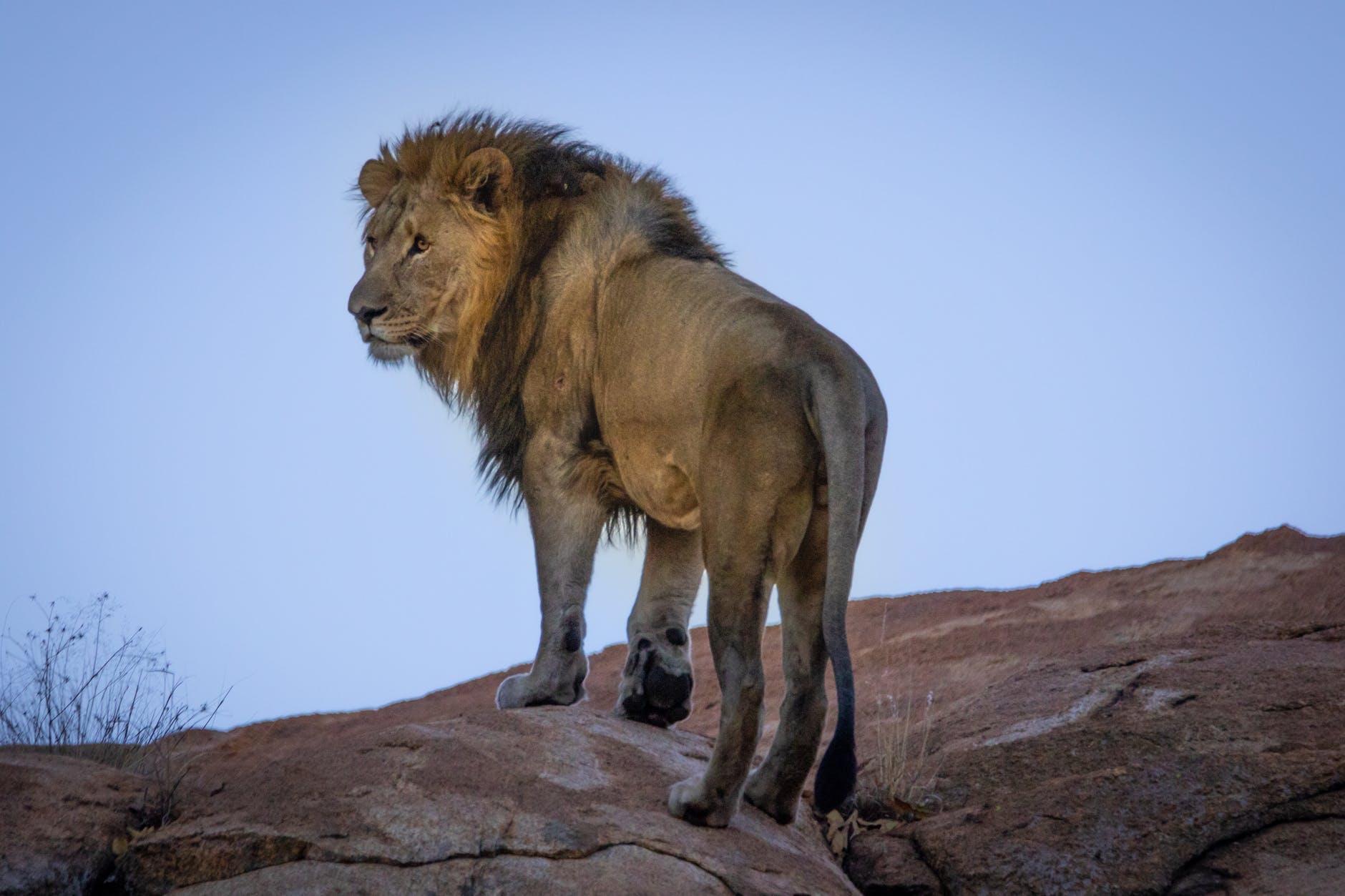
Photo by Henrik Pfitzenmaier on Pexels.com

Ancient History & Mythology

Leo the Lion has since ancient times been associated with the sun and royalty, ruled by the sun in astrology and is one of the oldest constellations collectively recognized with many ancient civilizations agreeing on perceiving it as a lion.

Archaeological evidence suggests that Mesopotamians recognized a constellation similar to Leo as early as 4000 BC. The Persians knew the constellation as Shir or Ser, Babylonians called it UR.GU.LA (“the great lion”), Syrians knew it as Aryo, and the Turks as Artan.

Photo by David McEachan on Pexels.com

The story goes that the ancient Egyptians venerated Leo because the appearance overhead of this constellation used to coincide with the annual flooding of the Nile River, the lifeblood of their agriculture and indeed, the nation entire. Marking the end of drought, desert lions would arrive at the river, driven by desperation, and their appearance was welcomed as a certain sign that the floods were shortly on their way. The Egyptians accordingly honoured the lion with festivals, and even today many statues of lions can be found along the course of the Nile River, proof of their reverence.

Photo by Magda Ehlers on Pexels.com

It’s thought that the lion-headed fountains commonly designed by Greek and Roman architects equally symbolized the life-giving waters released by the sun’s presence in Leo.

Herakles’ first labour was the killing of the Nemean Lion. This terrifying lion lived in a cave in Nemea, a town located to the south-west of Corinth. It was a man-eater, dining on the local folk, not OK, and a few had tried to kill it, only to find to their (terminal) horror, nothing could pierce the lion’s hide, it was so preternaturally tough.But someone must have survived to tell this tale, for Herakles, being forewarned of this additional teensy problem, managed somehow to sneak up on the lion asleep in its cave, and strangled to death the uber-kitty; poor puddy-tat.

Herakles then rather disrespectfully, I can’t help feeling, if undeniably pragmatically, skinned the lion with its own claws, and wore its skin as a cloak, making himself even more ferocious in appearance, as well as presumably, and even more importantly, arrow-proof.

Astrology

Photo by Alexas Fotos on Pexels.com

This fixed fire sign is known for its pride, ambition and determination, warmth and generosity of spirit, not to mention, charisma, but above all, Leo is known for bravery; the lionhearted one, the divine expression of physical, mental, and emotional fortitude, which is a very great virtue. Leo parents are typically devoted, but they rule their households, no question about it.

Courage takes many forms. There is the courage of initiative, the will to advance, engage and attack. There is moral courage, proceeding in the face of fear, “feeling the fear and doing it anyway.”

And there is the courage to endure, to withstand, and the fortitude that quietly says to itself, “I will keep smiling, and tomorrow I will try again”. No banners and no accolades.

Leo can be its own worst enemy; hasty, arrogant, reckless, self-centred, headstrong and careless, and for these reasons, unless these subjects learn patience, consideration and self-control, they are not necessarily always as lucky in life as they could be, or as they, and the great, shining Leo truly deserve, proud and thirsty children of the sun.

Leo
Dandy Lion

Dandelion’s

Golden Mane

Prideful

Greying

Casts away

Alight on Chance

To someday seed

And newly golden

Lionize again

K Hazeldine

Photo by Nita on Pexels.com

Bringing in Beltane…Magical May Eve

Photo by Polina Kovaleva on Pexels.com

30 April is known as May Eve, marking May Day and the beginning of the ancient Celt festival of Beltane.

Beltane begins at dusk on 30 April and is matched by its European counterpart, Walpurgis Nacht, or St Walpurga’s Night in Germanic tradition.

St Walpurga or Walburge was born in Crediton in Devon, but travelled widely as a missionary in the service of her uncle St Boniface, and eventually became abbess of a monastery in Heidenheim in modern Bavaria where she died 25 February 777 or 779. She was canonized 1 May 870.

Walpurga is reputed to protect sailors in storms at sea, reputedly thanks to a miracle when she was sailing to Germany and a terrible storm broke out, and she knelt on deck and prayed and the storm cleared as if by magic…

And yet, interestingly, Walpurga is also a protector against witchcraft. Curious, isn’t it. That someone’s holy prayer is someone else’s satanic spell or witch’s invocation.

Origins

Two great festivals in northern Europe long pre-dating Christianity were Samhain (Halloween) marking the start of winter, and Beltane (April 30/May 1) marking the start of summer.

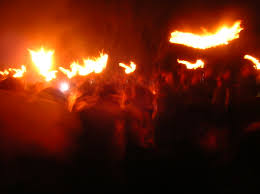
Beltane ‘the fires of Bel’ began as an ancient fire festival celebrated since at least the Dark Ages if not long before. The celebrations began at dusk on April 30th when great bonfires were lit to welcome the height of spring now associated with the zodiac sign of Taurus the Bull, representing the fertility of spring in full bloom.”

Traditionally,” writes Glennie Kindred (in Sacred Celebrations), “all fires in the community were put out and a special fire was kindled for Beltane. This was the ‘balefire’ or the Teineigen, the ‘need fire.’

Bel or Belenus (Celtic: possibly, Bright One) was a deity associated with pastures, meadows and animal husbandry and other agriculture. He was a fire god rather than a sun god as such, though the sun was used as a common motif in religious imagery.

The cattle were walked between two bonfires in a symbolical purification ritual, to be protected by the smoke from Bel’s fire before being put out to the open pastures for the summer.  Bonfires were lit on sacred hills too, and the smoke was considered a magical blessing on the fields, animals, and community, and was also supposed to maintain a fragile balance, keeping up a smokescreen, literally, between the human and faery realms.

The month of May got its name from Maia, also called Flora, the Greek goddess of spring and new abundance. Maia was the oldest of the seven sisters known as the Pleiades, and she was the mother of Hermes (Mercury.) The last zodiac sign of Spring, Gemini, is ruled by airy Mercury, as the air fills with butterflies and pollen.

Flora, or Maia by Botticelli

The name ‘May’ has been used in English since about 1430. Before this time the name of this month was spelled Maius or Mai. The Anglo- Saxons called it Tri-Milchus because all that lush new grass meant cows could now be milked three times a day.

The celebration of May Day has its roots in astronomy, celebrating the halfway point between the spring equinox and the summer solstice. It has been celebrated in the British Isles and through much of Europe as a fertility festival since the Dark Ages, and probably before that, with many stories and superstitions attached.

Superstitions

Like Halloween, May Eve and May Day is a magical time of year, liminal, when the veil between different worlds and realities is thinner than at other times of year.

Beltane or Walpurgisnacht is the mirror image, the spring season’s equivalent of Halloween when witches are said to dance at the Devil’s Sabbath.

This is a time for ghosts, but this is also the time of year when folklore suggests you are most likely to meet a supernatural being from the realm of ‘faery.’

Photo by Ellie Burgin on Pexels.com

The Fae are an ancient race, and they do not like humans whom they view as destructive, and who is to say they do not have a fair point there. The Fae are afraid of iron. To keep them at bay-

Touch wood no good

Touch iron, this you can rely on…

In this sense the Fae could be said to represent the spirit of humanity before the Iron Age.

They are not the cute creatures of fairy tale. Encounters are dangerous and are best avoided – or you may never be seen again. Do not, whatever you do, go to sleep on a fairy hill at any time, but especially not on May Eve or May Day and especially beware of going to sleep under flowering hawthorn bushes ….

Sex and Scandal

The Christian church made attempts to ban May Day festivities outright because of their overtly pagan nature and “lewd” context as an open celebration of male and female sexuality and fertility – ‘a heathenish vanity generally abused to superstition and wickedness.’ 

May Day meant drinking and fighting, another reason for the church’s disapproval, but this in itself harks back to the ancient traditions of the sacrifice of ‘The Green Man’ – a mythical figure representing the eternal battle waged between summer and winter, feast and famine. Many pubs in England are still named The Green Man.

In Padstow, Minehead and some other places in the UK, mischievous hobby-horses (‘osses) roamed the streets in search of unsuspecting young ladies to ‘carry away’ for undisclosed purposes.

Morris dancers up to no good riding with hobbyhorses, Richmond embankment,1620

Men who had been disappointed in love would make straw men representing their rivals and stick them on bushes. These depictions were needless to say, often deeply unflattering, and fighting might well follow once they were discovered and identified and the maker was known.

May Day harks back to the ancient traditions of the sacrifice of ‘The Green Man’ – a mythical figure representing the eternal battle waged between summer and winter, feast and famine. Many pubs in England are still named The Green Man.

This splendid depiction is on a boss in Rochester Cathedral, thanks to Wikimedia Commons.

The Puritans banned May Day under Oliver Cromwell but Charles 11 brought it back into custom after the Restoration.

Maypole Dancing goes back at least to the 14th century, but it seems the custom was very old even then, though the dance as we know it today, so pretty and decorative(and tame) -children dancing in village squares, is probably a Victorian invention . The maypole is generally assumed to be a phallic symbol, but the Norse peoples connected it with tree worship, and this connects British and Germanic tradition going back to a shared proto-germanic culture which is part of the common root culture in British life even today.

The Maypole dancing which so upset the Church and the Puritans comes down to us from the rites of spring dedicated to Freya.

The maypole originally represented a living tree, in particular the giant ash tree Yggdrasil, the great “world tree” of Norse myth, linking the nine worlds of the Norse cosmology including Asgard, land of the gods, Midgard, or Earth and Hel, the underworld.

“Ygg” means terrible. It was on this tree that Odin chose to hang nine days and nights, thirsty and fasting in exchange for the knowledge of the runes. The Norns sit beneath it and when every new person is born, carves their names into its bark…and with it, their destiny, although this can change. The Norns will allow us to rewrite it, unlike the destinies woven by the three Fates of Greek mythology.

Walpurgis Night

Also In the Germanic tradition, Walpurgis Night, on April 30th is a moon festival sacred to the goddess Freya.

“Walpurga” is another one of Freya’s names. The re-dedication of the holiday to “St. Walpurga” was a later Christian addition.

Freya (Old Norse, Freyja meaning “Lady”) is one of the pre-eminent goddesses in Norse mythology. She was the goddess of love and beauty in Norse mythology, the goddess of marriage and family and a great prophetess – a seeress. She taught her husband Odin how to read the runes, and like Odin, she had a fiercer aspect as a patron deity of war and death in battle.

Freya wears a cloak of falcon feathers and has a magical gold necklace called Brísingamen. She rides in a chariot pulled by two cats and a sacred boar called Hildisvíni runs alongside, though he is not shown in this picture.

The cats, it has been speculated, were two male kittens found by Thor. They had been abandoned by their mother and he took them to Freya. What kind of cats? I’d have thought Norwegian Forest cats, but legend suggests the kittens were grey-blue and on that basis it’s speculated they were Russian Blues.

Bringing in the May

I washed my face in water

That had neither rained nor run

And then I dried it on a towel

That was never woven or spun

  • The rhyme suggests we go out barefoot very early on May morning and wash our faces in all that magical dew (or late snow) Your complexion will instantly improve.  Let the wind and sunshine dry our faces and we’ll have good luck all year.
  • Bringing in ‘the may’ means gathering cuttings of flowering trees for magical protection of the home. Bring in branches of forsythia, magnolia, lilac, or other flowering branches. Decorate the doorway to keep away unfriendly fae and other spirits
  • Make garlands or decorate a basket or a ‘May bush’ with flowers and coloured ribbons. This would often be a hawthorn bush but it doesn’t have to be.
  • If you need to move a bee hive, May 1 is a traditional day for doing it, hopefully clement for the bees.
  • Turnips are traditionally planted on May 1. Plant now for lovely mashed turnip later. What are you waiting for?
  • Fishermen expect to get lucky with catch on May Day.
  • It’s a powerful day for spell-casting…any spells to do with bringing in health, wealth, and abundance. Light a red or pink candle for love or passion…but be careful what you wish for, and it is unlucky to try and take what is not rightfully available to you.
  • Traditionally it is unlucky to get married in May. ‘Marry in May, regret it for aye.’ But not to panic if you’ve got the date already booked. The writer of this article was born on May Eve and got married in May – 30 years ago this year- and like all of us, has had mixed luck in life. But so far at least is still married.

This Beltane, Venus has moved into her astrological home turf of Taurus. Good for money, the Stock Exchange. Good for all things green and growing. Good for glamour…an old term for magic. Venus will stay here for almost a month. And Mars moves into its home sign of Aries on 30 April. Pow. Action time. Vim and vigour.

This Walpurgis baby turns 61 on 30 April. Vim and vigour, not feeling it so much, but we shall see…..I may report back.

Wishing you the best of Beltane 2024

Until next time 🙂

Halloween and ‘Alfablot’-‘Sacrifice to the Elves’

Did the Norse celebrate Halloween? Plus a message from the runes for you…

Public Domain

What we know of Norse Mythology comes largely from the Eddas, two collections of writings from assorted anonymous writers, dating around 1250 CE.

All Hallows Eve, Halloween or Samhain is a Gaelic custom, not Norse.  The Norse peoples did mark this time of year, although in a different way, with Álfablót – the Elf Ritual.  

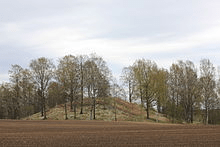
Elves were associated with burial mounds (also known as barrows) as it was believed that they lived in or around them, and more than this, elves were associated with the souls of the dead, rather than fairies in the other sense of the word, as a supernatural entity that was never human.

Rakni’s burial mound, Noway, Public Domain

It is the largest burial mound in Scandinavia, 77 metres in diameter and over 15 metres in height. There are a number of stories associated with it, one associated with a roving sea-King Raki or Ragnar. Skull fragments were found inside it, of a man aged between 20 and 25 but there were no grave goods. The mound has been dated to the sixth century to the time of the great migration after the collapse of the Roman Empire.

It is possible that this chieftain was an ancestor of Rollo, the Norse ancestor of William the Conqueror.

Like the modern Halloween, Álfablót originally marked the general end of autumn, although it may technically be celebrated on any day around this time. However in recent years, it has been predominantly practiced on or close to 31st October (Halloween/Samhain). 

Traditionally, Álfablót almost certainly involved an animal sacrifice, (blood) Records suggest this may even have been a (highly valuable) bull. It was intended as a sacrifice to the elves, asking for protection from the ancestors. Connected with this, the elves were also associated with fertility. 

A chief difference here is, unlike Halloween/Samhain, Álfablót was not a community celebration. It was a private ritual performed at the homesteads. Strangers were not permitted to take part or even watch.

Old Norse Runes

What runes do we drawn this Halloween Álfablót 2022?

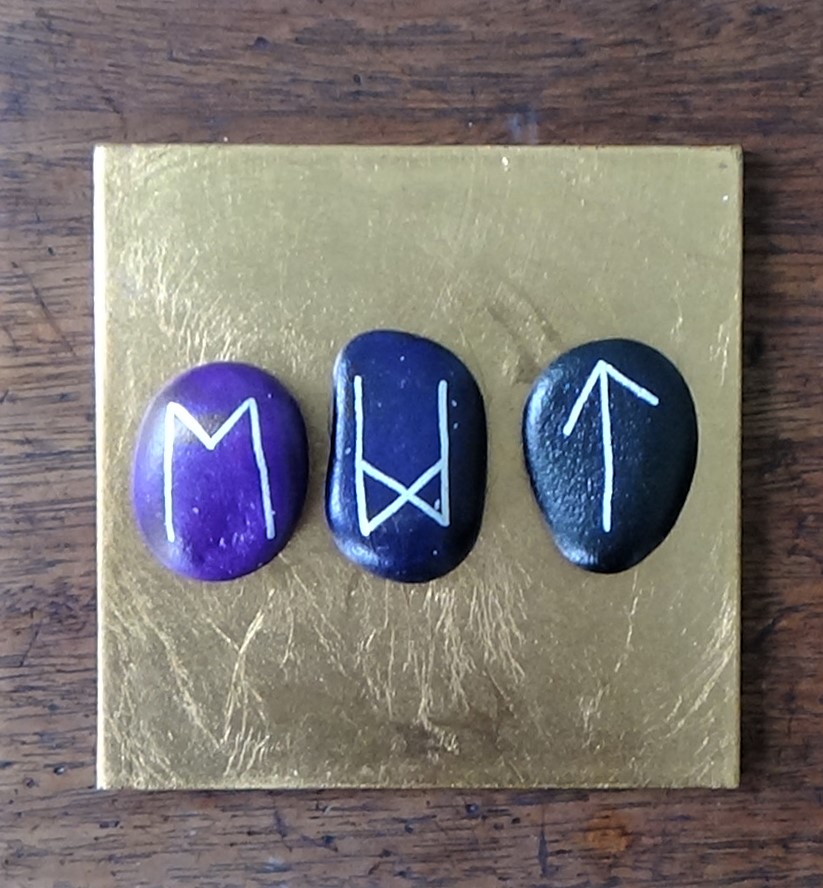
Ehwaz The Horse transport, journey progress

Mannaz Merkstave Communication difficulties, trouble with fellow man

Tiwaz Justice, Law and War (spear)

The message is not a cheerful one, I am sorry to say, but it will easily be understood why not in the context of the war in Ukraine and a lot more besides.

One might reasonably say, but the dead do us no harm? It is the living we need to watch for. Well, that depends upon their legacy, and the memories they leave behind. Jewish graves read ‘may their memory be a blessing.’

The rune of mankind has been drawn merkstave. This advice is a downer. In these days of travelling far afield almost at the drop of a hat, don’t be too quick at this time to get on your ‘horse’ and ride off to the lands of ‘strangers’.

Don’t be too quick to share your opinions with your neighbour, or all and sundry.

You do not know what they may be struggling with when you enter their space. Beware of the horses coming to your door carrying strangers. Some will come as friends, and honour us with their arrival. But not every stranger comes as a friend. The history books warn, it is a friendly fool that can’t tell friend from foe.

Why do you travel? What do you bring to the places you visit, for the sustenance of the people who live there?

Who is this that is coming now? Why do they come? What do they seek? What do they offer? Is it a fair just and lawful exchange? Or is this a hunting trip? What is the prey? What is the prize?

This grim counsel goes against our powerful instinct of hospitality and kindness to strangers. But that bottom line was always there, and the runes are reminding us.

The Viking raid on Lindisfarne in 793 sent a shock wave through Europe. But this was just the start of something bigger. What was driving it? In part, changes to the laws of inheritance in Scandinavia, younger sons, now dispossessed of family farms, had to go in search of their own fortunes.

So they did.

The Viking Raid on Lindisfarne

Another way of looking at these runes in terms of comment or advice about the cosmic weather right now, which is, beware of joining the crowd.

Beware of crowds. This, following the tragedy in Seoul where 150 or more people have died in a crush at a Halloween celebration. And the death toll is still rising, following the collapse of a bridge in India killing over 141 people who were celebrating Diwali, the festival of lights.

This also refers to getting into arguments on social media, and avoid gossip at this time. Stay clear of group-think.

The runes here are reflecting the fact that fiery Mars, planet of war, has just moved into the zodiac domain of Gemini, the sign of communications and siblings, and it will stay there, appparently moving backwards or retrograde, until 12 January 2023. There will be spectacular events. One can see how this combination may represent aeroplanes, missiles or indeed any kind of projectile. The threat of a nuclear attack is real, though I haven’t been shown that it will happen.

Contagion travels by the same token, suggesting an inevitable rise of flu and covid cases starting now, at least in the northern hemisphere.

There are many kinds of ghosts. There are the whirling leaves that used to be buds. There are the echoes of the distant past. There are the ghosts of our hopes, not all of which can ever be realized, the grief, the fears and memories of the living.

But Jupiter is returning to Pisces and this brings a promise of good cheer. Even in desperate times we see a Ukrainian soldier rescuing a hamster in a cage, the hamster obliviously running in its wheel. The soldier places it in the back of the truck, returns for two rabbits.

In such moments rests the hope for humanity.

Death is the theme for the season- and this is an unusually tricky Halloween season, caught between the partial solar in Scorpio on 25 October, and the upcoming Lunar eclipse in Taurus on 8 November.

Photo by Josh Hild on Pexels.com

HALLOWEEN

The grey ghosts are shifting.

Mists are lifting on the grey graves

where sandpipers call.

Mountains or clouds,

grey whales or waves

all one under the treacherous sun.

Fishbones are heaped

on the floors of the forest

where the Red Beast crouches

squinting aslant.

Waterbones lie fractal on stones

and frozen meniscus squeaks and groans.

Giant scaffolds loom in carlights 

where Death has swept up

to throttle the Titans,

shaking stiff in their ropes.

Ogres rear in the speeding corner.

White in the phantom night

respectful retainers line the lanes;

skulls and jaws, knuckles, thighbones.

stand to attention.

And the moon is ringed in a saturnine glow.

Dry bones stand tall by hedge and wall,

incorruptible, crack and creak

as the Old Year enters

The Big Sleep

Margaret Whyte 21.11.04

Libra the Celestial Scales, Balance of the Seasons in the Stars

The zodiac sign of Libra, what’s the story?

Most of us know our sign of the zodiac or sun sign, but where did get its name from, and what does it look like in the night sky? Read on for the story of Libra…

Common Associations

Symbol

Quality: Cardinal

Element: Air

Affirmation: I (seek to) Balance

Ruling planet: Venus

Body: Lower back, buttocks, kidneys

Colour: Indigo Blue

Flower: Rose, Hydrangea

Birthstones: Sapphire- September birthdays. Opal- October birthdays

Lucky Number: 6 (community, childhood)

Tarot card: Justice

Public Domain: Justice from the Rider-Waite Tarot

Astronomy

Libra (and I say Lee-bra too, like most people, but technically, it is correctly pronounced Ly-bra as in Library) is a small but distinct constellation next to the constellation Virgo in the evening sky. It looks like a lopsided diamond, or a small child’s drawing of a house, and is visible in the northern hemisphere between April and July.

Libra is most visible directly overhead at midnight in June, and is 29th in size of the 88 constellations.

Public Domain: Libra

Libra is bordered by the head of Serpens to the north, Virgo to the northwest, Hydra (the biggest known constellation of all) to the southwest, Lupus to the south, Scorpius to the east and the serpent bearer, Ophiuchus to the northeast.

Libra, like Cancer, is fairly faint from Earth in comparison with other constellations, and contains no spectacular first magnitude stars, but it contains a very old galaxy cluster, possibly around 10 billion years old, which is about the same age as our The Milky Way, our own galaxy.

There is a red dwarf star ,Gliese 581, in this galaxy, with three orbiting planets, one of which may possibly be suitable for life. This system is about 20 light years from Earth.

Libra used to be regarded, not as a constellation in its own right, but as part of neighbouring Scorpio and Virgo. This legacy remains in the names of its brightest stars.  The brightest star in Libra is a binary star about 77 light years from Earth. α Librae. Its common name is Zubenelgenubi, meaning “the Southern Claw” in Arabic. The second-brightest star in the constellation of Libra is β Librae, known as Zubeneschamali, from the Arabic for “The Northern Claw.”

Public Domain: the Scorpionic Scales, from Mercator  

Since 2002, technically, the Sun has actually appeared in the constellation of Libra from October 31 to November 22. But signs of the zodiac are not dependent on the positions of the actual constellations. Western or tropical astrology, which is based on seasonal phenomena, not the actual positions of the constellations, which remain the basis of Eastern or Sidereal astrology.

The Sun did used to be in the constellation of Libra at the northern autumnal equinox (c. September 23) to on or about October 23, when the hours of night and daylight were the same- hence the Libran key concept of natural balance, and the change of the seasons is still marked by the first days of the zodiac sign of Libra, 23 September.

But Western or Tropical astrology was designed as a construct based on arithmetic, not on current astronomy. The signs of the zodiac were inspired, modelled and named according to the heavenly bodies, but actually based on seasonal phenomena, these being presented as an arithmetic model, dividing into 12 pieces of a pie, the circle of the visible skies of the zodiac as seen from Earth, as calculated by the Greek mathematician, astronomer and astrologer Ptolemy in the 2C AD.

Mythology and History

Justitia by Howard David Johnson, 1954 –

Public Domain

Libra was once included as part of Scorpio, and was known in Babylonian astronomy as MUL Zibanu (the “scales” or “balance”) with an alternative name, the Claws of the Scorpion. In ancient Greece Libra was also seen as the Scorpion’s Claws.

The scales were held sacred to the Babylonian sun god Shamash, who was also the patron of truth and justice, and ever since these very early times, Libra has been associated with law, fairness and civility.

Libra was first recognised as a constellation in its own right in ancient Rome, when it began to represent the scales held by Astraea, also known as Dike, who in Greek mythology was actually associated with Virgo. In ancient times, the stars of Libra, The Scales, were also intermingled with those of  Scorpius by the Greeks, but were always considered as a separate group by the Romans.

According to the writer Manilius, Roman judges were born under the sign of Libra.  The Moon was said to be in Libra when Rome was founded, in a historical passage, which states “qua condita Roma.”

The start of Libra starts with the autumn equinox, when days and nights are almost of equal length, i.e. balanced, and Roman astrologers considered that the constellation of Libra represented the scales held by Astraea, the ‘star maiden,’ goddess of Justice and innocence. Astraea was a daughter of the Titans, god of dusk, and Eos, goddess of dawn.  She dwelt on earth alongside humans during the Golden Age of Man, but the Iron Age dawned, bringing war and wickedness, and Astraea could not abide this, nor the injustice of the killing of the bull who pulled the plough, until, sometime during the Bronze Age, she left earth for the skies, where she transformed into the constellation Virgo.

Here is pause for thought. This is all rather confusing. We are discussing Libra, not Scorpio, not Virgo, but Libra is a subtle sign, a comparatively newly created one, pulled somewhat, and aspects of it shared between neighbouring Scorpio and Virgo.

The seasonal story is straightforward. Libra is the autumn equinox in the northern hemisphere. But the mythos is complicated, due to the merging of several mythological personas, Babylonian, Greek and Roman. Astraea was also known as Dike, goddess of human justice (where Themis was goddess of natural justice) To the Romans she was Justitia. She was the protector of fair judgement, and continues embodied in the blindfolded figure of justice used in our own law courts today. Virgo and Libra go together, and so do Libra and Scorpio. This close relationship was echoed in the sky, where Libra, the symbolic representation of Dike, lies alongside Virgo. According to the myth, Astraea will one day return to Earth, bringing a new Golden Age.

The Libra Archetype

Libra is one of the three zodiac air signs, the others being Gemini and Aquarius.

 Libra is the only sign that is not represented by a human or animal, but the scales signify the collective and enduring human hunger for justice, as well as Libra’s own especially keen personal need for balance, order, and equality. Many astrologers view Libra as an especially lucky sign because it occurs during the peak of the year when the rewards of hard work are harvested.

Libra is suave, clever and extremely easy to like. The classic Libra subject has charm and can be a great listener with sharp observation skills and acute perception.

Because Venus, the goddess of love, rules Libra, the Libra subject is especially, even acutely sensitive to beauty in anything, whether it is a person, nature, art, or music. They dislike loud noises, cruelty, nastiness, and vulgarity, as they are naturally extremely civilised people. Born diplomats, Libras try to cooperate and compromise with everyone around them to create a tranquil atmosphere. They can sometimes be a little tiring to be with as they are constantly re-assessing and adjusting their thinking, and can be more changeable even than Gemini.

Public Domain: Venus, the ruler of Libra, The Birth of Venus by Botticelli.

Libras may show negative Scorpio traits just the same as a Scorpio subject. They may be touchy, thin-skinned, and tend not to handle criticism as dispassionately as they dispense it. They like to be the centre of attention and may resent it when they are not. Libra can be jealous, moody, and an expert practitioner of passive aggression, or go further as the ‘iron fist in a velvet glove’ – smoothly vengeful, or even ruthless.

But- lovely Libra. Smiling, civilised, smoothie side up, what’s not to like?

The Season of The Lion

Leo
Public Domain: The constellation of Leo with its distinctive Sickle, representing the head and neck of the Lion, and with Jupiter below. Click the link above for more astronomy.
Natural History
Lions came out of the desert this time of year, driven by drought, to drink from the Nile, a sign that the great Nile flood was shortly on its way, mapped in the sky, led in by the constellation, the star lion Leo.
lion leo images

Star Lion

Dandy Lion’s
Golden Mane
Greying, Prideful
Casts Away
Alight on chance
To Lionise again
KEH
The Lion in The Tarot

Leo’s Tarot Card is Strength, Major Arcana 8. This is not simply about raw physical Strength, or bodily courage, but nerve, fortitude and grace under pressure. The lady controls the lion, but the touch is light. This is a card of self-control.  King Hood protects the pride. The Lionesses hunt to feed the pride, working as a team. Hunting is dangerous for the hunter as well as for the prey. The lion does not kill for pleasure. Only for necessity. Any injury sustained during hunting can mean a slow and painful death for the lioness.

gilded strength
Image from The Gilded Tarot, artist Ciro Marchetti
But if you can’t solve the problem, and not everyone can solve every problem, let someone else have a go who thinks they can. If you can’t stand the heat, get out of the kitchen.  Sometimes there is strength, unselfishness, moral courage even, in deciding to do that, so as not to become part of the problem.
In terms of Tarot divination, if this card comes up in answer to a question, the answer is very likely a yes.
If your question is when? The answer is very likely to be July 23-August 23 of the same year.
Till next time 🙂

Archetypal Tarot

The Tarot Talks Archetypes.

What is Yours?

Astrology and Tarot are separate artistic disciplines with distinct histories and traditions, but there are powerful connections between them, with many astrological archetypes embedded in the Tarot.

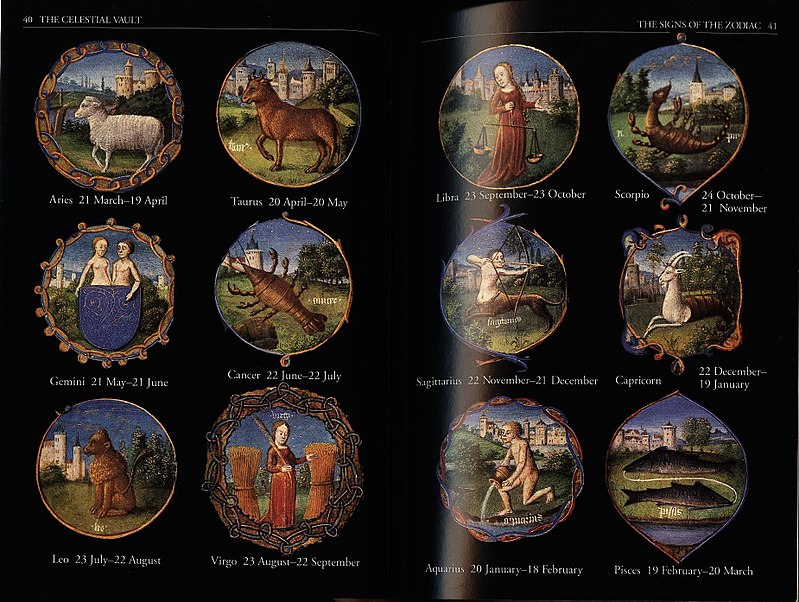
Zodiac Public Domain Book of Hours The Sky Order and Chaos Jean Pierre Verdet

Image: Public Domain from The Book of Hours, Jean Pierre Verdet

The 78 cards of a classic Tarot deck include 22 Major Arcana cards (Greater Secrets) and 56 Minor Arcana Cards (Lesser Secrets.)

The Major Arcana cards shine a light on life-changing situations and events, or draw attention to some crucial aspect of your own personality or behaviour, demanding attention at the time of the reading.

Each sign of the Zodiac is linked with a Tarot card from The Major Arcana. Your sun sign and your Major Arcana card represent key archetypes. But what exactly is an archetype?

Archetypes

The word derives from Ancient Greek and means a very typical example of something, like a model from which other copies are made; a prototype.

Arkhetupon ‘something moulded first as a model’, from arkhe-‘primitive’ + tupos ‘a model’.

The Oxford English Dictionary offers these  definitions

  • A very typical example of a certain person or thing.
  • Later, in Psychoanalysis (in Jungian theory) a primitive mental image inherited from the earliest human ancestors, and supposed to be present in the collective unconscious.
  • A recurrent symbol or motif in literature, art, or mythology.
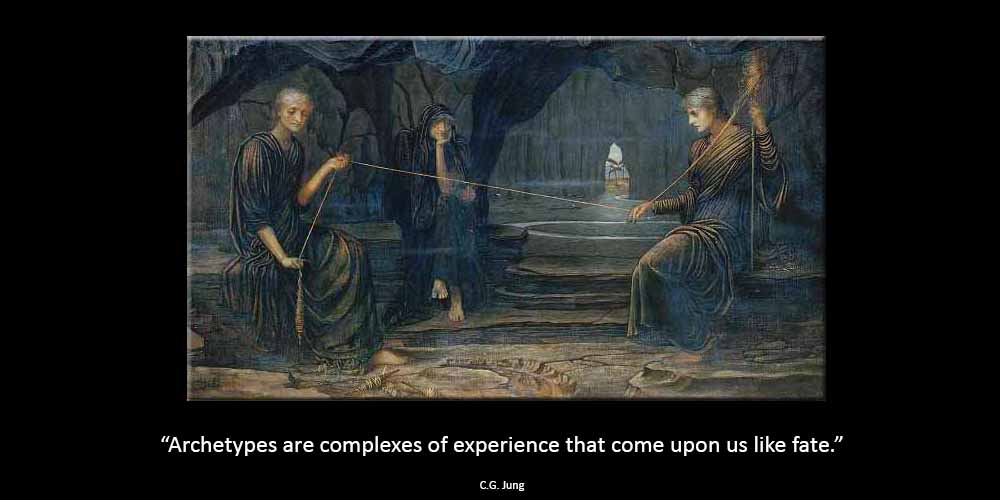
jung-quote-archetypes-complex-fate-jungcurrents

Archetypes are complexes of experience that come upon us like fate, and their effects are felt in our most personal life.

The ‘anima’ no longer crosses our path as a goddess, but, it may be, as an intimately personal misadventure, or perhaps as our best venture.

When, for instance, a highly esteemed professor in his seventies abandons his family and runs off with a young red-headed actress, we know that the gods have claimed another victim.

From Jung: Archetypes and the Collective Unconscious, Image: John Strudwick 1849-1937

The archetype represented by your Major Arcana card does not define you, of course, any more than your Sun sign does. You and I are unique. Every living thing is unique and yet-  it is also classifiable

The archetypes are classifications of behaviours and attributes, and in the Tarot, the Major Arcana chime with the signs of the zodiac.

There are two key archetypes in play in personal astrology; the archetype of your Sun sign, and then there is your ‘outward face’; a key aspect of the public persona, represented by your Rising Sign or Ascendant; the planet rising on the Eastern horizon at the time of your birth. It’s a good idea to read both when reading your horoscope.

If you know your time of birth, you can identify your rising sign via this link

Discover the Tarot’s Major Arcana card for your zodiac sign below.

Astro_signs


Aries (Mar 21-Apr 19)

Astrological archetype: The Ram. The Warrior.

Major Arcana card The Emperor – (energy, organisation, leadership)

Spring bursts forth after winter and so does the ram with the year’s first lambs, and so does The Emperor in you and me. The Emperor decrees we can’t just creep through Life. We need to push sometimes, and push hard or we would never get anywhere. The Emperor is fiery, energetic, driven and determined, good at delegating but controlling – some might even say bossy; A battering ‘ram’. The Emperor may be accident- prone due to general speed and haste. Male or female ‘he’ needs to learn how to take it easy, and slow down, to be more careful and patient, to stay curious and listen to the ideas of others. He’s not the only Emperor round here.

Taurus (Apr 20-May 20)

Astrological archetype: The Bull. The Artist. The Farmer.

Major Arcana card The Hierophant – (faith, study, tradition)

This card is about the power and wisdom of the written words and of tradition. Books, publishers, librarians, churches of all faiths, and universities are indicated by this same card. The High Priest (Hierophant) does things by the book, and has faith and trust in the old ways. He is all about standards. He is a protector, a gardener, a teacher, a mentor, a scholar, but the other message of this card is that change can be good, even necessary, wisdom is knowing when to bend with the wind, and that does not necessarily mean the same as throwing out any baby with the bathwater. 

Gemini (May 21-June 20)

Astrological archetype: The Twins. The Jester. Mercury.

Your Major Arcana card is The Lovers – (choices, love, duality)

This card has another name: ‘The Decision.’ Gemini is quick-witted, but sometimes decisions need more care and time than mercurial Gemini gives them. There is an innate restlessness, Gemini can be quick to walk away, even when sometimes they might do better to stick at things, even if they are bored, or the going gets rough. Gemini is the archetype of the Jester, the one who can take any turn of fate with a laugh and makes sure we remember to enjoy ourselves. This is the wisdom of Gemini. We need to be able to laugh at ourselves in order to keep a healthy sense of perspective. Laughter is powerful medicine. What we can’t joke about, we can’t deal with..

Cancer (Jun 21-Jul 22)

Astrological archetype: The Crab. The Mother.

Major Arcana card The Chariot – (progress, effort, co-operation).

The Crab is famously gentle, home-loving, intuitive, private; even secretive, but just look again at this guy/girl. This is Cancer’s Tarot face. The Chariot carries the victorious on parade. The Chariot takes us places. This is a card of triumph through discipline and sustained effort; the harnessing of resources, the charioteer and the horses working as one. Choose your teams well, put in a sustained effort, you and they can do great things together.  The Crab may be the archetypal sign of motherhood where the Ram is fatherhood, but these are qualities, not identities, while a carer is not a servant, and the gentleness of Cancer does not make it a doormat. No way. Push too far they will withdraw.

Leo (Jul 23-Aug 22)

Dominant element: Fire.

Astrological archetype: The Lion. The King.

Major Arcana card Strength – (courage, willpower, fortitude)

Life demands courage to meet it head on. To learn new things you have to take chances and risk failure. But the fire of Leo demands control. The lady patiently restrains the lion. It shall not devour her. She shall not try to harm it. The lion represents the spirit of the Leo subject. There is natural courage and charisma, but the Lady represents strength with gentleness and restraint – moral courage. The lion does not want to be ruled, but nor does she wish to be devoured, power must be used wisely and tyranny is always to be resisted.

Virgo (Aug 23-Sep 22)

Dominant element: Earth

Astrological archetype: The Virgin. The Craftsman.

Major Arcana card The Hermit – (Self-sufficiency, connection to nature, analysis)

The Hermit often likes to walk alone, and this is usually by choice. Time alone, especially in quiet, wild, green places, is especially good for the Hermit, male or female, married, or single. People turn to the Hermit for wise advice. The Hermit knows how to listen and sees far more than he or she says. The Hermit shines a quiet light along his path and others may safely follow in times of need. Animals can trust to the hermit’s compassion. The Hermit is often a talented artist or crafts-person, slow, methodical and a perfectionist, so much so, that she never feelsthe work is good enough to sell, even when it is. Virgo’s challenge is to expedite..

Libra (Sep 23-Oct 22)

Dominant element: Air.

Astrological archetype: The Scales. The Judge.

Major Arcana card Justice – (order, reason, restitution).

Libra combines analytical ability with intuition, and a natural grace and charm, with a talent for diplomacy. Justice is capable of severity, however, and can just now and again be overly keen to apply the letter of the law, forgetting the spirit. See the Sword in the hand of Justice. But the scales don’t stay still. They are rarely in perfect balance. They see-saw, like Libra’s moods and occasional indecision. Libra is changeable. It may be the only sign of the Zodiac represented by an inanimate object, and a Libra subject may be a born judge, but still, they are only human. But without Justice there would be chaos and misery, mature loose and running red in tooth and claw. There could be no society and no civilisation.

Scorpio (Oct 23-Nov 21)

Dominant element: Water.

Astrological archetype: The Scorpion. The Actor.

Major Arcana card Death – (endings, liberation, transformation)

There is no life without death. There can be nothing new without something else changing or ending. But just like the song, the seasons don’t fear the reaper. Death is not the enemy of Life. Scorpio understands this great mystery. Intuitive, subtle, often somewhat secretive, charismatic, intense, Scorpio is devoted to their loved ones, while with others they may be a true friend and powerful ally – or a vengeful enemy. Death has a long memory. He has seen it all before. Get in the way, and he may mow you down with that scythe. Sometimes it is better to walk away. Sometimes it is wiser to call it quits and call time on something that no longer serves you well.

Sagittarius (Nov 22-Dec 21)

Dominant element: Fire.

Astrological archetype: The Archer. The Explorer.

Your Tarot archetype is Temperance – (moderation; timing, healing).

Temperance was regarded as an angel- a force for virtue at the time the Tarot was first in use. Temperance is about moderation, and self- control, and the avoidance of extremes. But Temperance has other meanings…alchemy, the fusing together of two elements, materials or qualities to make a new thing stronger than either individual element; Intellect and feeling, ability and ambition, one person and another, one people and another. This is a force for diplomacy, reconciliation of differences and also for physical healing after illness.

Capricorn (Dec 22-Jan 19)

Dominant element: Earth.

Astrological archetype: The Goat. The Builder.

Major Arcana card The Devil – (also Pan. Wildness, entrapment, liberation)

Powerful opposites meet in the Goat. Capricorn, thought to be named originally for the ibex which mated at this same time of year,  is the builder and the banker of the zodiac; hard working and solid yet agile, with an often understated glamour and a keen, if dry sense of humour. The Devil comes in many guises; often powerfully attractive. Or think of animal magnetism. That’s Pan for you. The Devil warns us to beware compulsion reminding us that we can get trapped by our own behaviour as much as by circumstance but we can choose to liberate ourselves by exercising the willpower sufficient to change the behaviour or the circumstance, bringing order out of chaos.

Aquarius (Jan 20-Feb 18)

Dominant element: Air.  (Special note: Aquarius is sometimes mistakenly identified as a water sign because its symbol is the water carrier)

Astrological archetype: The Water Carrier. The Teacher.

Major Arcana card The Star – (hope, inspiration , humanitarianism).

The Star of hope has much in common with the imagery of the Aquarian Water Carrier. It shines its brightest, far-off light when everything else looks dark. The figure in the card has one foot in the water, symbolising her powers of intuition, and the other foot still on land, denotes her stability. Her knee is a bridge between elements. The stars symbolise the card’s over-arching message of guidance, hope and inspiration. Aquarius loves people as a general concept, but she is not one to blend in with the crowd, indicated by the biggest star above her head, which is bigger and set apart from the others.

Pisces (Feb 19-Mar 20)

Dominant element: Water.

Astrological archetype: The Fishes. The Seeker/Seer

Major Arcana card The Moon– (imagination, instinct, intuition)

Like Pisces, The Moon card is associated with the subconscious, and suggests that things are not always as they first appear. The Moon card also represents our secretive side or “shadow self”. The barking dog and the wolf in this card represent Pisces’ wild side sitting alongside its more domestic self. Pisces may seem gentle but the pull of the wild is strong, and so is the pull of the ocean’s tides. These people are deep. The crayfish crawling from the water represents “coming into consciousness” and the possession of psychic abilities, true of all the zodiac signs in their different ways, but especially archetypal of Pisces.

The archetypes are represented real things, real people. Who do we have here? The Magician? The Hermit? Herne? Cernunnos?

Photo by cottonbro on Pexels.com

Watch for the more everyday archetypes manifesting in real time all around you.

Until next time 🙂

.

Tarot Timing.

A lady was wondering how best to negotiate, or end a domestic difficulty. What did the Tarot show about what seemed likely to happen and when? What was the advice?

I drew The Hermit and The Queen of Cups.

The versions of The Hermit shown here are drawn from The Gilded Tarot, by kind permission of Ciro Marchetti, and The Golden Tarot by Kat Black, by kind permission of US Games Systems.


The Hermit shines a calm light. He is a path finder, representing calm and maturity, and he also represents a need for reflection, time out, a bit of peace and quiet.

This card also represents the zodiac sign of Virgo, and a date range of 23 August – 22 September.

I suggested therefore that late August looked like crunch time for the relationship, while the Queen of Cups – (this card is also from The Golden Tarot)  suggests a happily married woman or a woman becoming a mother, and this, sitting in the future or outcome position, seemed to bode favourably for the prospects of a workable resolution, and restoration of harmony in the household.

Queen Cups Golden

I was then informed that a baby was due in late August.

So there we have it, the Hermit was literally, pronouncing upon dates for the Queen of Cups new arrival.

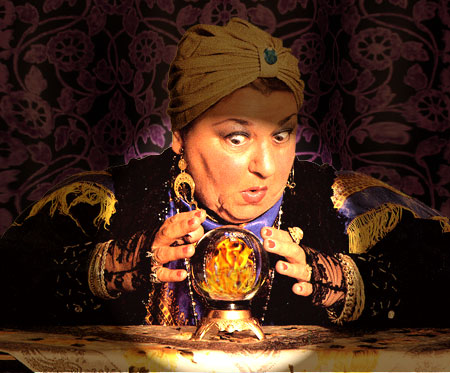
If I was a proper psychic, of course, I’d just have looked in my crystal ball and said so straight out. But there it is. I ain’t, I’ve got to use my Tarot, and then I need to think about it, and as for the headgear, forgeddit.

fortune teller

Until next time 🙂

Tarot Said ‘Ow’!

I’ve been reading Tarot some years but it’s an ongoing study and a daily practice. There is always something more to learn, new techniques for using the cards to get at useful information.

What I often do is pull a few cards at the end of the day, asking for the back-story. This offers the benefit of hindsight as well as the possibility of instant validation.

Last night I asked for the Tarot’s- eye story about my day yesterday and the first card out was The Tower.

16_TheTower

Image from The Gilded Tarot by courtesy of Ciro Marchetti

Keywords: Sudden change, Upheaval, Revelation, Downfall, Shock

Eh? I said to myself. Today began with a Tower moment?

Did it?

No way does a Tower moment escape your attention. It basically says ‘kaboom’!

It may be an emotional shock. It may be physical. It may be getting fired from your job, or learning you have been lied to and now what are you going to do about it? It may be a plane crash, a storm, an earthquake, a tsunami, a detonated bomb.

The Tarot is somewhat under threat of ‘spiritual’ sanitisation these days. There’s a movement afoot to say Tarot’s Death card does not mean Death, the Tower card does not mean physical disaster. And the Eight of Swords no doubt, only means chagrin or an attitude of helplessness, and never means plumbing or toilets (which actually, it may do in my experience)

We are all so engaged in spiritual evolution, these rock bottom, immutable things will soon all be beneath our notice, except that we happen to inhabit the material as well as energetic plane, so had better engage with it while we are here.

But the oracular voice is older than anyone alive, and while it is a living oracle and therefore subject to vagaries of fashion in thinking, it must never lose sight of its roots and neglect the material plane. Life means struggle, Life demands Strength.

The Tower card is ruled by Mars, god of war.It’s day is Tuesday, named for Tyr, Norse god of war. If you ask when something will happen and then I draw the Tower card, it will likely happen on a Tuesday.

tyr

While Tarot is at times exceedingly subtle and The Death card may well not mean an actual physical death and the Tower card may not spell physical disaster, they well MIGHT. Real life readings for real life people demands respect, which means recognising terrible things really do happen, physically, and the reader needs to be prepared to acknowledge that and not seek to sugar coat Tarot with spiritual sounding avoidance, immediately jumping to say things along the lines of ‘the Death card. Well, this card means transformation.’

Oh does it? Does it now? Not that I am necessarily disagreeing, but try for a few specifics, and by the way, I do not wanna be transformed just yet, thank you. I’ve got things to do first, if the universe will allow it, and anyway I am transforming all the time, and so are you , like it or not, and hopefully not just with lines and wrinkles but with each new thing we learn .

And now that I thought about it, staring at my Tower card, I was being plum stupid. My day did indeed start with a teeny Tower moment. Teeny for me, but maybe not for some other living creature.

I can see the bird feeder from where I lie in bed in our first floor apartment. It hangs on the balcony door and it’s my delight to watch the songbirds arriving from about half seven. The robin arrives first and then the coal tit, and they each return a few times in quick succession, stocking up for the day.

robin-01

This morning, a dark shape flared suddenly in the window followed by a smack and a thump as a bird hit the glass and the bird-feeder fell of its hook and dropped out of sight.

Il Matrimonio was out, pumping iron at the gym like a macho man, unless he was getting into quarrels with pensioners- again – and this is never too unlikely -the man is incorrigibly irritable and likely constitutionally deficient in Nat Phos -sodium phosphate.

I could not get up to see if there was an injured bird – pesky damn wheelchair business – and in fact when he got in ten minutes later, there was no bird. And no sign of loose feathers or blood.Even so a sparrowhawk could have come and snatched a bird of the feeder, hitting the pane in the process. Or else some little bird misjudged its flight. Either way, some bird got  a shock, and so did I.

Was it the robin? I now draw The High Priestess, so probably it was.

Was it OK? Knight of Cups Reversed. Not really, poor thing. It had a fine fright.

But there was no Death card and I saw the robin again this afternoon, so hopefully, all’s well that ends well.

Till next time 🙂
 

IF BACON GREW ON TREES

The Nutrient Report and other essays on food, eating, diet, health and the state of our planet

Rex Factor

Reviewing all the Kings and Queens of England & Scotland

The World's Passenger Ships

Ship History site, a compendium of passenger ships 1858- today's new builds

Capricorn Astrology Research

Research into Astrology

WAR STORIES

WWII & its Aftermath - Jennie Mack Gray

Quintus Curtius

Fortress Of The Mind

Jessica Davidson

Astrologer ~ Mystic ~ Writer

Mythology Matters

Matters of Myth, and Why Myth Matters

The Sanctuary of Vindos

Brythonic Polytheism and Shamanism