First let’s take a minute to consider what is meant by this word, ‘psychic.’ It comes from the Greek word psychikos (‘of the mind’ or ‘mental’) and the Greek word ‘psyche’ means ‘soul’ or ‘breath.’
That’s pretty vague, but we’ll broadly understand what we’re talking about here. It is the (sometimes spooky) experience of feeling you know something, without knowing how you know it or why you feel it, and then getting the proof, and finding out you were right, though you still don’t know how.
The Moon from the Gilded Royale Tarot, Ciro Marchetti
Everyone is psychic to a degree. It’s fascinating, but it’s natural. It might be uncanny, and often it is. It really, really is, but that doesn’t mean it’s supernatural. It is you. It is nothing to do with the occult. It is nothing directly to do with religion or witchcraft, though these activities are connected to or derive from that aspect of the human mind/psyche.
It’s about your innate animal intelligence, your instinct and intuition, and is simply a more acute manifestation of these natural functions of the human mind -your sensory capabilities. Intuition is acutely heightened instinct. It’s built in to your software, maybe even your hardware and is a key element in your survival tool-kit.
Jung was interested in the archetypes of Tarot.
So you took an instant dislike to someone but you don’t know why? Don’t simply dismiss that feeling; the reasons may become apparent later. Meanwhile, give it the benefit of the doubt but tread with care.
So you feel an overpowering reluctance to do something, but you don’t quite know why? Trust yourself. You have your reasons.
Feelings can be wrong, of course, in which case we can always reassess the situation or our reactions, and change our minds. But far more often they are right, and they work faster than conscious reasoning. Far, far faster, and it is this very speed that can save our life. That if something feels bad, it probably is.
Avoid.
But if we’re all psychic, why do people pay to go and consult someone else, or go to a professional psychic practitioner for readings?
They are looking for a service, and that depends on skill and a specific kind of experience. Professional psychics can not rely solely on their intuitive ability in order to deliver a service on demand. Psychic experiences happen when they happen, but the psychic reader needs to respond on demand, and to do this they have trained their abilities, developing specific skills, possibly involving many years of individual study, time and practice so that they can deliver insights that are relevant and that mean something to a total stranger, right here, right now.
But everyone had to start somewhere, and that doesn’t mean we can’t try it for ourselves.
Sometimes we might find ourselves undecided whether to go route A or route B. Using the playing cards might well give us a response that simply reflects what we already knew, or guessed, or suspected, but that is largely the point of doing such readings, and validation can itself be helpful in letting us know we read that situation correctly, whether or not it’s what we were hoping for.
Points to consider
Professional psychic readers are not permitted by law to take payment, reading for people aged under-18.
Or at least, it is not allowed in the UK without the authorization of a parent or guardian. There are good reasons for this, to do with maturity and vulnerability, and a word of caution applies here too, in reading for yourself if you are under 18.
There is a risk is you will not get it rightand misunderstand the message. Beware wishful thinking or fearful thinking. Calm your mind. Try and place yourself in a neutral frame of mind.
You may for instance draw the Death card and get frightened, interpreting this as a prediction of imminent death. What is far more likely is that the Death card is reflecting back at you something that has been on your mind lately. Perhaps there has been a death in your circle or perhaps you have been thinking of leaving a job or ending a relationship or other connection, or leaving one area to move away. Professional readers do not always get it right either. Until, and unless you are getting correct answers more than 55% of the time, your results are statistically no better than lucky guesses. Getting it wrong doesn’t mean you don’t have psychic ability, but this ability builds with practise and confidence.
Stay humble or you will be riding for a fall. This is not about power. No-one knows it all, and no one likes a know all. No-one has a 100% accuracy rate.
Is is unwise to make decisions based solely on the turn of a card.
The cards are to be regarded as an opportunity to pause, reflect and maybe think again. Start with easy but specific questions that you can quickly and easily validate, e.g. ‘will it be sunny here outside my window at 10.00 tomorrow morning?’
You might not understand or like the answer.
This is the very real risk in consulting with oracles, even your own – or especially your own. It needs discipline. Words matter. Be clear in your mind what it is you are really asking. Avoid repeating the same questions over and over in hope of getting the answer you want. You may get that answer in the end, but this is not conducive to accuracy, and if it becomes a compulsion, and you find you are doing it A LOT, or if you are experiencing, or have lately experienced depression or anxiety, you will be well advised to leave such activities alone for the time being. It could make matters worse.
Now let’s look at how to get an advisory yes or no answer using just one playing card. That’s all it is, an advisory answer; no court of law could treat this as admissible evidence.
Ordinary playing cards have been used in this way since at least the 1600’s and probably longer. A deck of playing cards is readily affordable and easy to obtain in many shops and online if you do not already have a deck.
The One- Card Spread is the simplest spread of all, but can do the job perfectly well, delivering an accurate yes or no answer.
First, for simplification and for the avoidance of confusion, remove the Joker. The Joker is a complex card. It correlates to the Fool in the Tarot and may mean a yes, no or maybe depending on a number of factors, so is not ideal for our purposes today.
You need somewhere quiet, no distractions. Some people like to use rituals, smudging, candles etc. I don’t use those myself in doing card readings, but this is purely a matter of personal preference.
Doing the reading
First you need to decide the code or system you will use for your one card spread. How are you going to interpret the answer?
Classical cartomancy uses this system:
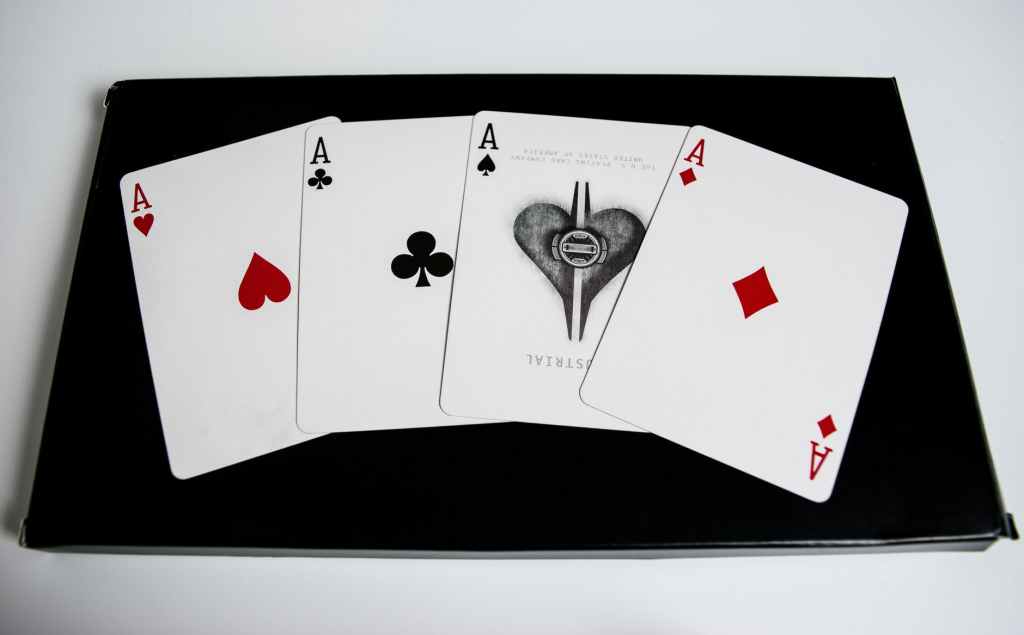
Any red suit card, Hearts or Diamonds, will mean yes, irrespective of its meaning
Any black suit card, Clubs or Spades will mean no, irrespective of its meaning
There are no rules except that you decide your system and then stick with it.
Consistency and repetition is crucially important. This is what professional card readers do. They ‘self-programme’ by telling themselves that this card means X and this other card means Y until with repetition and practise – it actually does.
They do it till they make it so.
Consider the question. It needs to be clear and unambiguous, asking for an answer that will serve your highest good, harming none.
You remain in charge, using the cards for advice only. You could, for example, ask questions along the lines of, ‘Is it a good idea/plan/will it work out well at this time (meaning is it in my best interests) to go here, go there, speak to, do this, do that…?” etc.
Now shuffle the deck, keeping the cards blind, asking your question aloud or just silently to yourself.
Draw a card whenever you feel ready. There are no rights and wrongs here, but it is this act of stopping and choosing a card completely at random that is actually the psychic activity involved in the reading.
You have here a deck of 52 cards but you are drawing just one, and expecting it to be meaningful and relevant, more so than all the other cards that you didn’t draw, that have remained in the deck. The cards that are missing may be just as significant in answering your question, as the ones that appear.
What have we got here?
A red card or a black card?
No further action is required or even desirable at this point. Simply log the card. Make a note and allow time to discover if the answer is correct.
If you would like to go beyond the probable yes or no answer, and look at the reasons why you got that answer, you could look up the actual card meaning for additional feedback, to treat that as an extra comment or piece of advice, referring to this very basic key below.
In general, the higher the number of your ‘yes’ or ‘no card, the stronger the answer, except for Aces, which are the lowest number, 1, but are the strongest cards. So the strongest yes answers would be the Ace of Diamonds or Hearts, or the 10 of Diamonds or hearts. The strongest no answers would be the Ace of Spades or Clubs, or the 10 of Spades or Clubs.
Ace – new beginnings; the pure energy of their suit.
Two – partnerships, attraction, balance.
Three – co-operation, connection, growth.
Four – security, stability, foundations, inaction.
Five – imbalance, challenges, change, adjustment.
Six – sweet victory, harmony, attainment and peace.
Seven – spiritual discernment, magic, wisdom, turning point, options.
Eight – movement (or lack of it), organization, prioritizing.
Nine – Growth, understanding, integration, realization.
Ten – Culmination, completion, transition, endings, beginnings.
The Court cards (portrait cards)
Knaves/Jacks represent news or new situations, or young people below the ages of around 25.
Knave of Hearts – romantic, emotional, sweet-natured.
Knave of Diamonds – curious, grounded, sensible.
Knaveof Spades – witty, clever, focused.
Knave of Clubs – active, adventurous, risk-taker.
Queens are adults, actual people; usually female but not necessarily.
Queen of Hearts – kind, empathic, nurturing.
Queen of Diamonds – practical, down-to-earth, good in a crisis.
Queen of Spades – truth-seeker, honest, straight-speaking.
Queen of Clubs – ambitious, strong communicator, passionate.
Kings are adults, actual people; usually male but not necessarily.
King of Hearts – approachable but reserved, wise, calm.
King of Diamonds – wealthy, hard working, shrewd, lover of luxury.
King of Spades – analytical, calculating, dispassionate.
King of Clubs – leader, inspirational, temperamental, sees the big picture.
30 April is known as May Eve, marking May Day and the beginning of the ancient Celt festival of Beltane.
Beltane begins at dusk on 30 April and is matched by its European counterpart, Walpurgis Nacht, or St Walpurga’s Night in Germanic tradition.
St Walpurga or Walburge was born in Crediton in Devon, but travelled widely as a missionary in the service of her uncle St Boniface, and eventually became abbess of a monastery in Heidenheim in modern Bavaria where she died 25 February 777 or 779. She was canonized 1 May 870.
Walpurga is reputed to protect sailors in storms at sea, reputedly thanks to a miracle when she was sailing to Germany and a terrible storm broke out, and she knelt on deck and prayed and the storm cleared as if by magic…
And yet, interestingly, Walpurga is also a protector against witchcraft. Curious, isn’t it. That someone’s holy prayer is someone else’s satanic spell or witch’s invocation.
Origins
Two great festivals in northern Europe long pre-dating Christianity were Samhain (Halloween) marking the start of winter, and Beltane (April 30/May 1) marking the start of summer.
Beltane ‘the fires of Bel’ began as an ancient fire festival celebrated since at least the Dark Ages if not long before. The celebrations began at dusk on April 30th when great bonfires were lit to welcome the height of spring now associated with the zodiac sign of Taurus the Bull, representing the fertility of spring in full bloom.”
Traditionally,” writes Glennie Kindred (in Sacred Celebrations), “all fires in the community were put out and a special fire was kindled for Beltane. This was the ‘balefire’ or the Teineigen, the ‘need fire.’
Bel or Belenus (Celtic: possibly, Bright One) was a deity associated with pastures, meadows and animal husbandry and other agriculture. He was a fire god rather than a sun god as such, though the sun was used as a common motif in religious imagery.
The cattle were walked between two bonfires in a symbolical purification ritual, to be protected by the smoke from Bel’s fire before being put out to the open pastures for the summer. Bonfires were lit on sacred hills too, and the smoke was considered a magical blessing on the fields, animals, and community, and was also supposed to maintain a fragile balance, keeping up a smokescreen, literally, between the human and faery realms.
The month of May got its name from Maia, also called Flora, the Greek goddess of spring and new abundance. Maia was the oldest of the seven sisters known as the Pleiades, and she was the mother of Hermes (Mercury.) The last zodiac sign of Spring, Gemini, is ruled by airy Mercury, as the air fills with butterflies and pollen.
Flora, or Maia by Botticelli
The name ‘May’ has been used in English since about 1430. Before this time the name of this month was spelled Maius or Mai. The Anglo- Saxons called it Tri-Milchus because all that lush new grass meant cows could now be milked three times a day.
The celebration of May Day has its roots in astronomy, celebrating the halfway point between the spring equinox and the summer solstice. It has been celebrated in the British Isles and through much of Europe as a fertility festival since the Dark Ages, and probably before that, with many stories and superstitions attached.
Superstitions
Like Halloween, May Eve and May Day is a magical time of year, liminal, when the veil between different worlds and realities is thinner than at other times of year.
Beltane or Walpurgisnacht is the mirror image, the spring season’s equivalent of Halloween when witches are said to dance at the Devil’s Sabbath.
This is a time for ghosts, but this is also the time of year when folklore suggests you are most likely to meet a supernatural being from the realm of ‘faery.’
The Fae are an ancient race, and they do not like humans whom they view as destructive, and who is to say they do not have a fair point there. The Fae are afraid of iron. To keep them at bay-
Touch wood no good
Touch iron, this you can rely on…
In this sense the Fae could be said to represent the spirit of humanity before the Iron Age.
They are not the cute creatures of fairy tale. Encounters are dangerous and are best avoided – or you may never be seen again. Do not, whatever you do, go to sleep on a fairy hill at any time, but especially not on May Eve or May Day and especially beware of going to sleep under flowering hawthorn bushes ….
Sex and Scandal
The Christian church made attempts to ban May Day festivities outright because of their overtly pagan nature and “lewd” context as an open celebration of male and female sexuality and fertility – ‘a heathenish vanity generally abused to superstition and wickedness.’
May Day meant drinking and fighting, another reason for the church’s disapproval, but this in itself harks back to the ancient traditions of the sacrifice of ‘The Green Man’ – a mythical figure representing the eternal battle waged between summer and winter, feast and famine. Many pubs in England are still named The Green Man.
In Padstow, Minehead and some other places in the UK, mischievous hobby-horses (‘osses) roamed the streets in search of unsuspecting young ladies to ‘carry away’ for undisclosed purposes.
Morris dancers up to no good riding with hobbyhorses, Richmond embankment,1620
Men who had been disappointed in love would make straw men representing their rivals and stick them on bushes. These depictions were needless to say, often deeply unflattering, and fighting might well follow once they were discovered and identified and the maker was known.
May Day harks back to the ancient traditions of the sacrifice of ‘The Green Man’ – a mythical figure representing the eternal battle waged between summer and winter, feast and famine. Many pubs in England are still named The Green Man.
This splendid depiction is on a boss in Rochester Cathedral, thanks to Wikimedia Commons.
The Puritans banned May Day under Oliver Cromwell but Charles 11 brought it back into custom after the Restoration.
Maypole Dancing goes back at least to the 14th century, but it seems the custom was very old even then, though the dance as we know it today, so pretty and decorative(and tame) -children dancing in village squares, is probably a Victorian invention . The maypole is generally assumed to be a phallic symbol, but the Norse peoples connected it with tree worship, and this connects British and Germanic tradition going back to a shared proto-germanic culture which is part of the common root culture in British life even today.
The Maypole dancing which so upset the Church and the Puritans comes down to us from the rites of spring dedicated to Freya.
The maypole originally represented a living tree, in particular the giant ash tree Yggdrasil, the great “world tree” of Norse myth, linking the nine worlds of the Norse cosmology including Asgard, land of the gods, Midgard, or Earth and Hel, the underworld.
“Ygg” means terrible. It was on this tree that Odin chose to hang nine days and nights, thirsty and fasting in exchange for the knowledge of the runes. The Norns sit beneath it and when every new person is born, carves their names into its bark…and with it, their destiny, although this can change. The Norns will allow us to rewrite it, unlike the destinies woven by the three Fates of Greek mythology.
Walpurgis Night
Also In the Germanic tradition, Walpurgis Night, on April 30th is a moon festival sacred to the goddess Freya.
“Walpurga” is another one of Freya’s names. The re-dedication of the holiday to “St. Walpurga” was a later Christian addition.
Freya (Old Norse, Freyja meaning “Lady”) is one of the pre-eminent goddesses in Norse mythology. She was the goddess of love and beauty in Norse mythology, the goddess of marriage and family and a great prophetess – a seeress. She taught her husband Odin how to read the runes, and like Odin, she had a fiercer aspect as a patron deity of war and death in battle.
Freya wears a cloak of falcon feathers and has a magical gold necklace called Brísingamen. She rides in a chariot pulled by two cats and a sacred boar called Hildisvíni runs alongside, though he is not shown in this picture.
The cats, it has been speculated, were two male kittens found by Thor. They had been abandoned by their mother and he took them to Freya. What kind of cats? I’d have thought Norwegian Forest cats, but legend suggests the kittens were grey-blue and on that basis it’s speculated they were Russian Blues.
Bringing in the May
I washed my face in water
That had neither rained nor run
And then I dried it on a towel
That was never woven or spun
The rhyme suggests we go out barefoot very early on May morning and wash our faces in all that magical dew (or late snow) Your complexion will instantly improve. Let the wind and sunshine dry our faces and we’ll have good luck all year.
Bringing in ‘the may’ means gathering cuttings of flowering trees for magical protection of the home. Bring in branches of forsythia, magnolia, lilac, or other flowering branches. Decorate the doorway to keep away unfriendly fae and other spirits
Make garlands or decorate a basket or a ‘May bush’ with flowers and coloured ribbons. This would often be a hawthorn bush but it doesn’t have to be.
If you need to move a bee hive, May 1 is a traditional day for doing it, hopefully clement for the bees.
Turnips are traditionally planted on May 1. Plant now for lovely mashed turnip later. What are you waiting for?
Fishermen expect to get lucky with catch on May Day.
It’s a powerful day for spell-casting…any spells to do with bringing in health, wealth, and abundance. Light a red or pink candle for love or passion…but be careful what you wish for, and it is unlucky to try and take what is not rightfully available to you.
Traditionally it is unlucky to get married in May. ‘Marry in May, regret it for aye.’ But not to panic if you’ve got the date already booked. The writer of this article was born on May Eve and got married in May – 30 years ago this year- and like all of us, has had mixed luck in life. But so far at least is still married.
This Beltane, Venus has moved into her astrological home turf of Taurus. Good for money, the Stock Exchange. Good for all things green and growing. Good for glamour…an old term for magic. Venus will stay here for almost a month. And Mars moves into its home sign of Aries on 30 April. Pow. Action time. Vim and vigour.
This Walpurgis baby turns 61 on 30 April. Vim and vigour, not feeling it so much, but we shall see…..I may report back.
Have you ever had a Tarot reading with someone else, or pulled cards for yourself, and been surprised, mystified or even spooked because the cards were so relevant it was downright uncanny? How does that happen? After all, there are 78 cards in a Tarot deck. For those few cards you chose entirely at random, the others all had to stay in the deck.
The Basics
Tarot is only one of many systems of divination. Others are far older in origin, including astrology, palmistry, the I-Ching, runes and reading bones/entrails etc as in Rome, where Spurinna, the haruspex predicted the assassination of Julius Caesar. The popularity of card games took off after Mamluk game cards were brought to Western Europe from Turkey, and the earliest known set of tarot cards was created in the 14th century. The Tarot, also known as the Tarocchi or Tarock, began as a game of chance in the courts of northern Italy but did not become seriously associated with fortune telling or other psychic divination until much later, by the mid 18th century.
Physically speaking, a Tarot deck is little more than 78 pieces of illustrated, numbered card-stock.
The meanings in the cards need a reader to make them come alive. Study is required. No faith is required, however. No religion, no need to commune with any ‘spirits’ than the spirit of Mankind. I have read for Christian, Muslim, Hindu, Chinese and Jewish clients, as well as for atheists, agnostics and downright skeptics. No problem at all. The imagery in the Tarot crosses cultural boundaries.
But in communing with some ancient, but ‘higher’ part of ourselves, superego, not id, perhaps we are communing with the Divine, depending on however one wishes to define it. Or else tapping into our ancient animal knowing. That we muted or traded in exchange for the great advancement to language.
I see it as a transcendence or suspension of the everyday self. When I am doing a reading for another person, I need to free myself, try and take myself out of the equation, me and my worry about getting it ‘right’ or ‘wrong’; me and my ego.
I sometimes joke as I shuffle the cards, ‘OK, now my ancient inner animal is going to have a little talk with your ancient inner animal.’
We are going to converse on at (at least) two levels, consciously, and via telepathy, enabled by the imagery of the cards.
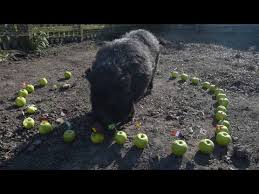
Marcus the psychic pig, accurately predicted the result of the EU Referendum, and The US Elections
Suspension of self and ego notwithstanding, delivery of a professional level of service means I, or any other reader need to do as well or better than the pig.
The reader draws cards blindly and at random, and lays them out in a pattern or spread, using the placement of the cards, the imagery and associated meanings of that card. Why choose this card and not that one? Well, there is the mystery. The central nervous system has a mind of its own, and dictates my movement, in determining the instant at which I stop shuffling. I can think of no better explanation. The choice to stop shuffling is not remotely deliberate.
The reader then interprets the cards, sharing what they sense about a given person, situation or question, past, present and possible future.
This stuff is not omniscience. I don’t KNOW anything. I just say what I see and feel. The thing that amazes, and can even startle the person being read for, and the readers too at times, is the total, immediate and undeniable relevance of cards drawn blindly and at random, and then organised into a pattern or spread for interpretation.
The cards were drawn at random, but the results do not seem random at all.
They fit.
OK, but shaddap! How exactly does this stuff WORK?
Well, OK, OK. But there is no one single, neat and tidy answer.
The reader has ‘uploaded’ a ‘programme’ by learning the meanings and associations of the cards. With much repetition and practice, just as with learning to play an instrument or indeed any kind of rote learning, this programming becomes almost second nature, and the cards may act now, not only as technical support but as a springboard for insights prompted by lateral or associative thinking, backed up by instinct.
This provides them with their starting point, and then their own ideas, empathy or intuition supplies further comment. The cards provide a spring board for the reader’s intuition, but the associations of the cards supply the details enabling greater precision of interpretation. Associative thinking, or lateral thinking helps me a lot in arriving at ‘psychic’ insights or ‘hits.’
I look at the card and there is a kind of a ‘ping’
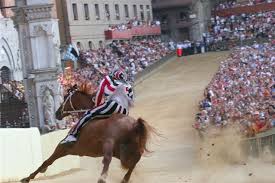
For instance: I drew the Six of Wands, and this card generally means progress, promotion, a trip but on this occasion, something about the artwork made me say something I had never said on previous occasions, drawing the self same card, and I asked the client, ‘are you thinking of going to Siena?’
And she was, or rather, a place just outside Siena, but how did I arrive at that guess? Firstly, I had already established that we were looking at a travel destination. Secondly, something about it suddenly made me think of the Palio.
The Six Wands from The Legacy of The Divine Tarot, Ciro Marchetti
At other times the six of Wands has told me about motorbikes. Once it ‘showed’ me an upcoming sporting event, a big one and I asked the client, was this correct, and learned he was going to the Paralympics as a reserve member of the wheelchair rugby team. Most recently I drew this card, and said to the lady that it looked as though she may be meeting a man who was into speeding vehicles, but his job involved teamwork. She recognized this description and said he was a firefighter. In this instance then, the six of Wands denoted a fire engine.
Same card, three entirely concrete, different yet related interpretations, talking about the real, modern world.
Synchronicity
The psychologist Carl Jung never learned to read the Tarot himself but was fascinated by its ability to reflect what was going on. Jung theorized that Tarot works by means of a phenomenon he called “synchronicity”, or meaningful coincidence.
Jung was also fascinated by what Tarot could tell us about real people we know as pictured through classic story archetypes, e.g.; The King, The High Priestess, the Wise Man (Magician) the Hermit, and for its insights into the conscious mind working in tandem with the unconscious mind.
The ‘coincidences’ of the Tarot’s commentary, relating the enquirer/clients own story back to them are so frequent and particular that the enquirer/client strongly feels that they have been heard by some mysterious invisible presence. The reader feels it too.
The reader has ‘uploaded’ a ‘programme’ by learning the meanings and associations of the cards. With much repetition and practice, just as with learning a language or to to play an instrument or indeed any kind of rote learning, this programming becomes second nature, and the cards may act now, not only as technical support, but as a springboard for insights prompted by lateral or associative thinking, and we may go up into the realms of the psychic stratosphere.
The clues in the cards
Each card has many keywords attached. These are the basic building bricks of the reading.
The Chariot card, for instance, has these meanings attached; a vehicle, a driving test, a garage, a road trip, travel, ambition, project, a partnership, teamwork, discipline, and also the zodiac sign of Cancer and the dates associated with this sign (June 21-July 22)
So, let’s imagine I draw this card. Which meaning is the right one here and now?
Circe by Waterhouse
John William Waterhouse – Sketch of Circe, 1911-1914 (public domain)
How does the reader
1: choose cards which so appropriately describe things you have not yet told the reader?
2: choose which of the many possible card interpretations to go with?
Well, the context of the card is a clue. What are the surrounding cards? The reader studies these with care. Beyond this, the short answer is, the reader doesn’t know. They make a judgement call and go with their first impressions, trusting the unconscious process, then making it conscious again, putting it back into words.
This is presumably working on empathy.
Intuition is one’s inner tuition – one’s instinctive understanding. It’s necessary for survival, and we all possess it to some degree.
Using a learned system such as Tarot helps us give it words.
Sometimes these words are so specific, many call it ‘psychic’ and psychic ability and intuition are often seen as “supernatural.”
But anyone can learn to read Tarot cards, while the degree of proficiency attained depends on a certain natural talent, but also depends to a very great extent on study and practise. Lots of people start learning, but give it up again without ever finding out all they might be able to do with it.
In Summary
Tarot is an art not a science. It is a form of language. You clearly see there’s a process at work. The mechanisms are both apparent and inscrutable. One sees the physical actions of shuffling, drawing and arranging the cards, and then upon card knowledge, feeling and sensing and finally, the right, apposite and meaningful word choice.
Becoming proficient at reading the Tarot, such that one can read to a service level feels like a big responsibility. Well, it is, and it demands a heck of a lot of practice, and the more you work with the Tarot or whatever system of divination you might want to work with, the more confidently you will be able to tap into your intuition, but you do not need to think of yourself as psychic in order to learn to read the Tarot, or to become fluent and proficient.
There is a native understanding beyond your conscious awareness and control. Whether you think that proceeds from your subconscious, the collective unconscious, God, your guides, or your higher self doesn’t matter.
The results are the proof. Sometimes these can be put to the test, observed and validated immediately, as when a reader says something that they could not possibly have known, but the client knows to be correct. But when a reader comments in respect of events many months ahead, it might be turn out to be pie in the sky, or it might prove accurate, but only time will tell.
Is the information potentially usable, actionable or workable here and now?
That is a pragmatic reading. It is my experience that most people welcome an element of pragmatism when they are at a crossroads. The Tarot is no less ‘spiritual’ when it psychically detects a problem with the drains.
Fortune Teller, Albert Anker, 1880
We can, and do know more than we know. All of us, and without necessarily knowing HOW we know it. Perhaps there are biological algorithms at work here, and why should this be surprising?
We don’t even know how old we are as a species. Not really. Until 2015 we were told, based on the available evidence, that humanity had been practicing organised agriculture for 12000 years, but subsequent discoveries by the sea of Galilee suggest humanity has been experimenting with crop eugenics for at least 23000 years.
We don’t know everything there is to know about Time.
Six million years of Mankind. 200 000 years of ‘modern’ us. We’ve got nothing on the scorpions, with their 350 million years. Still, we are more ancient and mysterious, it seems, with every new archaeological discovery.
Dang. I meant to post this in November and forgot. I’ll blame it on Brexit. Why not.
Is there a missing thirteenth sign in the astrological zodiac? NASA, astronomers and mainstream media suggest there is, trotting out this story every few years, to the frustration of Tropical western astrology scholars and practitioners. Sidereal (eastern) astrologers may agree with NASA, but Tropical (western) astrologers absolutely do not.
So what’s all this about?
It hinges on the confusing of zodiac signs with the constellations after which they were named, treated them as mutually interchangeable which they are not.
There are 12 signs in astrology. Modern astronomy records 88 constellations covering the southern and northern hemispheres of Earth’s sky.
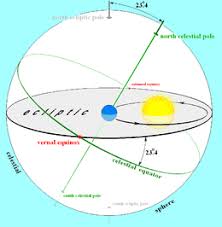
Thirteen of these constellations cross or touch the ecliptic – the trajectory of the Sun’s apparent path across the sky as seen from Earth.
Public Domain: the Plane of the ecliptic
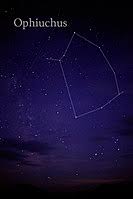
These include the 12 constellations that inspired the names of the 12 zodiac signs plus a thirteenth constellation– Ophiuchus (Oaf-ih-YOU-kus)
Astronomers and NASA have presented this thirteenth constellation, Ophiuchus, as the thirteenth sign of the zodiac, while also pointing out that the zodiac itself…the section of sky directly overhead as viewed from Earth- has changed from when the ancient Babylonian astrologers first viewed it, so that, claims NASA, the generally accepted dates for the zodiac signs as supplied in horoscopes are now a month out of alignment.
This
change in the skies has been the result of an effect called precession. The
gravitational pull of the Moon and the Sun causes the Earth to ‘wobble’ and as the
Earth orbits around the sun; a different constellation appears behind it each
month.
So while
the zodiac signs have remained in a
fixed position, and their dates have remained the same, varying only by a day
or two here and there, the constellations have drifted.
Based on this, astronomers have suggested the new astrological zodiac should more correctly look like this, with these new dates:
•Capricorn:
20 Jan – 16 Feb
•Aquarius: 16 Feb – 11 March
•Pisces: 11 March – 18 April
•Aries: 18 April – 13 May
•Taurus: 13 May – 21 June
•Gemini: 21 June – 20 July
•Cancer: 20 July – 10 Aug
•Leo: 10 Aug – 16 Sept
•Virgo: 16 Sept – 30 Oct
•Libra: 30 Oct – 23 Nov
•Scorpio: 23 – 29 Nov
•Ophiuchus: 29 Nov – 17 Dec
•Sagittarius: 17 Dec – 20 Jan
So you thought you were a Taurus sun sign, says NASA. No, actually, you are an Aries subject. So you thought you were an Aries sun sign? No, you are Pisces. So you thought you were a Sagittarius? No, you are Ophiuchus, and so on.
Whoa. But let’s not get too excited. As astronomers are quick to point out, astronomy is not astrology. And that works both ways.
First let’s take a brief look at the astronomy.
The Astronomy and the Constellation of Ophiuchus
Wiki
Ophiuchus ([Oaf-ih-YOU-kus) is one of the largest constellations but in general the least well known, straddling the celestial equator northwest of the centre of the Milky Way, near the constellations Aquila, Serpens, and Hercules, and opposite Orion, the southern section lying between Scorpius to the west and Sagittarius to the east. Below Ophiuchus, down to the right, look out for a bright reddish star, Antares in Scorpio, for help in confirming that you have found it.
Right now -July- is the best time to see it in the northern hemisphere, mid-winter in the southern hemisphere. Hence this story is in the news again right now.
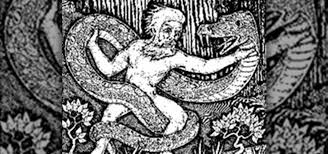
Its name comes from the Greek Ὀφιοῦχος Ophioukhos; “serpent-bearer,” and it is commonly represented as a man grasping a snake. In medieval Islamic astronomy the constellation was known as ‘Al-Ḥawwa,’ “the snake-charmer.” It used to be called Serpentius, when the constellation counted more stars, including the constellation of Serpens, representing the snake itself. Marking the head of Ophiuchus, Alpha Ophiuchi has an older, Arabic name: Rasalhague, the “Head of the Snake Charmer”.
Ophiuchus contains notable features and objects, including Kepler’s Supernova, or Kepler’s Star, named for German astronomer Johannes Kepler.
It was by far the brightest star in the sky for over 3 weeks during 1604 and actually Kepler wasn’t the first to note the supernova, due to cloudy conditions, but he made observations over the course of an entire year and wrote about the “new star in the foot of Ophiuchus”.
Kepler’s Supernova
continued visible for 18 months, and its remnants are still studied today, still
the most recent supernova to be observed with the naked eye.
Mythology
To the
ancient Greeks, the constellation represented the god Apollo struggling
with a huge snake that guarded the Oracle of Delphi.
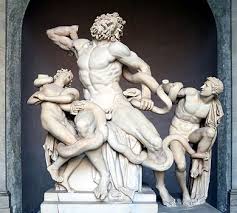
Later myths identified Ophiuchus with Laocoon, the tragic Trojan priest of Poseidon, who warned his fellow Trojans about the Greek’s wooden horse, and together with his sons, was killed by a pair of sea-serpents sent by Poseidon to shut him up, because clearly, Poseidon was on the side of the Greeks, or else under orders from Zeus, or else Laocoon had already annoyed him in some other way, and you know, nothing less than death by giant sea-snake would do.
Public Domain
Pluto (Hades) complained to Jupiter (Zeus) that Asclepius was interfering with death, an act of hubris which upset the natural order, and meant the end of the circle of life, with no room for new life.
Immortality would be a terrible evil. Life itself would die, stagnated, and Jupiter (Zeus) duly put a stop to it by killing Asclepius, hurling a lightning thunderbolt straight at his head, giving him an instant perm.
Apollo was, rather understandably, we may agree, furiously upset, “you zapped my son you b*stard!” Jupiter tried to comfort him by placing Asclepius in the heavens to honour his good works, and the rod of Asclepius remains the symbol of western medicine to this day.
The rod of Asclepius is not be confused with the Cadeuceus, a symbol of medicine, but also of trade. The cadeuceus is assciated with Mercury, and has not one but two snakes twined round the staff, and it has wings.
Public Domain
So, is Ophiuchus the thirteenth zodiac sign? Or does your zodiac sign stay the same?
Image: Public Domain: The Snake-Wrangler in Urania’s Mirror, 1825. Above the tail of the serpent is a now ‘obsolete’ constellation, Taurus Poniatovii
If you are born between 29th November and 17th December, NASA, other astronomers and Sidereal astrologers may argue that your zodiac sun sign is technically Ophiuchus.
Key personality traits:
Humanitarian* Poetic* Hungry for knowledge* Intuitive* Psychic*Intense *Likes bright colours *High achievers *Prone to harbouring enemies without realizing *Lucky (so long as the enemies don’t succeed, obviously)
These are, not surprisingly, a mix of classic Scorpio and Sagittarius attributes in this profile.
But- there is a But here. And it is a blooming big BUT.
What astronomy is failing to recognize is the logic of the system which is the very basis of western (Tropical) astrology, and which makes a key distinction between the positions at any given time of the constellations themselves, and the zodiac signs named after them.
The signs of the zodiac as we know them today are based on Ptolemy’s twelve-fold division of the ecliptic, designed so that each sign spans 30° of celestial longitude, or roughly the distance the Sun travels in a month. 12 was a cleaner, tidier number to work with than was 13.
Ptolemy aligned these divisions with the seasons so that the March
equinox always falls on the boundary between Pisces and Aries, whereas Sidereal (Vedic)
astrology is based on the constellations themselves, as was western astrology
way back at the time of the Babylonians, whose data Ptolemy worked with.
Tropical western astrology, with its 12 associated zodiac signs is a static,
modelled system based NOT on the constellations themselves, but on the wheel of
the seasons which also accord the signs of the zodiac their personalities, but the idea of the ‘missing’
thirteenth sign is nothing new.
“It was developed by Hipparchus in 130 BC,” says astrologer, Susan Miller, “but you don’t get your characteristics from the constellations. You get them from the planets, from the sun and moon. We measure everything by the degree to which the earth is rotated around the sun. So if you’re born at the beginning of the zodiac, which corresponds to the spring equinox and typically falls on March 20, you’re at the 0º point—or the point at which the sun is crossing directly over the earth’s Equator. If we didn’t have names like Virgo or Gemini we’d have to walk around saying, `Hi, I’m a 136º,’ and I’d say, `Oh, really? Well I’m a 352º and so on.”
In Summary
NASA’s supposed debunking may be logical in strictly astronomical terms. But that’s astronomy. It has nothing to do with western Tropical astrology as practiced today, and would only matter if the timing of the signs relied upon being tied to the actual positions of the constellations.
But they do not, and your zodiac sign, also known as your sun sign still stands, both as it is and where it is, based on the principle and according to the system on which it was first described.
“Tonight is the first full moon of the new year, nicknamed the Wolf Moon. As winter bit down, hungry wolves came down to the villages in search of food.”
January and February is wolf mating season, and their howls haunted the nights more than usual, both in Europe and in North America. This nickname was shared by Europeans and Native Americans alike, though this full moon has other nicknames too, including the Snow Moon and Ice Moon.
British Wolf Hunt Public Domain
Also Tweeted
“Tonight’s lunar eclipse full moon in Cancer rises at 15:50 GMT (UK) or 2:21 ET and sets at 07.53 GMT (UK) Last night’s almost-full moon was spectacular. Excited cat playing & pouncing on things. This ‘watery’ lunar event typically signifies big changes at home. A lettinggo.”
That evening I said to Il Matrimonio, “I wonder who we will be hearing about tomorrow, who has ‘let go and left home’?”
Very many people will have ‘let go and left home’ of course. 2 people go out of this world every second and 4 come in, or if we want to be statistically exact, 1.8 go out, and 4.20 come in.
“The unborn are banging on the gates of the dock. What’s the limit on the shipping lanes?”- KT Kearns
But who would we be hearing about?
Which crab would quit his rock-pool?
Who would the wolf moon carry away in tonight’s meteor shower? (The Quadrantids)
It was the Sultan of Oman, Qaboos bin Said Al- Said, 79, a ruler for 50 years, ally of the UK and US and the longest ruling monarch in the Arab world.
Publicly at least, apart from three years of marriage which ended in divorce, after which his wife remarried, he lived to all intents and purposes as a hermit (crab) But his personal life has remained entirely private, protected by his shell of court and state.
Qaboos bin Said Al -Said
Excerpts from an Obituary in the Middle East Eye: (Link provided below)
“The sultan took the throne of an extremely underdeveloped country with a history of civil conflict and oversaw its transformation into a politically stable middle-income state during his half-century reign. Under a model of modernising absolute monarchy, he largely managed to steer Oman away from the extremes of consumerism of neighbouring Dubai and the religious conservatism of Saudi Arabia.
The concentration of political power and wealth in the sultan’s hands, combined with the absence of a clear route to succession, had led to fears that there could be a leadership crisis following his death.
The appointment of Haitham bin Tariq, Oman’s culture minister and the 65-year-old cousin of the late sultan, on Saturday appeared to put to rest lingering uncertainty over the country’s succession process.
Under Qaboos, political parties were banned and laws of lese-majesty created an all-pervasive system of surveillance and repression that ensured no organised opposition could emerge.
Still, there is no doubting the genuine affection in which the sultan was held by many Omanis and expatriates, seen as a visionary leader who had secured the welfare of Omanis and expatriates alike by leading the nation through its modernisation, and leaving a legacy that his successor will be hard put to equal.
Oman’s Sultan Qaboos is pictured at his palace in Muscat on 14 January 2019 (AFP)
The Sultan inherited a conservative, highly religious country riven by armed insurrection and tribal divisions, Valeri wrote, and over several decades, reduced the influence of the tribes, while incorporating their leaders in the political process.
Qaboos also championed the advance of women, gradually opening the way for many to enter education and the labour market in increasing numbers, despite Oman being a conservative society that traditionally segregated women in domestic roles.
Qaboos was also a big supporter of the arts with his government sponsoring the country’s first societies of artists and traditional music. As a lover of classical music, he played the organ and the lute, composed music and founded the Gulf’s first symphony orchestra in 1985, its players recruited from the towns and villages of Oman.
Qaboos was careful to maintain diplomatic ties even with those states, such as Iran and Iraq, which were in conflict with his western allies. As he explained to an Egyptian newspaper in 1985: “There is ultimately no alternative to peaceful coexistence between Arabs and Persians, nor to a minimum of agreement in the region.”
One of the world’s longest-serving heads of state, Qaboos began tentative moves toward a constitutional monarchy in the late 1990s and early 2000s, with the introduction of an elected consultative assembly and municipal council elections. However at the time of his death he remained head of state and prime minister, and commander in chief of the armed forces.
Qaboos’s successor will face the growing question of how to quell rising expectations of a new generation of internet-savvy young people no longer satisfied with the repressive paternalism that prevailed under half a century of Qaboos.
Now. Here is a very interesting piece of information, linking the Full Moon In Cancer with the Sultan Qaboos, or at least, I find this interesting. If not downright spooky.
Your Moon sign is an expression of your temperament and style of doing things. The natal chart of the Sultan shows that he was born with his Sun in deep and secretive, watery Scorpio and his Moon in the sign of almost equally deep and secretive sign of Cancer the Crab.
That was one enigmatic man of deep waters. That was one tough shell.
Two tough shells.
Now consider this image of the Moon card from The Gilded Tarot Royale, from the illustrator Ciro Marchetti, and the full moon uniting wolf and crab.
Revisiting an old blog. Similar issues afoot again.
Sprog Senior was unsettled by rumours at work. She works as a vet nurse and the vet owner was thinking of selling. Was she already facing redundancy, having been there only a very few months? She asked her boss directly, who answered that his plans were not finalised, and he would be letting everyone know in the next week or so.
Very unsettling. On Sunday Sprog Senior asked , when did the Tarot see her knowing for sure, and would it be welcome news for her, or unwelcome?
I asked ‘will it be Monday?’ and drew The Ace of Cups reversed.
‘It probably won’t be tomorrow. You look as if you are in for one of those harmless, slightly dull days where nothing particular happens.’
I asked, will it be Tuesday, and drew the Death card , signifying endings in general, as…
The Sun card in Tarot foresees sunny weather at its most literal. It’s respite from care, the gift of the moment, childhood and sometimes the imminence of birth. It’s also travel, particularly to hot places. It is the return of the sun after the winter solstice. It is the zenith of the sun in the summer solstice. It is glory.
Reversed it’s the setting sun, delays and lesser joys, the passing away of childhood, nostalgia, beautiful, bittersweet twilight. It may mean getting something less than you hoped for, but what you get is still something to be happy for.
The Star card on the other hand, can and often has indicated a recovery from depression, sickness and despair, a guiding light, someone sees a way ahead, they couldn’t see before.
Klytie was a figure in Ancient Greek mythology who fell in love with the sun god, Apollo. Each day…














 True Tarot Tales