Psychic Pisces, the Zodiac Fishes

 Most of us know our zodiac or sun sign, but what does it look like in the night sky, and what’s the story behind it? This month it’s the turn of Pisces the Heavenly Fishes…

Common associations

Symbol: undefined

Date of Birth: 19 Feb to 20 March

Ruling planet: Neptune (before Neptune’s discovery, Jupiter)

Element: Water

Quality: Mutable (read on to find out more)

Lucky Day: Monday andThursday

Energy: Yin

Key phrase: I believe

Body: Feet, eyes, bladder

Birth Stone:  Aquamarine but also amethyst, ruby, bloodstone and jasper. Aquamarine is the blue variety of beryl. Emerald is a green beryl. The aquamarine is believed to enhance foresight and clairvoyance, and a sense of happiness.

Colour:  Purple, violet, sea-green

Herbs/Flowers: the water lily (associated with Neptune)

Tarot card:  The Moon: ebb and flow, cyclical shifts, intuition, dreams, visionary capabilities, fertility, difficulties with travel, uncertainties, shadow boxing, wild creatures, instinct v civilisation, genius, delusion

Moon card rider waite.jpg
From The Gilded Royale Tarot, Ciro Marchetti

Public Domain:  Rider-Waite

The Astronomy

256px-PiscesCConstellation.jpg

In the sky, Pisces is represented as two fish swimming at right angles to each other, one to the north and one to the west and attached by a cord. The fish are most usually depicted as koi.

Pisces, named for the Latin plural of fish is the 14th largest constellation overall. Pisces is in the first quadrant of the Northern Hemisphere and covers a large V-shaped region. While it is a fairly large constellation, its stars are faint — none are brighter than fourth magnitude — making it challenging to see in the sky with the naked eye.

Even so, its brightest star, Eta Piscium, also known as Alpherg or Kullat Nunu, is a bright giant star (G class) 294 light-years from Earth and has a luminosity 316 times greater that of the sun. Kullat Nunu is its Babylonian name. ‘Nunu’ means ‘fish’ and ‘kullat’ is a bucket.

Pisces second brightest star is Gamma Piscium, a yellow giant about 130 light-years from Earth.

Alpha Piscium is the third brightest star in Pisces, and is made up of a pair of white dwarf stars in close proximity. Its other name is Alrescha (“the cord.”) It lights the spot where it appears that the tails of the two fish are joined or tied together.

The best time to see Pisces in the Northern Hemisphere is between 6-9 November at 9 PM below the Square of Pegasus.

Pisces is notable for containing the point at which the sun crosses the celestial equator into the Northern Hemisphere around March 20 each year.

pisces John Flamsteed 1729.jpg

Image from the Atlas Coelestis, posthumously published by astronomer John Flamsteed, 1729, illustrator John Thornhill.

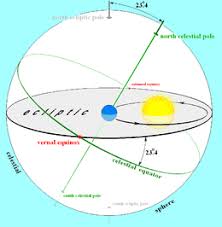
Astronomer and author Ian Ridpath explains: A cord joins the tails of Pisces. The horizontal dashed line passing through the southerly fish is the celestial equator, and the diagonal dashed line is the Sun’s annual path, the ecliptic.

The point where they cross is known as the vernal (spring) equinox.

History and Mythology

The fish of Pisces are attached by a cord of stars, just as life and death, and winter and spring are conjoined and cannot be separated.

Salmon spawn from October- December onwards. The last of the Atlantic salmon spawning happens late February, after which the salmon die. Perhaps there is a connection here.

Pisces is a mutable sign. These are the signs that mark the end of a season; the other mutable signs are Gemini and Sagittarius. Pisces marks the end of winter, leading up to the vernal equinox. Of all the zodiac signs, mutable signs are traditionally the most flexible and adaptable, the ones most at ease with endings and transitions and change.

Pisces is not only the last sign of winter, moving into spring; it is the last sign of the whole zodiac year, the culmination of all the signs that came before it. Symbolically therefore, Pisces has one foot, or fish in the death of the old year, meaning the last of the winter, pre-spring equinox, and one foot or fish in the quickening of spring, post-spring equinox.

Winter often brings mourning, as it carries away the frail and the old.

Psychic Pisces straddles the season of that winter’s grief and the new green shoots of spring.

The sign of Pisces is Babylonian in origin. Enki, the Sumerian god of wisdom, and the alleged true father of mankind, is associated with the planet Neptune, which astrologically rules the sign of Pisces.

To the ancient Greeks, the fish themselves were the goddess Aphrodite and her son, Eros. They were walking by the Euphrates one day when a terrible monster, Typhon, suddenly rose up out of the water to destroy them.

The gods of Olympus were no match for this particular very ancient monster, a son of Gaia, or Earth herself. He was as tall as the heavens and his eyes shot flames. Instead of fingers, he had 100 dragon’s heads sprouting from his hands.

None of the Olympians had the power to destroy the ghastly Typhon, or confront him, not alone, and he tried to kill them every chance he got. For a time, all they could do was flee, often by transforming themselves into animals, and Aphrodite and Eros, in this case, transformed themselves into fish and swam away.

Another version of the story says they dived into the river, and were rescued by two friendly fish that carried them to safety, and were later placed in the sky, their tails intertwined, to commemorate the day when Eros (Love) and Aphrodite (Beauty) were saved from a hideous fate.

Ultimately, Zeus managed to imprison the terrible Typhon beneath Mount Etna…and he is still very much alive down there to this day.

The Astrological Personality

There is no such thing in reality as THE Pisces personality and the same goes for all the zodiac sun signs. Your sun sign is an archetype, a keynote but of course it is not and never could be the whole story.

Pisces combines imagination with determination, charm with depth, and at times there is a certain passivity, even inertia, which may actually serve them very well at times, but may in some cases degenerate into a trap or a kind of darkness involving depression, alcohol or other substance misuse.

These individuals are talented, natural artists or musicians. They are famously loyal once committed, compassionate and sensitive.

Pisces has steel. This doesn’t get mentioned much, hardly ever, if at all, but Pisces has a quiet steel. They may tire, but they endure, and try taking them on, they may not say much, but watch their face harden, and, should you cross the line once too often, again, they may not say much, but you are gone.

Their instincts are kindly, and they have a soft spot for the underdog. Where they demonstrate a lack of proper consideration for others, or undue stubbornness, it is not due to any lack of goodwill, but because they are not paying attention, too focused on their inner preoccupations.

Pisces Public Domain.jpg

Pisces needs variety, and structure must allow them room for a degree of autonomy. Many police officers, arbitrators and judges are born under Pisces, as well as artists and musicians. Administrative work, although Pisces can do it, is really not their sort of thing by and large.

Pisces can make excellent and approachable leaders of small teams, loyal to their staff. They will take on injustice, take on those superior in status, but Pisces, unlike, say Aquarius, confines their remit to action on an individual basis. Pisces are not temperamentally disposed to mount group actions, campaigns or crusades unless perhaps, they are early Pisces, born on the Aquarius cusp, but the later subjects of this sign, born close to the Aries cusp, are very much the ‘doers’ of Pisces.

Pisces is brave but their physical energy must be guarded. It can be erratic, and once depleted, is not always easily restored. If they are prone to headaches at the back of the head, there may be related bladder infections or other hidden issues. Pisces needs longer to recuperate from illnesses than some other signs. It needs plenty of rest, music and relaxation time near to rivers, ponds and sea.

Weaknesses – Depending on their other planetary placements, Pisces may be prone to falling prey to either wishful thinking, or gloom or unhealthy lifestyle habits, especially when struggling to recover and regroup from setbacks. Lacking a clear sense of purpose or direction, Pisces can drift loose from their cord, becoming detached and living too much in their own imaginary world.

Until next time 🙂
Ophiuchus: The Thirteenth Sign of the Zodiac?

Dang. I meant to post this in November and forgot. I’ll blame it on Brexit. Why not.

Is there a missing thirteenth sign in the astrological zodiac? NASA, astronomers and mainstream media suggest there is, trotting out this story every few years, to the frustration of Tropical western astrology scholars and practitioners. Sidereal (eastern) astrologers may agree with NASA, but Tropical (western) astrologers absolutely do not.

So what’s all this about?

It hinges on the confusing of zodiac signs with the constellations after which they were named, treated them as mutually interchangeable which they are not.

There are 12 signs in astrology. Modern astronomy records 88 constellations covering the southern and northern hemispheres of Earth’s sky.

Thirteen of these constellations cross or touch the ecliptic – the trajectory of the Sun’s apparent path across the sky as seen from Earth.

ecliptic.jpg
Public Domain: the Plane of the ecliptic

These include the 12 constellations that inspired the names of the 12 zodiac signs plus a thirteenth constellation– Ophiuchus (Oaf-ih-YOU-kus)

Astronomers and NASA have presented this thirteenth constellation, Ophiuchus, as the thirteenth sign of the zodiac, while also pointing out that the zodiac itself…the section of sky directly overhead as viewed from Earth- has changed from when the ancient Babylonian astrologers first viewed it, so that, claims NASA, the generally accepted dates for the zodiac signs as supplied in horoscopes are now a month out of alignment.

This change in the skies has been the result of an effect called precession. The gravitational pull of the Moon and the Sun causes the Earth to ‘wobble’ and as the Earth orbits around the sun; a different constellation appears behind it each month.

So while the zodiac signs have remained in a fixed position, and their dates have remained the same, varying only by a day or two here and there, the constellations have drifted.

Based on this, astronomers have suggested the new astrological zodiac should more correctly look like this, with these new dates:

•Capricorn: 20 Jan – 16 Feb
•Aquarius: 16 Feb – 11 March
•Pisces: 11 March – 18 April
•Aries: 18 April – 13 May
•Taurus: 13 May – 21 June
•Gemini: 21 June – 20 July
•Cancer: 20 July – 10 Aug
•Leo: 10 Aug – 16 Sept
•Virgo: 16 Sept – 30 Oct
•Libra: 30 Oct – 23 Nov
•Scorpio: 23 – 29 Nov
•Ophiuchus: 29 Nov – 17 Dec
•Sagittarius: 17 Dec – 20 Jan

So you thought you were a Taurus sun sign, says NASA. No, actually, you are an Aries subject. So you thought you were an Aries sun sign? No, you are Pisces. So you thought you were a Sagittarius? No, you are Ophiuchus, and so on.

Whoa. But let’s not get too excited. As astronomers are quick to point out, astronomy is not astrology. And that works both ways.

First let’s take a brief look at the astronomy.

The Astronomy and the Constellation of Ophiuchus

200px-OphiuchusCC.jpg
Wiki

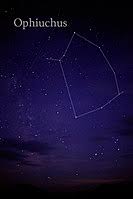
Ophiuchus ([Oaf-ih-YOU-kus)  is one of the largest constellations but in general the least well known,  straddling the celestial equator northwest of the centre of the Milky Way, near the constellations Aquila, Serpens, and Hercules, and opposite Orion, the southern section lying between Scorpius to the west and Sagittarius to the east. Below Ophiuchus, down to the right, look out for a bright reddish star, Antares in Scorpio, for help in confirming that you have found it.

Right now -July- is the best time to see it in the northern hemisphere, mid-winter in the southern hemisphere.  Hence this story is in the news again right now.

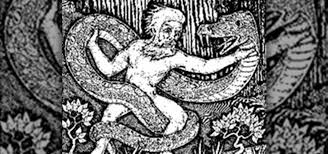
Its name comes from the Greek Ὀφιοῦχος Ophioukhos; “serpent-bearer,” and it is commonly represented as a man grasping a snake.  In medieval Islamic astronomy the constellation was known as ‘Al-Ḥawwa,’ “the snake-charmer.” It used to be called Serpentius, when the constellation counted more stars, including the constellation of Serpens, representing the snake itself. Marking the head of Ophiuchus, Alpha Ophiuchi has an older, Arabic name: Rasalhague, the “Head of the Snake Charmer”.

Ophiuchus contains notable features and objects, including Kepler’s Supernova, or Kepler’s Star, named for German astronomer Johannes Kepler.

It was by far the brightest star in the sky for over 3 weeks during 1604 and actually Kepler wasn’t the first to note the supernova, due to cloudy conditions, but he made observations over the course of an entire year and wrote about the “new star in the foot of Ophiuchus”.

Kepler’s Supernova continued visible for 18 months, and its remnants are still studied today, still the most recent supernova to be observed with the naked eye.

Mythology

To the ancient Greeks, the constellation represented the god Apollo struggling with a huge snake that guarded the Oracle of Delphi.

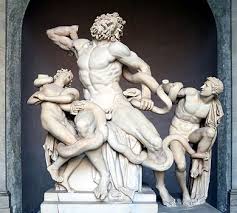
Later myths identified Ophiuchus with Laocoon, the tragic Trojan priest of Poseidon, who warned his fellow Trojans about the Greek’s wooden horse, and together with his sons, was killed by a pair of sea-serpents sent by Poseidon to shut him up, because clearly, Poseidon was on the side of the Greeks, or else under orders from Zeus, or else Laocoon had already annoyed him in some other way, and you know, nothing less than death by giant sea-snake would do.

Public Domain

Pluto (Hades) complained to Jupiter (Zeus) that Asclepius was interfering with death, an act of hubris which upset the natural order, and meant the end of the circle of life, with no room for new life.

Immortality would be a terrible evil. Life itself would die, stagnated, and Jupiter (Zeus) duly put a stop to it by killing Asclepius, hurling a lightning thunderbolt straight at his head, giving him an instant perm.  

Apollo was, rather understandably, we may agree, furiously upset, “you zapped my son you b*stard!” Jupiter tried to comfort him by placing Asclepius in the heavens to honour his good works, and the rod of Asclepius remains the symbol of western medicine to this day.

The rod of Asclepius is not be confused with the Cadeuceus, a symbol of medicine, but also of trade. The cadeuceus is assciated with Mercury, and has not one but two snakes twined round the staff, and it has wings.

rod of asclepius.png
Public Domain

So, is Ophiuchus the thirteenth zodiac sign? Or does your zodiac sign stay the same?

Sidney_Hall_-_Urania's_Mirror_-_Taurus_Poniatowski,_Serpentarius,_Scutum_Sobiesky,_and_Serpens.jpg
Image: Public Domain: The Snake-Wrangler in Urania’s Mirror, 1825. Above the tail of the serpent is a now ‘obsolete’ constellation, Taurus Poniatovii

If you are born between 29th November and 17th December, NASA, other astronomers and Sidereal astrologers may argue that your zodiac sun sign is technically Ophiuchus.

Key personality traits:

Humanitarian* Poetic* Hungry for knowledge* Intuitive* Psychic*Intense *Likes bright colours *High achievers *Prone to harbouring enemies without realizing *Lucky (so long as the enemies don’t succeed, obviously)

These are, not surprisingly, a mix of classic Scorpio and Sagittarius attributes in this profile.

But- there is a But here. And it is a blooming big BUT.

What astronomy is failing to recognize is the logic of the system which is the very basis of western (Tropical) astrology, and which makes a key distinction between the positions at any given time of the constellations themselves, and the zodiac signs named after them.

The signs of the zodiac as we know them today are based on Ptolemy’s twelve-fold division of the ecliptic, designed so that each sign spans 30° of celestial longitude, or roughly the distance the Sun travels in a month. 12 was a cleaner, tidier number to work with than was 13.

Ptolemy aligned these divisions with the seasons so that the March equinox always falls on the boundary between Pisces and Aries, whereas Sidereal (Vedic) astrology is based on the constellations themselves, as was western astrology way back at the time of the Babylonians, whose data Ptolemy worked with.

Tropical western astrology, with its 12 associated zodiac signs is a static, modelled system based NOT on the constellations themselves, but on the wheel of the seasons which also accord the signs of the zodiac their personalities, but the idea of the ‘missing’ thirteenth sign is nothing new.

It was developed by Hipparchus in 130 BC,” says astrologer, Susan Miller, “but you don’t get your characteristics from the constellations. You get them from the planets, from the sun and moon. We measure everything by the degree to which the earth is rotated around the sun. So if you’re born at the beginning of the zodiac, which corresponds to the spring equinox and typically falls on March 20, you’re at the 0º point—or the point at which the sun is crossing directly over the earth’s Equator. If we didn’t have names like Virgo or Gemini we’d have to walk around saying, `Hi, I’m a 136º,’ and I’d say, `Oh, really? Well I’m a 352º and so on.”

In Summary

NASA’s supposed debunking may be logical in strictly astronomical terms. But that’s astronomy. It has nothing to do with western Tropical astrology as practiced today, and would only matter if the timing of the signs relied upon being tied to the actual positions of the constellations.

But they do not, and your zodiac sign, also known as your sun sign still stands, both as it is and where it is, based on the principle and according to the system on which it was first described.

A Lunar Eclipse: The Crab, the Sultan and the Wolf

Tweeted Friday January 10

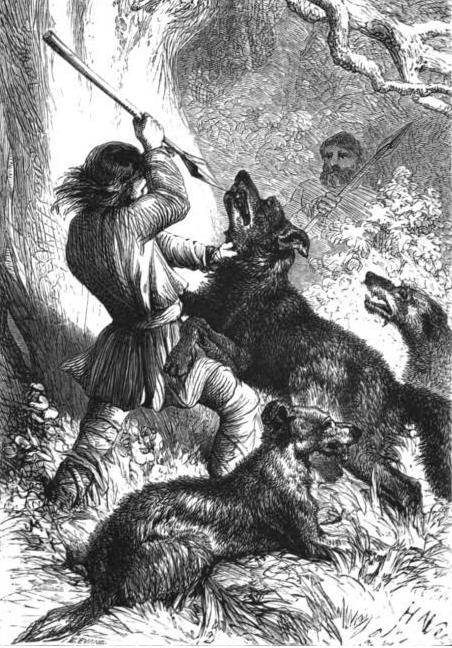
“Tonight is the first full moon of the new year, nicknamed the Wolf Moon. As winter bit down, hungry wolves came down to the villages in search of food.”

January and February is wolf mating season, and their howls haunted the nights more than usual, both in Europe and in North America. This nickname was shared by Europeans and Native Americans alike, though this full moon has other nicknames too, including the Snow Moon and Ice Moon.

British Wolf Hunt Public Domain

Also Tweeted

“Tonight’s lunar eclipse full moon in Cancer rises at 15:50 GMT (UK) or 2:21 ET and sets at 07.53 GMT (UK) Last night’s almost-full moon was spectacular. Excited cat playing & pouncing on things. This ‘watery’ lunar event typically signifies big changes at home. A letting go.”

That evening I said to Il Matrimonio, “I wonder who we will be hearing about tomorrow, who has ‘let go and left home’?”

Very many people will have ‘let go and left home’ of course. 2 people go out of this world every second and 4 come in, or if we want to be statistically exact, 1.8 go out, and 4.20 come in.

“The unborn are banging on the gates of the dock. What’s the limit on the shipping lanes?”- KT Kearns

But who would we be hearing about?

Which crab would quit his rock-pool?

Who would the wolf moon carry away in tonight’s meteor shower? (The Quadrantids)

It was the Sultan of Oman, Qaboos bin Said Al- Said, 79, a ruler for 50 years, ally of the UK and US and the longest ruling monarch in the Arab world.

Publicly at least, apart from three years of marriage which ended in divorce, after which his wife remarried, he lived to all intents and purposes as a hermit (crab) But his personal life has remained entirely private, protected by his shell of court and state.

Qaboos bin Said Al -Said

Excerpts from an Obituary in the Middle East Eye: (Link provided below)

“The sultan took the throne of an extremely underdeveloped country with a history of civil conflict and oversaw its transformation into a politically stable middle-income state during his half-century reign. Under a model of modernising absolute monarchy, he largely managed to steer Oman away from the extremes of consumerism of neighbouring Dubai and the religious conservatism of Saudi Arabia.

The concentration of political power and wealth in the sultan’s hands, combined with the absence of a clear route to succession, had led to fears that there could be a leadership crisis following his death.

The appointment of Haitham bin Tariq, Oman’s culture minister and the 65-year-old cousin of the late sultan, on Saturday appeared to put to rest lingering uncertainty over the country’s succession process.

Under Qaboos, political parties were banned and laws of lese-majesty created an all-pervasive system of surveillance and repression that ensured no organised opposition could emerge.

Still, there is no doubting the genuine affection in which the sultan was held by many Omanis and expatriates, seen as a visionary leader who had secured the welfare of Omanis and expatriates alike by leading the nation through its modernisation, and leaving a legacy that his successor will be hard put to equal.

Oman’s Sultan Qaboos is pictured at his palace in Muscat on 14 January (AFP)
Oman’s Sultan Qaboos is pictured at his palace in Muscat on 14 January 2019 (AFP)

The Sultan inherited a conservative, highly religious country riven by armed insurrection and tribal divisions, Valeri wrote, and over several decades, reduced the influence of the tribes, while incorporating their leaders in the political process.

Qaboos also championed the advance of women, gradually opening the way for many to enter education and the labour market in increasing numbers, despite Oman being a conservative society that traditionally segregated women in domestic roles.

Qaboos was also a big supporter of the arts with his government sponsoring the country’s first societies of artists and traditional music. As a lover of classical music, he played the organ and the lute, composed music and founded the Gulf’s first symphony orchestra in 1985, its players recruited from the towns and villages of Oman.

Qaboos was careful to maintain diplomatic ties even with those states, such as Iran and Iraq, which were in conflict with his western allies. As he explained to an Egyptian newspaper in 1985: “There is ultimately no alternative to peaceful coexistence between Arabs and Persians, nor to a minimum of agreement in the region.”

One of the world’s longest-serving heads of state, Qaboos began tentative moves toward a constitutional monarchy in the late 1990s and early 2000s, with the introduction of an elected consultative assembly and municipal council elections. However at the time of his death he remained head of state and prime minister, and commander in chief of the armed forces. 

Qaboos’s successor will face the growing question of how to quell rising expectations of a new generation of internet-savvy young people no longer satisfied with the repressive paternalism that prevailed under half a century of Qaboos.

Excerpts from the Middle East Eye: Read more HERE

Now. Here is a very interesting piece of information, linking the Full Moon In Cancer with the Sultan Qaboos, or at least, I find this interesting. If not downright spooky.

Your Moon sign is an expression of your temperament and style of doing things. The natal chart of the Sultan shows that he was born with his Sun in deep and secretive, watery Scorpio and his Moon in the sign of almost equally deep and secretive sign of Cancer the Crab.

That was one enigmatic man of deep waters. That was one tough shell.

Two tough shells.

Now consider this image of the Moon card from The Gilded Tarot Royale, from the illustrator Ciro Marchetti, and the full moon uniting wolf and crab.

Or should we say, reuniting.

Until next time 🙂

The Sun, The Stars and Sunflowers.

Katie-Ellen's avatarTrue Tarot Tales

Sunflowers…

The Sun card in Tarot foresees sunny weather at its most literal.   It’s respite from care, the gift of the moment, childhood and sometimes the imminence of birth. It’s also travel, particularly to hot places. It is the return of the sun after the winter solstice. It is the zenith of the sun in the summer solstice. It is glory.

Reversed it’s the setting sun, delays and lesser joys, the passing away of childhood, nostalgia, beautiful, bittersweet twilight. It may mean getting something less than you hoped for, but what you get is still something to be happy for.

The Star card on the other hand, can and often has indicated a recovery from depression, sickness and despair, a guiding light, someone sees a way ahead, they couldn’t see before.

Klytie was a figure in Ancient Greek mythology who fell in love with the sun god, Apollo. Each day…

View original post 219 more words

Halloween and ‘Alfablot’-‘Sacrifice to the Elves’

Did the Norse celebrate Halloween? Plus a message from the runes for you…

Public Domain

What we know of Norse Mythology comes largely from the Eddas, two collections of writings from assorted anonymous writers, dating around 1250 CE.

All Hallows Eve, Halloween or Samhain is a Gaelic custom, not Norse.  The Norse peoples did mark this time of year, although in a different way, with Álfablót – the Elf Ritual.  

Elves were associated with burial mounds (also known as barrows) as it was believed that they lived in or around them, and more than this, elves were associated with the souls of the dead, rather than fairies in the other sense of the word, as a supernatural entity that was never human.

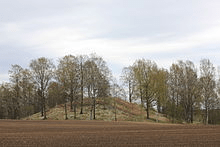
Rakni’s burial mound, Noway, Public Domain

It is the largest burial mound in Scandinavia, 77 metres in diameter and over 15 metres in height. There are a number of stories associated with it, one associated with a roving sea-King Raki or Ragnar. Skull fragments were found inside it, of a man aged between 20 and 25 but there were no grave goods. The mound has been dated to the sixth century to the time of the great migration after the collapse of the Roman Empire.

It is possible that this chieftain was an ancestor of Rollo, the Norse ancestor of William the Conqueror.

Like the modern Halloween, Álfablót originally marked the general end of autumn, although it may technically be celebrated on any day around this time. However in recent years, it has been predominantly practiced on or close to 31st October (Halloween/Samhain). 

Traditionally, Álfablót almost certainly involved an animal sacrifice, (blood) Records suggest this may even have been a (highly valuable) bull. It was intended as a sacrifice to the elves, asking for protection from the ancestors. Connected with this, the elves were also associated with fertility. 

A chief difference here is, unlike Halloween/Samhain, Álfablót was not a community celebration. It was a private ritual performed at the homesteads. Strangers were not permitted to take part or even watch.

Old Norse Runes

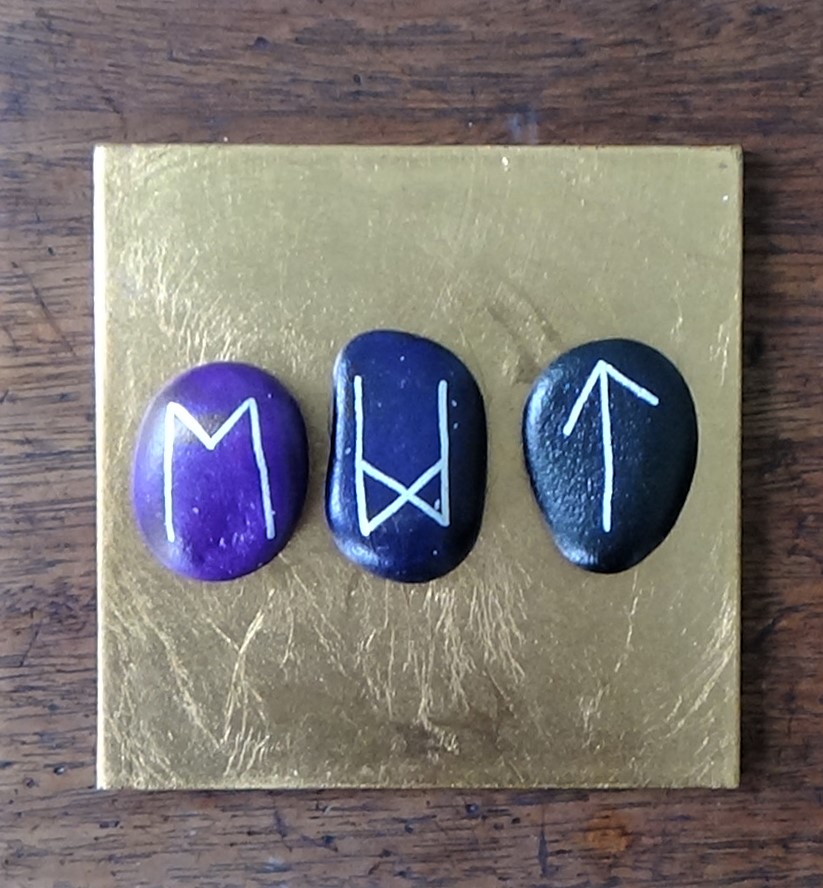
What runes do we drawn this Halloween Álfablót 2022?

Ehwaz The Horse transport, journey progress

Mannaz Merkstave Communication difficulties, trouble with fellow man

Tiwaz Justice, Law and War (spear)

The message is not a cheerful one, I am sorry to say, but it will easily be understood why not in the context of the war in Ukraine and a lot more besides.

One might reasonably say, but the dead do us no harm? It is the living we need to watch for. Well, that depends upon their legacy, and the memories they leave behind. Jewish graves read ‘may their memory be a blessing.’

The rune of mankind has been drawn merkstave. This advice is a downer. In these days of travelling far afield almost at the drop of a hat, don’t be too quick at this time to get on your ‘horse’ and ride off to the lands of ‘strangers’.

Don’t be too quick to share your opinions with your neighbour, or all and sundry.

You do not know what they may be struggling with when you enter their space. Beware of the horses coming to your door carrying strangers. Some will come as friends, and honour us with their arrival. But not every stranger comes as a friend. The history books warn, it is a friendly fool that can’t tell friend from foe.

Why do you travel? What do you bring to the places you visit, for the sustenance of the people who live there?

Who is this that is coming now? Why do they come? What do they seek? What do they offer? Is it a fair just and lawful exchange? Or is this a hunting trip? What is the prey? What is the prize?

This grim counsel goes against our powerful instinct of hospitality and kindness to strangers. But that bottom line was always there, and the runes are reminding us.

The Viking raid on Lindisfarne in 793 sent a shock wave through Europe. But this was just the start of something bigger. What was driving it? In part, changes to the laws of inheritance in Scandinavia, younger sons, now dispossessed of family farms, had to go in search of their own fortunes.

So they did.

The Viking Raid on Lindisfarne

Another way of looking at these runes in terms of comment or advice about the cosmic weather right now, which is, beware of joining the crowd.

Beware of crowds. This, following the tragedy in Seoul where 150 or more people have died in a crush at a Halloween celebration. And the death toll is still rising, following the collapse of a bridge in India killing over 141 people who were celebrating Diwali, the festival of lights.

This also refers to getting into arguments on social media, and avoid gossip at this time. Stay clear of group-think.

The runes here are reflecting the fact that fiery Mars, planet of war, has just moved into the zodiac domain of Gemini, the sign of communications and siblings, and it will stay there, appparently moving backwards or retrograde, until 12 January 2023. There will be spectacular events. One can see how this combination may represent aeroplanes, missiles or indeed any kind of projectile. The threat of a nuclear attack is real, though I haven’t been shown that it will happen.

Contagion travels by the same token, suggesting an inevitable rise of flu and covid cases starting now, at least in the northern hemisphere.

There are many kinds of ghosts. There are the whirling leaves that used to be buds. There are the echoes of the distant past. There are the ghosts of our hopes, not all of which can ever be realized, the grief, the fears and memories of the living.

But Jupiter is returning to Pisces and this brings a promise of good cheer. Even in desperate times we see a Ukrainian soldier rescuing a hamster in a cage, the hamster obliviously running in its wheel. The soldier places it in the back of the truck, returns for two rabbits.

In such moments rests the hope for humanity.

Death is the theme for the season- and this is an unusually tricky Halloween season, caught between the partial solar in Scorpio on 25 October, and the upcoming Lunar eclipse in Taurus on 8 November.

Photo by Josh Hild on Pexels.com

HALLOWEEN

The grey ghosts are shifting.

Mists are lifting on the grey graves

where sandpipers call.

Mountains or clouds,

grey whales or waves

all one under the treacherous sun.

Fishbones are heaped

on the floors of the forest

where the Red Beast crouches

squinting aslant.

Waterbones lie fractal on stones

and frozen meniscus squeaks and groans.

Giant scaffolds loom in carlights 

where Death has swept up

to throttle the Titans,

shaking stiff in their ropes.

Ogres rear in the speeding corner.

White in the phantom night

respectful retainers line the lanes;

skulls and jaws, knuckles, thighbones.

stand to attention.

And the moon is ringed in a saturnine glow.

Dry bones stand tall by hedge and wall,

incorruptible, crack and creak

as the Old Year enters

The Big Sleep

Margaret Whyte 21.11.04

Update: Cartomancy Musings -December General Election

Posted on Twitter 9 Dec 2019:-


Katie-Ellen@ktlncartomancer
· Will it be a hung parliament? Let’s look through the lens of playing card cartomancy. No opinions. Just cards. Shuffle blind, draw 5 cards, red/black, central card key. 10 Diamonds, Queen D, Ace Clubs (reps GE & a NO answer) 4 Spades (ugh) Ace Diamonds (future = new start).

Let’s look back to a previous reading on this blog, posted 1 October 2019 in which I used pendulum divination, asking this question and getting this response below……

Will there be a General Election BEFORE the UK leaves?

The pendulum is swinging to NO. But I don’t know. I keep thinking of that Ace of Clubs card. I don’t see one occurring in September or October and that timing would be exceedingly tight. But, swinging the pendulum again, there’s something here, suggesting however unlikely, there may be one either concluded or announced before Christmas.” – (posted 1 October 2019)

Time permitting I will be posting further before the Election. Meantime, I find it curious that throughout these nearly three and a half years since the referendum, I have not detected any consistent signal for a clean WTO- style exit, nor the date.

Brexit presents itself through my cards as a series of steps. not a definitive event, though certain themes have been consistent during the past three and a half years.

It did look possible, if dubious, throughout September, that we would have a Halloween Brexit from which I deduce that the PM did absolutely sincerely intend to keep that promise, by whatever means. The chances were consistently detected as ranging between 2/5 and 3/5 .

For me, a definite yes, usually shows itself as a 4/5 or a 5/5. But I wasn’t getting a 0/5 either, or a 1/5.

Hedging its bets? Possibly, but the reader has no conscious control whatsoever as to which cards are drawn. The Tarot was perhaps mirroring the feeling and expectations of the collective psyche. But then something shifted and on 13 October, in a prediction written for astrologer Jessica Adams in which I was looking ahead to the month of November (you will be able to read it HERE on Tuesday 5 November) I said, based on 2 Tarot cards, that I was not being shown that the UK had left the EU today, 1 November, BUT it was still coming, events were moving on apace.

After such a long, acrimonious parliamentary stalemate, and bearing in mind deep concerns about the content of the proposed withdrawal agreement, perhaps this new general election campaign is to be regarded as today’s best good news.

I will have clearly have to have a stab at an Election prognostication well before we get there on 12 December if only for the laffs. How we are all laughing.

I still feel, based on my cards, that Brexit will happen. Asking this question, consulting with the cards, two cards have made multiple appearances since the 2016 Referendum.

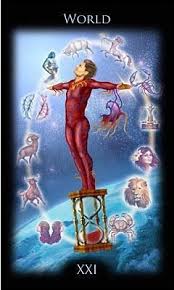
The World Card has been one of these, Major Arcana 21, and in plain English this translates as the wide world, literally (WTO/global trade) and in terms of the Brexit process, project completion and the start of a whole new cycle.

The dates though. The dates. The figure on this card from the Legacy of the Divine Tarot deck, illustrated by Ciro Marchetti, is reaching out his arms, spanning the Scorpion of Halloween and somewhere between Aquarius and the Fish of Pisces, late February-late March. But is it 2020 or a continuum into 2021?

The Legacy of The Divine Tarot

In other readings, I have noted many appearances of Leo the Lion for some reason I don’t understand, indicating a key development in late July 2020. I’ll have to watch that space.

Divination suggests the future prospects for Britain are actually pretty darn good. Expansive, while at the same time grounded on home soil. Cards of poverty, or war, do not figure in the picture, not because all in the garden is rosy, but they are not the defining destination feared by so many.

Again and again I have asked, what is the ‘destiny’ for Britain and drawn the same card over and over, the Nine of Coins suggesting a slow gathering momentum, a juggernaut, coming decade of hard work and economic achievement.

This card specifically suggests notable prospects including but not limited to financial services, manufacturing, horticulture/agriculture, farmer’s markets and a surge in demand for local produce luxury goods, the heritage industry and hoteliers. I would be happier to see a fish leaping in that pond, though at least there is a pond, and that is clearly vital business pending, fishing rights and fisheries, significant by a silence in the noise around the current withdrawal bill passed by this Parliament. This bill, may presumably, may be superseded by events.

The Legacy of the Divine Tarot

There are 77 other cards I could have drawn, asking to see the future face of Britain. I could have drawn the pauper’s card, the 5 of Coins. I could have drawn The Tower, crash, ruin, war. I could have drawn The Devil, enslavement, entrapment, helpless rage and civil war. Or even the end of the world as we know it.

I have given my cards so many chances these last three years to show me any of these terrible tidings, and must conclude Brexit will somehow be resolved, and Britain should look to its people, and also look up the stars and horizons including Europe and beyond, and have more ambition, looking to the lessons of its history, which are all about the lessons for its future. It is easy to see that Brexit might not happen at all, and the Establishment has demonstrated an absolute determination that it will not.

I can only say that rightly or wrongly, I still detect, based on divination, that the UK will come out of the EU -which is not Europe-and when it does, it is because it must, or else be shattered, and be seen to be shattered at the very heart of its constitutional integrity, and with it, national and international integrity and repute.

In Summary

What outcome card do I get for the Conservatives in the upcoming GE? The Fool. This is a major arcana card, number 0 and 22, the beginning and end of the ouroboros serpent, favourable card, and signifies new beginnings. It is also the birth sign card of Gemini subject, Boris Johnson.

What card do I get for Labour? The Eight of Swords. A minor arcana card and a deeply unfavourable card of getting stuck. I feel there are some good things in the Labour manifesto, but I feel what many previous Labour voters feel, and this card reflects it absolutely, that Jeremy Corbyn has been taken hostage by one section of the party to the wider detriment of the whole, and I sense he feels this, and is deeply uneasy, but can’t see the way out, or a way back to his party’s traditional heartlands. He too is a Gemini subject, so in theory, I could have drawn the Fool for him too, as the Gemini leader of the Labour party.

What outcome card for the Lib Dems? The Page of Cups? This is a court card, a favourable card; a bud, an offer, a young person, but it tends to be correspondingly minor in scale, except as the start of something that could become very big…but not for a while. (Jo Swinson is an Aquarius subject, and ‘her’ major arcana card would therefore be number 17, The Star)

There are other parties in play of course. I’ll hope to look at all this again in more detail before we get to voting time.

Till next time 🙂

Libra the Celestial Scales, Balance of the Seasons in the Stars

The zodiac sign of Libra, what’s the story?

Most of us know our sign of the zodiac or sun sign, but where did get its name from, and what does it look like in the night sky? Read on for the story of Libra…

Common Associations

Symbol

Quality: Cardinal

Element: Air

Affirmation: I (seek to) Balance

Ruling planet: Venus

Body: Lower back, buttocks, kidneys

Colour: Indigo Blue

Flower: Rose, Hydrangea

Birthstones: Sapphire- September birthdays. Opal- October birthdays

Lucky Number: 6 (community, childhood)

Tarot card: Justice

Public Domain: Justice from the Rider-Waite Tarot

Astronomy

Libra (and I say Lee-bra too, like most people, but technically, it is correctly pronounced Ly-bra as in Library) is a small but distinct constellation next to the constellation Virgo in the evening sky. It looks like a lopsided diamond, or a small child’s drawing of a house, and is visible in the northern hemisphere between April and July.

Libra is most visible directly overhead at midnight in June, and is 29th in size of the 88 constellations.

Public Domain: Libra

Libra is bordered by the head of Serpens to the north, Virgo to the northwest, Hydra (the biggest known constellation of all) to the southwest, Lupus to the south, Scorpius to the east and the serpent bearer, Ophiuchus to the northeast.

Libra, like Cancer, is fairly faint from Earth in comparison with other constellations, and contains no spectacular first magnitude stars, but it contains a very old galaxy cluster, possibly around 10 billion years old, which is about the same age as our The Milky Way, our own galaxy.

There is a red dwarf star ,Gliese 581, in this galaxy, with three orbiting planets, one of which may possibly be suitable for life. This system is about 20 light years from Earth.

Libra used to be regarded, not as a constellation in its own right, but as part of neighbouring Scorpio and Virgo. This legacy remains in the names of its brightest stars.  The brightest star in Libra is a binary star about 77 light years from Earth. α Librae. Its common name is Zubenelgenubi, meaning “the Southern Claw” in Arabic. The second-brightest star in the constellation of Libra is β Librae, known as Zubeneschamali, from the Arabic for “The Northern Claw.”

Public Domain: the Scorpionic Scales, from Mercator  

Since 2002, technically, the Sun has actually appeared in the constellation of Libra from October 31 to November 22. But signs of the zodiac are not dependent on the positions of the actual constellations. Western or tropical astrology, which is based on seasonal phenomena, not the actual positions of the constellations, which remain the basis of Eastern or Sidereal astrology.

The Sun did used to be in the constellation of Libra at the northern autumnal equinox (c. September 23) to on or about October 23, when the hours of night and daylight were the same- hence the Libran key concept of natural balance, and the change of the seasons is still marked by the first days of the zodiac sign of Libra, 23 September.

But Western or Tropical astrology was designed as a construct based on arithmetic, not on current astronomy. The signs of the zodiac were inspired, modelled and named according to the heavenly bodies, but actually based on seasonal phenomena, these being presented as an arithmetic model, dividing into 12 pieces of a pie, the circle of the visible skies of the zodiac as seen from Earth, as calculated by the Greek mathematician, astronomer and astrologer Ptolemy in the 2C AD.

Mythology and History

Justitia by Howard David Johnson, 1954 –

Public Domain

Libra was once included as part of Scorpio, and was known in Babylonian astronomy as MUL Zibanu (the “scales” or “balance”) with an alternative name, the Claws of the Scorpion. In ancient Greece Libra was also seen as the Scorpion’s Claws.

The scales were held sacred to the Babylonian sun god Shamash, who was also the patron of truth and justice, and ever since these very early times, Libra has been associated with law, fairness and civility.

Libra was first recognised as a constellation in its own right in ancient Rome, when it began to represent the scales held by Astraea, also known as Dike, who in Greek mythology was actually associated with Virgo. In ancient times, the stars of Libra, The Scales, were also intermingled with those of  Scorpius by the Greeks, but were always considered as a separate group by the Romans.

According to the writer Manilius, Roman judges were born under the sign of Libra.  The Moon was said to be in Libra when Rome was founded, in a historical passage, which states “qua condita Roma.”

The start of Libra starts with the autumn equinox, when days and nights are almost of equal length, i.e. balanced, and Roman astrologers considered that the constellation of Libra represented the scales held by Astraea, the ‘star maiden,’ goddess of Justice and innocence. Astraea was a daughter of the Titans, god of dusk, and Eos, goddess of dawn.  She dwelt on earth alongside humans during the Golden Age of Man, but the Iron Age dawned, bringing war and wickedness, and Astraea could not abide this, nor the injustice of the killing of the bull who pulled the plough, until, sometime during the Bronze Age, she left earth for the skies, where she transformed into the constellation Virgo.

Here is pause for thought. This is all rather confusing. We are discussing Libra, not Scorpio, not Virgo, but Libra is a subtle sign, a comparatively newly created one, pulled somewhat, and aspects of it shared between neighbouring Scorpio and Virgo.

The seasonal story is straightforward. Libra is the autumn equinox in the northern hemisphere. But the mythos is complicated, due to the merging of several mythological personas, Babylonian, Greek and Roman. Astraea was also known as Dike, goddess of human justice (where Themis was goddess of natural justice) To the Romans she was Justitia. She was the protector of fair judgement, and continues embodied in the blindfolded figure of justice used in our own law courts today. Virgo and Libra go together, and so do Libra and Scorpio. This close relationship was echoed in the sky, where Libra, the symbolic representation of Dike, lies alongside Virgo. According to the myth, Astraea will one day return to Earth, bringing a new Golden Age.

The Libra Archetype

Libra is one of the three zodiac air signs, the others being Gemini and Aquarius.

 Libra is the only sign that is not represented by a human or animal, but the scales signify the collective and enduring human hunger for justice, as well as Libra’s own especially keen personal need for balance, order, and equality. Many astrologers view Libra as an especially lucky sign because it occurs during the peak of the year when the rewards of hard work are harvested.

Libra is suave, clever and extremely easy to like. The classic Libra subject has charm and can be a great listener with sharp observation skills and acute perception.

Because Venus, the goddess of love, rules Libra, the Libra subject is especially, even acutely sensitive to beauty in anything, whether it is a person, nature, art, or music. They dislike loud noises, cruelty, nastiness, and vulgarity, as they are naturally extremely civilised people. Born diplomats, Libras try to cooperate and compromise with everyone around them to create a tranquil atmosphere. They can sometimes be a little tiring to be with as they are constantly re-assessing and adjusting their thinking, and can be more changeable even than Gemini.

Public Domain: Venus, the ruler of Libra, The Birth of Venus by Botticelli.

Libras may show negative Scorpio traits just the same as a Scorpio subject. They may be touchy, thin-skinned, and tend not to handle criticism as dispassionately as they dispense it. They like to be the centre of attention and may resent it when they are not. Libra can be jealous, moody, and an expert practitioner of passive aggression, or go further as the ‘iron fist in a velvet glove’ – smoothly vengeful, or even ruthless.

But- lovely Libra. Smiling, civilised, smoothie side up, what’s not to like?

Queen of the Heavens, Harvest Goddess Virgo.

“The Virgin with her sheaf belongs to Ceres,” The Astronomica, Manilius, 1st century AD. 

Virgo is known as a sun sign or sign of the Zodiac, but what does the constellation look like in the night sky, and what’s the seasonal story behind it? Let’s investigate Virgo, Corn- Goddess of the Zodiac, also known as Shala, Ishtar, Demeter, Ceres...

Common Associations

Virgo symbol

Date: August 23-September 22

Symbol: The Virgin

Element: Earth

Quality: Mutable (Sagittarius and Pisces are also Mutable, suggesting these subjects are capable and versatile; and generally inclined to conform, going with the flow if it’s for the greater good.)

Ruling planet: Mercury (Travel and all forms of communication)

House: Sixth, ruling health, habits, and routines

Colour: green, white and yellow

Body: Intestines

Birthstone: Carnelian

Flowers: small bright flowers, clover, buttercup

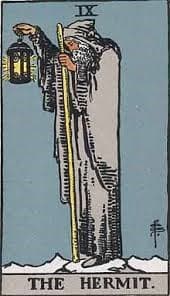
Tarot card: The Hermit (introspection, perception, analysis, care for nature)

The hermit tarot card

Source Wikipedia: The Hermit from the Rider-Waite Tarot deck

Astronomy

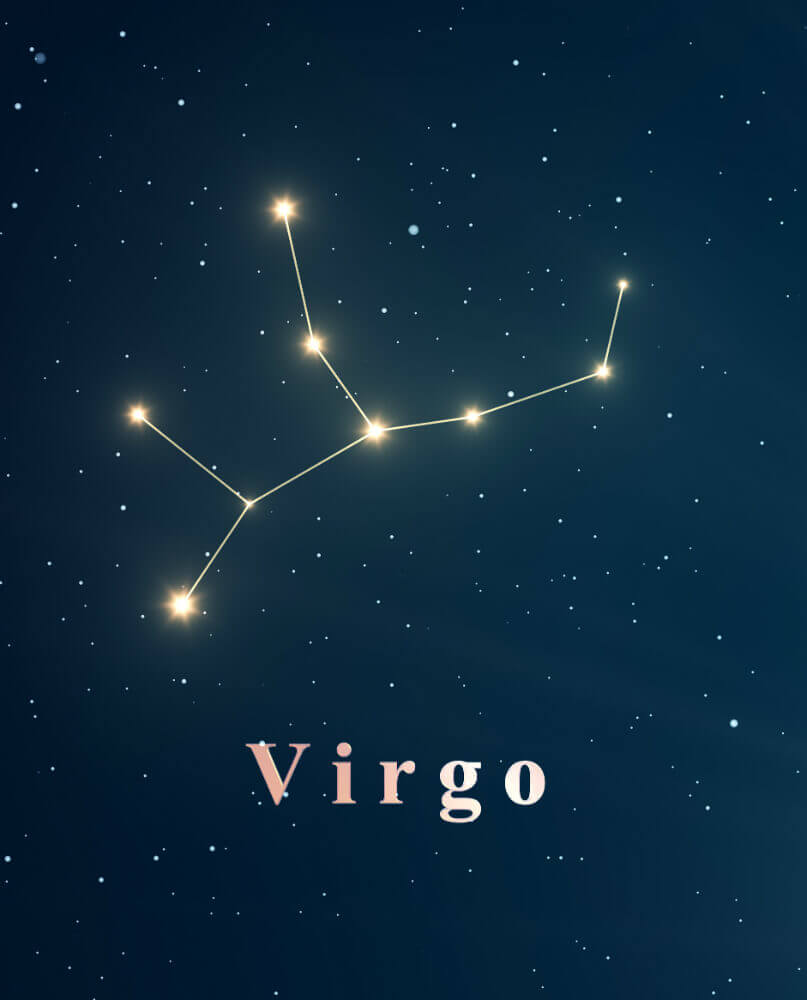
Virgo astronomy

Public Domain

Virgo is the second-largest constellation in the sky after Hydra, and the largest constellation in the zodiac, located between Libra to the west and Leo to the east, and below the Big Dipper.

In the northern hemisphere, it is most visible in the evening sky in May- to late June. In the southern hemisphere, it can be seen in autumn and winter.

Find its brightest star, the brilliant-blue-white Spica, and you will work out the rest of Virgo with her feet pointing east.

It might seem a bit of a stretch, trying to picture a person from that photograph, but add in a few more of her stars, imagine her lounging, dangling a sheaf of wheat from one hand (Spica.)

And now you see her.

Spica

Author’s own image

Spica is a double star, brighter than our sun. Its name is from the Latin, meaning an ‘ear of grain’- or a sheaf of wheat.

It’s sometimes called ‘The Lonely One’ because it is so far from the others, and the astronomer and astrologer Ptolemy saw these stars as ruled by Venus and Mars respectively, mated together in a chaste, androgynous union, like the slightly remote purity of Virgo herself.

Vindemiatrix, ‘the Grape-Gatherer,’ seen at daylight, was once seen as a sign that now it was time to pick the grapes.

Galaxies: The Virgo Cluster

It’s mind-boggling to consider that our own Sun is just one star of the Milky Way, and the Milky Way is only one of a collection of galaxies known as The Local Group.

This contains three large spiral galaxies: the Milky Way, Andromeda, and the Triangulum Galaxy, and a few dozen dwarf galaxies. But The Local Group is just one member of the Virgo Cluster – a collection of 1200-2000 galaxies that stretch across 15 million light-years of space.

And the Virgo Cluster is just one cluster in the Virgo Supercluster.

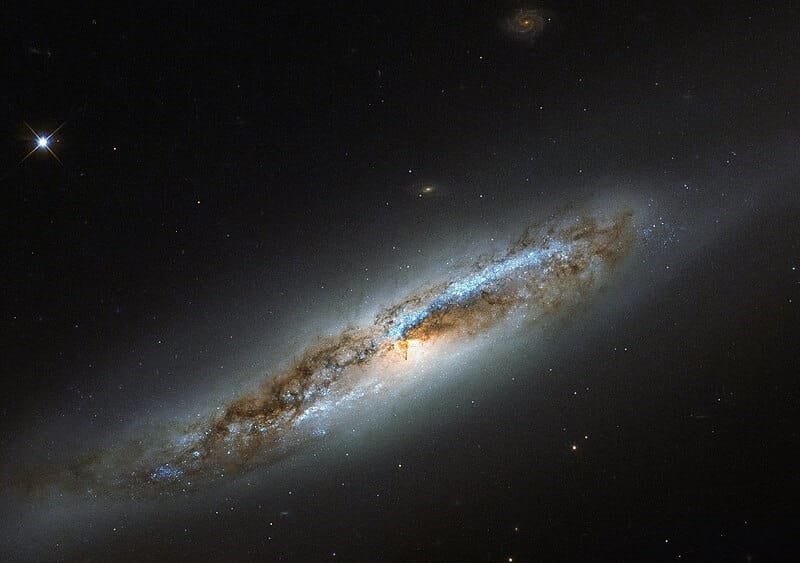
the constellation of Virgo

Wiki Commons: the constellation of Virgo is especially rich in galaxies, with more than 1300 galaxies in the Virgo Cluster. One of these, NGC 4388, 60 million light-years away, is captured in this image, as seen by the NASA/ESA Hubble Space Telescope’s Wide Field Camera 3.

But if the constellation of Virgo is most visible in May in the northern hemisphere, why are the birthdates for the sign of the zodiac August 23-September 22nd?

Astronomy is not Astrology. The sky as we see it is called the celestial sphere: a giant blue ball that rotates around us (its rotation axis crosses the poles). The Sun appears to move along with this sphere every day, rising in the East and setting in the West, but it also appears to move, in this sphere, at a one-degree-a-day pace, on the contrary direction (West-East).

This annual motion is on a circle called Ecliptic, a great circle in relation to the Equator.

Now imagine a belt around this circle. This is the Zodiac. Ptolemy divided this 360-degree belt by 12 for the elegance of arithmetic, based on 12 constellations described by the Babylonians, ignoring a thirteenth constellation, Ophiuchus, so that a zodiac sign represents roughly a 30-degree chunk of this belt.

But the constellations have moved in the last two thousand years, and changed positions relative to Earth, owing to wobbling of the Earth on its axis; an effect known as precession.

The dates for the zodiac signs named after the zodiacal constellations, however, have remained the same, but this great fact of astronomy does not affect the validity of the dates of your Zodiac Sun sign as calculated by Ptolemy.

The exact dates of the Zodiac signs can vary by a day or two each year and are calculated by astronomers every year at sunrise on the day of the Spring Equinox.

History & Mythology

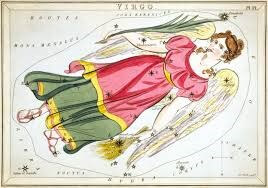
Virgo Urania’s Mirror

Public Domain: Virgo: Urania’s Mirror

The Sumerians

Shala was an ancient Sumerian deity (later Babylonia, the area now known as southern Iraq and Kuwait) She was the goddess of grain -and also compassion. Why link these two things? Famine is suffering. A good harvest was seen as a blessing of the gods.  What is planted in the spring must yield a crop in the autumn, or famine is likely to follow. Shala was married either to the fertility god, Dagon, or the storm god, Ishkur, or possibly both, with one as her consort.  This is significant. Virgo the Virgin is not about a state of physical virginity – but refers more to an attitude; a slightly elusive and rather refined quality, male or female.

Shala was associated with the constellation of Virgo, and vestiges of symbolism associated with her continue, such as the star Spica, the ‘ear of grain’, even as the deity’s name changed from age to age, and culture to culture.

In 10th century BC, the Babylonians called part of this constellation, “The Furrow,” referring back to the goddess Shala, and the Shala Mons is a mountain on Venus named after her.

In Egyptian mythology, the sight of Virgo in the night sky was also associated with harvest time, and with the goddess Isis, while in Indian astrology, she was The Maiden, Kanya.

The Greeks

To the Greeks, she was the harvest goddess Demeter, also called Ceres, (the root of the word ‘cereal’) and also by association, her beloved daughter, Persephone.

When Hades abducted Persephone to live with him in the underworld, Demeter went into mourning. There was no harvest that year. People and livestock starved and Zeus, the king of gods, eventually intervened, insisting that Hades return Persephone to Demeter. But Zeus also stipulated that Persephone must not eat until her return, and Hades, not wanting to part with her, gave Persephone a pomegranate, knowing fine well how much she liked them, and she ate some of the seeds on her way home.

Persephone

Public Domain

So Persephone went home to her mother, but because of the pomegranate she has to return to the underworld for four months every year, and then Demeter grieves; winter returns, and the land sleeps.  

The Virgo Archetype – Personality

Virgo Archetype

Public Domain

Virgos are practical but artistically gifted. They are hard workers who love to better themselves. They love to analyze, and their perceptiveness means that they can always find or create order within chaos. They are honest friends although, being extra discerning, and analytical, they might have a tendency to analyze you, pointing out your strengths and also your mistakes and weaknesses. This will probably be annoying, very, but it’s usually well-meant. They may also give great advice because of those same analytical abilities.

Their quest of self-improvement includes their appearance. They are perfectionists, highly concerned about the impression they give, but at the same time, they are very ready to help others, which can make them targets of those who wish to take advantage of them. Virgo is ruled by agile, communicative Mercury, and Virgo’s brain is in overdrive much of the time. These folks can do great things and get a lot done – if they don’t lose sight of the original vision, and get overly bogged down in non-important detail.

Until next time 🙂

IF BACON GREW ON TREES

The Nutrient Report and other essays on food, eating, diet, health and the state of our planet

Rex Factor

Reviewing all the Kings and Queens of England & Scotland

The World's Passenger Ships

Ship History site, a compendium of passenger ships 1858- today's new builds

Capricorn Astrology Research

Research into Astrology

WAR STORIES

WWII & its Aftermath - Jennie Mack Gray

Quintus Curtius

Fortress Of The Mind

Jessica Davidson

Astrologer ~ Mystic ~ Writer

Mythology Matters

Matters of Myth, and Why Myth Matters

The Sanctuary of Vindos

Shamanic Guidance and Healing rooted in the Land and Lore of Britain