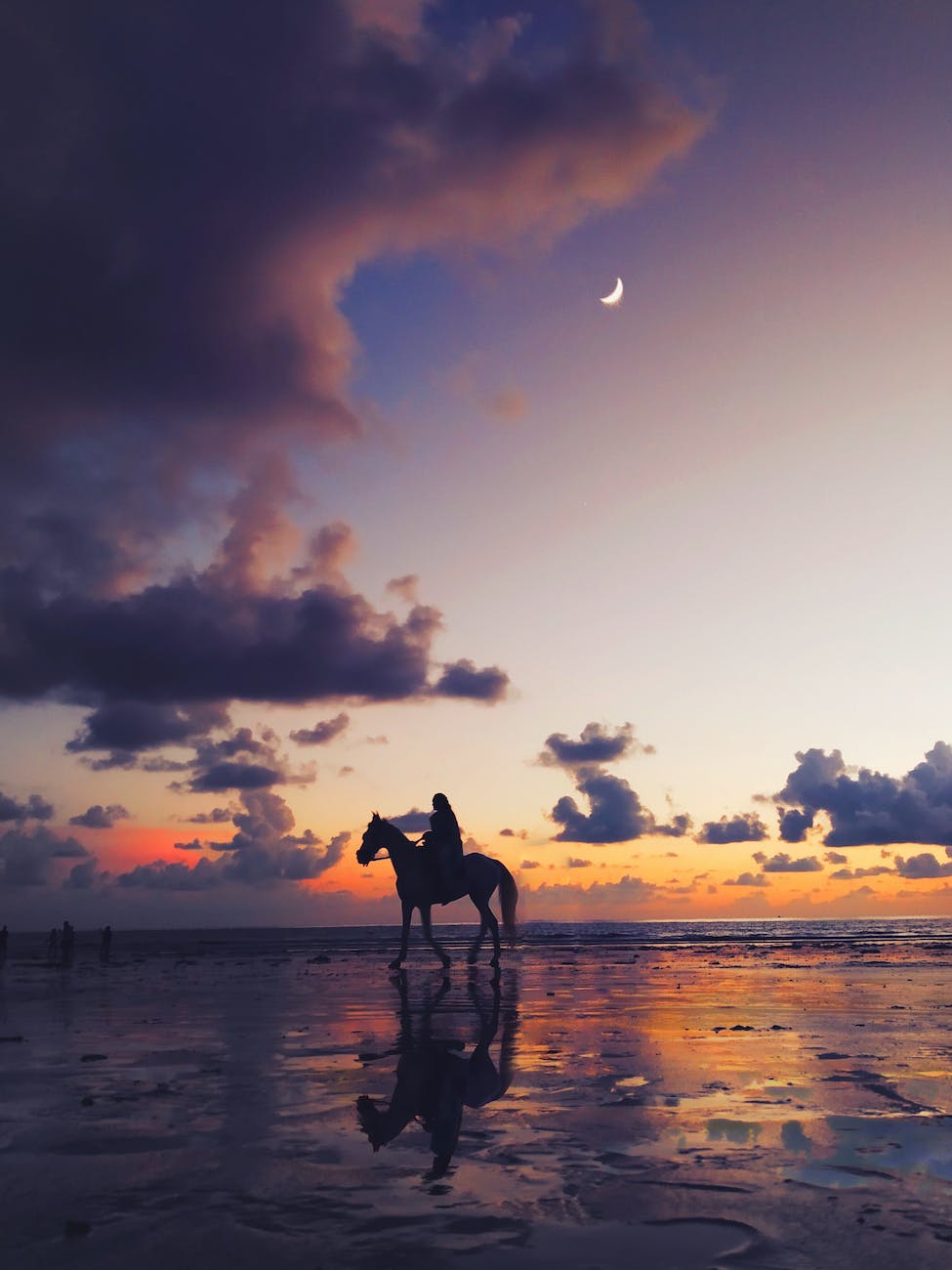
Note the Biblical ‘pale horse’ and the white rose. The rose signifies beauty and immortality.
All that has ever once been, is recorded somewhere, somehow, forever.
Astronomy
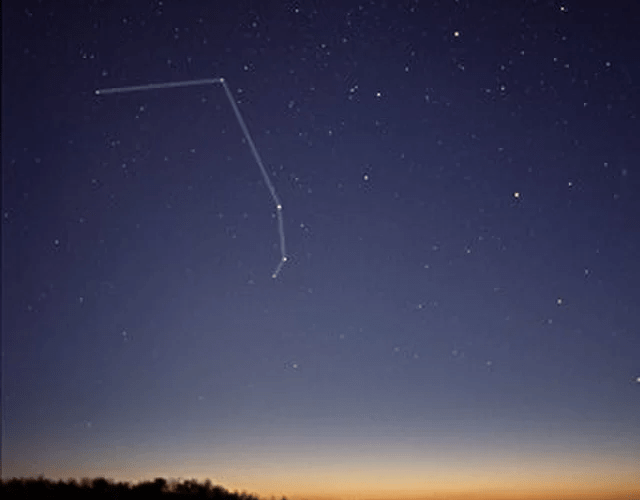
Scorpius is a massive, spectacular j- shaped constellation located in the skies over the southern hemisphere near the centre of the Milky Way. In the Northern hemisphere it can be seen in July and August, and is most visible in July at 9.00 PM. In the Southern…
Yesterday we entered we enter the zodiac territory of Capricorn on the day of the winter solstice. But what is the story behind the zodiac sign of Capricorn the Cosmic Sea-Goat?
Traditional associations
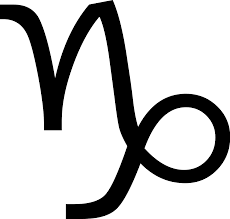
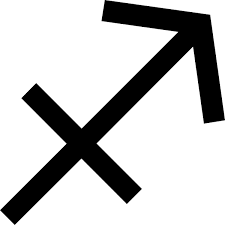
Symbol:
Date of Birth: 21 Dec to 20 January approx
Ruling planet: Saturn
Lucky Day: Saturday Lucky Numbers: 2 and 8
Element: Earth
Quality: Cardinal (the start of the season of winter) Is receptive but equally an initiator.
Key phrase: I build, I use
Body: Skin, knees, skeletal system
Birth Stone: Red Garnet and Black Onyx
Colour: Deep red
Herbs/Flowers: Wintergreen, Ivy, Carnation
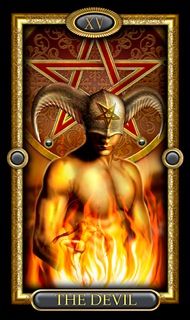
Tarot card: The Devil (Pan/Nature, Mystery, Fascination, Obsession, Entrapment) This card paints him as rather a seductive, beguiling beast. One can appreciate the artist’s take on this. The Devil is also the angel of the Morning Star, fallen or not. And if he is hideous and stinky, who is going to let him anywhere near them? Whom shall he snare? Who is going to fall for his tricks?
The Major Arcana Tarot card representing Capricorn is Number 15, The Devil, representing all of animal nature and natural drives and charisma on the positive side, and fear, addiction, obsession and entrapment on the negative side.
Capricorn must and will have its autonomy. It will rather do without than find itself in dependency on another, at the cost of its dignity, and integrity of personal sovereignty.
Other Tarot cards associated with Capricorn are The Ace, the Queen of Pentacles, and the 2, 3 and 4 of Pentacles.
Psalm 46: 10 says “Be still and know that I am God. I will be exalted in the Earth.”
Capricorn says all living things are God, including dung beetles, and any creature we don’t like. All living things, all Life, is exalted in the Earth.
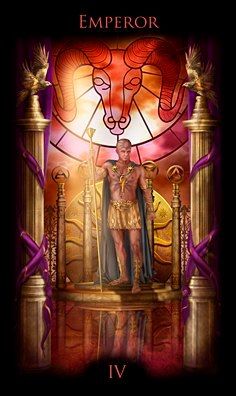
From the Legacy of The Divine Tarot, Ciro Marchetti
Astronomy
The constellation of Capricornus from which the sun sign gets its name is located in an area of sky known as The Sea or The Water, containing other water-related constellations including Aquarius, Pisces and the River, Eridanus.
Wiki
Like other constellations of the astrological zodiac, Capricorn was first catalogued by the Greek astronomer Ptolemy in the 2nd century.
Capricorn means Horn of the Goat from the Latin Capri cornus. “Capri” = goat, “Cornus” = horn. You can- with just a bit of a stretch- imagine the constellation as a goat’s face, looking at you with horns either side of its head.
Capricornus is the smallest constellation in the zodiac, with no first magnitude stars. Even so, the brightest star, Delta Capricorni A, is a white giant with a luminosity 8.5 times that of the Sun.
Capricornus has three stars with known planets and contains a Messier object, Messier 30, a globular cluster 28,000 light years distant and about 90 light years across in size. This cluster is approaching us at the speed of 181.9 km/s, and was one of the first deep sky objects discovered by Charles Messier in 1764.
There are five meteor showers associated with Capricornus: the Alpha Capricornids, the Chi Capricornids, the Sigma Capricornids, the Tau Capricornids and the Capricorniden-Sagittarids.
Neptune in Capricorn
The planet Neptune was discovered in the constellation Capricornus, near Deneb Algedi, the brightest star in the tail of the goat, on September 23, 1846.
This illustrates a powerful mythic connection between earth sign Capricorn and the deep water sign of Pisces the Fishes. This connection is many ages old and goes back to the Babylonians 21 centuries BC. We shall explore this connection more closely in a moment.
How did the ancients know? How could they have known, to have come up with the story of the Sea-Goat? So far as we aware, they could not have known about Neptune to have made any such connection. And yet they did, as we shall see.
Natural History
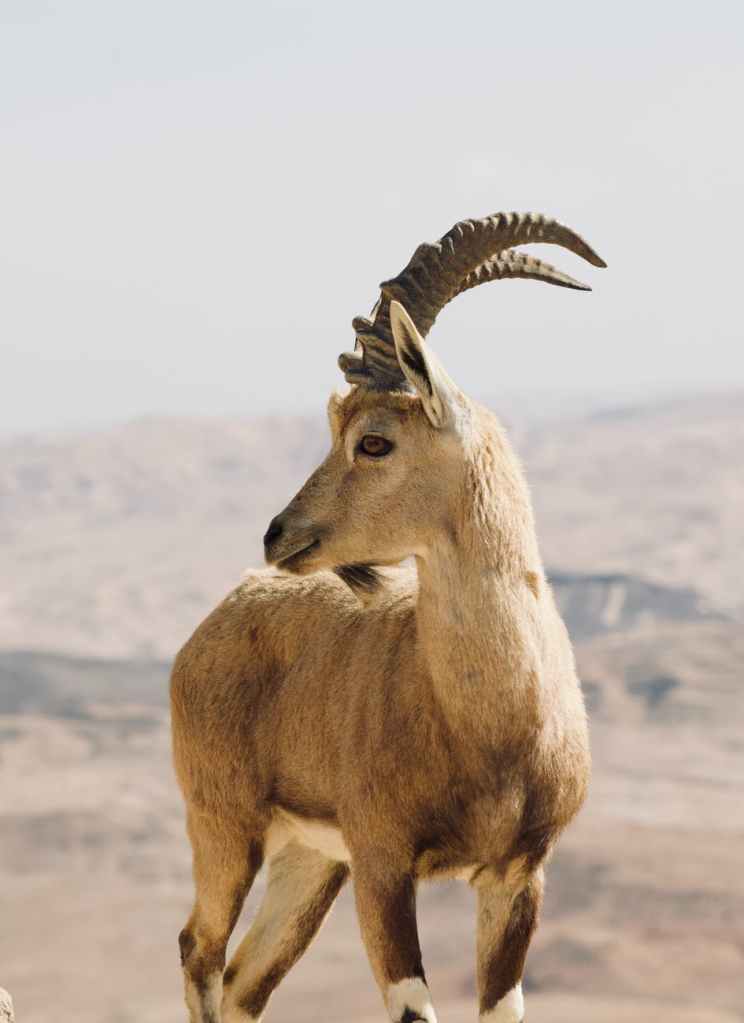
Though Capricornus is the second faintest constellation in the sky after Cancer, its story lineage is very ancient indeed. Mountain Goats, the ibex, were depicted in Ice Age paintings.
The European ibex male starts fighting for territory and mating in December, and in modern astrology, as distinct from modern astronomy, Capricorn’s rule begins today at the solstice, although meteorological winter starts 1 December.
Capricorn the constellation itself is actually overhead nowadays during Aquarius, due to the wobble of the Earth, an effect known as precession, but the sun sign named after Capricornus retains the dates accorded to it by Ptolemy.
Mythology
Capricorn is commonly represented in the form of a sea-goat: a mythical creature half goat, half-fish. This creature is Pricus, another son of Cronos (Time) king of the mer-goats of Greek myth. (Presumably this makes Capricorn a brother of Zeus.)
The story of Pricus the Sea-Goat comes from an evolution story far older than the mythos of ancient Greece. Before 1000 BC the Sumerians knew Capricorn as the goat-fish, or SUHUR-MASH-HA.
The children of Pricus left the sea to dwell on mountains, leaving him alone in the oceans with no-one to talk to any more. And Pricus was a great teacher.
He was very lonely now, all the young ones gone. Zeus placed him in the Sea of the Stars so that he could see his children again, and they could look up from the mountain sides and still see him, and remember where they first came from. Out of the sea, like us, and everything else that now lives on land.
Later myths centre on stories of sun gods nursed by a she-goat, one of the best known of which is the story of the baby Zeus. whose mother Rhea hid him from his murderous father Cronos. They took refuge in a mountain cave where he was nursed by the she-goat Amalthea
Another story talks about the forest deity Pan, who has the legs and horns of a goat, like Krotos, his son, a great archer and devotee of the Muses, who is identified with the neighbouring constellation Sagittarius in an alternative version of the Chiron legend.
Pan, so the legend said, was placed in the sky by Zeus in gratitude after he came to the rescue of other gods after an epic battle with the Titans, when they were fleeing the monster Typhon, son of the Titan Tartarus and Earth.
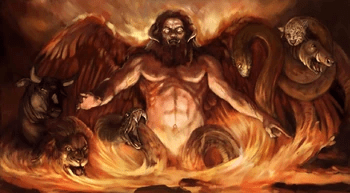
Typhon was truly fearsome, a fire-breathing creature, higher than mountains and with dragons’ heads instead of fingers. The Olympian gods disguised themselves as they fled in terror: Zeus disguised as a ram – Hera, as a white cow, and Pan as a goat (another version of the myth suggests Bacchus/Dionysus).
Horrors! Typhon caught Zeus and dismembered him, thinking perhaps to enjoy a rare treat of Jupiter-sized lamb chops for tea. Bbut then Pan played such a weird sound on his pan pipes, he terrified Typhon, who panicked just long enough for Hermes to swoop down and snatch up all the bits of Zeus and put him back together.
In gratitude, Zeus transferred Pan to a luxury pad in the heavens as Capricornus, and later, finally managed to trick Typhon, trapping and imprisoning trap him in Tartarus or beneath Mount Etna where he still grumbles to this day, swearing to get even, or starts roaring and shooting out flames in his furious efforts to escape.
among them is he who lies in dread Tartarus, that enemy of the gods, Typhon with his hundred heads. Once the famous Cilician cave nurtured him, but now the sea-girt cliffs above Cumae, and Sicily too, lie heavy on his shaggy chest. And the pillar of the sky holds him down, snow-covered Aetna, year-round nurse of bitter frost, from whose inmost caves belch forth the purest streams of unapproachable fire. In the daytime her rivers roll out a fiery flood of smoke, while in the darkness of night the crimson flame hurls rocks down to the deep plain of the sea with a crashing roar. That monster shoots up the most terrible jets of fire; it is a marvellous wonder to see, and a marvel even to hear about when men are present. Such a creature is bound beneath the dark and leafy heights of Aetna and beneath the plain, and his bed scratches and goads the whole length of his back stretched out against it…
Neo-Platonism
Another legend says that while the souls of those about to be born descend to Earth through the constellation of Cancer, via the Beehive Cluster, the souls of the dead return to the cosmic seas from whence they came, ascending again through the stars of Capricorn – The Gate of the Gods. I am told this idea also features in Serbian mythology.
Astrology
Capricorn is a cardinal earth sign, ruled by the planet Saturn, stern planet of self-reliance, self-discipline, duty, responsibility, conservation, patience, limitations and restrictions. Cardinal signs usher in a new season. Aries ushers in the spring, Cancer the summer, Libra the autumn and Capricorn is the usher of winter.
The Capricorn Archetype
All the zodiac signs represent archetypes, meaning something that is considered to be a perfect or typical example of a particular kind of person or thing.
The zodiac signs paint a ‘typical’ portrait of a person born at a particular time of year, in a particular season. A baby born in summer arrives into a different physical environment from a winter baby; with differences of temperature, hours of daylight, maternal diet during pregnancy and so on, with potentially different effects.
The archetype of Capricorn is the Ruler, the Wise Elder, Protector, Organizer and Provider.
The story of Capricorn, as mentioned earlier, was first inspired by the tough but agile mountain ibex. December and January is mating season, when the male ibex fights for territory.
Capricorn is a worker and a fighter with the strength, intelligence, stamina and determination to overcome hardships and master its environment.
Capricorn is a pragmatist with strong ethics. Capricorn is not sentimental, but all the same, Capricorn is a rock for the people in their lives. They may wear a serious face, but they will do what it takes to care for their loved ones, and will work longer and harder to do this than almost any other zodiac sign. These people express their devotion through deeds, not words, practical action. They will be the person who builds a fire for others to warm their hands at.
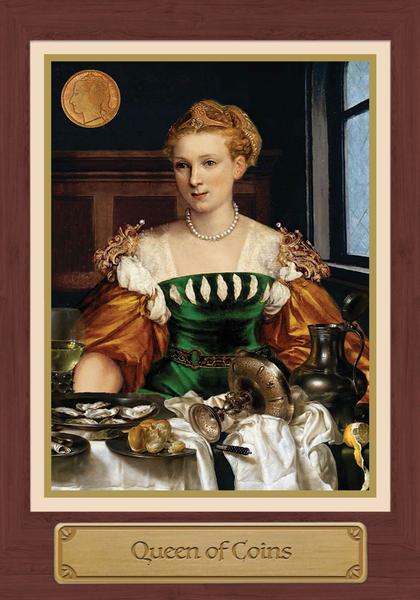
The court card of Capricorn is the Queen of Pentacles. The King of Pentacles may also be used to represent a Capricorn native, male or female, in a reading
The Touchstone Tarot, Kat Black
Card Meanings: queen of earth, earth mother, a wise woman, hedge witch, a vet, conservationist, farmer, ecologist, financial, business woman, Gaia, Demeter, a practical woman, grounded, wise, instinctive, knowledgeable, prudent
She will put the food on the table. She will make things beautiful. When she finds a mess, she will clear it up. Help her or don’t help her. But don’t get in her way.
Venus retrograde in Capricorn
Venus, planet of love, beauty, luxury and therefore finance- and also vulcanicity is retrograde in Capricorn at the moment, 19- 29 December.
It is not only Mars who can wage war. Oh no. Basalt planet Venus is Aphrodite, the deity and genius loci of Sicily, home of Etna. Not for nothing was she married to the smith of the Gods, Vulcan or Hephaestus…even if she did cheat on him with Mars/Ares.
Here then in astrological terms is volcanic activity here on Capricornian Earth, and this year it is happening in Capricorn season, literal or metaphorical. Here is vulcanicity. La Palma. Mount Semeru.
Here in human dealings this month is an undercurrent of beauty on the back foot, or beauty demanding its dues. Shall it smoulder or shall it erupt this month?
“For beauty, we will pay. “- Kraftwerk, The Model.
Capricorn can seem almost superhuman, like Duracell bunny-goats, virtually tireless. This persistence, this determination ensures their ultimate success at anything that demands their attention or they find worthy of their interest.
They are not do-gooders but they are very conscious of their obligations to others, quick to pay their debts and if someone does them a favour, they will not rest until it is returned, as a matter of personal dignity and to safeguard their space, freedom and autonomy as much as anything else.
Capricorn
But of course there is no such thing in reality as THE Capricorn personality. You are a unique individual. Your zodiac sign (sun sign) is a major keynote, but it is nothing like the full picture in real life – or in astrology. There are many other factors in play; your rising sign, your Moon sign, the planets in your houses, your decan and the degree of the actual day you were born. So for one thing, if you don’t feel like a ‘typical’ Capricorn, perhaps you are a second or third decan Capricorn, rather than a ‘most typical’ first decan Capricorn.
What are the decans?
The Zodiac is a belt of sky tracking the path of the sun across the sky over the course of the year. We call this pathway of the sun ‘the ecliptic,’ and the zodiac belt shares this same pathway. The paths of the Moon and visible planets are all contained within the belt of the zodiac. Each zodiac sign represents a 30 degree section of this belt. Each sign is then sub-divided into three blocks of ten degrees, equalling about ten days in length, with slight variations.
This gives us the zodiac decans, from the Latin meaning ten. They are sometimes nicknamed ‘the thirty- six faces of astrology,’ because they add more human faces to the story. The decans break down the story of each zodiac sign into three, more in-depth chapters, affording extra insight into your sign, and what it means in real life.
First Decan Capricorn
Capricorn-Capricorn
Dates: 22 December-31 December
Planetary rulers: Saturn-Saturn
Tarot card: Two Pentacles
From The Gilded Tarot
Card meanings:juggling of finances, putting eggs in different baskets, being in two places at once, juggling jobs and responsibilities, or two jobs, commuting, relocation, infinity, the ever changing balance
This Capricorn decan does not suffer fools gladly. This is a serious, profound and powerfully minded individual. Many people want to know them, and they are people people, yet they are cautious and have few truly intimate friends. But those friends are true and lasting, while many others come and go.
They have a dry, wry, droll sense of humour, a keen sense of the ridiculous, and a sense of fun, but others who are less confident can feel intimidated by their intelligence. They have gravitas with a natural personality authority which some may find challenging. This decan will not be pushed around, any more than the mountain ibex doing battle on the side of the mountain is ready to give way to its rival without a fierce fight.
This decan dislikes whatever it considers cheap and easy sentiment, but is utterly devoted in a pragmatic, non-demonstrative way, to those they love and will show it in their deeds, whether or not they say it with words, seemingly so fearless, whether they really are afraid or not, and so sure of foot on the rockiest of mountain slopes.
Famous first decan Capricorns in history: Johannes Kepler, Isaac Newton, Louis Pasteur, Ava Gardner, Woodrow Wilson, Mao Tse-Tung
Second Decan
Capricorn-Taurus
Dates: 1 January-10 January
Planetary rulers: Saturn-Venus
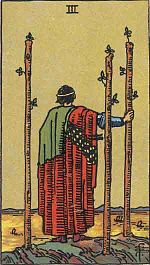
Tarot card: Three Pentacles
From The Gilded Tarot
Card Meanings: skill, study, patience, taking care, taking pride in your work,arts, crafts, beauty, heritage, architecture, cooperation, teamwork
This decan is also a serious individual but somewhat less forthright in manner, more easygoing and ruled by Venus, cheerful, agreeable and with softer edges all round. This decan in general is the most artistic or musical Capricorn, though again, the style is low key. This person is usually considered highly trustworthy, and generally deserves that reputation, while they themselves are cautious of trusting others. They crave beautiful surroundings and creature comforts. (Well, who doesn’t?) Their physical appearance matters to them a great deal, from which we can see an added tragedy for some of the famous subjects of this decan.
Famous Second Decan Capricorn subjects: Joan of Arc, Louis Braille, Elvis Presley, Richard Nixon, Michael Schumacher, Stephen Hawking
Third Decan Capricorn
Capricorn-Virgo
Dates: 11 January-19 January
Planetary ruler: Saturn-Mercury
Tarot card-Four of Pentacles
From The Gilded Tarot
Card Meanings: thrift, prudence, saving money, holding on to money, hoarding, investing, saving, preserving, conserving resources, damage limitation, self- protection, the need for order, stability and freedom from worry
This decan, ruled by Mercury, is something of a perfectionist; curious, analytical, rational and intellectual, somewhat changeable. Saturn’s overarching influence will tend to make this Mercurial Capricorn more practical and cautious than Mercury subjects of the other zodiac signs, but they may not need to work so much as the other Capricorn decans to get where they need to be, helped by that agile Mercury influence, balanced by the conscientiousness of Virgo. They drive themselves very hard and can get bogged down, obsessing over detail in
They are deep, serious, and thoughtful, but are quick witted and up for fun, and may be happiest with a lively, interesting partner, who can help them take their mind off their own preoccupations and lift their mood when they walk in after a hard day.
Famous Decan 3 Capricorn subjects: Martin Luther King Junior, Edwin ‘Buzz’ Aldrin, Aristotle, Kevin Costner
Many Happy Returns, dear Capricorn. This video makes me think of you.
Here we are again in the zodiac season of Sagittarius the Archer, aiming high, reaching for the light as the sun sinks to the solstice and the daylight dwindles. What is the story behind this mutable fire sign?
Common associations
Symbol:
Date of Birth: Nov 21/22 to Dec 21
Ruling planet: Jupiter
Element: Fire Quality: Mutable- the ending of one season, and the beginning of another
Key phrase: I seek
Body: Thighs
Birth Stone: Topaz, Citrine, Turquoise
Colour: Light Blue
Tarot card: Temperance: Timing, Moderation, Education, Solstice, Healing of Chiron. Also The Knight of Wands, and the 8, 9 and 10 Wands.
Public Domain: Rider-Waite
Astronomy
Source :Wiki
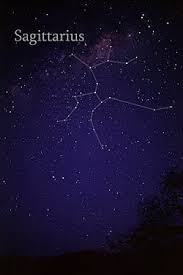
Sagittarius, the zodiac sign inspired by the constellation of Sagittarius, from the Latin meaning Archer, was recorded in the 2nd century by the Greek astronomer Ptolemy.
The constellation of Sagittarius is near the centre of our galaxy, the spiral Milky Way, mainly visible in the southern hemisphere June-November. In the Northern hemisphere we can see it low on the horizon August- October.
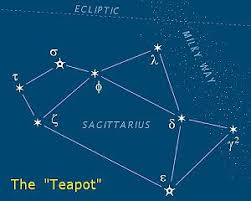
Sagittarius gets its nickname, ‘The Teapot’ on account of its vaguely teapot-shaped star pattern, or asterism.
To find ‘The Teapot‘
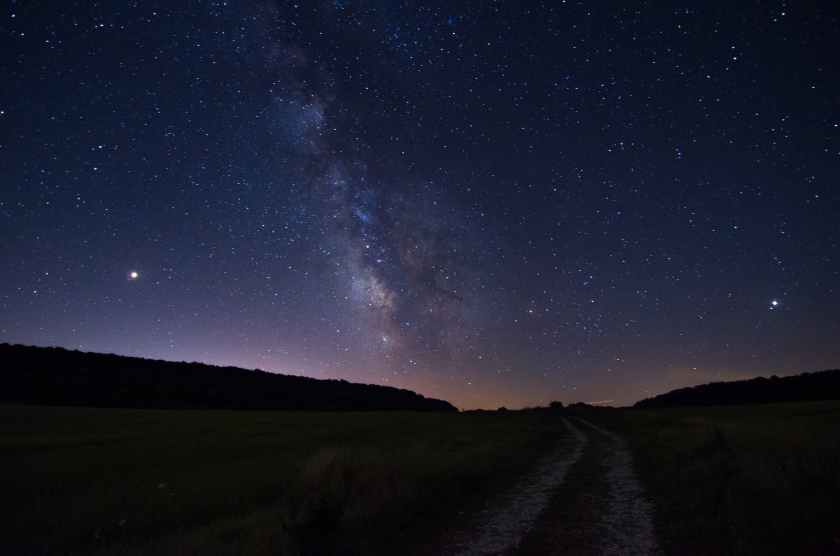
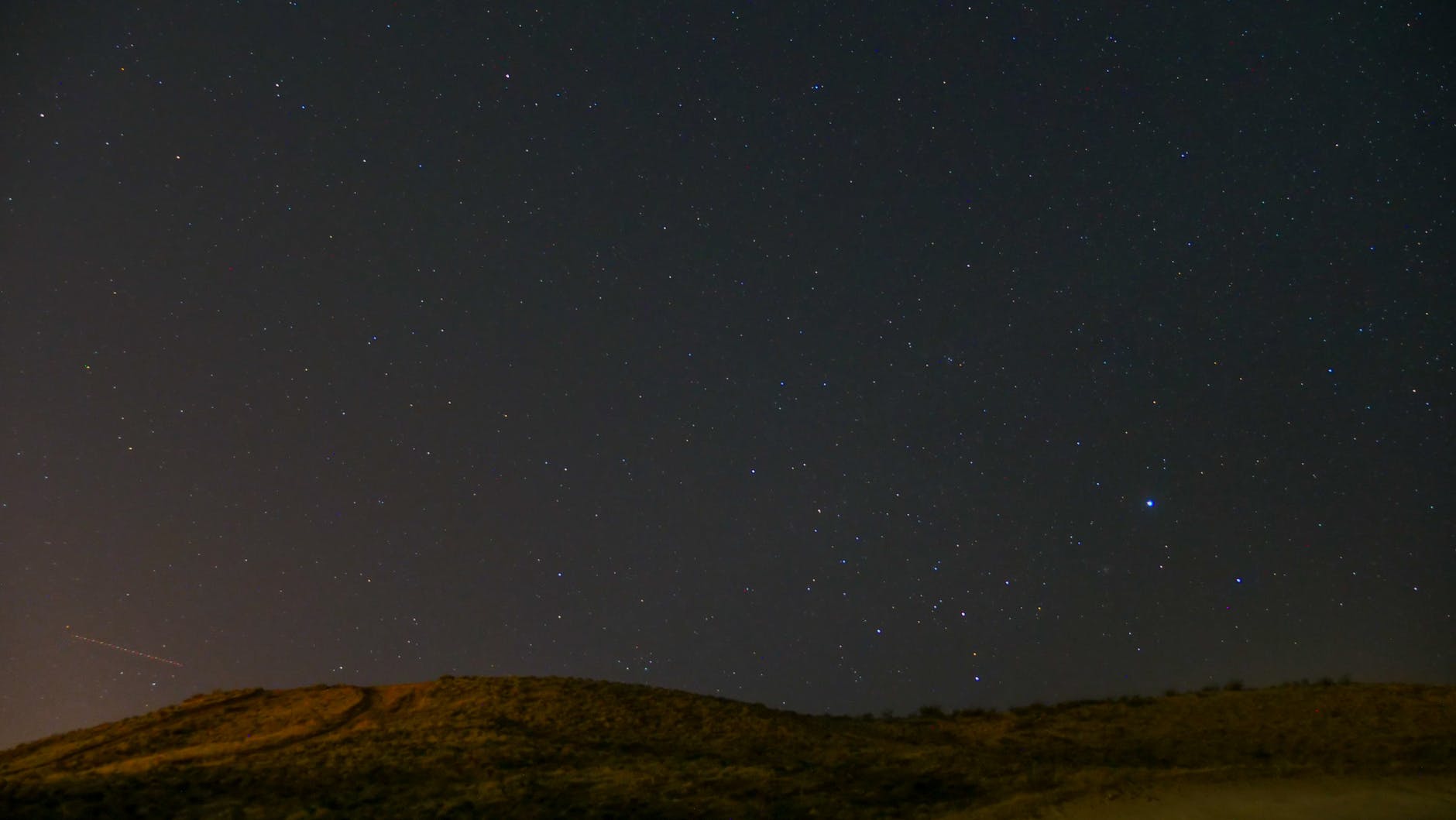
The best time to look is in August or September. We need somewhere really dark, locating the hazy band of The Milky Way stretching right across the sky. Looking up in the northern hemisphere, the Milky Way seems to bulge as it descends to the southern horizon. This ‘bulge’ is roughly the middle of the Milky Way and is contained within the boundaries of the constellation of Sagittarius.
Photo by u200bu0468u0477u047bu048f u046au0454u0459u0469u04e1u04c4u047bu0487u0477 on Pexels.com
Sagittarius contains a massive star-forming region, the Omega Nebula, home to the bright blue hyper-giant Pistol Star, one of the brightest stars in the Milky Way, discovered 1930 using the Hubble Space telescope.
The Pistol Star is largely hidden in the dust of its own nebula, but it’s 100 times as massive as our Sun, and 10,000,000 times as bright.
Mythology
Sagittarius is the ninth sign in the Zodiac, not to be confused with the constellation itself, and represents those born between Nov. 22 and the advent of winter solstice, Dec. 21.
Sagittarius is nowadays generally associated with the ancient Greek story of Chiron but the story is far more ancient and goes back to Mesopotamia in the 26 century BCE, to the story of Pabilsag, a deity or divine king of a city called Larak.
The story of Pabilsag was handed down to the Greeks through the Sumerians.
The Sumerian word ‘Pabil’ means ‘ancestor or relative’. Combined with the final element ‘sag’, meaning ‘chief, head, tip or foremost,’ his name can be translated as the ‘Chief Ancestor’ or ‘Forefather’.
The Archer is a hunter just as our forefathers were hunters at the dawn of human civilization.
Here, 3 millennia BC, we portray him as a winged centaur type figure, and yes, he is an archer too, and his arrow points at the heart of Scorpio, the red star Antares. But look at Pabilsag. No horse’s tail! He has a scorpion’s tail as the wheel of the Zodiac turns, and sure enough, as Sagittarius comes galloping in, we are leaving behind the sign of Scorpio.
Sagittarius is a solitary hunter. He does not work as one of a team, bringing down the really big prey. He is an individualist, working alone, just as many a hunter or trapper still hunts alone in winter.
The constellation of Sagittarius-Pabilsag is seen within the Milky Way, rising from the southern regions close to the horizon into the higher reaches of the skies. This section of the Milky Way represents a symbolic bridge or a rainbow for the souls of the dead on their way to the afterlife, as the arrival of Capricorn draws near, marking the advent of the winter solstice.
Sagittarius, or Pabilsag, is a ‘psychopomp’ – like Hermes, the messenger of the Gods of Ancient Greece. He is both guardian and guide ofthe dying year itself, and offers safe escort to the souls of the dying as they ascend to the heavens through the gates of Capricorn.
Chiron the wounded Centaur
Most modern versions of the story refer to much later, classical variants of the old Babylonian myths, and say that Sagittarius represents the gentle, cultured centaur, Chiron, who was accidentally shot by Herakles with a poison arrow.
The centaurs were a rough lot, hard- drinking, hard- fighting and smelly – not remotely glamorous. The legends of the centaurs may originally have arisen from perfectly mortal reality of ancient Greek cowboys.
But whatever the centaurs were, Chiron ‘the wisest and justest of the centaurs’ was something different, representing a bright star of hope for the race of the centaurs, and for Humanity itself, as collectively it strives to rise above the ever present tyranny of the Id and its own worst nature.
Here he is, teaching the young Achilles to play the lyre. Chiron had many pupils; Asclepius, Ajax, Achilles, Theseus, Jason, Peleus, Perseus, and Phoenix. And he taught Herakles, who brought about his death, when he was sent there to be schooled with Chiron.
Herakles was sent after his killed his music teacher back home. His tutor, Linus, criticized his playing, and Herakles smashed his lyre over the teachers head, killing him. Though in some accounts he used a stool.
And so he was sent to be schooled by the illustrious Chiron. And for some time, all was well, until one day Herakles got caught up in a fight and in the confusion accidentally wounded Chiron, shooting him with a poisoned arrow dipped in the venom of the Hydra.
Chiron was left in terrible and permanent pain. He was wise in the ways of medicine, none wiser, but he could not heal himself, and none could help him. Nor could he die, being an Immortal.
Still, he carried on until he could bear it no more, and asked Zeus to release him from immortality so that he could escape the pain in the blessed release of death.
Zeus placed him in the heavens as Sagittarius. Or did he? There is a bit of a question here because Chiron already has another constellation named after him- Centaurus.
And to add to the confusion, there is another version of the story of Sagittarius, referring to him instead as Krotos, a satyr who lived on Mount Helicon with the Muses. Krotos was the son of Pan and Eupheme, and his mother had nursed the Muses. He was a renowned archer, hunter, horse rider – hence a possible source of confusion with the centaur, and besides all this, a devotee of his childhood companions, The Muses and their arts.
Krotos means ‘One who Claps his hands.’ He was credited by the Greeks with not only having invented archery, but introducing the convention of applause at artistic performances.
It was the Muses who, for his own musical talents, when Krotos died, asked Zeus to place him among the stars, which he did, transforming him into the constellation Sagittarius, says this variant of the zodiac story.
So Sagittarius is either the cultured wounded healer, Chiron, already represented in the constellation Centaurus, or he is the cultured satyr, Krotos; goaty, horse-riding archer, culture vulture and hunter extraordinaire as the sun is sinking to the winter solstice.
Chiron or Krotos? Take your pick.
Or go Babylonian with Pabilsag.
The Muses
Sagittarius is keenly intuitive, and usually has a marked talent, a gift, in the field of the Arts. Sagittarian subject Winston Churchill for example, was clearly psychic, subject to visions and feelings of premonition, and also painted.
Delphi said there were three Muses. But c 600 BC Hesiod wrote in his Theogony that there were Nine Muses, the daughters of Zeus and Mnemosyne (Memory personified) and this is the version that has generally stuck.
The Muses, it ought to be mentioned, were not necessarily always benign. They were touchy for one thing, sensitive to human hubris, and liable to exact vengeance of anyone they decided was getting above themselves.
Kalliope ‘She of the Lovely Voice’ was the muse of epic poetry. Also of Diplomacy.
Klio ‘She Who Proclaims’ was the muse of history.
Erato ‘The Lovely One’ was the muse of love poetry.
Euterpe ‘She Who Pleases’ was the muse of music.
Melpomene ‘She Who Sings’ was the muse of tragedy.
Polyhymnia ‘She of the Many Hymns’ was the muse of sacred poetry.
Terpsichore ‘She Who Delights to Dance’ was the muse of dance.
Thalia ‘The Cheerful One’ was the muse of comedy
Urania ‘The Heavenly One’ was the goddess of astronomy, astrology, and later, Christian poetry.
The Astrological Personality of Sagittarius
Of course there is no such thing as THE Sagittarius personality. Everyone is unique. We are speaking here of an archetype. All the zodiac signs represent archetypes– something that is considered to be a perfect or typical example of a particular kind of person or thing.
Sagittarius is the Archer, the eternal student, aiming high and far even as the sun sinks; the optimist, the voyager, maybe a seer or a prophet.
The archer is a hunter. This time of year was the time for hunting. The crops were gathered in and finished for the year. Meat would be caught and hung, cured, salted away for the hungrier months ahead.
But since the origins of Tropical or western astrology were based on the seasons in the northern hemisphere, what if we live in the southern hemisphere?
Some astrologers have suggested that if you were born in the southern hemisphere and your zodiac sign really doesn’t feel right, why not look up your opposite zodiac sign and try that on for size, see if that feels like a better fit. So for Aries, read Libra’s horoscope, for Taurus read Scorpio, for Gemini read Sagittarius, and so on.
These are astute, clever, capable people but they need career flexibility, and they may refuse to fail to apply themselves if bored. Like Gemini, they are prone to restlessness. They may fail to stick at a job or a succession of jobs, and may struggle financially long term in consequence.
Hence their challenge, but also their guiding light is the idea of Temperance, personified in the Tarot, symbolizing patience, prudence, and the art of good timing.
They can do domestic. But you wouldn’t really call it how they roll. And they do tend to roll, from place to place, job to job, and a rolling stone gathers no moss. The problem here being the other things it doesn’t gather either, such as a steady income, or savings or other means of security in old age, if Sagittarius does not find a way to balance their great need for freedom , space and independence with prudence and good timing.
Sagittarius tends to have lots of friends. More than almost anyone else, so much so, family and friends can feel neglected at times, forgotten, when Sagittarius goes off yet again, devil may care, to share experiences with new best friends.
Sagittarius must have inspiration, and the freedom to follow it, and to roam. But this humanitarian, kindly, if restless rolling stone sooner or later almost always comes trotting, or should we say, rolling home again, expecting to find their loved ones exactly where they left them. And usually, they will. Though others too, do not enjoy being taken for granted, and this may need care.
Sagittarius will be the star of this show, but what they really need for domestic happiness is a quietly confident, self-reliant partner.
Sagittarius is a potential high flyer, like an arrow, well aimed, hard working and clever. They have an enlarged curiosity, always learning. They are adventurous and progressive, and work best in teams within large organizations.
They tend to be good at earning money, but not so good at saving it, generally due to impulse buying. They need plenty of physical activity outdoors and to be in contact with nature. They tend to be animal lovers. At home, they tend to be happier married than single, and they are co-operative, fun, efficient and reliable partners but they can be detached, reserved, restless and impulsive, and they sometimes fail in consideration to their partner in their search for independent fun, seeking new adventures outside the home.
They may be psychic; religious or spiritually inquiring, with a prophetic or visionary gift which they may express through music, writing, animal connections or group endeavours for some common cause.
But as we have already observed, of course there is no such thing in reality as THE Sagittarius personality. Your zodiac sign (sun sign) is a major keynote, but it is nothing like the full picture in real life – or even in astrology.
There are many other factors in play; your rising sign, your Moon sign, and the planets in your houses, elements, modes, aspects, transits, the decans, degrees and so on.
If you don’t feel like a ‘typical’ Sagittarius, perhaps you are a second or third decan Sagittarius, rather than a ‘most typical’ first decan Sagittarius.
The Zodiac is the arc of the sky as visible from earth, which tracks the pathway of the sun, ‘the ecliptic.’ Obviously, what we can see depends on where we are on Earth at any given time, but the zodiac belt follows this same pathway.
The zodiac belt is 16 degrees deep with the ecliptic running along the middle, rather like a layer in a cake. The layers of this cake are 8 degrees above the sun’s pathway- the buttercream filling of the ecliptic- and 8 degrees below.
The Greeks divided this imaginary zodiac belt into twelve sections, choosing this number for ease of arithmetic, and named them after constellations found along this same pathway. There are more than twelve constellations, above the ecliptic, or straddling it or below it, but the zodiac signs named after them, recorded by Eudoxus of Cnidus and Ptolemy of Alexandria get their name from just twelve, again, for reasons of arithmetic.
Each zodiac sign represents a 30 degree section of this 360 degree belt. Each sign is then sub-divided into three blocks of ten degrees, roughly ten days in length. This gives us the decans of the zodiac, nicknamed ‘the thirty six faces of astrology.’ The decans break down each zodiac sign into three sub-chapters, shining extra light on the story.
First Decan Sagittarius
Sagittarius-Sagittarius
Dates: 22 November-30 November
Planetary rulers: Jupiter and Jupiter
Tarot card: Eight of Wands
From The Gilded Tarot
Card Meanings: speed, changes, news, sudden developments, arrivals, departures or situations that may prove to be short lived- a ‘flash in the pan.’
Jupiter, planet of expansion, progress, ambition and optimism is both the ruler and sub-ruler of this decan. There is idealism and a love of knowledge here. Sagittarius-Sagittarius is an enthusiast for life, upbeat, spontaneous, and fun. They are highly competitive, and don’t like to lose, with intellectual capabilities of a high order and a keen sense of justice,
There is often a fascination with medicines, shamanism of any kind, and an interest in ancient cultures and their healing traditions. Sagittarius loves wide-open spaces, fresh air and being close to nature.
Sagittarius-Sagittarius is outgoing, yet actually rather private and reserved, not easy to get to know well. They can be the life and soul of the party, but when it comes down to it, they confide in very few.
Famous first decan Sagittariussubjects: Winston Churchill, Pablo Escobar, Tina Turner, CS Lewis, Britney Spears, Gianni Versace
Second Decan Sagittarius
Sagittarius-Aries
Dates: 1 December-11 December
Planetary rulers: Mars and Moon (Aries Triplicity)
Mars brings to this decan an adventurous spirit; energy, courage and ambition. This decan could be an explorer or adventurer, but does well in business and commerce with marked executive abilities. They are natural sportspeople or soldiers.
They are often highly physically attractive to others, and though they are reserved, and may even push people away, guarding their space, they are passionate when in love with a reputation as potential heartbreakers. They are also known for having a bit of a short fuse, and for bearing grudges.
They need to spend plenty of time outdoors and need lots of physical activity to be at their best.
Second Decan Sagittarius are kind and courageous, clever, good with their hands, quick with their minds, technically proficient, independent, and no matter how rough a time they are having, as with the first decan, they will usually keep that to themselves, showing their best face to the world.
Famous Second Decan Sagittarius subjects: John Kerry, Kirk Douglas, Jim Morrison, Tyra Banks, John Malkovich
Third Decan Sagittarius
Sagittarius-Leo
Dates: 12 December-21 December
Planetary ruler: The Sun and Saturn (Leo Triplicity)
Tarot card- Ten of Wands
From The Rider-Waite-Smith Tarot
Card Meanings: effort, determination, shouldering a burden, ‘going to town,’ ‘taking it to town.’
Ruled by the Sun, the centre of our solar system, this person is very much the centre of their own universe. There is a great love of change and a desire for reform. This decan is full of enterprise and novel ideas. They are realists, possibly cynics, but they are very much in tune with their instincts, and make great researchers, investigators or teachers.
They are not known for small talk. They say what they think, and this can give them a reputation for being rude or judgemental. They may have a dark sense of humour. But their sub-ruler, the Sun, which stands for warmth, pride and vitality, joining up with beneficent Jupiter means they have initiative combined with magnetism, and when they feel like it, a talent for making other people laugh. (Not that there was much funny about Stalin but, every zodiac sign has its seriously bad boys and girls)
Famous Decan 3 Sagittarius: Jane Austen, Beethoven, Nostradamus, Joseph Stalin, Steven Spielberg
The Cusps of Sagittarius
22 November- 25November
This earlier native has Scorpio qualities. Their ruling planets are Jupiter and Mars. They are courageous with great physical endurance. They tend to take on a lot of responsibility, maybe too much, which can load them down and hold them back. They take much care over their work, and have a vivid imagination but will voice share strong opinions, and though they are sensitive, they can be tactless, and in consequence are sometimes misunderstood.
19 December -21 December
This later native has Capricorn tendencies. Their ruling planets are Jupiter and Saturn. They are generally very good company, entertaining, easygoing, witty and well-informed although they sometimes rub other people up the wrong way. They will not hesitate to disagree with others, and will criticise other viewpoints. On the other hand, they have a strong sense of duty, they seldom betray a confidence and they don’t interfere in matters which don’t involve them directly.
Happy Birthday Sagittarius!
We can expect volcanic events this month, literally and metaphorically,
2022 is looking like a pretty good year for you, with bright prospects for work and finances, thanks to a big fat, optimistic Jupiter influence. Ambition and hard work really could pay off for you this coming year. Put your back into it, Ten of Wands style.
What is the valley of death? We know it as a poetic expression from the Bible, but what might it mean in reality? What is the limit of the definition of reality anyway, when it comes to the imponderables. In algebra, we have to rely on symbolic placeholders too, as in X and Y.
Is the valley of death a poetic description of the end of life experience, a final sensory experience, a vision explainable in terms of a firing-off of neurons by the dying brain, or could it be something more?
I do not advertise as a psychic or clairvoyant or a medium, but tarot readers may get listed as such because there is no separate listing for Tarot in the telephone directory.
But why don’t I advertise as such? Well, Tarot card reading for divination, strategy and support is the service I undertake to guarantee to deliver, as my professional promise, and this is the bottom line and this service depends on acquired skill underpinned by knowledge. OK. But am I psychic? Yes. So are you, most likely, but psychic insights and experiences happen when they happen. Like a wind that ‘bloweth as it listeth’ – psychic insights may be confidently expected, but cannot be guaranteed.
Learning how to read cards, or any other system of divination, although card reading can facilitate them however, as the reader goes down a rabbit-hole, descending into a sort of Hades, seeking to find the ‘right’ interpretation of the cards in any given context. A reader can be asked absolutely anything about anything, and can never prepare, but only prepare to respond.
Every reader has their own story to tell, about how and why they started to learn to do readings. It need not start with a history of psychic experiences. Not at all. But often, it does and in a way, it did with me
‘The Mind has many corridors’ wrote Emily Dickinson. The world is older and stranger, not only than we do imagine, but more than we can imagine.
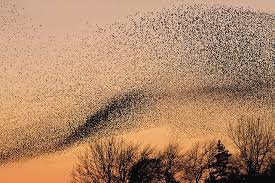
All animals are pattern seekers, pattern makers or pattern breakers, whether in order to hunt or to hide. Man is hardwired for the power of pattern, and communicating pattern, and the meanings of pattern, and of breaks in pattern, is the eternal task of storytelling. Man – meaning all of Mankind- is a storytelling animal.
‘In the beginning was the Word’.
The Day I met a Dead Man
Many years before I ever so much as opened a pack of Tarot cards, to be grabbed by the art and story telling embedded in them, I met a dead man on the street, a stranger, though we didn’t so much meet. It was more of a case of receiving a summons.
Leicester, 1988. I had just had coffee with a friend I’d used to work with at the Costume Museum in Wygston’s House, now a restaurant. My friend had been the curator at that time and way, way back, the eponymous Roger Wygston had been a wealthy wool merchant and several times Mayor of Leicester.
“Roger Wygston was born about 1430. His father, William, made the family fortune from the wool trade in the first half of the 1400s. Roger was elected chamberlain in 1459 and mayor of Leicester in 1465, 1471 and 1487. He was Member of Parliament for Leicester in 1473 and 1488. He died at Whitsun 1507.” More HERE
I worked in a little room upstairs, putting the Museum’s collection records, index card system on to computers for the first time, and helped put together an exhibition telling the story of hosiery and featuring our star exhibit, a Coptic sock from about AD 400. It had a bifurcated foot and horizontal stripes in red, brown and green.
Wygston’sHouse, Public Domain
I had coffee and a catch up with my friend, and then we said goodbye. I had a legal appointment at the top end of New Walk at 2.00 PM.
There was a time I walked up and down New Walk almost every day, and I worked a short while in the Museum there too. The portico entrance seen here on the right. This one, Wygston’s House and others were all part of the Leicestershire Museums Service run by the County Council.
New Walk and the Museum, Leicester
I was selling a house among other things, with a lot going on at this time, some of it stressful. Anyone reading this may dismiss the following account on those grounds if they feel so inclined. This would be a perfectly reasonable option, if personally somewhat uncomplimentary in relegating the writer to the role of unreliable narrator, but that would certainly be the easiest, least challenging take on it.
Hardly sooner had I set off walking heading off to this appointment than I began to feel peculiar. Not exactly unwell, but certainly not good. There was a crackling in my ears, white noise like an un-tuned radio. Spots started dancing in front of my eyes, fizzing red and black. My body felt weirdly heavy.
I had never fainted in my life to recognize what that felt like, but, thinking maybe I was about to faint, I decided to keep on walking, thinking it would clear my head. But I was unaccountably scrambled, disorientated.
I could not for the life of me, remember or think where I was supposed to be going. I was on autopilot.
My feet took charge, leading me as it were, one step in front of the other until only a few minutes later, I had crossed a busy street.
I followed a small pedestrianized back street round the curved back wall of what was still called Marks & Spencer then, now M & S and then I came to a standstill.
There was a man lying on his back in the narrow street, sprawled across the pavement. A paramedic was attempting resuscitation, another kneeling by them, a small crowd anxiously watching, an ambulance waiting, .
There he lay, defenseless against exposure; an older man, but not exactly elderly, his trousers unbuttoned and unzipped, showing purple underpants, while the paramedics worked on him. His purchases, a few oranges presumably just bought in the market, had rolled out of his striped canvas shopping bag, and into the gutter.
I kept a distance, standing alone, with a blindingly sudden feeling of certainty, a sensation of astonished comprehension, ‘oh, that’s why I came this way. He fetched me.’
The fog rolled back and now I remembered I was on my way to the New Walk. I was by no means far out of my way, but nor would I have naturally thought to come this way.
I knew it was no good them trying to resuscitate him. I remember thinking, ‘he’s not in there anymore’.
I had the feeling, not only was the man not in his body any more, he was standing close beside me, on my right.
I saw nothing, heard nothing and felt nothing in that moment except a pang on his account, but this, with a dissociated neutrality. I think perhaps I was a little shocked, but I wasn’t frightened, only sad, not so much at the suddenness of the man’s death, but that he was caught so unprepared, and was so very frightened, finding himself unable to get back in his body that he had sent an SOS and pulled me off my own path to bring me, a perfect stranger, to where he lay, so abruptly evicted from his own body in a city centre back street on a sunny day.
Maybe it works something like radio waves, and I happened to be in the right place at the right time, and I was tuned in on the right frequency, like the story of the haunted house in my previous post.
I talked to him, and told him he had done the hard bit, and not to try and get back in, that he’d had a most tremendous shock, but it was OK, it was all right, and there was somewhere else he needed to go now, but it was perfectly all right.
Had I thought of it I might have said a prayer. I’m not religious, but words have power across the boundaries of time and space, and who knows what other boundaries.
I reckon that the old Wakes, company, food, alcohol, song, were a wise tradition rooted in this ancient understanding. That the dead might need a bit of time to process what has happened. That they might need encouragement and reassurance before they set off on their lone but universal odyssey once more to greet the rising sun. Read Here about Wakes.
A friend of my mother’s once told her that she had not been close to her father. But after he died and she went to see the body and say goodbye, she thought his face did not look quite right. She felt he looked frightened. The mouth was twisted. She sang to him ‘The Lord Is My Shepherd’, and she thought he must have heard her, because his mouth relaxed, and all at once his face looked quite different.
Some go swiftly and easily through the Valley. Others, not so.
The archangels Uriel and Michael are psychopomps; escorting the dead as they ascend back up to the heavens via the Gate of the Gods in the constellation of Capricorn.
In Greek and Roman mythology, the god Hermes or Mercury, would escort the souls to the banks of the River Acheron, or The Styx if you prefer, to wait for Charon the Ferryman and the crossing to the Isle of the Dead and the Fields of Asphodel.
Wiki: Psychopomps (from the Greek word ψυχοπομπός, psychopompós, literally meaning the ‘guide of souls’)[1] are creatures, spirits, angels, or deities in many religions whose responsibility is to escort newly deceased souls from Earth to the afterlife. Their role is not to judge the deceased, but simply to guide them.
23 The Lord is my shepherd; I shall not want.2 He maketh me to lie down in green pastures: he leadeth me beside the still waters.3 He restoreth my soul: he leadeth me in the paths of righteousness for his name’s sake. 4 Yea, though I walk through the valley of the shadow of death, I will fear no evil: for thou art with me; thy rod and thy staff they comfort me.5 Thou preparest a table before me in the presence of mine enemies: thou anointest my head with oil; my cup runneth over.6 Surely goodness and mercy shall follow me all the days of my life: and I will dwell in the house of the Lord for ever.
But I didn’t think of that. I was young, inexperienced in such things, too astonished and unprepared. So that was all I said to him, and then I went on my way and I put it out of my mind for a long time to come.
But I hope that he did hear me, however inadequate the response, if only to know that yes, he might have left his body, but he still existed and he stil lhad agency.
The living were still trying to help him, and though they could neither bring him back nor accompany him on his forward journey, whatever that might be, still, he had sent out a distress signal, and someone had received it and responded.
Most of us know our sign of the zodiac, but what is the story behind the sign? Read on for the story of Libra…
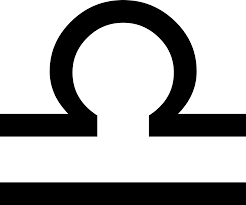
Libra marks the advent of the autumn equinox in the northern hemisphere. The scales of Libra represent this temporary state of balance in nature, and the closest equality of the hours of darkness and daylight.
Birthstones: Sapphire- September birthdays. Opal- October birthdays
Lucky Number: 6 (community, childhood)
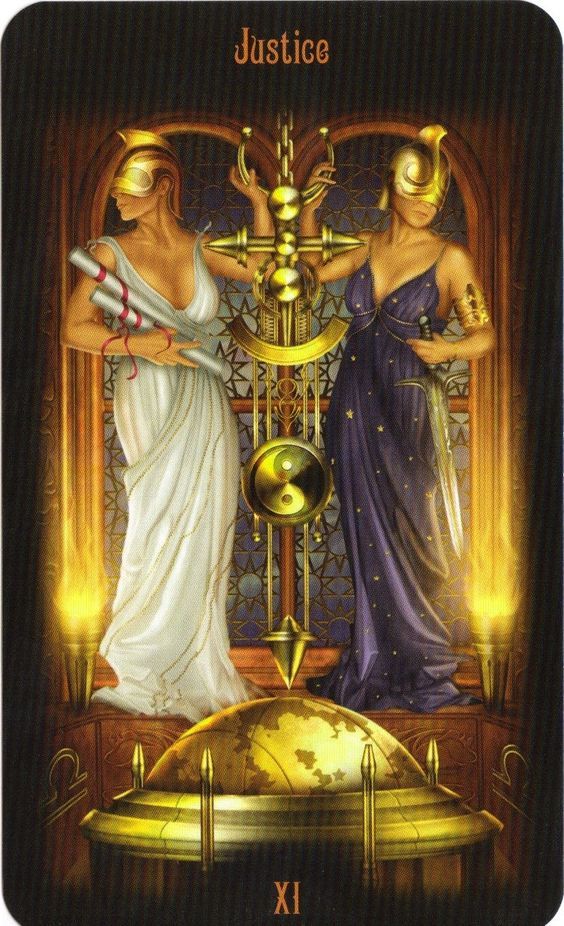
Tarot card: Justice Minor Arcana cards: 2, 3, 4 Swords
From The Legacy of the Divine Tarot, illustrator Ciro Marchetti
Astronomy
Constellation Libra
Libra (which technically, though I don’t know anyone who actually pronounces it this way, is pronounced Ly-bra as in Library) is a small but distinct constellation next to the constellation Virgo in the evening sky.
It looks rather like a lopsided diamond and is visible in the northern hemisphere between April and July and is most visible directly overhead at midnight in June.
It is 29th in size of the 88 known constellations and is is bordered by the head of Serpens to the north, Virgo to the northwest, Hydra (the biggest constellation) to the southwest, Lupus to the south, Scorpius to the east and the serpent bearer, Ophiuchus to the northeast.
Libra, like Cancer, is fainter from Earth than other constellations, and contains no spectacular first magnitude stars, but it contains a very old galaxy cluster that is thought to be around 10 billion years old, the same age as The Milky Way, our own galaxy.
Libra also contains a red dwarf star, Gliese 581, which has three orbiting planets, one of which may possibly be suitable for life. This system is about 20 light years from Earth.
Libra though recognized as an asterism long before, was only formally classified as a constellation by the Romans, and used to be regarded, not as a constellation in its own right, but as part of the neighbouring constellations Scorpio and Virgo.
This legacy explains the names of its brightest stars; a binary star about 77 light years from Earth. α Librae. called Zubenelgenubi, in Arabic “the Southern Claw” in Arabic. The second-brightest star is β Librae, or Zubeneschamali, the Arabic for “The Northern Claw.”
Once upon a time, about three thousand years ago and until AD 730, the Sun used to move into the constellation of Libra at the time of the northern autumnal equinox (c. September 23) and stay there until about October 23.
This changed over time, owing to the wobble of the Earth, owing to an effect called the precession of the equinoxes so that since 2002, the Sun has actually appeared in the constellation of Libra from October 31 to November 22.
HOWEVER This does not affect the dates or the meaning of the zodiac sign of Libra which is based, not on the science of the astronomy in real time, but on an arithmetic model.
Mythology and History
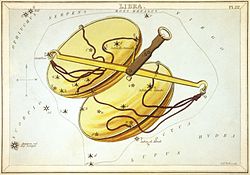
From Urania’s Mirror
Libra was known in Babylonian astronomy as MUL Zibanu (the “scales” or “balance”) with an alternative name, the Claws of the Scorpion. In ancient Greece too, Libra was seen as the Scorpion’s Claws.
The scales were sacred to the Babylonian sun god Shamash, who was the patron of truth and justice, so that since these very early times, Libra has been associated with law, fairness and civility.
Libra was first recognised as a constellation in its own right in ancient Rome, when it began to represent the scales held by Astraea, or Dike, who in Greek mythology was actually associated with Virgo. In ancient times, the stars of Libra, The Scales, were also intermingled with those of Scorpius by the Greeks, but were always considered as a separate group by the Romans.
According to the writer Manilius, whether this was factually correct or not, more Roman judges were born under the sign of Libra than under other zodiac signs.
Venus and Libra
Libra, like Taurus, is traditionally ruled by Venus, planet of love, beauty, friendship, diplomacy- and also wealth, because wealth provides luxuries.
The Birth of Venus, Botticelli
Everything has its shadow side of course, and Venus can also mean over indulgence, undue materialism, or uncontrolled desires or obsession.
The Libra Archetype
The Archetype of Libra is The Judge.
All zodiac signs are archetypes, meaning something that is considered to be a perfect or typical example of a particular kind of person or thing,
The zodiac signs paint a ‘typical’ portrait of a person born at a particular time of year, in a particular season. A baby born in summer arrives into a different physical environment from a winter baby; differences of parental diet, especially in the days long before supermarkets where food was a matter of seasonal availability, plus other environmental factors; temperatures, hours of daylight exposure and so on, with potential physical effects on that baby’s makeup and development.
Libra is one of the three zodiac air signs, the others being Gemini and Aquarius.
Libra is the only sign that is not represented by a human or animal, but the scales signify the collective and enduring human hunger for justice, as well as Libra’s own especially keen personal need for balance, order, and equality.
Many astrologers view Libra as an especially lucky sign because it occurs during the peak of the year when the rewards of hard work are harvested.
Libra is suave, clever and extremely easy to like. The classic Libra subject has charm and can be a great listener with sharp observation skills and acute perception.
Because Venus, the goddess of love, rules Libra, the Libra subject is especially, even acutely sensitive to beauty in anything, whether it is a person, nature, art, or music. They dislike loud noises, nastiness, and vulgarity, as they are naturally extremely civilized people. They can sometimes be a little tiring to be with as they are constantly re-assessing and adjusting their thinking, and can be restless, more changeable even than Gemini.
Late Libra may show some of the more negative Scorpio traits. They may be touchy and thin-skinned, and tend not to handle criticism as dispassionately as they dispense it.
But Libra on a good hair day, when it is sunny side up, smart as anything, smiling, civilized, ready to be amused, that lollipop face, what’s not to like?
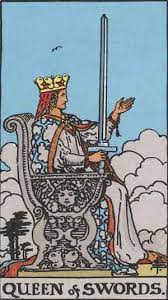
The archetypal human face in the Tarot representing Libra is the Queen of Swords, though of course in real life, this may represent male or female.
This court card represents a queen of keen observational and analytical capabilities, combining intellect and instinct. She has worked hard, given her best service, learned many life lessons, may well have experienced much loss, and while often charming, has a certain air of aloofness. Many seek her out for her wise advice, and receive fair,considered advice. In her most negative aspects she may be vindictive.
These archetypes are based on thousands of years of observation, but of course there is no such thing in reality as THE Libra personality.
You are a unique individual. Your zodiac sign (also known as your sun sign) is a major keynote, but nothing like the full picture in real life – or even in astrology.
But your decan, which depends on where your birthday falls within your zodiac sign, digs just a little deeper. If you don’t feel like a ‘typical’ Libra, perhaps you are a second or third decan Libra, rather than a ‘most typical’ first decan Libra.
What are the decans?
The decans have been described as ‘the thirty six faces of astrology.’
The Zodiac, a portion of sky as seen from earth, represents an imaginary belt or wheel; a circle of 360 degrees. This circle was seen as divided in Tropical or Western astrology into twelve ‘slices,’ of approximately thirty degrees each. Each slice represents a zodiac sign named after a chosen constellation appearing inside this belt of sky, giving us the zodiac signs we are familiar with today.
Astrologers then sub-divided each of these 12 signs into three parts of ten degrees each. Every degree – every birth date -supplies added insights or texture in respect of character and potential destiny.
The first ten days of a zodiac sign are the first decan. The next ten days or so are the second decan, and the last ten days or so are the third decan.
“If you’ve ever wondered why people born in the same sign seem different, decans can help answer this puzzle,” – astrologer Rachel Lang.
Libra First Decan
Libra-Libra
Dates: 23 September – 2 October
Planetary rulers: Traditional –Moon / Modern –Venus
Tarot card: Two of Swords – Truce, pause, standoff, taking stock, information gathering, indecision, obstinate, none so blind as will not see, refusal to engage
Libra-Libra gets a double dose of Venus glamour, as both its planetary ruler and sub-ruler; here is the most ‘typical’ Libra subject; sensitive, perceptive, attractive and well-balanced, keenly intuitive and extra sensitive to beauty, the arts and fashion.
They are clever as anything, strategic thinkers, great at seeing patterns, dealing with data. They are diplomats, cool operators, experts at avoiding unpleasant conversations. They are sensitive to loud noises and dislike crowds.
They hate conflicts, arguments and will avoid direct confrontation, though this is not always helpful. This means they may also avoid uncomfortable decision-making – or indeed any decision-making and may put off a boring job in the hope that someone else will deal with it, though they are perfectly capable of doing it themselves.
Libra is not known for nothing as ‘the iron fist in the velvet glove.’ They can turn away, cut you out cold, and you may never find out why. There will be a reason, but they don’t do those kinds of conversation, for all their essential kindness and usual generosity of spirit. First decan Libra for all their gifts can be self-critical and prone to anxiety or sudden mood swings. They really, really need their space.
Libra Second Decan
Libra-Aquarius
Dates: 3 -12 October
Planetary rulers: Traditional – Saturn / Modern – Uranus
Tarot card: Three of Swords. Sorrow, stress, separation, love triangles, karma, making peace with the past. All signs must learn to deal with loss. Important to note, none of these messages are intended for Libra alone, and may simply represent Libra timing in a reading.
Libra-Aquarius, ruled by stern Saturn and rebellious Uranus is not only brilliantly clever, but dutiful, patient, wise, and inventive, even downright psychic, more curious about subjects like astrology than other Librans. Here is a thinker with a strongly independent streak – even a little quirky. This Libran is urbane, naturally sophisticated, and much sought after for their wit, knowledge, sparkling company and good advice.
They are known for combining artistic gifts with a logical, rational scientific way of thinking. The writer’s father was a second decan Libran; an academic author and scholar of French philosophy, and an exhibiting artist, a painter, with powerful ESP.
All Librans have good earning potential above average, but this decan, ruled by disciplined Saturn, though not remotely mean, is careful, especially prone to saving up for a rainy day, or with an eye to leaving money for their dependents.
Never underestimate them. If a second Libra thinks something is wrong or unethical, if they disapprove of something they may react with a shocking finality, bringing down the sword of judgement. It’s the same with all Librans but the second decan Libra, while oh so polite….will coolly tell you to your face what they do not approve of.
Libra-Aquarius, inspiring devotion and respect, is an enigma, remote and distant, like a kindly priest or a shaman, or a shining lone star.
Planetary rulers: Traditional – Jupiter / Modern – Mercury
Tarot card- Four of Swords: rest, bed, recovery, retreat, regrouping after mental or physical exhaustion
Libra-Gemini is known for above average physical attractiveness and typically looks younger than their actual age, with a rounded face, bright, keen eyes, medium build, and a light to medium build, usually above average height.
Knowledge is power to this most restless Libran. They need to feel up to date, well informed. They may not necessarily share what they know, unless they feel challenged or contradicted. They can be competitive and also secretive, not because they are deceitful, but to avoid the risk of hassle. They cannot bear dealing with bad news, or to be the bearer of bad tidings. Libra decan 3 is not the one to volunteer to handle this.
They are capable of aggression, but still, are more timid, more of an introvert that many would take them for on first acquaintance.
They may have found themselves cast in the role of outsider at some period of their lives. This may have proved a formative experience, or it may have dented their confidence and given them a bit of a hang-up.
They take themselves very seriously, and are serious about money, and about their obligations, and make excellent family providers. They do need to feel that whatever they do for their loved ones was entirely their own idea, and do not respond well if they get the idea they are being pressured, but a bit of praise goes a long way with Decan 3 Libra.
They are kindly, and they notice things, but they don’t tend to give out a lot of feedback. They are born judges, but it can seem as if other people’s problems aren’t entirely real to them, and if they’re in the wrong, they may never admit it for fear of being judged themselves.
This decan in particular craves travel, and is known for a love of the sea. They have a tendency to become restless, withdrawn and irritable when bored, or when they can’t travel as much as they would like. Pandemic travel restrictions really might have been quite a frustration for this Libra subject.
This will not be a quiet news month on the global stage or in the media. It promises to be pretty interesting, and possibly at times, a bit too interesting, reflecting lively and intense astrological transits, particularly until the Mars square Pluto conjunction 21,22 and 23 October, which suggests we take special care how we go, avoiding getting into confrontations, and when going out and about.
On the other hand, we could get a lot of stuff sorted out this Libra season, spurred on helpful bursts of Mars energy.
Libra is laid back, or at least, quietly focused, going about its business. But this Libra season, 2021, is in all probability, not a case of business as usual.
Orion The Hunter, ‘Man of the Mountains’ or as he was known to the early Sumerians, the Akkadians, The Light of Heaven, returns to the northern hemisphere in late July or early August, once again striding the eastern horizon at sunrise, though he is tilted on his side this time of year facing up.
But when we say return, where has he been, then? The answer is, he has been invisible, hidden in the glare of the sun since May. Yes. Now he is back, and will rise earlier each day until he is visible all evening by early December. As a girl I used to like to go out on cold frosty evenings to fill the coal scuttle from the coal bunker in the back garden. Looking up at him. I knew his name. I knew he was The Hunter but that was all, and I wondered about him, and what he was hunting up there. Those winter evenings still have that same kind of magic.
Orion is only the 26th largest constellation, sitting on the celestial equator, facing the constellation next door, the oncoming, charging, Taurus the Bull. It’s smaller than another Greek hero, Perseus but Orion’s got more brilliant stars.
(The biggest constellation is Hydra, and the biggest Zodiac constellation is Virgo.)
Orion’s brightest stars are the blue-white star Rigel, representing the Hunter’s left foot (where the scorpion bit him, sent by Gaia, and caused his death) and the red super-giant Betelgeuse, his right shoulder,only ten million years old, which makes Betelgeuse young to be a red super-giant, but it’s evolved faster due to its enormous mass. It is expected to go supernova in the next million years, and when it does will be brighter than the Moon and the brightest supernova ever to have been visible from Earth.
Orion’s third brightest star is Bellatrix, his left shoulder, while Orions’s Belt is one of the most easily recognized asterisms with its three stars, nicknamed in Arabic ‘the Golden Nuts’.
Their Arabic names, read east to west or left to right; Alnitak (girdle), Alnilam (string of pearls) and Mintaka (belt) But of course they have many other names across the world; The Magi, the Three Mary’s….
The Mayans called them ‘The Fire Drill’, invoking them in an annual fire ceremony to delay the onset of the end of the world.
‘No other constellation more accurately represents the figure of a man,’ said Germanicus Caesar
Orion has been identified as a human figure in every culture at every latitude, with countless story variations
Orion, aka Nimrod, was the son of Poseidon in Greek myth; the most handsome man ever to walk the earth. He was a great hunting buddy and friend of Artemis.Her twin brother, Apollo glowered, seeing that Artemis fancied Orion something rotten, though she had taken a vow of perpetual chastity.
Orion was a bit of a sex pest, chasing the Pleiades, so that Zeus confiscated them to the sky for their own peace and quiet. And a fat lot of good it did them, because when Orion was killed by a scorpion (THE scorpion) Artemis in her grief, asked Zeus to post Orion upstairs to the heavens, which he did, right next door to the Pleiades, who also represent the celestial bull pen of Taurus.
Thanks Zeus. You didn’t think that one through, did you?
Should Taurus ever break free of his pen, said an ancient Arabic legend, it will be the end of all things, so let’s hope he’s happy up there, and that Orion doesn’t chase the Pleiades away.
Orion bravely strides towards the Bull, but although he killed the scorpion that also killed him, he still fears it, and dreads its appearance fleeing west as the autumn wears on and Scorpius rises (Scorpio)
Orion in his eternal battle with Scorpius
The stand off between Orion and Taurus the Bull, its red eye, Aldebaran glaring at him, daring him to come nearer, does not fit the story of Orion, and a question has been raised in some quarters over the identity of Orion, and whether he has become confused with Herakles/Hercules at any time in his identification with this constellation.
The reasons are likely historical. The constellation as recognized by the Greeks originated with the Sumerians, who saw in it their great hero Gilgamesh fighting the Bull of Heaven whereas, as previously mentioned, the Sumerian name for Orion was URU AN-NA, meaning ‘light of heaven,’ and Taurus was GUD AN-NA, ‘bull of heaven’.
Gilgamesh was the Sumerian equivalent of Heracles, the greatest hero of Greek mythology, and one of the labours of Heracles was to catch the Cretan bull, but Orion was never in a fight with a bull. Heracles, it has been suggested, deserves a magnificent constellation such as this one, but has been consigned to a much more obscure area of sky.
The Sumerian story is older.
Orion and the Tarot
The Golden Tarot by Kat Black
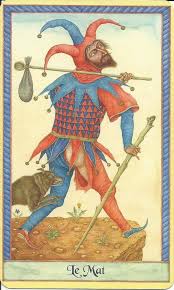
The Tarot card most commonly associated with Orion is The Fool. The most numinous card in the deck, its element is Air and it is ruled by the planet of revolution, Uranus.
It is the portal of the number Zero. The Fool or as some called him, The Jester, is both beginnings and ending.
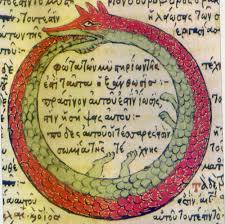
In a real life reading it may detect or forecast a birth of a child, or a new offer or a launch or opportunity of some kind. And change happens all the time but this is always major or significant in scope. But although is not associated with Death, unlike the famous Death card, it can mean a death too, representing infinity, the ouroboros.
An ouroboros
The Fool lives in the moment. He may be fun, he may be joy, or he may be frightening. There’s every reason a lot of people are scared of clowns as the living embodiment of The Fool. He represents the wisdom of innocence, or mistakes made through impulsiveness or ignorance rather than stupidity. But he may represent a threat, whether direct or existential, clearly sensed but not as yet clearly identifiable. The fear is visceral, not lightly to be dismissed.
He may be a shamanic, gnostic figure; the stranger, the outcast, the wise Fool or the Fool on the Hill. He dances to his own tune. He takes chances, risks, and sometimes these pay off, but sometimes he steps over the edge of the cliff, heedless of his dog’s most urgent warning.
The dog in the card is not biting the Fool, but desperately trying to get his attention. If someone asks the Tarot’s advice and then I draw this card reversed….someone needs to draw back from the precipice and look again before they leap.
I may bark like the Fool’s dog but will they act on this advice? CAN they? Will they even really hear it, let alone find a way to use it? We are who we are, and we do what we do, based on who we are. It is a rare person who can step back and see things anew once they are committed to Opinion A or B or they are emotionally invested in outcome A or B.
Advice, to be heard, must be sufficiently timely, before the paint dries.
Everywhere the Fool goes, his dog follows, just as Orion is followed in the skies by his two hunting dogs, Canis major and Canis minor. Sirius, the Dog Star is in the constellation of Canis Major and is THE brightest star in Earth’s night sky.
The only objects that outshine Sirius in our skies are the sun, moon, Venus, Jupiter, Mars and Mercury – and Sirius will usually outshine Mercury too.
All Mankind is Orion.
We were hunters at the dawn of man (The Fool) And gatherers too, but we were never gorillas, and never herbivores on our ancestral line.
“We were risen not of fallen angels but risen apes, and they were killer apes besides” – Robert Ardrey, in African Genesis.
Hunting was what brought us together in teams, then communities. Co operation meant compassion.
Fatboy Slim tells a version of that story here (except that we were apes but we did not evolve on the gorilla branch).
Watch out for Orion overhead in the final frame of the video.
Tarot cards: The Hierophant- Tradition, Orthodoxy, Received wisdom, Academia, Medicine, a teacher or mentor.
Minor Arcana cards: the Five, Six and Seven of Pentacles/Coins/Disks.
Astronomy
Wiki
Taurus (Latin for Bull) is a large and prominent constellation between Aries to the west and Gemini to the east. It ranks 17th in size of the 48 Greek constellations recorded by Ptolemy in his introduction to the Mathematics of the Heavens, the Almagest, written AD 150.
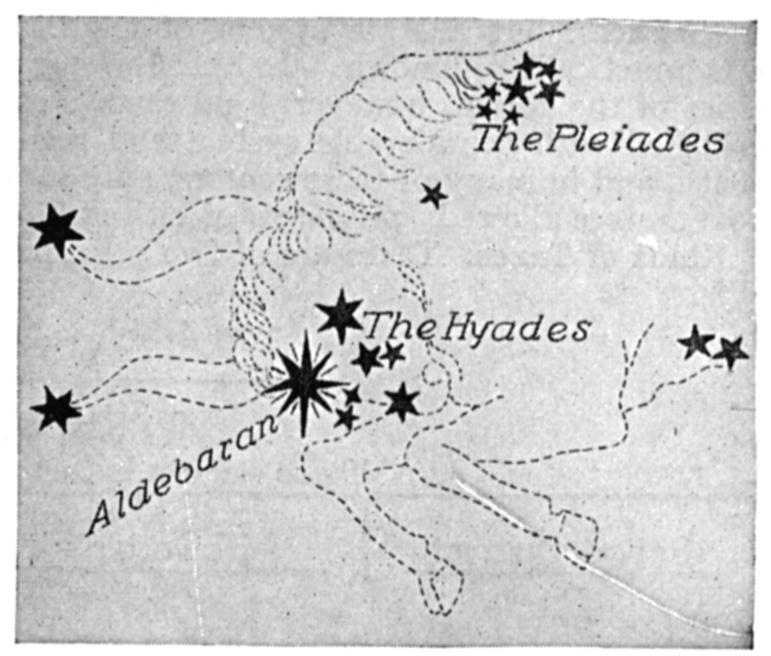
The stars of Taurus depict the face, horns and forepart of the bull’s body. His face is made up of a triangular cluster of stars called The Hyades. There are no legs, the Bull is imagined half submerged. He is the mythical Bull from the Sea. A second cluster of stars, The Pleiades, also known as The Seven Sisters, swarm like bees above his back.
The best time to see Taurus is during December and January. By March and April, you might see it in the west in the twilight.
To find Taurus first you need to find the three stars of Orion’s belt, happily, one of the easiest things to see on a clear winter’s night.
Now look up to the right, looking north-east, See a bright orange-red star? That’s Aldebaran, ‘The Follower,’ a red giant, the biggest, brightest star in the constellation, the Eye of the Bull, glaring in the direction of Orion.
Should the Bull escape his heavenly pen, said an ancient Arabic legend, he would stampede the universe to pieces, and it would be the end of things for all time. We had better hope hope nothing upsets him up there in the celestial meadows. Let’s hope he’s got plenty of buttercups and clover up there to keep him happy, and he doesn’t get bitten by horseflies.
A truly freaky factoid ….” in about two million years, the NASA space probe Pioneer 10, now heading out into deep space, will pass Aldebaran.” SOURCE
If that isn’t enough to make one need a quiet lie-down with a cold flannel on one’s head, I don’t know what is.
Wiki Commons: the horns, face and the giant red star, Aldebaran, the Eye of the Bull, glaring menacingly in the direction of Orion the Hunter
Ancient History
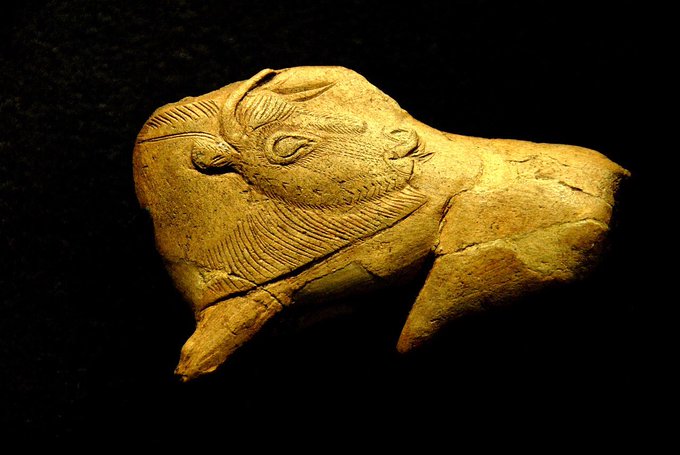
Carving of a Bison, France, thought to be 15000-20000 years old
I am suspicious of that bison. It looks as though it has a ring in its nose.
Taurus has been recognized as a sky bull since at least the Early Bronze Age. Historians think the figure of a bull was first discerned in the stars by the Sumerians around 3000 BC, and was recorded in cuneiform by the Babylonians.
In modern Western (Tropical) astrology Aries The Ram is counted the first sign of the western zodiac, ushering in the spring (vernal) equinox along with the first lambs.
But 4000 years ago it was Taurus, not Aries that coincided with the vernal equinox. The reason this is no longer the case is due to the wobble of the Earth and an effect called the precession of the equinoxes.
Taurus overhead marked the start of the calving season. and for Babylonian astronomers Taurus was the first sign of the Zodiac, ‘the Bull in front,’- leading from the front. The Bull was also the first sign for the early Hebrews, who called it Aleph, as in A, the first letter of the alphabet.
The bull, like its ancestor, the wild auroch, is a potent symbol of strength and fertility, especially masculine virility, but where Leo the lion, represents wild strength, Taurus the bull is domesticated, controlled strength, as harnessed in oxen or a bull with a ring through his nose.
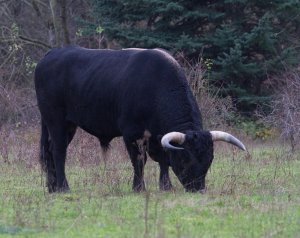
The dairy bulls, breeds such as the Charolais for instance, are famously aggressive where the black bulls used in bull-fighting are by comparison, more easygoing.
Before agriculture, we hunted beef in the shape of the auroch. Aurochs, the fiercer, wild ancestors of the modern bull, were painted in the Lascaux caves in France, in paintings thought to date from 15000 BC.
The most famous section of the Lascaux caves in the Dordogne in France is the Hall of the Bulls, featuring four black bulls, or aurochs. One of the bulls is 5.2 metres (17 ft) long, the largest animal discovered so far in cave art.
This was the time of year of the great migrations of the aurochs; a dangerous but potentially highly rewarding hunting opportunity. Not only did the aurochs provide the luxury of meat, but the horns and hide had many uses.
Lascaux
In the UK it is thought that Salisbury plain was a Lek -a mating ground of the auroch, and this is part of the story behind the building of Stonehenge on this site. They massed here, protected from the ambush of the sabre- toothed tiger by its huge wide open views.
Then hunting gave way to farming of animals, guaranteeing supplies with less risk attached. The first ever cattle, goats, sheep, and pig- farming began in the so-called ‘Fertile Crescent;’ a region covering eastern Turkey, Iraq, and south-western Iran about 12000 years ago.
Taurus glares at Orion The Hunter, but then we stopped being hunters and became farmers, and no-one works harder than a farmer, and many care deeply for their animals too, but where is his legend in the skies?
These farming practices spread westwards, and in time had a genetic effect on the human population, with the sudden appearance of a gene mutation that enabled humans to digest raw cow’s milk. It’s not known when this first occurred, but it probably first happened in colder Northern Europe, and today 35 % of the global human population can digest the milk sugar, lactose, as adults.
The bull was considered a divine animal throughout antiquity and was a symbol of the moon, fertility, rebirth, and royal power, while today, the Lithuanian word ‘taurus’ means ‘noble.’
There is evidence of bull cults throughout the Mediterranean starting in Anatolia, dating from at least 70000 BC. From the worship of the Apis bull in Egypt, to bull-leaping in Knossos and the sacrificial portrayal in Roman Mithraism, the bull has been an integral part of many diverse and important religious traditions.
The Egyptian goddess Hathor goddess of mothers, was the equivalent of the Greek Aphrodite (not Demeter) and had the ears and horns of a cow, the original Holy or Sacred Cow.
Demeter Vindemiatrix is Virgo, but Aphrodite Venus is Taurus.
Greek legend associated Taurus with the legend of Zeus and Europa, in which the god Zeus, up to his sneaky tricks yet again, disguised himself as a beautiful, gentle white bull, coaxed the princess Europa into climbing on his back, then abducted her, swam away with her to Crete, and made her one of his mistresses. The many gifts Zeus gave Europa included a pet dog that later became the constellation Canis Major. Their children supposedly included Minos, King of Crete, the builder of the Labyrinth and the famous palace at Knossos where the bull games were held.
Bull worship, or rather, the concept of the bull as divine gradually migrated ever westwards and northwards. The Celtic druids held Tauric festivals at least 2000 years ago, and there is archaeological evidence of bull worship near Newcastle and York in the UK.
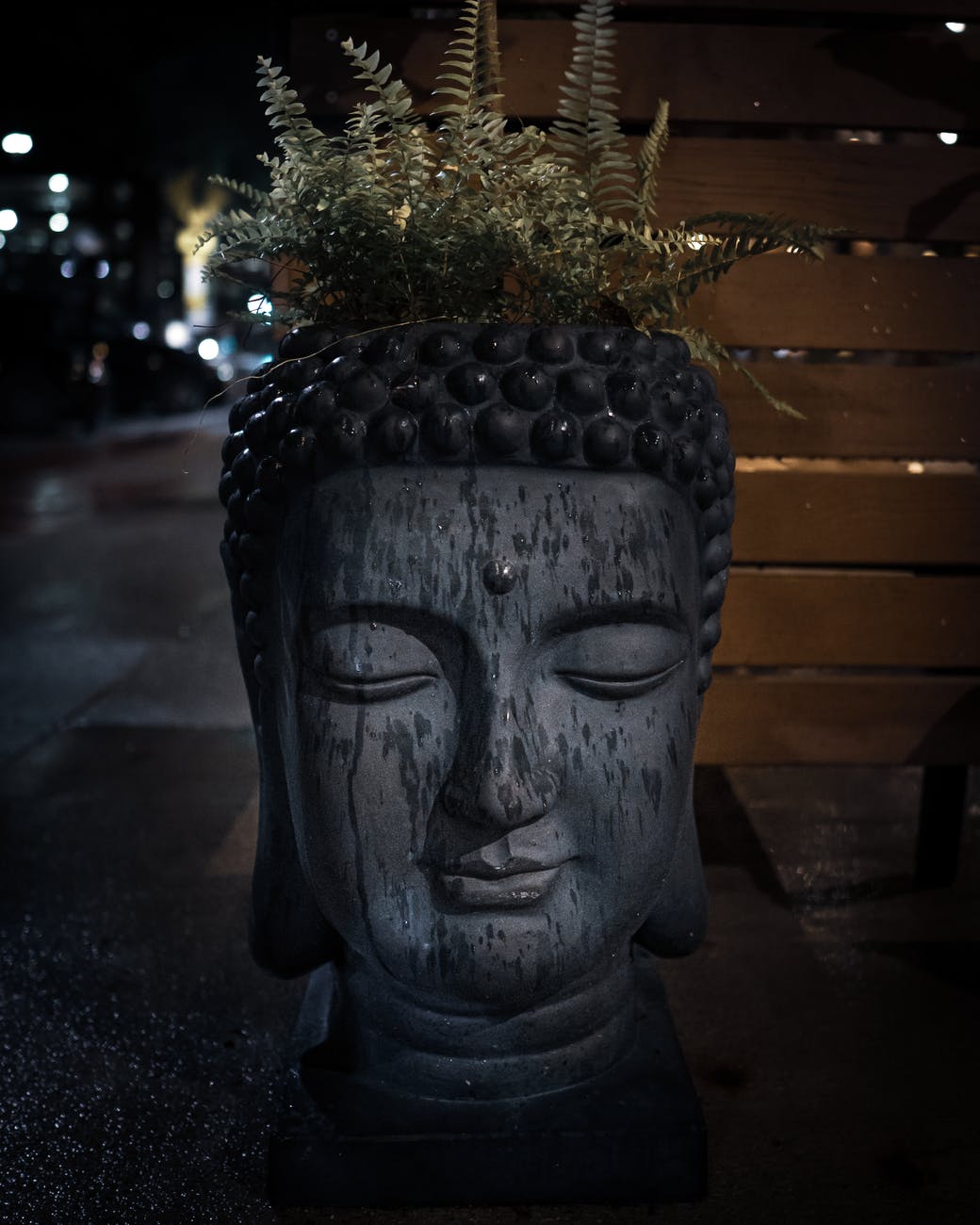
The Buddha was born when the Full Moon was in Taurus (Vesak) and his birthday is celebrated at the Vesak Festival which occurs on the first Full Moon in Taurus.
Like the Bull himself, the classic Taurus subject, male or female, is generally peaceable, pleasant, even placid. But Taurus will not be disrespected, pushed or driven. Other people can get a shock when Taurus suddenly sees red …they seemed so laid back before ….and they don’t give a lot of warning. The mistake of the other person was in underestimating them, mistaking their good nature for weakness or stupidity once too often.
Bulls cannot physically see red. It is the movement of the toreador’s cape that provokes them, and not the colour. But when the human bull ‘sees’ red, they will either dig in hard, or may charge head on. Taurus in a full-on rage is a ‘bull in a china shop’ – the one Earth sign that will withstand or demolish the opposition of the other more famous ‘fighting’ signs, Aries, Leo, and even Scorpio, its opposite number in the zodiac.
Taurus really, really doesn’t like to fight but won’t be pushed, and doesn’t lose in a fair fight. The bull ring is not a fair fight; nor is the abattoir, that’s the tragedy of the Bull, to be brought low by his physical inferiors.
But if a Taurus is being a naughty bull; unreasonable, misbehaving, or being a ‘bully’ then quietly stand your ground. It should pass. Taurus may sulk but as a rule is not vindictive.
But why upset the Bull? Look at him, quietly grazing. He’s really not looking for trouble.
Uranus in Taurus, March 2019-July 2025
The futurist planet Uranus‘The Great Awakener’- is currently in Taurus and has been there since March 2019 .
And there it will stay, sometimes direct, sometimes retrograde until April 2026.
2021 is less tough than 2021 in some ways, and Jupiter is going to lighten and ease things here and there. But it’s still tough. On a global scale this pandemic seems likely to continue into the early months of 2022 but with more, longer easing off periods in-between.
The last time Uranus was in Taurus was 1934 to 1941. Uranus was in Aries when the stock market crashed in 1929, but the aftermath of this event was felt for years after, first the Great Depression then WW2 broke out in 1939. The UK government introduced food rationing January 1940 – remembering here that Taurus rules agriculture and food production.
This transit saw a rise in women joining the workforce- a necessity with the men away at war—Taurus ruled by Venus is a feminine sign. My grandmother left her job in schools, where she taught biology, and worked in a factory by day and with the ambulance service by night. My mother, born in 1939, was largely cared for by her grandmother while her mother was out working. She barely saw her mother, and far less of her father until she was six and he returned home from naval service at the end of the war, to his civilian job as a museum curator. He was a naturalist, an ornithologist, and a Taurus subject, though not what you’d call a people person. Still, he knew a lot, did a lot, created new exhibitions and new educational opportunities for school children, and this was The Taurean Hierophant at work, sure enough.
A story of the war/post-war generation, but why mention it? Uranus in Taurus is the reason why, a transit in common. This was a point in history with profoundly far reaching consequences. Such patterns of history do not necessarily repeat, or not in the same ways. Uranus in Taurus is not sinister. None of this is to suggest there will be another world war, unless it’s a trade war.
We are not seeing food shortages. But we are being asked to ‘ration’ or do without many things we are used to, or have come to expect as our natural rights. For some this might mean things like overseas holidays, but right now all the signs are– no need for any psychic to say this- that stay-cations are still the safest booking options this summer.
Uranus in Taurus, as we have seen historically, may bring big social changes between now and April 2026, and these may include changes for the better; more sustainable practices in economics, trade and agriculture. The fast food industry, for instance, is relatively new and recent but has with remarkable speed become an everyday way of eating for many people, especially young people who don’t remember a time when it wasn’t there. But Uranus in Taurus suggests the enormous fast food industry is likely to prove non-sustainable maintained on anything like its current scale. The Hierophant = Taurus =Bull = money + meat (think beef-burger)
There is no cause for alarm based on Uranus in Taurus, but there are collective changes, challenges, discomfort and upheaval because Taurus (The Hierophant) is about material basics and creature comforts while Uranus (planet of rebellion) upsets apple carts.
My cards suggest we will somehow avoid a second Great Depression, post-pandemic. But it’s a futurist symbol, Uranus, and signifies new technology as a means of solving problems, and this may bring added social unrest, as with the Luddites, textile workers, followers of a mysterious character called Ned Ludd during the English Industrial revolution.
These men risked, and indeed some suffered, hanging or transportation, smashing the machines that threatened to take away not only their jobs, but actually, their whole way of life. New ways that forced them and their children into a harsh new environment outside the home. That put them on a clock, that cared nothing for their humanity, for their pride, skill, and need to see, or at least share in the story of a job seen through from start to finish. That cared nothing at the start, for their comfort or well-being, or even for their safety. The ‘dark satanic mills’. There are graves of the orphans who worked in them, in towns in West Yorkshire. People laugh at them nowadays, the Luddites, ha ha ha, wretched technophobes, but is it wise to laugh?
Taurus is an artisan.
Facing tempests of dust
I’ll fight on till the end
Creatures of my dreams, raise up and dance with me
A Bull dreams of a meadow. Such is the nature of a bull. No heaven more perfect.
Pandemics run their course, adding their coda to the make-up of the human immune system. ‘Hope springs eternal’, and for many, the Tarot sees new opportunities and good times in the high spring of May. But nature will have its way, in its cruelty and its kindness.
Other months are as beautiful, but what month is more beautiful than May?
Here comes spring in the northern hemisphere. The spring of vernal equinox officially occurred today, 20 March 2022. Today we enter the turf of Aries the Ram, marking the beginning of the new astrological year in Western (Tropical) astrology.
Common Associations
Symbol:
Date of Birth: variable 21 March to 20 April
Ruling planet: Mars
Lucky Day: Tuesday
Energy: Yang (Masculine/Extrovert)
Element:Fire
Quality: Cardinal (the start of the season of spring)
Major Arcana Tarot Card: Major Arcana: The Emperor (Masculinity, Fatherhood, Government, Law and Order, Courage, Stability)
Image from The Legacy of the Divine Tarot, illustrator Ciro Marchetti
From The Legacy of the Divine Tarot, Ciro Marchetti
The Tarot court card correlating with Aries is the Queen of Wands. Note the sunflowers and royal lions on her throne, and the black cat, considered lucky. The Queen of Wands is a warm, kindly but shrewd, capable and insightful figure.
The Minor arcana cards associated the cardinal sign Aries are the 2, 3 and 4 of Wands.
The 2 of Wands, ambition, global trade, agreements, career choices, direction, partnerships.
The 3 of Wands, making ready to launch a ‘ship’, or a ship comes in, trade, export, new horizons, exploration, but the timing and the planning has to be right. No rushing this. No cutting corners.
The 4 of Wands: a house becomes a home, a business puts down solid foundations, professional achievements, qualifications.
Astronomy
Aries is a small, rather dim constellation in the Northern Hemisphere between Pisces to its west and Taurus to its east.Imagine the Ram sitting with his head pointing downwards.
The constellation of Aries via Wiki
The brightest star in Aries is Alpha Arietis, or Hamal, from the Arabic Al Ras al Hamal, ‘the Head of the Sheep.’ Hamal is the third star up from the bottom, a red giant with a magnitude of 2.0, and is visible to the naked eye, shining about as brightly as Mars when the planet is at its farthest point from Earth.
Below Hamal, the two bottom stars in the photograph are the stars Beta Arietis, also called Sheratan, a blue-white star, and Gamma Arietis, also called Mesarthim, a whitish binary star with two components. These are the horns of the Ram, and their names mean the Two Signs, meaning these ‘horns’ were seen as the two first signs of spring.
The three stars of the Head of the Ram are the stars to look out for, especially December around 9 p.m. local time, seen rising in the east. December is an especially good month for viewing Aries, when the Earth is on the other side of the sun .
During spring in the Northern Hemisphere or autumn in the Southern Hemisphere autumn is the worst time of year; Aries is lost in the glare of the sun. In late October, Aries rises in the east at sunset, reaches its highest point in the sky at midnight and sets in the west at sunrise.
Aries reaches its highest point in the sky – at about 10 p.m. local time (the time in all time zones) in late November, 8 p.m. local time in late December and 6 p.m. local time in late January.
The spring equinox was a time of renewal throughout the northern half of Earth, an event of great significance to people who were much more aware than we are nowadays, of the direct human dependence for survival on the earth and its produce, land, weather and sky.
Aries marked the main lambing season of wild sheep in Europe, 21 March – 20 April. The lambing season extended with agricultural husbandry.
The Sumerians
Sumeria is one of the oldest known urban civilizations in what is now called Southern Iraq, during the Neolithic-Bronze Age, 4500 BC to 1500 years BC. The ancient Sumerians called the sun, Subat, meaning the Ancient Sheep or Ram and the planets were the Celestial Herd.
The Egyptians
In ancient Egyptian astronomy, the constellation known to us as Aries was called ‘Lord of the Head’, referring to its symbolic significance, and it was associated with the sun god Amon-Ra, who was depicted as a man with a ram’s head and represented fertility and creativity. Because it was the astronomical location of the spring (vernal) equinox, it was called the ‘Indicator of the Reborn Sun’. Sources suggest the position of Aries at the zenith coincided with the rising of Sirius in the east and flooding of the Nile.
The Greeks
To the Sumerians, the stars of Aries were a herdsman. Aries was not fully recognized as a constellation until classical times when the ancient Greeks from about 1580 B.C. to 360 B.C. oriented the construction of many of their sacred temples to line them up with the star Hamal.
In Hellenistic astrology, the constellation of Aries was associated with the golden ram of Greek mythology that rescued Phrixus and Helle.
The brother and sister, Phrixus and Helle were the children of the Boeotian king Athamas and the cloud fairy, Nephele. But Nephele died, the king remarried, and his new wife, Ino, feared and hated them as a perceived threat to her own two children by the king, and planned to have them done away with.
They were warned and fled, rescued by a flying golden ram sent by Hermes at the plea of the dead Nephele, watching in anguish from the other world, but poor Helle fell into the sea below and was lost in the Dardanelles, named the Hellespont in her honour. Later, safely in Colchis, Phrixus (rather ungratefully?) sacrificed the Golden Ram, as a way of returning it home to the gods, and presented its fleece as a gift to King Aeetes, who placed it on a tree in a grove under the guard of a terrible dragon, the hideous Hydra, whom Jason later killed in order to steal the magical healing fleece.
Christianity
Founded in a society and at a latitude where ‘shepherds watched their flocks by night’…with a clear view of the night skies much of the year round, Aries speaks of God as The Shepherd, and Jesus as The Lamb of God.
Astrology deals in terms of archetypes, meaning a very typical example of a particular thing, person or situation. Of course there is no such thing in reality as THE Aries personality and the same goes for all the zodiac sun signs. Your sun sign is an archetype, a keynote, but it is not your full astrological portrait. We are all unique and it could never be the whole story.
But the archetypes did not come into being for no reason. You don’t mess lightly with The Ram. Aries is number one, the first sign in the Zodiac year, youthful and exuberant. But it is also the sign of a king, and not only that, but a warrior-king, as illustrated in the watchful, slightly weary, Emperor card in the Rider-Waite Tarot, ready armoured, always on guard. Note the Ram’s heads decorating his throne.
Aries is ultra-virile, with a warrior spirit, just as a ram will charge headlong at an intruder, and may even kill a person who enters his field, threatening his ewes and his territory at the wrong moment.
Aries is known for its determination and zest for life, and in the same spirit, Aries can be reckless and with it, accident prone in its general haste to get on and do whatever is the next thing. Aries are at a statistically increased risk of road accidents, in particular with head and neck injuries in comparison with other zodiac signs, and must beware of impatience leading to risk-taking behaviours.
Aries is ready to experiment or pioneer but may not finish what it starts. They are determined but run on a short fuse, and can be sabotaged by their own impatience if they don’t get quick results.
Aries subjects may exhibit careless or even ruthless behaviour with a disregard for others in their desire to achieve and excel. They can bear grudges but, though sensitive themselves, and occasionally a touch too quick to take offense, they are prone to be careless about the sensitivities of others.
However, in their personal relationships Aries are lively, affectionate, pleasant, frank, direct and generous. Full of bounce and joie de vivre, there is much to like and admire about the early springtime subjects of fiery Aries, the Mighty Ram.
Famous Aries in history
The Holy Roman Emperor Charlemagne. Oh wow. Now there is a surprise. I mean, look at him for goodness sake…..