The Season of the Lion

Today 22 July (or 23rd depending where we are in the world) we leave the zodiac sign of Cancer; mysterious and elusive Crab in the Starry zodiac sea and the sign of the zenith of the summer, and we move into the astrological sign of Leo the celestial lion. Most of us know our zodiac or sun sign, but what does it actually look like in the night sky, and what’s the story behind it? It’s time to roll out the red carpet for the star-lion, royal Leo…

Photo by Ryutaro Tsukata on Pexels.com

TRADITIONAL Associations

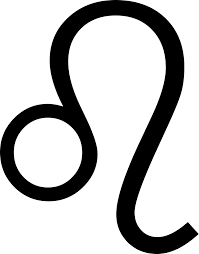
Zodiac Symbol of Leo

Dates: 22-23 July-23 August

Symbol: Lion

Element: Fire

Metal: Gold

Position: Fixed

Ruler: The Sun

Body: Heart and spine

Trees: Palm trees, laurel, walnuts, olive trees, lemon and orange trees.

Plants: Marigolds, sunflowers, dandelions, (dents de lion =lion’s teeth) celandines, passion flowers

Gemstones: Peridot, carnelian, ruby, onyx
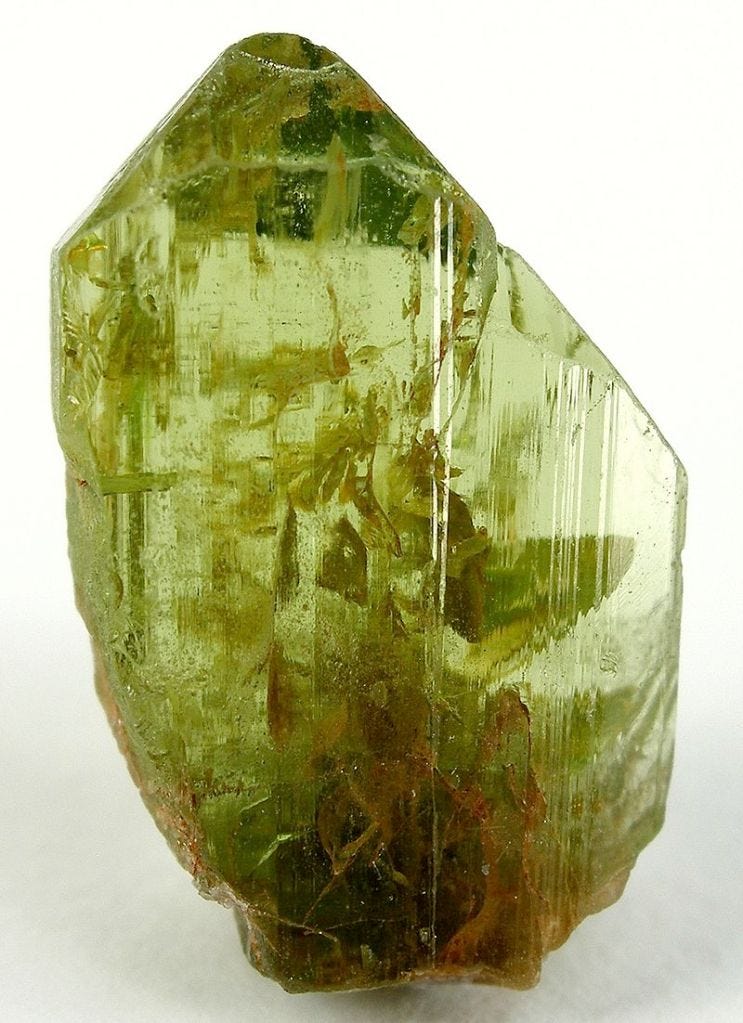
Peridot By Rob Lavinsky, iRocks.com – CC-BY-SA-3.0, CC BY-SA 3.0, https://commons.wikimedia.org/w/index.php?curid=10478407

Key phrase: I love/I desire

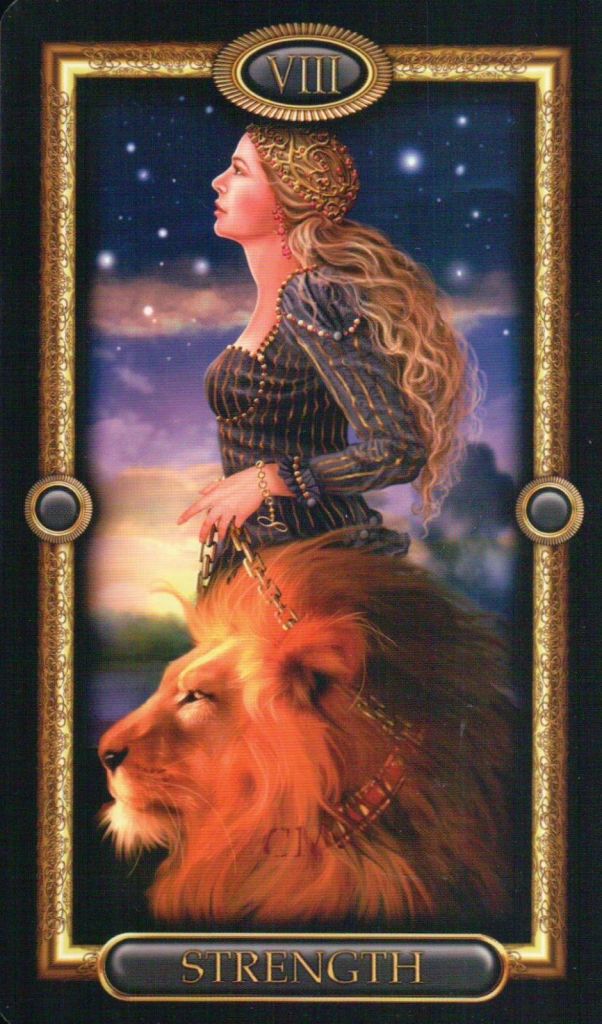
Tarot card: Strength
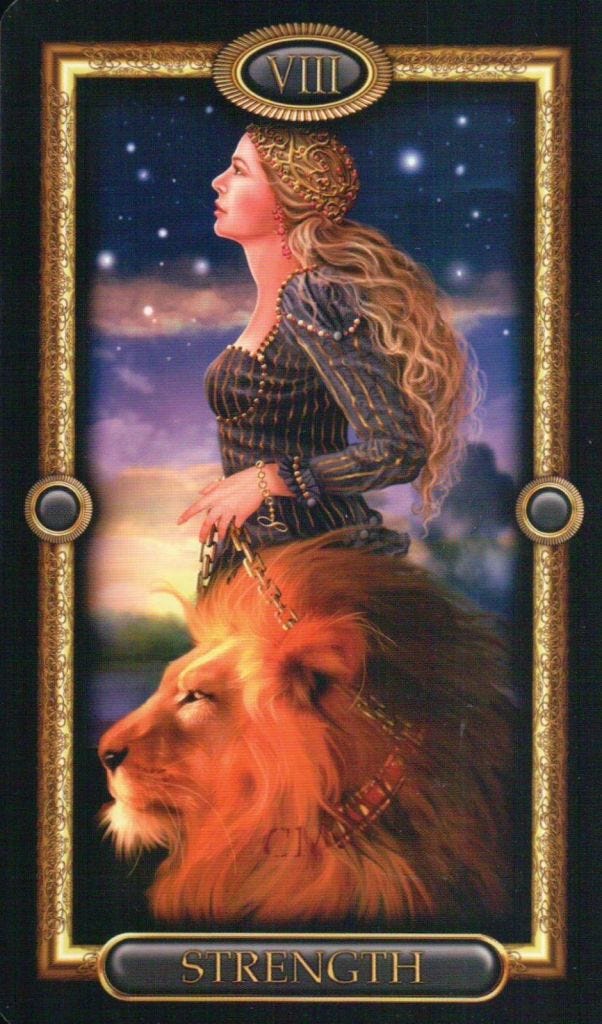
The Gilded Tarot Royale, Ciro Marchetti

The Lady and the Lion. Perhaps it is Una. Or perhaps her name is Leona or Leonora, for the lion is also the lioness. Her hold on the leash could not be lighter. She is controlling the lion, but only because it is allowing it, not fighting her restraint, signifying that the lion is also a part of herself. This is just as one would imagine, a welcome card of better health, signifying recovery if someone has been ill.

Astronomy

Leo is one of the 48 constellations described by the 2nd-century astronomer Ptolemy, and one of the 88 modern constellations recognised by NASA today, between the neighbouring constellations of Cancer to the west and Virgo to the east.

Leo is the 12th largest constellations, and one of the most easily recognizable due to its many bright stars, and a distinctive shape suggesting a crouching lion, apparently facing right.

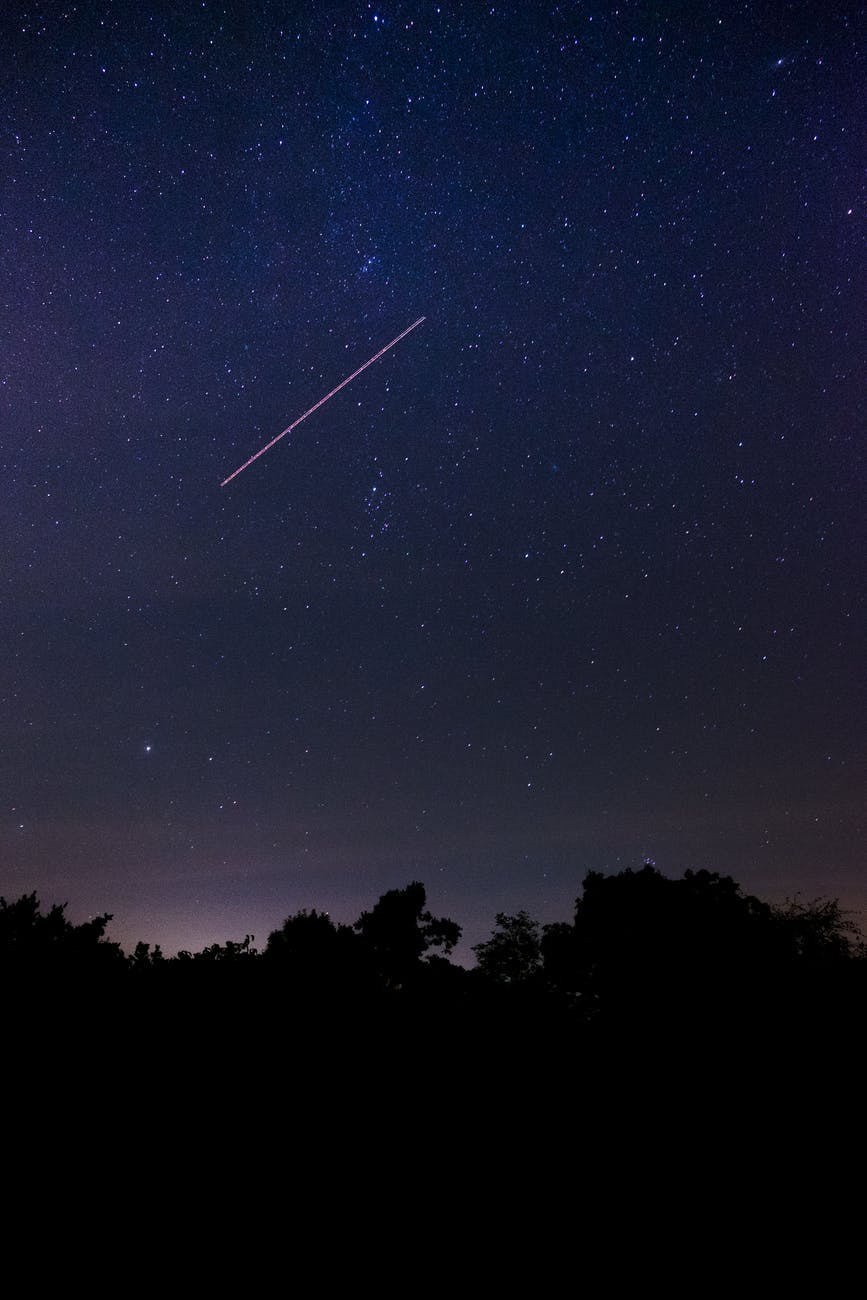
The bright light in the sky beneath Leo as seen in the photo below is Jupiter.
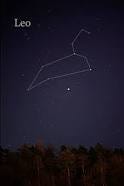
Wiki

The best time to see the Lion is in Spring in the northern hemisphere, from around the March equinox. In early April, the constellation Leo reaches its high point for the night around 10 p.m. By around May 1, Leo reaches his high point for the night around 8 p.m. local time  In early May, the Lion begins to set in the west around 2 a.m. local time and by June, Leo is descending in the west in the evening, drifting progressively westward.

By late July and into early August, the Lion is beginning to fade into the sunset, returning to the eastern sky and visible before dawn around late September or October.

Look out for the Big Dipper, Leo is below it. You are looking for a backwards question mark pattern called the Sickle; and you can see its curve outlines the Lion’s mane.
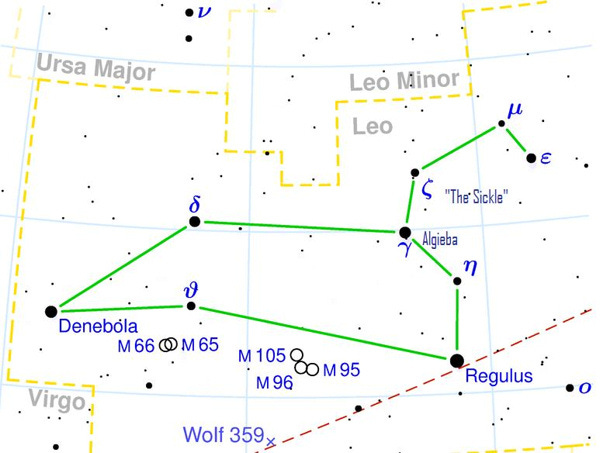
Leo’s brightest star, Regulus, or Alpha Leonis, ‘The King Star,’ is the heart of the celestial lion, a sparkling blue-white star at the bottom of the backwards question mark pattern. Regulus means “little king” or “prince” in Latin. The star’s Greek name, Basiliscos, has the same meaning, while the Arabic name is Qalb al-Asad, meaning literally “the heart of the lion.”

Coeur de Lion.

Leo’s fifth largest star, Epsilon Leonis, 247 light years from Earth, is 288 times more luminous than the Sun, four times as massive and has 21 times the solar radius.

A triangle of stars in eastern Leo represents the Lion’s hindquarters and tail. The brightest star of the triangle is named Denebola, Arabic, meaning the Lion’s Tail.

There are 15 stars in Leo with 18 known planets between them, but none of the planets is in a habitable zone.

The Leonids are meteor showers associated with the constellation of Leo. They peak around November 17-18 every year, and there is another minor shower, the January Leonids, peaking January 1 – 7.
History & Mythology

Leo the Lion has since ancient times been associated with the sun and royalty, ruled by the sun in astrology and is one of the oldest constellations collectively recognized with many ancient civilizations agreeing on perceiving it as a lion.

Archaeological evidence suggests that Mesopotamians recognized a constellation similar to Leo as early as 4000 BC. The Persians knew the constellation as Shir or Ser, Babylonians called it UR.GU.LA (“the great lion”), Syrians knew it as Aryo, and the Turks as Artan.

The Lions of The Nile

This image has an empty alt attribute; its file name is pexels-photo-5265481.jpeg

The story goes that the ancient Egyptians venerated Leo because the overhead appearance of Leo once upon a time coincided with the annual flooding of the Nile River, the lifeblood of their agriculture- and therefore the nation entire.

Why once upon a time? The constellations as seen from Earth have moved over the millennia due to a 26 000 year cycle known as the precession of the equinoxes.

By the end of the drought, the desert lions were getting desperate and would come within sight of the city walls seeking water but this low point in the life of the lions was welcomed as a certain sign that the Nile floods were now shortly on their way. The Egyptians accordingly honoured the lion with festivals, and statues of lions can still be seen along the course of the Nile River, proof of their reverence.

It’s thought that the lion-headed fountains commonly designed by Greek and Roman architects equally symbolized the life-giving waters released by the sun’s presence in Leo.
This image has an empty alt attribute; its file name is pexels-photo-1320412.jpeg

Herakles and the Lion of Nemea

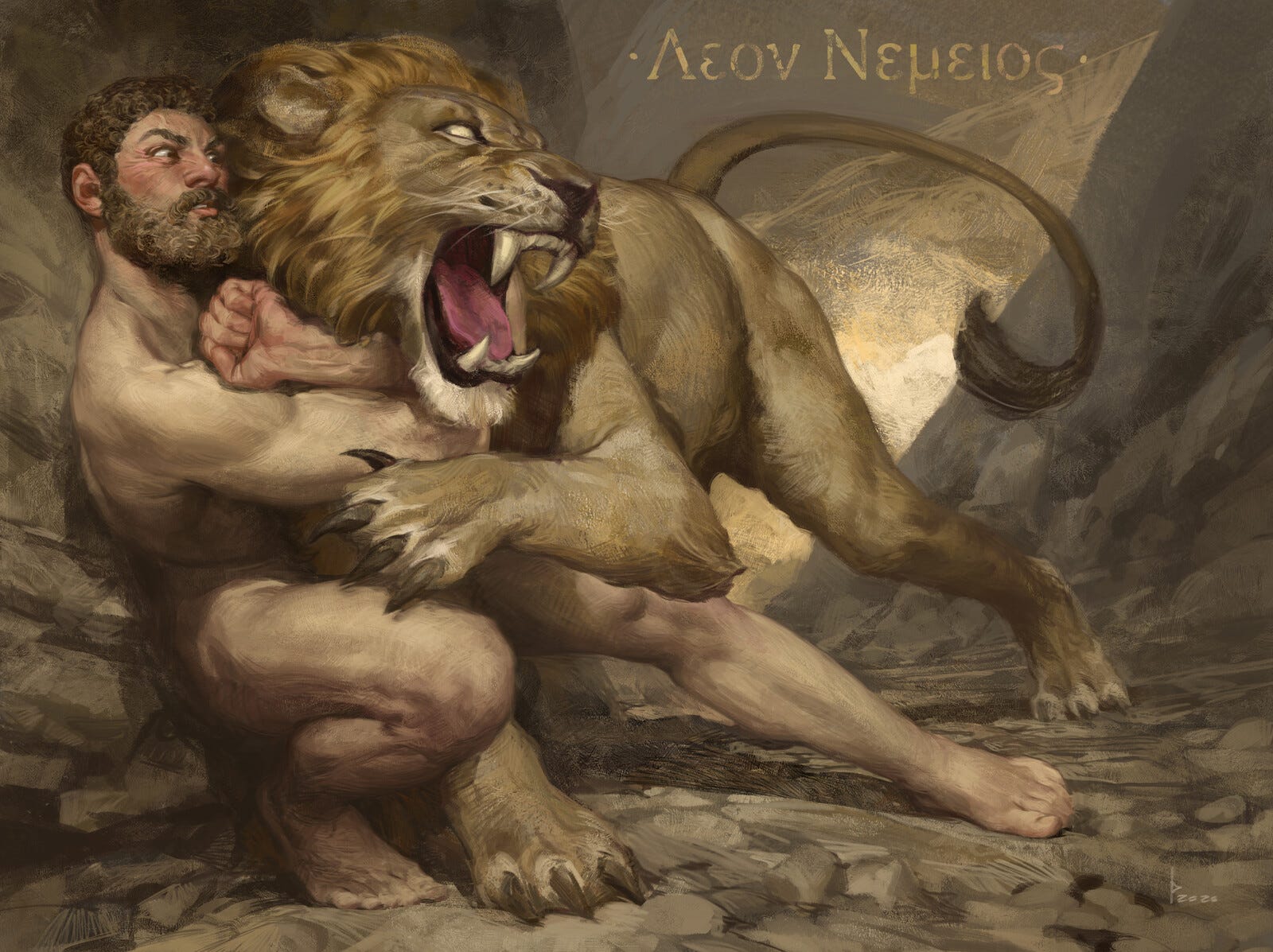
In Greek mythology, Herakles’ first labour was the killing of the Nemean Lion. This man eating lion lived in a cave just outside Nemea, a town south-west of Corinth. There had been a number of failed attempts to kill it, but these intrepid hunters had discovered- to their (terminal) horror- that nothing could pierce the lion’s hide, it was so preternaturally tough.

But someone must have survived to tell this tale, for Herakles was forewarned of this additional teensy problem, and sneaked up on the lion when it was asleep in his cave, where they fought and he strangled to death the uber-kitty.

Herakles then (rather disrespectfully, I can’t help feeling, if undeniably pragmatically) skinned the lion with its own claws, and wore its skin as a cloak, making himself even more ferocious in appearance, and more importantly, arrow-proof.

Painting by Artist Torgeir Jjereide
Astrology

Tarot cards: Strength and the Five, Six and Seven of Wands.

This fixed fire sign is known for its pride, ambition and determination, warmth and generosity of spirit, not to mention, charisma, but above all, Leo is known for bravery; the lionhearted one, the divine expression of physical, mental, and emotional fortitude, which is a very great virtue. Leo parents are typically devoted, but they rule their households, no question about it.

Courage takes many forms. There is the courage of initiative, the will to advance, engage and attack. There is moral courage, proceeding in the face of fear, “feeling the fear and doing it anyway.”

And there is the courage to endure, to withstand, and the fortitude that quietly says to itself, “I will keep smiling, and tomorrow I will try again”. No banners and no accolades.

Leo can be its own worst enemy; hasty, arrogant, reckless, self-centred, headstrong and careless, and for these reasons, unless these subjects learn patience, consideration and self-control, they are not necessarily always as lucky in life as they could be, or as the great-hearted Leo truly deserves, proud and thirsty children of the sun.

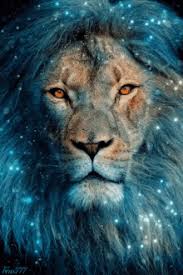
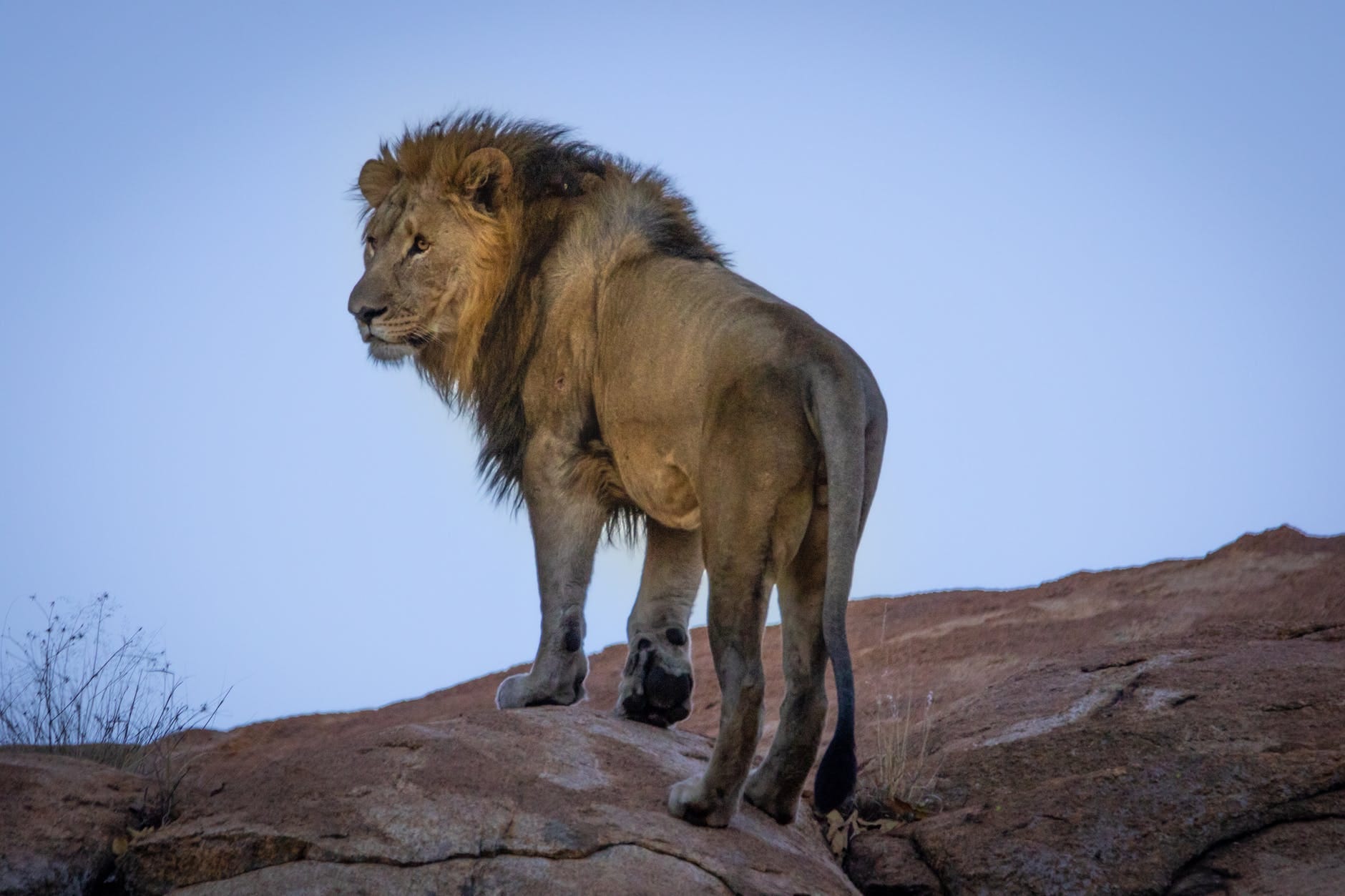
The living animal with such a very beautiful, and somehow sad and wistful face.
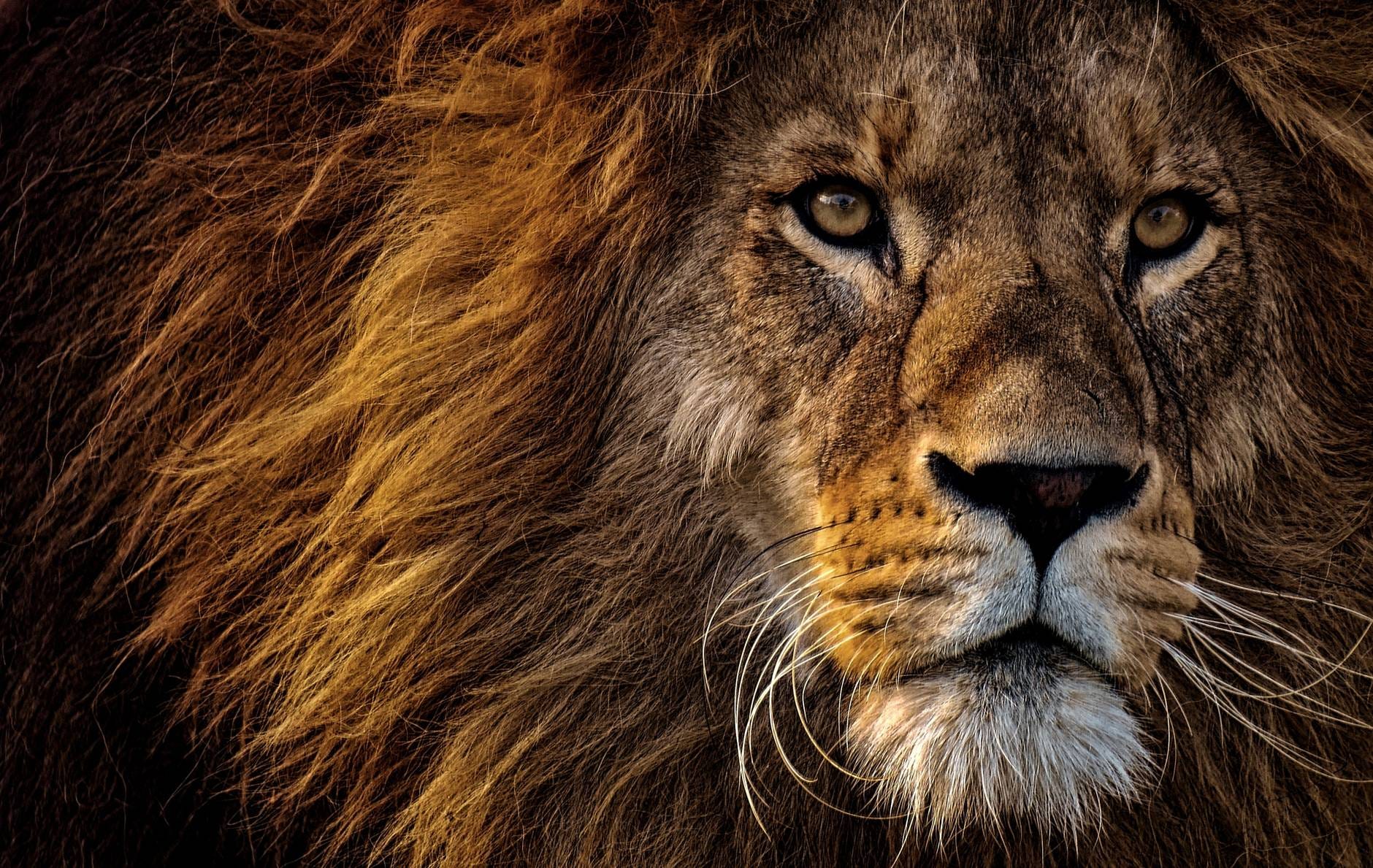
Photo by Alexas Fotos on Pexels.com

Dandy-Lion

Dandelion’s

Golden Mane

Prideful

Greying

Casts away

Alight on Chance

To someday seed

And newly golden

Lionize again

-Katie-Ellen Hazeldine

Salutations, Star Lion Leo

Today 22 July, we leave the zodiac sign of Cancer, the mysterious and elusive Crab in the Starry zodiac sea, the sign of the zenith of the summer, and we move into the astrological sign of Leo the celestial lion. Most of us know our zodiac or sun sign, but what does it actually look like in the night sky, and what’s the story behind it? It’s time to roll out the red carpet for the star-lion, Leo…

Common Associations

Zodiac Symbol of Leo

Dates: 22-23 July-23 August

Symbol: Lion

Element: Fire

Metal: Gold

Position: Fixed

Ruler: The Sun

Body: Heart and spine

Trees: Palm trees, laurel, walnuts, olive trees, lemon and orange trees.

Plants: Marigolds, sunflowers, dandelions, (dents de lion =lion’s teeth) celandines, passion flowers

Gemstones: Peridot, carnelian, ruby, onyx

Peridot By Rob Lavinsky, iRocks.com – CC-BY-SA-3.0, CC BY-SA 3.0, https://commons.wikimedia.org/w/index.php?curid=10478407

Key phrase: I love

Tarot card: Strength

The Gilded Tarot Royale, Ciro Marchetti

The Lady and the Lion. Perhaps it is Una. Or perhaps her name is Leona or Leonora, for the lion is also the lioness. Her hold on the leash could not be lighter. She is controlling the lion, but only because it is allowing it, not fighting her restraint, signifying that the lion is also a part of herself. This is just as one would imagine, a very welcome card of better health, signifying recovery if someone has been ill.

Astronomy

Leo is one of the 48 constellations described by the 2nd-century astronomer Ptolemy, and one of the 88 modern constellations recognised by NASA today, between the neighbouring constellations of Cancer to the west and Virgo to the east.

Leo is the 12th largest constellations, and one of the most easily recognizable due to its many bright stars, and a distinctive shape suggesting a crouching lion, apparently facing right.

The bright light in the sky beneath Leo as seen in the photo below is Jupiter.

Wiki

The best time to see the Lion is Spring in the northern hemisphere, from around the March equinox. In early April, the constellation Leo reaches its high point for the night around 10 p.m. By around May 1, Leo reaches his high point for the night around 8 p.m. local time  In early May, the Lion begins to set in the west around 2 a.m. local time and by June, Leo is descending in the west in the evening, drifting progressively westward.

By late July and into early August, the Lion is beginning to fade into the sunset, returning to the eastern sky and visible before dawn around late September or October.

Look out for the Big Dipper, Leo is below it. You are looking for a backwards question mark pattern called the Sickle; and you can see its curve outlines the Lion’s mane.

Leo’s brightest star, Regulus, or Alpha Leonis, ‘The King Star,’ is the heart of the celestial lion, a sparkling blue-white star at the bottom of the backwards question mark pattern. Regulus, means “little king” or “prince” in Latin. The star’s Greek name, Basiliscos, has the same meaning, while the Arabic name is Qalb al-Asad, meaning literally “the heart of the lion.”

Mind Boggler -Leo’s fifth largest star, Epsilon Leonis, 247 light years from Earth, is 288 times more luminous than the Sun, four times as massive and has 21 times the solar radius.

A triangle of stars in eastern Leo represents the Lion’s hindquarters and tail. The brightest star of the triangle is named Denebola, Arabic, meaning the Lion’s Tail.

There are 15 stars in Leo with 18 known planets between them, but none of the planets is in a habitable zone.

The Leonids are meteor showers associated with the constellation of Leo. They peak around November 17-18 every year, and there is another minor shower, the January Leonids, peaking January 1 – 7.

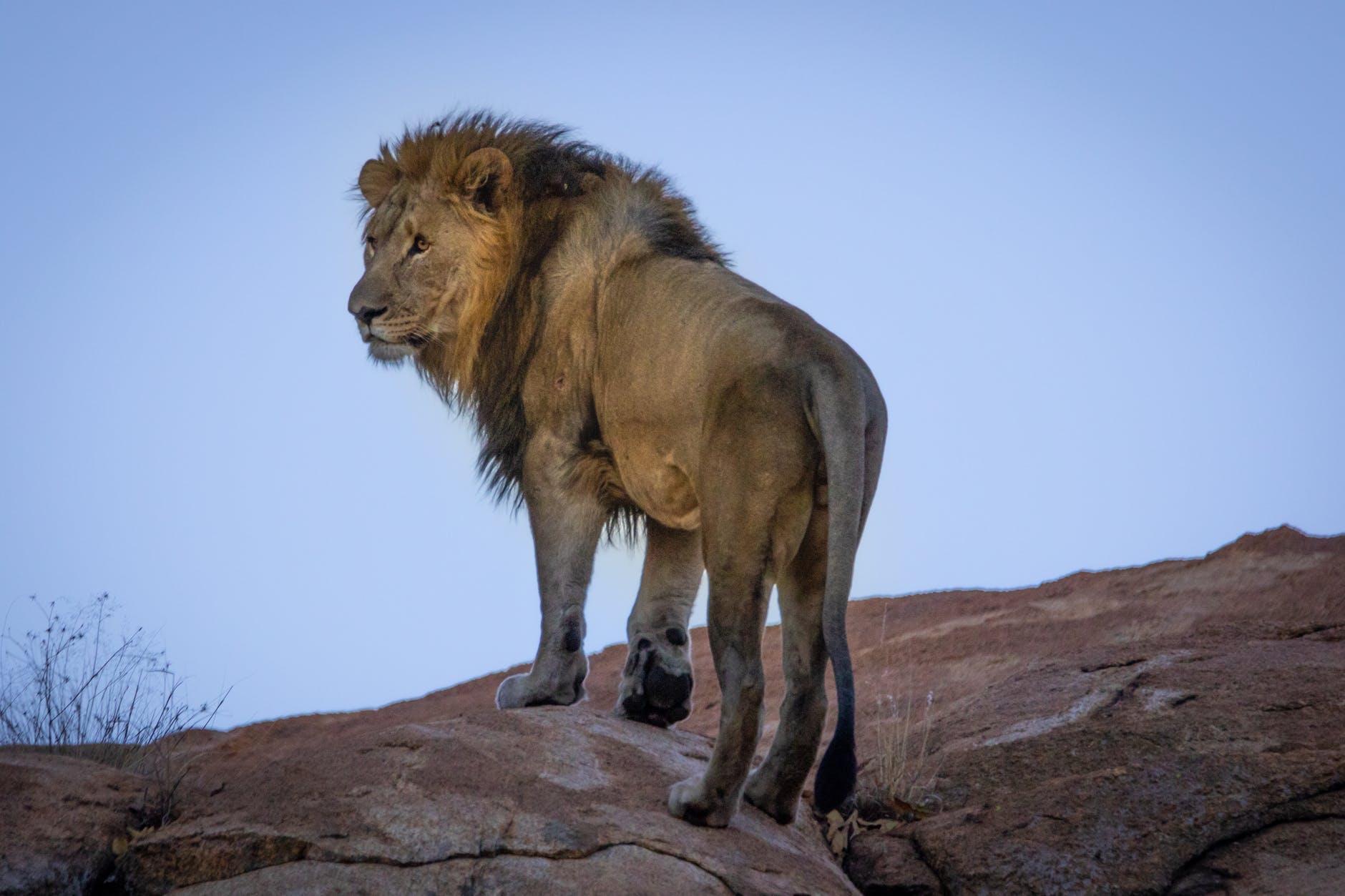
Photo by Henrik Pfitzenmaier on Pexels.com

Ancient History & Mythology

Leo the Lion has since ancient times been associated with the sun and royalty, ruled by the sun in astrology and is one of the oldest constellations collectively recognized with many ancient civilizations agreeing on perceiving it as a lion.

Archaeological evidence suggests that Mesopotamians recognized a constellation similar to Leo as early as 4000 BC. The Persians knew the constellation as Shir or Ser, Babylonians called it UR.GU.LA (“the great lion”), Syrians knew it as Aryo, and the Turks as Artan.

Photo by David McEachan on Pexels.com

The story goes that the ancient Egyptians venerated Leo because the appearance overhead of this constellation used to coincide with the annual flooding of the Nile River, the lifeblood of their agriculture and indeed, the nation entire. Marking the end of drought, desert lions would arrive at the river, driven by desperation, and their appearance was welcomed as a certain sign that the floods were shortly on their way. The Egyptians accordingly honoured the lion with festivals, and even today many statues of lions can be found along the course of the Nile River, proof of their reverence.

Photo by Magda Ehlers on Pexels.com

It’s thought that the lion-headed fountains commonly designed by Greek and Roman architects equally symbolized the life-giving waters released by the sun’s presence in Leo.

Herakles’ first labour was the killing of the Nemean Lion. This terrifying lion lived in a cave in Nemea, a town located to the south-west of Corinth. It was a man-eater, dining on the local folk, not OK, and a few had tried to kill it, only to find to their (terminal) horror, nothing could pierce the lion’s hide, it was so preternaturally tough.But someone must have survived to tell this tale, for Herakles, being forewarned of this additional teensy problem, managed somehow to sneak up on the lion asleep in its cave, and strangled to death the uber-kitty; poor puddy-tat.

Herakles then rather disrespectfully, I can’t help feeling, if undeniably pragmatically, skinned the lion with its own claws, and wore its skin as a cloak, making himself even more ferocious in appearance, as well as presumably, and even more importantly, arrow-proof.

Astrology

Photo by Alexas Fotos on Pexels.com

This fixed fire sign is known for its pride, ambition and determination, warmth and generosity of spirit, not to mention, charisma, but above all, Leo is known for bravery; the lionhearted one, the divine expression of physical, mental, and emotional fortitude, which is a very great virtue. Leo parents are typically devoted, but they rule their households, no question about it.

Courage takes many forms. There is the courage of initiative, the will to advance, engage and attack. There is moral courage, proceeding in the face of fear, “feeling the fear and doing it anyway.”

And there is the courage to endure, to withstand, and the fortitude that quietly says to itself, “I will keep smiling, and tomorrow I will try again”. No banners and no accolades.

Leo can be its own worst enemy; hasty, arrogant, reckless, self-centred, headstrong and careless, and for these reasons, unless these subjects learn patience, consideration and self-control, they are not necessarily always as lucky in life as they could be, or as they, and the great, shining Leo truly deserve, proud and thirsty children of the sun.

Leo
Dandy Lion

Dandelion’s

Golden Mane

Prideful

Greying

Casts away

Alight on Chance

To someday seed

And newly golden

Lionize again

K Hazeldine

Photo by Nita on Pexels.com

Rex Factor

Reviewing all the Kings and Queens of England & Scotland

The World's Passenger Ships

Ship History site, a compendium of passenger ships 1858- today's new builds

Capricorn Astrology Research

Research into Astrology

WAR STORIES

WWII & its Aftermath - Jennie Mack Gray

Quintus Curtius

Fortress Of The Mind

Jessica Davidson

Astrologer ~ Mystic ~ Writer

Mythology Matters

Matters of Myth, and Why Myth Matters

The Sanctuary of Vindos

Brythonic Polytheism and Shamanism