30 April is known as May Eve, marking May Day and the beginning of the ancient Celt festival of Beltane.
Beltane begins at dusk on 30 April and is matched by its European counterpart, Walpurgis Nacht, or St Walpurga’s Night in Germanic tradition.
St Walpurga or Walburge was born in Crediton in Devon, but travelled widely as a missionary in the service of her uncle St Boniface, and eventually became abbess of a monastery in Heidenheim in modern Bavaria where she died 25 February 777 or 779. She was canonized 1 May 870.
Walpurga is reputed to protect sailors in storms at sea, reputedly thanks to a miracle when she was sailing to Germany and a terrible storm broke out, and she knelt on deck and prayed and the storm cleared as if by magic…
And yet, interestingly, Walpurga is also a protector against witchcraft. Curious, isn’t it. That someone’s holy prayer is someone else’s satanic spell or witch’s invocation.
Origins
Two great festivals in northern Europe long pre-dating Christianity were Samhain (Halloween) marking the start of winter, and Beltane (April 30/May 1) marking the start of summer.
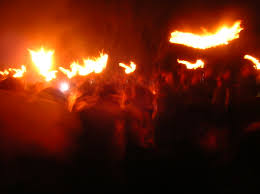
Beltane ‘the fires of Bel’ began as an ancient fire festival celebrated since at least the Dark Ages if not long before. The celebrations began at dusk on April 30th when great bonfires were lit to welcome the height of spring now associated with the zodiac sign of Taurus the Bull, representing the fertility of spring in full bloom.”
Traditionally,” writes Glennie Kindred (in Sacred Celebrations), “all fires in the community were put out and a special fire was kindled for Beltane. This was the ‘balefire’ or the Teineigen, the ‘need fire.’
Bel or Belenus (Celtic: possibly, Bright One) was a deity associated with pastures, meadows and animal husbandry and other agriculture. He was a fire god rather than a sun god as such, though the sun was used as a common motif in religious imagery.
The cattle were walked between two bonfires in a symbolical purification ritual, to be protected by the smoke from Bel’s fire before being put out to the open pastures for the summer. Bonfires were lit on sacred hills too, and the smoke was considered a magical blessing on the fields, animals, and community, and was also supposed to maintain a fragile balance, keeping up a smokescreen, literally, between the human and faery realms.
The month of May got its name from Maia, also called Flora, the Greek goddess of spring and new abundance. Maia was the oldest of the seven sisters known as the Pleiades, and she was the mother of Hermes (Mercury.) The last zodiac sign of Spring, Gemini, is ruled by airy Mercury, as the air fills with butterflies and pollen.
Flora, or Maia by Botticelli
The name ‘May’ has been used in English since about 1430. Before this time the name of this month was spelled Maius or Mai. The Anglo- Saxons called it Tri-Milchus because all that lush new grass meant cows could now be milked three times a day.
The celebration of May Day has its roots in astronomy, celebrating the halfway point between the spring equinox and the summer solstice. It has been celebrated in the British Isles and through much of Europe as a fertility festival since the Dark Ages, and probably before that, with many stories and superstitions attached.
Superstitions
Like Halloween, May Eve and May Day is a magical time of year, liminal, when the veil between different worlds and realities is thinner than at other times of year.
Beltane or Walpurgisnacht is the mirror image, the spring season’s equivalent of Halloween when witches are said to dance at the Devil’s Sabbath.
This is a time for ghosts, but this is also the time of year when folklore suggests you are most likely to meet a supernatural being from the realm of ‘faery.’
The Fae are an ancient race, and they do not like humans whom they view as destructive, and who is to say they do not have a fair point there. The Fae are afraid of iron. To keep them at bay-
Touch wood no good
Touch iron, this you can rely on…
In this sense the Fae could be said to represent the spirit of humanity before the Iron Age.
They are not the cute creatures of fairy tale. Encounters are dangerous and are best avoided – or you may never be seen again. Do not, whatever you do, go to sleep on a fairy hill at any time, but especially not on May Eve or May Day and especially beware of going to sleep under flowering hawthorn bushes ….
Sex and Scandal
The Christian church made attempts to ban May Day festivities outright because of their overtly pagan nature and “lewd” context as an open celebration of male and female sexuality and fertility – ‘a heathenish vanity generally abused to superstition and wickedness.’
May Day meant drinking and fighting, another reason for the church’s disapproval, but this in itself harks back to the ancient traditions of the sacrifice of ‘The Green Man’ – a mythical figure representing the eternal battle waged between summer and winter, feast and famine. Many pubs in England are still named The Green Man.
In Padstow, Minehead and some other places in the UK, mischievous hobby-horses (‘osses) roamed the streets in search of unsuspecting young ladies to ‘carry away’ for undisclosed purposes.
Morris dancers up to no good riding with hobbyhorses, Richmond embankment,1620
Men who had been disappointed in love would make straw men representing their rivals and stick them on bushes. These depictions were needless to say, often deeply unflattering, and fighting might well follow once they were discovered and identified and the maker was known.
May Day harks back to the ancient traditions of the sacrifice of ‘The Green Man’ – a mythical figure representing the eternal battle waged between summer and winter, feast and famine. Many pubs in England are still named The Green Man.
This splendid depiction is on a boss in Rochester Cathedral, thanks to Wikimedia Commons.
The Puritans banned May Day under Oliver Cromwell but Charles 11 brought it back into custom after the Restoration.
Maypole Dancing goes back at least to the 14th century, but it seems the custom was very old even then, though the dance as we know it today, so pretty and decorative(and tame) -children dancing in village squares, is probably a Victorian invention . The maypole is generally assumed to be a phallic symbol, but the Norse peoples connected it with tree worship, and this connects British and Germanic tradition going back to a shared proto-germanic culture which is part of the common root culture in British life even today.
The Maypole dancing which so upset the Church and the Puritans comes down to us from the rites of spring dedicated to Freya.
The maypole originally represented a living tree, in particular the giant ash tree Yggdrasil, the great “world tree” of Norse myth, linking the nine worlds of the Norse cosmology including Asgard, land of the gods, Midgard, or Earth and Hel, the underworld.
“Ygg” means terrible. It was on this tree that Odin chose to hang nine days and nights, thirsty and fasting in exchange for the knowledge of the runes. The Norns sit beneath it and when every new person is born, carves their names into its bark…and with it, their destiny, although this can change. The Norns will allow us to rewrite it, unlike the destinies woven by the three Fates of Greek mythology.
Walpurgis Night
Also In the Germanic tradition, Walpurgis Night, on April 30th is a moon festival sacred to the goddess Freya.
“Walpurga” is another one of Freya’s names. The re-dedication of the holiday to “St. Walpurga” was a later Christian addition.
Freya (Old Norse, Freyja meaning “Lady”) is one of the pre-eminent goddesses in Norse mythology. She was the goddess of love and beauty in Norse mythology, the goddess of marriage and family and a great prophetess – a seeress. She taught her husband Odin how to read the runes, and like Odin, she had a fiercer aspect as a patron deity of war and death in battle.
Freya wears a cloak of falcon feathers and has a magical gold necklace called Brísingamen. She rides in a chariot pulled by two cats and a sacred boar called Hildisvíni runs alongside, though he is not shown in this picture.
The cats, it has been speculated, were two male kittens found by Thor. They had been abandoned by their mother and he took them to Freya. What kind of cats? I’d have thought Norwegian Forest cats, but legend suggests the kittens were grey-blue and on that basis it’s speculated they were Russian Blues.
Bringing in the May
I washed my face in water
That had neither rained nor run
And then I dried it on a towel
That was never woven or spun
The rhyme suggests we go out barefoot very early on May morning and wash our faces in all that magical dew (or late snow) Your complexion will instantly improve. Let the wind and sunshine dry our faces and we’ll have good luck all year.
Bringing in ‘the may’ means gathering cuttings of flowering trees for magical protection of the home. Bring in branches of forsythia, magnolia, lilac, or other flowering branches. Decorate the doorway to keep away unfriendly fae and other spirits
Make garlands or decorate a basket or a ‘May bush’ with flowers and coloured ribbons. This would often be a hawthorn bush but it doesn’t have to be.
If you need to move a bee hive, May 1 is a traditional day for doing it, hopefully clement for the bees.
Turnips are traditionally planted on May 1. Plant now for lovely mashed turnip later. What are you waiting for?
Fishermen expect to get lucky with catch on May Day.
It’s a powerful day for spell-casting…any spells to do with bringing in health, wealth, and abundance. Light a red or pink candle for love or passion…but be careful what you wish for, and it is unlucky to try and take what is not rightfully available to you.
Traditionally it is unlucky to get married in May. ‘Marry in May, regret it for aye.’ But not to panic if you’ve got the date already booked. The writer of this article was born on May Eve and got married in May – 30 years ago this year- and like all of us, has had mixed luck in life. But so far at least is still married.
This Beltane, Venus has moved into her astrological home turf of Taurus. Good for money, the Stock Exchange. Good for all things green and growing. Good for glamour…an old term for magic. Venus will stay here for almost a month. And Mars moves into its home sign of Aries on 30 April. Pow. Action time. Vim and vigour.
This Walpurgis baby turns 61 on 30 April. Vim and vigour, not feeling it so much, but we shall see…..I may report back.
I am running a few days late with this. Strange times for us all.
This is a revised and updated article, first published AskAstrology.com
Most of us know our sun sign, or sign of the zodiac, but what does it look like in the night sky, and what is the story behind it? The spring equinox was on March 20. Time to talk about Aries the Ram, the first sign of the new astrological year…
Common Associations
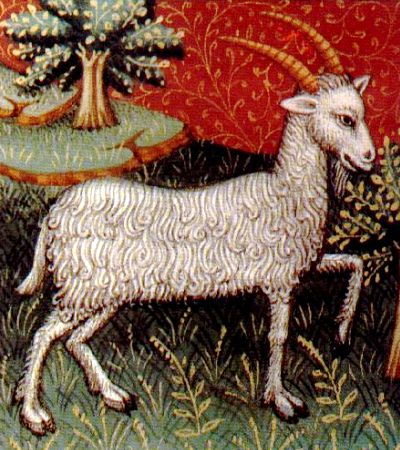
Symbol
Date of Birth: 19/21 March to 20 April
Ruling planet: Mars
Lucky Day: Tuesday
Energy: Yang (Masculine/Extrovert)
Element:Fire
Quality: Cardinal (the start of the season of spring)
Tarot Card: The Emperor (Masculinity, Fatherhood, Government, Law and Order, Courage, Stability)
Note the rams heads adorning his throne.
If I am asked ‘when?’ during a reading and I draw The Emperor, the time-frame suggested is Aries.
Public Domain: Rider-Waite Tarot
Astronomy
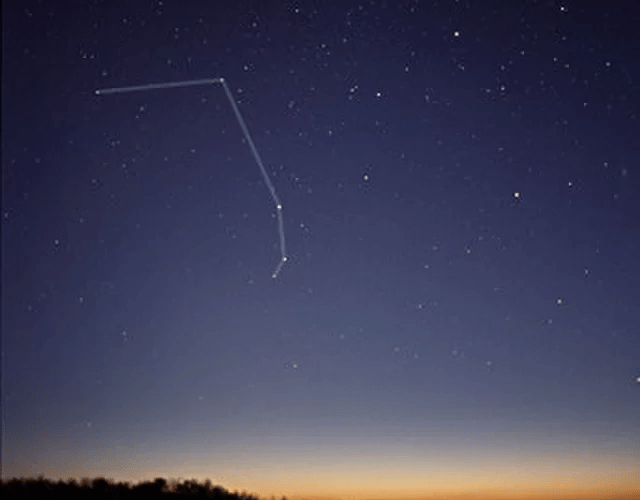
Aries, with the head of the Ram pointing downwards. The two bottom stars are the horns
Aries is located in the Northern Hemisphere between Pisces to its west and Taurus to its east.
It is not a specially bright or large constellation. The brightest star in Aries is Alpha Arietis, or Hamal, from the Arabic Al Ras al Hamal, meaning “the Head of the Sheep.” Hamal is a red giant with a magnitude of 2.0, visible to the naked eye, which is about as bright as Mars when the planet is at its farthest point from Earth. The other two brightest stars are the horns of the Ram, Sheratan and
Between 2000 BC and 100 BC the spring equinox used to be April 24 when Hamal was conjunct with the sun, but now the spring equinox is 20 March when the sun shines in front of the constellation Pisces on the border with Aries.
This is because the sun moves westward in front of the backdrop constellations by about one degree (two sun diameters) every 72 years. This drifting is due to a motion of Earth, a wobble on its axis, called the precession of the equinoxes.
But for historical reasons the spring/vernal equinox is still referred as the First Point of Aries.
The Aries constellation contains a galaxy about 100 million light-years from our own galaxy, the Milky Way, and it also a planetary system called 30 Ari, which consists of a gas giant and four stars.
A supernova in Aries was recorded in May, in the year 1012 AD.
The best time to see Aries.
Look for it in December around 9 p.m. local time, rising in the east. A Northern Hemisphere spring or Southern Hemisphere autumn is the worst time of year for viewing Aries, when it is lost in the sun’s glare. December is an especially good month for viewing Aries, when the Earth is on the other side of the sun. In late October, Aries rises in the east at sunset, reaches its highest point in the sky at midnight and sets in the west at sunrise.
Aries reaches its highest point in the sky about 10 p.m. local time (the time in all time zones) in late November, 8 p.m. local time in late December and 6 p.m. local time in late January.
History and Mythology
The spring equinox was a time of renewal throughout the northern half of Earth, an event of great significance to people who were much more aware than we are nowadays, of human dependence on the land and sky.
Once upon a time Aries marked the end of the wild sheep main lambing season in Europe, 21 March – 20 April.
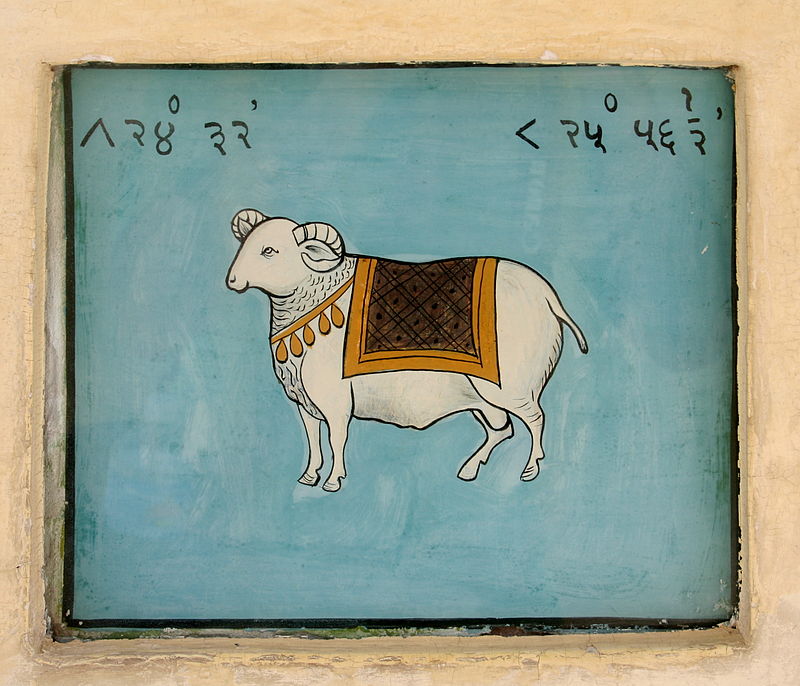
Below, in this rather humorous and charming illustration from India, is surely the least ever fiery ram of a wild sheep.
Humanity made connections, looking up and making patterns out of the skies overhead at that time, matching these to such significant natural events on the ground.
The Sumerians are one of the oldest known urban civilisations in what is now called Southern Iraq, during the Neolithic-Bronze Age, 4500 BC to 1500 years BC. The ancient Sumerians called the sun, Subat, meaning the Ancient Sheep or Ram and the planets were the Celestial Herd.
The brother and sister Phrixus and Helle were the children of the Boeotian king Athamas and the cloud fairy, Nephele. She died, the king remarried, and his new wife, Ino, feared and hated them and planned to kill them as a perceived threat to her own two children by the king.
They fled, rescued by a flying golden ram sent by Hermes at the plea of the dead Nephele, watching in anguish from the other world, but Helle fell into the sea below and was lost in the Dardanelles, named the Hellespont in her honour. Later, safely in Colchis, Phrixus (rather ungratefully) sacrificed the Golden Ram, returning it to the gods, and presented its fleece as a gift to King Aeetes, who placed it on a tree in a grove under the guard of a dragon, the hideous Hydra, whom Jason later killed in order to steal the magical healing fleece.
In ancient Egyptian astronomy, Aries was called Lord of the Head, and was associated with the god Amon-Ra, depicted as a man with a ram’s head and representing fertility and creativity. And because it was the location of the spring (vernal) equinox, it was also called the “Indicator of the Reborn Sun.” The position of Aries at the zenith coincided with the rising of Sirius in the east and the flooding of the Nile.
The Temple of Amon-Ra at Karnak bore the likeness of the supreme sun-god with the horns of a ram. The road to Karnak was formed from the wings of two granite sphinxes bearing the head of Aries.
However, Aries was not fully recognized as a constellation until classical times when the ancient Greeks from about 1580 B.C. to 360 B.C. oriented the construction of many of their sacred temples in relationship to Hamal.
In Hellenistic astrology, the constellation of Aries is associated with the golden ram of Greek mythology that rescued Phrixus and Helle on orders from Hermes, taking them to the land of Colchis.
The brother and sister, Phrixus and Helle, were the children of the Boeotian king Athamas and the cloud fairy, Nephele. Athamas was unfaithful and Nepehele left. Drought followed but Athamas remarried, and his new wife, Ino, planned to kill Phrixus and Helle as a perceived threat to her own two children by the king.
They fled, rescued by a flying golden ram sent by Hermes at the plea of Nephele, watching in anguish from the other world, but Helle fell into the sea below and was lost in the Dardanelles, named the Hellespont in her honour.
Public Domain: 1902
The magical ram, Krios, spoke to Phrixus to calm and comfort him as they continued on their way. Later, safely in Colchis, Phrixus (perhaps rather ungratefully) sacrificed the Golden Ram, returning it to the gods, and presented its fleece as a gift to King Aeetes, who placed it on a tree in a grove under the guard of a dragon, the hideous Hydra, whom Jason later killed in order to steal the magical healing fleece.
The name Phrixus means ‘curly.’
Astrological Personality
There is no such thing in reality as THE Aries personality and the same goes for all the zodiac sun signs. Your sun sign is an archetype, a keynote, but of course it is not your full astrological portrait. We are all unique and it could never be the whole story.
Aries is ultra-virile, with a warrior spirit, just as a ram will charge headlong, at an intruder, and may even kill a person who enters his field, threatening his ewes and his territory at the wrong moment.
Aries is known for its determination and zest for life, and in the same spirit, Aries can be reckless and with it, accident prone in its general haste to get on and do whatever is the next thing. Aries are at a statistically increased risk of accidents, especially with head and neck injuries in comparison with other signs, largely due to impatience and risk-taking behaviours.
Aries is ready to experiment or pioneer but may not finish what it starts. They are determined but can be diverted by their own impatience if they don’t get quick results.
In their personal relationships Aries are lively, pleasant, frank, direct and generous. Full of wit and bravery and bounce and joie de vivre, there is much to love and admire about the early springtime subjects of fiery Aries, the Mighty Ram.
This concludes my series exploring the science and history of the Zodiac. Browse the archives for the astronomy and ancient stories behind the other signs of the Zodiac.
Most of us know our zodiac or sun sign, but what does it look like in the night sky, and what’s the story behind it? This month it’s the turn of Pisces the Heavenly Fishes…
Birth Stone: Aquamarine but also amethyst, ruby, bloodstone and jasper. Aquamarine is the blue variety of beryl. Emerald is a green beryl. The aquamarine is believed to enhance foresight and clairvoyance, and a sense of happiness.
Colour: Purple, violet, sea-green
Herbs/Flowers: the water lily (associated with Neptune)
Tarot card: The Moon: ebb and flow, cyclical shifts, intuition, dreams, visionary capabilities, fertility, difficulties with travel, uncertainties, shadow boxing, wild creatures, instinct v civilisation, genius, delusion
From The Gilded Royale Tarot, Ciro Marchetti
Public Domain: Rider-Waite
The Astronomy
In the sky, Pisces is represented as two fish swimming at right angles to each other, one to the north and one to the west and attached by a cord. The fish are most usually depicted as koi.
Pisces, named for the Latin plural of fish is the 14th largest constellation overall. Pisces is in the first quadrant of the Northern Hemisphere and covers a large V-shaped region. While it is a fairly large constellation, its stars are faint — none are brighter than fourth magnitude — making it challenging to see in the sky with the naked eye.
Even so, its brightest star, Eta Piscium, also known as Alpherg or Kullat Nunu, is a bright giant star (G class) 294 light-years from Earth and has a luminosity 316 times greater that of the sun. Kullat Nunu is its Babylonian name. ‘Nunu’ means ‘fish’ and ‘kullat’ is a bucket.
Pisces second brightest star is Gamma Piscium, a yellow giant about 130 light-years from Earth.
Alpha Piscium is the third brightest star in Pisces, and is made up of a pair of white dwarf stars in close proximity. Its other name is Alrescha (“the cord.”) It lights the spot where it appears that the tails of the two fish are joined or tied together.
The best time to see Pisces in the Northern Hemisphere is between 6-9 November at 9 PM below the Square of Pegasus.
Pisces is notable for containing the point at which the sun crosses the celestial equator into the Northern Hemisphere around March 20 each year.
Image from the Atlas Coelestis, posthumously published by astronomer John Flamsteed, 1729, illustrator John Thornhill.
Astronomer and author Ian Ridpath explains: A cord joins the tails of Pisces. The horizontal dashed line passing through the southerly fish is the celestial equator, and the diagonal dashed line is the Sun’s annual path, the ecliptic.
The point where they cross is known as the vernal (spring) equinox.
History and Mythology
The fish of Pisces are attached by a cord of stars, just as life and death, and winter and spring are conjoined and cannot be separated.
Salmon spawn from October- December onwards. The last of the Atlantic salmon spawning happens late February, after which the salmon die. Perhaps there is a connection here.
Pisces is a mutable sign. These are the signs that mark the end of a season; the other mutable signs are Gemini and Sagittarius. Pisces marks the end of winter, leading up to the vernal equinox. Of all the zodiac signs, mutable signs are traditionally the most flexible and adaptable, the ones most at ease with endings and transitions and change.
Pisces is not only the last sign of winter, moving into spring; it is the last sign of the whole zodiac year, the culmination of all the signs that came before it. Symbolically therefore, Pisces has one foot, or fish in the death of the old year, meaning the last of the winter, pre-spring equinox, and one foot or fish in the quickening of spring, post-spring equinox.
Winter often brings mourning, as it carries away the frail and the old.
Psychic Pisces straddles the season of that winter’s grief and the new green shoots of spring.
The sign of Pisces is Babylonian in origin. Enki, the Sumerian god of wisdom, and the alleged true father of mankind, is associated with the planet Neptune, which astrologically rules the sign of Pisces.
To the ancient Greeks, the fish themselves were the goddess Aphrodite and her son, Eros. They were walking by the Euphrates one day when a terrible monster, Typhon, suddenly rose up out of the water to destroy them.
The gods of Olympus were no match for this particular very ancient monster, a son of Gaia, or Earth herself. He was as tall as the heavens and his eyes shot flames. Instead of fingers, he had 100 dragon’s heads sprouting from his hands.
None of the Olympians had the power to destroy the ghastly Typhon, or confront him, not alone, and he tried to kill them every chance he got. For a time, all they could do was flee, often by transforming themselves into animals, and Aphrodite and Eros, in this case, transformed themselves into fish and swam away.
Another version of the story says they dived into the river, and were rescued by two friendly fish that carried them to safety, and were later placed in the sky, their tails intertwined, to commemorate the day when Eros (Love) and Aphrodite (Beauty) were saved from a hideous fate.
Ultimately, Zeus managed to imprison the terrible Typhon beneath Mount Etna…and he is still very much alive down there to this day.
The Astrological Personality
There is no such thing in reality as THE Pisces personality and the same goes for all the zodiac sun signs. Your sun sign is an archetype, a keynote but of course it is not and never could be the whole story.
Pisces combines imagination with determination, charm with depth, and at times there is a certain passivity, even inertia, which may actually serve them very well at times, but may in some cases degenerate into a trap or a kind of darkness involving depression, alcohol or other substance misuse.
These individuals are talented, natural artists or musicians. They are famously loyal once committed, compassionate and sensitive.
Pisces has steel. This doesn’t get mentioned much, hardly ever, if at all, but Pisces has a quiet steel. They may tire, but they endure, and try taking them on, they may not say much, but watch their face harden, and, should you cross the line once too often, again, they may not say much, but you are gone.
Their instincts are kindly, and they have a soft spot for the underdog. Where they demonstrate a lack of proper consideration for others, or undue stubbornness, it is not due to any lack of goodwill, but because they are not paying attention, too focused on their inner preoccupations.
Pisces needs variety, and structure must allow them room for a degree of autonomy. Many police officers, arbitrators and judges are born under Pisces, as well as artists and musicians. Administrative work, although Pisces can do it, is really not their sort of thing by and large.
Pisces can make excellent and approachable leaders of small teams, loyal to their staff. They will take on injustice, take on those superior in status, but Pisces, unlike, say Aquarius, confines their remit to action on an individual basis. Pisces are not temperamentally disposed to mount group actions, campaigns or crusades unless perhaps, they are early Pisces, born on the Aquarius cusp, but the later subjects of this sign, born close to the Aries cusp, are very much the ‘doers’ of Pisces.
Pisces is brave but their physical energy must be guarded. It can be erratic, and once depleted, is not always easily restored. If they are prone to headaches at the back of the head, there may be related bladder infections or other hidden issues. Pisces needs longer to recuperate from illnesses than some other signs. It needs plenty of rest, music and relaxation time near to rivers, ponds and sea.
Weaknesses – Depending on their other planetary placements, Pisces may be prone to falling prey to either wishful thinking, or gloom or unhealthy lifestyle habits, especially when struggling to recover and regroup from setbacks. Lacking a clear sense of purpose or direction, Pisces can drift loose from their cord, becoming detached and living too much in their own imaginary world.
Dang. I meant to post this in November and forgot. I’ll blame it on Brexit. Why not.
Is there a missing thirteenth sign in the astrological zodiac? NASA, astronomers and mainstream media suggest there is, trotting out this story every few years, to the frustration of Tropical western astrology scholars and practitioners. Sidereal (eastern) astrologers may agree with NASA, but Tropical (western) astrologers absolutely do not.
So what’s all this about?
It hinges on the confusing of zodiac signs with the constellations after which they were named, treated them as mutually interchangeable which they are not.
There are 12 signs in astrology. Modern astronomy records 88 constellations covering the southern and northern hemispheres of Earth’s sky.
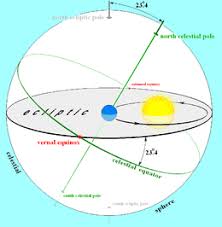
Thirteen of these constellations cross or touch the ecliptic – the trajectory of the Sun’s apparent path across the sky as seen from Earth.
Public Domain: the Plane of the ecliptic
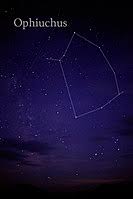
These include the 12 constellations that inspired the names of the 12 zodiac signs plus a thirteenth constellation– Ophiuchus (Oaf-ih-YOU-kus)
Astronomers and NASA have presented this thirteenth constellation, Ophiuchus, as the thirteenth sign of the zodiac, while also pointing out that the zodiac itself…the section of sky directly overhead as viewed from Earth- has changed from when the ancient Babylonian astrologers first viewed it, so that, claims NASA, the generally accepted dates for the zodiac signs as supplied in horoscopes are now a month out of alignment.
This
change in the skies has been the result of an effect called precession. The
gravitational pull of the Moon and the Sun causes the Earth to ‘wobble’ and as the
Earth orbits around the sun; a different constellation appears behind it each
month.
So while
the zodiac signs have remained in a
fixed position, and their dates have remained the same, varying only by a day
or two here and there, the constellations have drifted.
Based on this, astronomers have suggested the new astrological zodiac should more correctly look like this, with these new dates:
•Capricorn:
20 Jan – 16 Feb
•Aquarius: 16 Feb – 11 March
•Pisces: 11 March – 18 April
•Aries: 18 April – 13 May
•Taurus: 13 May – 21 June
•Gemini: 21 June – 20 July
•Cancer: 20 July – 10 Aug
•Leo: 10 Aug – 16 Sept
•Virgo: 16 Sept – 30 Oct
•Libra: 30 Oct – 23 Nov
•Scorpio: 23 – 29 Nov
•Ophiuchus: 29 Nov – 17 Dec
•Sagittarius: 17 Dec – 20 Jan
So you thought you were a Taurus sun sign, says NASA. No, actually, you are an Aries subject. So you thought you were an Aries sun sign? No, you are Pisces. So you thought you were a Sagittarius? No, you are Ophiuchus, and so on.
Whoa. But let’s not get too excited. As astronomers are quick to point out, astronomy is not astrology. And that works both ways.
First let’s take a brief look at the astronomy.
The Astronomy and the Constellation of Ophiuchus
Wiki
Ophiuchus ([Oaf-ih-YOU-kus) is one of the largest constellations but in general the least well known, straddling the celestial equator northwest of the centre of the Milky Way, near the constellations Aquila, Serpens, and Hercules, and opposite Orion, the southern section lying between Scorpius to the west and Sagittarius to the east. Below Ophiuchus, down to the right, look out for a bright reddish star, Antares in Scorpio, for help in confirming that you have found it.
Right now -July- is the best time to see it in the northern hemisphere, mid-winter in the southern hemisphere. Hence this story is in the news again right now.
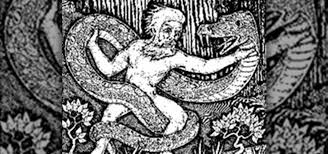
Its name comes from the Greek Ὀφιοῦχος Ophioukhos; “serpent-bearer,” and it is commonly represented as a man grasping a snake. In medieval Islamic astronomy the constellation was known as ‘Al-Ḥawwa,’ “the snake-charmer.” It used to be called Serpentius, when the constellation counted more stars, including the constellation of Serpens, representing the snake itself. Marking the head of Ophiuchus, Alpha Ophiuchi has an older, Arabic name: Rasalhague, the “Head of the Snake Charmer”.
Ophiuchus contains notable features and objects, including Kepler’s Supernova, or Kepler’s Star, named for German astronomer Johannes Kepler.
It was by far the brightest star in the sky for over 3 weeks during 1604 and actually Kepler wasn’t the first to note the supernova, due to cloudy conditions, but he made observations over the course of an entire year and wrote about the “new star in the foot of Ophiuchus”.
Kepler’s Supernova
continued visible for 18 months, and its remnants are still studied today, still
the most recent supernova to be observed with the naked eye.
Mythology
To the
ancient Greeks, the constellation represented the god Apollo struggling
with a huge snake that guarded the Oracle of Delphi.
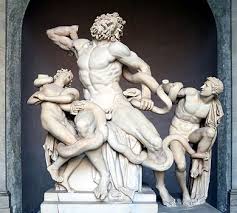
Later myths identified Ophiuchus with Laocoon, the tragic Trojan priest of Poseidon, who warned his fellow Trojans about the Greek’s wooden horse, and together with his sons, was killed by a pair of sea-serpents sent by Poseidon to shut him up, because clearly, Poseidon was on the side of the Greeks, or else under orders from Zeus, or else Laocoon had already annoyed him in some other way, and you know, nothing less than death by giant sea-snake would do.
Public Domain
Pluto (Hades) complained to Jupiter (Zeus) that Asclepius was interfering with death, an act of hubris which upset the natural order, and meant the end of the circle of life, with no room for new life.
Immortality would be a terrible evil. Life itself would die, stagnated, and Jupiter (Zeus) duly put a stop to it by killing Asclepius, hurling a lightning thunderbolt straight at his head, giving him an instant perm.
Apollo was, rather understandably, we may agree, furiously upset, “you zapped my son you b*stard!” Jupiter tried to comfort him by placing Asclepius in the heavens to honour his good works, and the rod of Asclepius remains the symbol of western medicine to this day.
The rod of Asclepius is not be confused with the Cadeuceus, a symbol of medicine, but also of trade. The cadeuceus is assciated with Mercury, and has not one but two snakes twined round the staff, and it has wings.
Public Domain
So, is Ophiuchus the thirteenth zodiac sign? Or does your zodiac sign stay the same?
Image: Public Domain: The Snake-Wrangler in Urania’s Mirror, 1825. Above the tail of the serpent is a now ‘obsolete’ constellation, Taurus Poniatovii
If you are born between 29th November and 17th December, NASA, other astronomers and Sidereal astrologers may argue that your zodiac sun sign is technically Ophiuchus.
Key personality traits:
Humanitarian* Poetic* Hungry for knowledge* Intuitive* Psychic*Intense *Likes bright colours *High achievers *Prone to harbouring enemies without realizing *Lucky (so long as the enemies don’t succeed, obviously)
These are, not surprisingly, a mix of classic Scorpio and Sagittarius attributes in this profile.
But- there is a But here. And it is a blooming big BUT.
What astronomy is failing to recognize is the logic of the system which is the very basis of western (Tropical) astrology, and which makes a key distinction between the positions at any given time of the constellations themselves, and the zodiac signs named after them.
The signs of the zodiac as we know them today are based on Ptolemy’s twelve-fold division of the ecliptic, designed so that each sign spans 30° of celestial longitude, or roughly the distance the Sun travels in a month. 12 was a cleaner, tidier number to work with than was 13.
Ptolemy aligned these divisions with the seasons so that the March
equinox always falls on the boundary between Pisces and Aries, whereas Sidereal (Vedic)
astrology is based on the constellations themselves, as was western astrology
way back at the time of the Babylonians, whose data Ptolemy worked with.
Tropical western astrology, with its 12 associated zodiac signs is a static,
modelled system based NOT on the constellations themselves, but on the wheel of
the seasons which also accord the signs of the zodiac their personalities, but the idea of the ‘missing’
thirteenth sign is nothing new.
“It was developed by Hipparchus in 130 BC,” says astrologer, Susan Miller, “but you don’t get your characteristics from the constellations. You get them from the planets, from the sun and moon. We measure everything by the degree to which the earth is rotated around the sun. So if you’re born at the beginning of the zodiac, which corresponds to the spring equinox and typically falls on March 20, you’re at the 0º point—or the point at which the sun is crossing directly over the earth’s Equator. If we didn’t have names like Virgo or Gemini we’d have to walk around saying, `Hi, I’m a 136º,’ and I’d say, `Oh, really? Well I’m a 352º and so on.”
In Summary
NASA’s supposed debunking may be logical in strictly astronomical terms. But that’s astronomy. It has nothing to do with western Tropical astrology as practiced today, and would only matter if the timing of the signs relied upon being tied to the actual positions of the constellations.
But they do not, and your zodiac sign, also known as your sun sign still stands, both as it is and where it is, based on the principle and according to the system on which it was first described.
“Tonight is the first full moon of the new year, nicknamed the Wolf Moon. As winter bit down, hungry wolves came down to the villages in search of food.”
January and February is wolf mating season, and their howls haunted the nights more than usual, both in Europe and in North America. This nickname was shared by Europeans and Native Americans alike, though this full moon has other nicknames too, including the Snow Moon and Ice Moon.
British Wolf Hunt Public Domain
Also Tweeted
“Tonight’s lunar eclipse full moon in Cancer rises at 15:50 GMT (UK) or 2:21 ET and sets at 07.53 GMT (UK) Last night’s almost-full moon was spectacular. Excited cat playing & pouncing on things. This ‘watery’ lunar event typically signifies big changes at home. A lettinggo.”
That evening I said to Il Matrimonio, “I wonder who we will be hearing about tomorrow, who has ‘let go and left home’?”
Very many people will have ‘let go and left home’ of course. 2 people go out of this world every second and 4 come in, or if we want to be statistically exact, 1.8 go out, and 4.20 come in.
“The unborn are banging on the gates of the dock. What’s the limit on the shipping lanes?”- KT Kearns
But who would we be hearing about?
Which crab would quit his rock-pool?
Who would the wolf moon carry away in tonight’s meteor shower? (The Quadrantids)
It was the Sultan of Oman, Qaboos bin Said Al- Said, 79, a ruler for 50 years, ally of the UK and US and the longest ruling monarch in the Arab world.
Publicly at least, apart from three years of marriage which ended in divorce, after which his wife remarried, he lived to all intents and purposes as a hermit (crab) But his personal life has remained entirely private, protected by his shell of court and state.
Qaboos bin Said Al -Said
Excerpts from an Obituary in the Middle East Eye: (Link provided below)
“The sultan took the throne of an extremely underdeveloped country with a history of civil conflict and oversaw its transformation into a politically stable middle-income state during his half-century reign. Under a model of modernising absolute monarchy, he largely managed to steer Oman away from the extremes of consumerism of neighbouring Dubai and the religious conservatism of Saudi Arabia.
The concentration of political power and wealth in the sultan’s hands, combined with the absence of a clear route to succession, had led to fears that there could be a leadership crisis following his death.
The appointment of Haitham bin Tariq, Oman’s culture minister and the 65-year-old cousin of the late sultan, on Saturday appeared to put to rest lingering uncertainty over the country’s succession process.
Under Qaboos, political parties were banned and laws of lese-majesty created an all-pervasive system of surveillance and repression that ensured no organised opposition could emerge.
Still, there is no doubting the genuine affection in which the sultan was held by many Omanis and expatriates, seen as a visionary leader who had secured the welfare of Omanis and expatriates alike by leading the nation through its modernisation, and leaving a legacy that his successor will be hard put to equal.
Oman’s Sultan Qaboos is pictured at his palace in Muscat on 14 January 2019 (AFP)
The Sultan inherited a conservative, highly religious country riven by armed insurrection and tribal divisions, Valeri wrote, and over several decades, reduced the influence of the tribes, while incorporating their leaders in the political process.
Qaboos also championed the advance of women, gradually opening the way for many to enter education and the labour market in increasing numbers, despite Oman being a conservative society that traditionally segregated women in domestic roles.
Qaboos was also a big supporter of the arts with his government sponsoring the country’s first societies of artists and traditional music. As a lover of classical music, he played the organ and the lute, composed music and founded the Gulf’s first symphony orchestra in 1985, its players recruited from the towns and villages of Oman.
Qaboos was careful to maintain diplomatic ties even with those states, such as Iran and Iraq, which were in conflict with his western allies. As he explained to an Egyptian newspaper in 1985: “There is ultimately no alternative to peaceful coexistence between Arabs and Persians, nor to a minimum of agreement in the region.”
One of the world’s longest-serving heads of state, Qaboos began tentative moves toward a constitutional monarchy in the late 1990s and early 2000s, with the introduction of an elected consultative assembly and municipal council elections. However at the time of his death he remained head of state and prime minister, and commander in chief of the armed forces.
Qaboos’s successor will face the growing question of how to quell rising expectations of a new generation of internet-savvy young people no longer satisfied with the repressive paternalism that prevailed under half a century of Qaboos.
Now. Here is a very interesting piece of information, linking the Full Moon In Cancer with the Sultan Qaboos, or at least, I find this interesting. If not downright spooky.
Your Moon sign is an expression of your temperament and style of doing things. The natal chart of the Sultan shows that he was born with his Sun in deep and secretive, watery Scorpio and his Moon in the sign of almost equally deep and secretive sign of Cancer the Crab.
That was one enigmatic man of deep waters. That was one tough shell.
Two tough shells.
Now consider this image of the Moon card from The Gilded Tarot Royale, from the illustrator Ciro Marchetti, and the full moon uniting wolf and crab.
The Sun card in Tarot foresees sunny weather at its most literal. It’s respite from care, the gift of the moment, childhood and sometimes the imminence of birth. It’s also travel, particularly to hot places. It is the return of the sun after the winter solstice. It is the zenith of the sun in the summer solstice. It is glory.
Reversed it’s the setting sun, delays and lesser joys, the passing away of childhood, nostalgia, beautiful, bittersweet twilight. It may mean getting something less than you hoped for, but what you get is still something to be happy for.
The Star card on the other hand, can and often has indicated a recovery from depression, sickness and despair, a guiding light, someone sees a way ahead, they couldn’t see before.
Klytie was a figure in Ancient Greek mythology who fell in love with the sun god, Apollo. Each day…
An introduction to the astronomy, history and, mythology of the zodiac sign of Capricorn…
Most of us know our zodiac or sun sign, but what does it look like in the night sky, and what’s the story behind it? This month it’s the turn of Capricorn…
Common associations
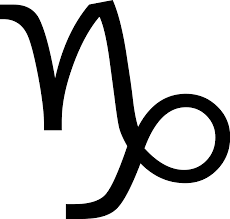
Symbol:
Date of Birth: 21 Dec to 20 January
Ruling planet: Saturn
Lucky Day: Saturday Lucky Numbers 2 and 8
Energy: Yin
Element:Earth
Quality: Cardinal (the start of the season of winter)
Key phrase: I build, I use
Body: Skin, knees, skeletal system
Birth Stone: Red Garnet, Black Onyx
Herbs/Flowers: Wintergreen, Ivy, Carnation
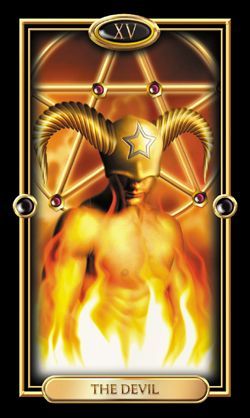
Tarot card: The Devil (Pan/Nature, Mystery, Fascination, Obsession, Entrapment)
From The Gilded Tarot by kind permission of Ciro Marchetti
The Astronomy
Public Domain
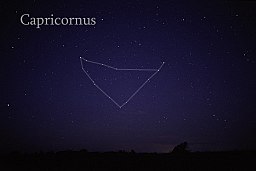
The constellation of Capricornus is located in an area of sky known as The Sea or The Water, containing other water-related constellations including Aquarius, Pisces and Eridanus.
Its name is Latin for “horned goat” or “having horns like a goat’s”, and it is commonly represented in the form of a sea-goat: a mythical creature that is half goat, half-fish, like Pricus, the son of Chronos (Time) king of the mer-goats of Greek myth. This seems to have been an evolution legend. The children of Pricus left the sea to dwell on mountains, leaving him alone in the oceans with no-one to teach any more, and Pricus was a great teacher. Zeus placed him in the Sea of the Stars so that he could see his children again, and they could look up and see him.
Capricornus is the smallest constellation in the zodiac, with no first magnitude stars. Even so, the brightest star, Delta Capricorni A, is a white giant with a luminosity 8.5 times that of the Sun.
Capricornus has three stars with known planets and contains a Messier object, Messier 30, a globular cluster 28,000 light years distant,about 90 light years across in size.
The cluster is approaching us at the speed of 181.9 km/s. It was one of the first deep sky objects discovered by Charles Messier in 1764.
There are five meteor showers associated with Capricornus: the Alpha Capricornids, the Chi Capricornids, the Sigma Capricornids, the Tau Capricornids, and the Capricorniden-Sagittarids.
Like other constellations of the astrological zodiac, Capricorn was first catalogued by the Greek astronomer Ptolemy in the 2nd century.
The planet Neptune was discovered in the constellation Capricornus, near Deneb Algedi, the brightest star in the tail of the goat, on September 23, 1846.
This perhaps explains or illustrates a strong astral and psychic mythic connection between Capricorn and Pisces the Fishes.
History and Mythology
Though Capricornus is the second faintest constellation in the sky after Cancer, its imagery is very ancient indeed, associated with myths that go back to the 21st century BC and several of which centre on various sun gods nursed by a she-goat.
All myths of astrology have their roots in Earth’s seasons. Goats, and their relatives, ibex, were depicted in Ice Age paintings, and later immortalized in myth as Capricorn.
Male ibex started fighting and mating during early winter, December and January, coinciding with the later days ascribed to Capricorn. In the early Bronze Age, Capricornus marked the winter solstice and, in modern astrology, as distinct from astronomy, Capricorn’s rule still begins on the first day of winter. The constellation itself is actually overhead nowadays during Aquarius, due to the wobble of the Earth, an effect known as precession, but the sun sign named after Capricornus retains the dates accorded to it by Ptolemy.
Before 1000 BC the Sumerians knew Capricorn as the goat-fish, or SUHUR-MASH-HA, but the constellation is nowadays more widely associated with two mythical creatures from Greek legends: the deity Pan, and the she-goat Amalthea who suckled baby Zeus, although these legends were based on far more ancient stories involving kindly she-goats and baby sun deities.
The forest deity Pan has the legs and horns of a goat, like Krotos, his son, who was a great archer and devotee of the Muses, and is identified with the neighbouring constellation Sagittarius.
Pan, so the legend said, was placed in the sky by Zeus in gratitude after he came to the rescue of other gods during a time the Olympian gods sought refuge in Egypt following their epic battle with the Titans, when the monster Typhon, son of the Titan Tartarus and Earth, sought revenge.
Typhon was a fearsome fire-breathing creature, higher than mountains and with dragons’ heads instead of fingers. The Olympian gods sought to escape his vengeance by adopting various disguises: Zeus, a ram – Hera, a white cow, Bacchus (another version of the myth suggests Pan) a goat.
Zeus was dismembered by Typhon, but was saved when Bacchus/Pan played a sound on his pipes, ‘panikos,’ from which we get the word ‘panic’ – and he panicked the monster long enough for an agile Hermes to collect the supreme god’s limbs and carefully restore him. In gratitude, Zeus transferred Bacchus/Pan to the heavens as Capricornus.
Another legend says that while the souls of those about to be born descend to Earth through the constellation of Cancer, via the Beehive Cluster, the souls of the dead return to the cosmic sea, ascending through the gate of Capricorn.
Public Domain: Celestial Atlas 1822
The Astrology
Capricorn is the tenth sign in the Zodiac.
There is no such thing in reality as THE Capricorn personality and the same goes for all the zodiac sun signs. Your sun sign is an archetype, a keynote but of course it is not and never could be the whole story.
The archetype of Capricorn is shrewd, wise, and even Gnostic. They are profound thinkers, often deeply enquiring, and with a wry sense of humour, self-reliant, stoic in the face of adversity, hard-working, determined and resilient.
They have high standards, and expect much of themselves but also others which, depending on other aspects of their astrological portrait, can make them demanding or even overbearing task-masters,
They are known for a dry rather than a joyful wit, and if Saturn gets too prominent, they can be downbeat, cynical and suspicious, seeing traps and problems everywhere, viewing the enthusiasm of others as premature or naïve.
Capricorn is no-one’s fool, but Capricorn carries its own weight, and the weight of others too from time to time, and Capricorn climbs the mountain to see the world, not so that the world will see Capricorn.
Public Domain
“Duties are what make life most worth the living. Lacking them, you are not necessary to anyone. And this would be like living in an empty space. Or not being alive at all.”- Marlene Dietrich, born Dec 27, 1901













 True Tarot Tales