Today is Candlemas, the Christian festival of presenting Jesus at the temple, but long before that, this time of year marked a more ancient celebration in Gaelic Britain: the rites of spring and the fire festival of Imbolc.
Let’s get with the programme, Imbolc style, and parade down the street, go pray for the health of the fields! It’s all about the soil. Our cradle on Earth.
Candlemas is a continuation of that more ancient festival Imbolc, which spans 1-2 February and begins 1 February with St Brigid’s Day.
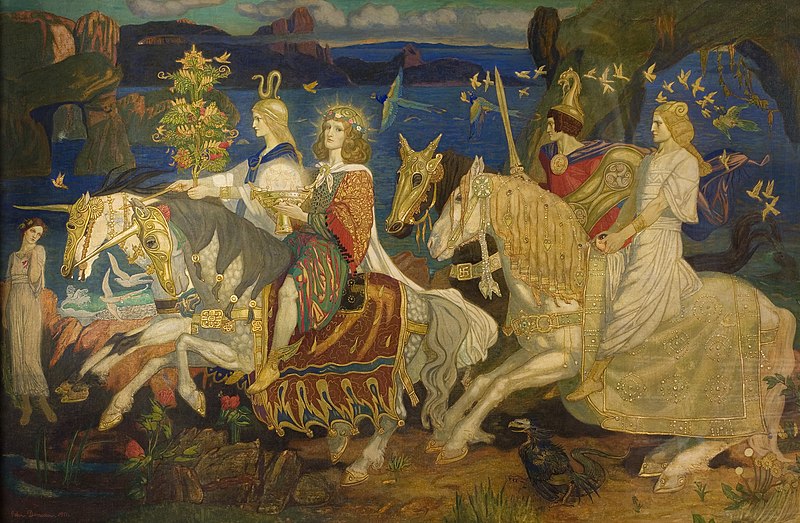
The original Brigid was a pre-Christian goddess of the Tuatha Dé Danann, the mythical first people or faerie people of Ireland. She was a daughter of the chief of the gods, The Dagda, and was known as a goddess of healers, poets, smiths, childbirth and inspiration. Her name means “exalted one”.
Riders of the Sidhe, John Duncan, 1911
Her story was later merged with the Christian saint of the same name in the middle ages, St Brigid of Kildare.
This fire festival, whether viewed as pagan or Christian, began as a neolithic festival also celebrated in Scotland and the Isle of Man, roughly marking the 1/2 way point between the winter solstice and spring equinox.
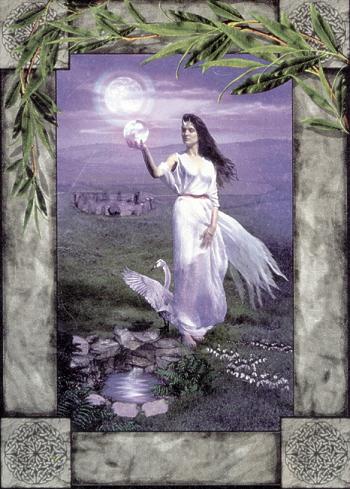
From The Sacred Circle Tarot
There are various suggestion about the etymology of ‘Imbolc. ‘ It is commonly thought to come from a word meaning “in the belly.” reflecting the role of the goddess Brigid as a protector of women in childbirth, as well as the safe birthing of precious livestock.
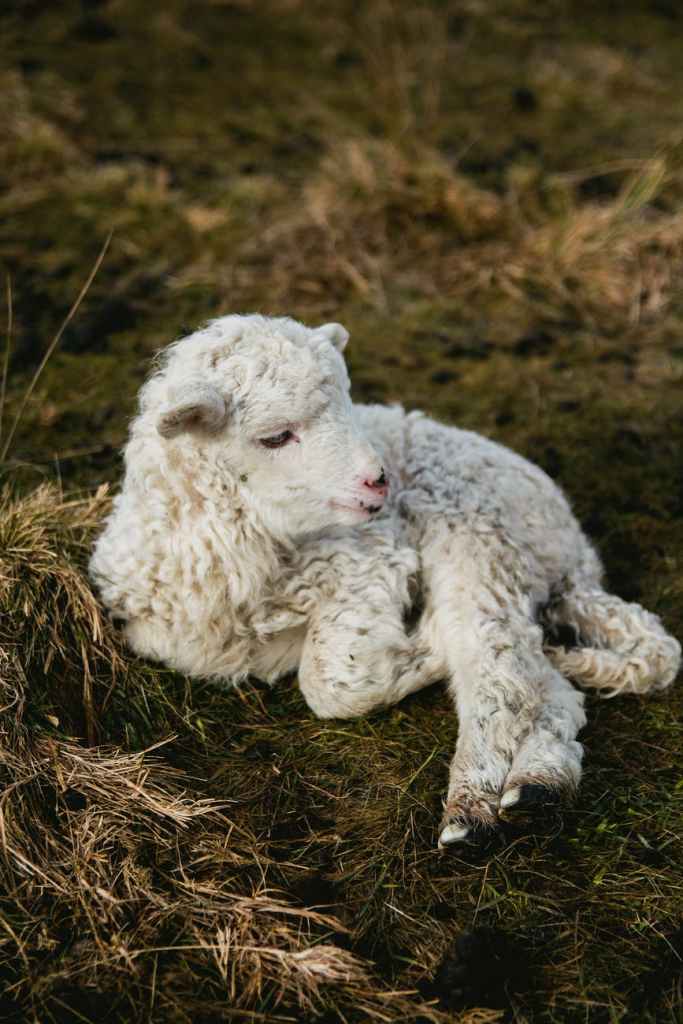
Any time now, is the time of the very first lambs. The start of the lambing season varies by up to two weeks in any given year.
Brigid was said to visit one’s home at Imbolc. Asking her blessings, people would make a bed for Brigid and leave her food and drink, and items of clothing would be left outside for her to bless. Brigid was petitioned to protect homes and livestock. This was a time for feasting and visits to sacred wells, and a time for ritual divination.
St Brigid’s cross is the classic icon of her saint’s day today, though this too, predates Christianity. It is made from rushes and was placed in doorways to protect the home from harm.
A new Christian story was created for it, that the earthly manifestation of Brigid, St Brigid of Kildare, had woven it for a dying man, using rushes from the floor, baptizing him at the point of death.
Spring fire, fierce quickening of new green shoots, the fierceness of the ram.
Imbolc was when the Cailleach. —the divine crone of Gaelic tradition—gathered her firewood for the rest of the winter. Legend said if she wished the winter to last a good while longer, she would make sure the weather on Imbolc was bright and sunny, so she could go out and about, and gather firewood.
This superstition says it’s good news, then, if we have bad weather at Imbolc. Winter is almost done with for another year.
Dang. I meant to post this in November and forgot. I’ll blame it on Brexit. Why not.
Is there a missing thirteenth sign in the astrological zodiac? NASA, astronomers and mainstream media suggest there is, trotting out this story every few years, to the frustration of Tropical western astrology scholars and practitioners. Sidereal (eastern) astrologers may agree with NASA, but Tropical (western) astrologers absolutely do not.
So what’s all this about?
It hinges on the confusing of zodiac signs with the constellations after which they were named, treated them as mutually interchangeable which they are not.
There are 12 signs in astrology. Modern astronomy records 88 constellations covering the southern and northern hemispheres of Earth’s sky.
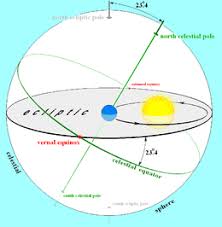
Thirteen of these constellations cross or touch the ecliptic – the trajectory of the Sun’s apparent path across the sky as seen from Earth.
Public Domain: the Plane of the ecliptic
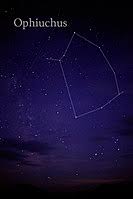
These include the 12 constellations that inspired the names of the 12 zodiac signs plus a thirteenth constellation– Ophiuchus (Oaf-ih-YOU-kus)
Astronomers and NASA have presented this thirteenth constellation, Ophiuchus, as the thirteenth sign of the zodiac, while also pointing out that the zodiac itself…the section of sky directly overhead as viewed from Earth- has changed from when the ancient Babylonian astrologers first viewed it, so that, claims NASA, the generally accepted dates for the zodiac signs as supplied in horoscopes are now a month out of alignment.
This
change in the skies has been the result of an effect called precession. The
gravitational pull of the Moon and the Sun causes the Earth to ‘wobble’ and as the
Earth orbits around the sun; a different constellation appears behind it each
month.
So while
the zodiac signs have remained in a
fixed position, and their dates have remained the same, varying only by a day
or two here and there, the constellations have drifted.
Based on this, astronomers have suggested the new astrological zodiac should more correctly look like this, with these new dates:
•Capricorn:
20 Jan – 16 Feb
•Aquarius: 16 Feb – 11 March
•Pisces: 11 March – 18 April
•Aries: 18 April – 13 May
•Taurus: 13 May – 21 June
•Gemini: 21 June – 20 July
•Cancer: 20 July – 10 Aug
•Leo: 10 Aug – 16 Sept
•Virgo: 16 Sept – 30 Oct
•Libra: 30 Oct – 23 Nov
•Scorpio: 23 – 29 Nov
•Ophiuchus: 29 Nov – 17 Dec
•Sagittarius: 17 Dec – 20 Jan
So you thought you were a Taurus sun sign, says NASA. No, actually, you are an Aries subject. So you thought you were an Aries sun sign? No, you are Pisces. So you thought you were a Sagittarius? No, you are Ophiuchus, and so on.
Whoa. But let’s not get too excited. As astronomers are quick to point out, astronomy is not astrology. And that works both ways.
First let’s take a brief look at the astronomy.
The Astronomy and the Constellation of Ophiuchus
Wiki
Ophiuchus ([Oaf-ih-YOU-kus) is one of the largest constellations but in general the least well known, straddling the celestial equator northwest of the centre of the Milky Way, near the constellations Aquila, Serpens, and Hercules, and opposite Orion, the southern section lying between Scorpius to the west and Sagittarius to the east. Below Ophiuchus, down to the right, look out for a bright reddish star, Antares in Scorpio, for help in confirming that you have found it.
Right now -July- is the best time to see it in the northern hemisphere, mid-winter in the southern hemisphere. Hence this story is in the news again right now.
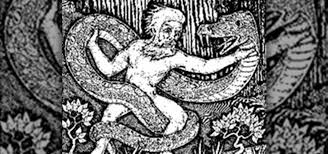
Its name comes from the Greek Ὀφιοῦχος Ophioukhos; “serpent-bearer,” and it is commonly represented as a man grasping a snake. In medieval Islamic astronomy the constellation was known as ‘Al-Ḥawwa,’ “the snake-charmer.” It used to be called Serpentius, when the constellation counted more stars, including the constellation of Serpens, representing the snake itself. Marking the head of Ophiuchus, Alpha Ophiuchi has an older, Arabic name: Rasalhague, the “Head of the Snake Charmer”.
Ophiuchus contains notable features and objects, including Kepler’s Supernova, or Kepler’s Star, named for German astronomer Johannes Kepler.
It was by far the brightest star in the sky for over 3 weeks during 1604 and actually Kepler wasn’t the first to note the supernova, due to cloudy conditions, but he made observations over the course of an entire year and wrote about the “new star in the foot of Ophiuchus”.
Kepler’s Supernova
continued visible for 18 months, and its remnants are still studied today, still
the most recent supernova to be observed with the naked eye.
Mythology
To the
ancient Greeks, the constellation represented the god Apollo struggling
with a huge snake that guarded the Oracle of Delphi.
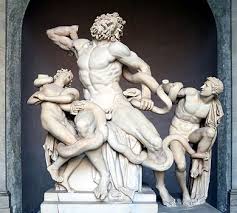
Later myths identified Ophiuchus with Laocoon, the tragic Trojan priest of Poseidon, who warned his fellow Trojans about the Greek’s wooden horse, and together with his sons, was killed by a pair of sea-serpents sent by Poseidon to shut him up, because clearly, Poseidon was on the side of the Greeks, or else under orders from Zeus, or else Laocoon had already annoyed him in some other way, and you know, nothing less than death by giant sea-snake would do.
Public Domain
Pluto (Hades) complained to Jupiter (Zeus) that Asclepius was interfering with death, an act of hubris which upset the natural order, and meant the end of the circle of life, with no room for new life.
Immortality would be a terrible evil. Life itself would die, stagnated, and Jupiter (Zeus) duly put a stop to it by killing Asclepius, hurling a lightning thunderbolt straight at his head, giving him an instant perm.
Apollo was, rather understandably, we may agree, furiously upset, “you zapped my son you b*stard!” Jupiter tried to comfort him by placing Asclepius in the heavens to honour his good works, and the rod of Asclepius remains the symbol of western medicine to this day.
The rod of Asclepius is not be confused with the Cadeuceus, a symbol of medicine, but also of trade. The cadeuceus is assciated with Mercury, and has not one but two snakes twined round the staff, and it has wings.
Public Domain
So, is Ophiuchus the thirteenth zodiac sign? Or does your zodiac sign stay the same?
Image: Public Domain: The Snake-Wrangler in Urania’s Mirror, 1825. Above the tail of the serpent is a now ‘obsolete’ constellation, Taurus Poniatovii
If you are born between 29th November and 17th December, NASA, other astronomers and Sidereal astrologers may argue that your zodiac sun sign is technically Ophiuchus.
Key personality traits:
Humanitarian* Poetic* Hungry for knowledge* Intuitive* Psychic*Intense *Likes bright colours *High achievers *Prone to harbouring enemies without realizing *Lucky (so long as the enemies don’t succeed, obviously)
These are, not surprisingly, a mix of classic Scorpio and Sagittarius attributes in this profile.
But- there is a But here. And it is a blooming big BUT.
What astronomy is failing to recognize is the logic of the system which is the very basis of western (Tropical) astrology, and which makes a key distinction between the positions at any given time of the constellations themselves, and the zodiac signs named after them.
The signs of the zodiac as we know them today are based on Ptolemy’s twelve-fold division of the ecliptic, designed so that each sign spans 30° of celestial longitude, or roughly the distance the Sun travels in a month. 12 was a cleaner, tidier number to work with than was 13.
Ptolemy aligned these divisions with the seasons so that the March
equinox always falls on the boundary between Pisces and Aries, whereas Sidereal (Vedic)
astrology is based on the constellations themselves, as was western astrology
way back at the time of the Babylonians, whose data Ptolemy worked with.
Tropical western astrology, with its 12 associated zodiac signs is a static,
modelled system based NOT on the constellations themselves, but on the wheel of
the seasons which also accord the signs of the zodiac their personalities, but the idea of the ‘missing’
thirteenth sign is nothing new.
“It was developed by Hipparchus in 130 BC,” says astrologer, Susan Miller, “but you don’t get your characteristics from the constellations. You get them from the planets, from the sun and moon. We measure everything by the degree to which the earth is rotated around the sun. So if you’re born at the beginning of the zodiac, which corresponds to the spring equinox and typically falls on March 20, you’re at the 0º point—or the point at which the sun is crossing directly over the earth’s Equator. If we didn’t have names like Virgo or Gemini we’d have to walk around saying, `Hi, I’m a 136º,’ and I’d say, `Oh, really? Well I’m a 352º and so on.”
In Summary
NASA’s supposed debunking may be logical in strictly astronomical terms. But that’s astronomy. It has nothing to do with western Tropical astrology as practiced today, and would only matter if the timing of the signs relied upon being tied to the actual positions of the constellations.
But they do not, and your zodiac sign, also known as your sun sign still stands, both as it is and where it is, based on the principle and according to the system on which it was first described.
Card drawn today as my Card of the Day: (tweets limited to 280 characters.)
Katie-Ellen@ktlncartomancer· Tarot COTD: The Magician. 1st card out of the deck, shuffled & drawn blind. Skill, alchemy. Self-assurance, self-determination. Yet. 4 elements-‘corners’ of the globe & see globe of the spheres?Tricky year ahead but UK Manuf, tech & space ind will do big new things. IMG Marchetti
The Magician: The Tarot of the Divine Legacy: Ciro Marchetti
The Magician makes things happen. Britain is making things happen. Britain is still making things. See the factories hidden inside this image? See the tower blocks of the City and the service sectors? See the books new and old? See the astrolabe, the wheels, the cogs, the electricity, and the conjuring, welding and harmonizing of a master conductor/physicist?
There are a number of posts here on this blog, card readings on Brexit dating back to the referendum of 2016. We were in Bilbao the day the result was announced, and next day drove across to Sitges, and were asked about it a few times by total strangers, all in a thoughtful, friendly way.
Some were Catalan.
Let’s just look back to December.
Posted on Twitter 9 Dec 2019:- Katie-Ellen@ktlncartomancer· Will it be a hung parliament? Let’s look through the lens of playing card cartomancy. No opinions. Just cards. Shuffle blind, draw 5 cards, red/black, central card key. 10 Diamonds, Queen D, Ace Clubs (reps GE & a NO answer) 4 Spades (ugh) Ace Diamonds (future = new start).
And let’s look back again at an earlier reading, posted 1 October 2019 in which I used pendulum divination, asking this question…..
“Will there be a General Election BEFORE the UK leaves?
The pendulum is swinging to NO. But I don’t know. I keep thinking of that Ace of Clubs card. I don’t see one occurring in September or October and that timing would be exceedingly tight. But, swinging the pendulum again, there’s something here, suggesting however unlikely, there may be one either concluded or announced before Christmas.” – (posted 1 October 2019)
The dates though? The dates. How did I do there?
I was timid. I posted in October that I drew a 2:5 chance of there being the Halloween Brexit promised for 31 October. I still detected it as possible therefore, while far from guaranteed, and of course, now we know it didn’t happen. 1 October the chance suddenly reduced from 3/5 to 2/5.
1 October 2019 “The figure on this card from the Legacy of the Divine Tarot deck, illustrated by Ciro Marchetti, is reaching out his arms, spanning the Scorpion of Halloween and somewhere between Aquarius and the Fish of Pisces, late February-late March. But is it 2020 or a continuum into 2021?”
The Legacy of The Divine Tarot
We entered Aquarius 20 January, so that the formal declaration of Brexit tonight is set to occur at the very beginning of the time window indicated by my reading.
And yet, as we know, this event at 11.00 PM tonight UK time, midnight Brussels time, marks the start of a year long transition period.
Time and again since 2016 I have looked to see if it would be a No Deal Brexit. I have not at any time seen a No Deal Brexit. We might still get one, but the Withdrawal Agreement means it has been averted at least until the end of 2020.
So how will that proceed this year? In other readings, I have noted many appearances of Leo the Lion for some reason I don’t understand, indicating a key development in July-August 2020. I’ll have to watch that space.
Again and again since the 2016 referendum I have asked, what is the ‘destiny’ for Britain, and drawn the same card over and over, the Nine of Coins, suggesting a slow gathering momentum, a juggernaut, and a coming decade of hard work and economic achievement.
This card specifically suggests notable prospects including but not limited to: financial services, manufacturing, horticulture/agriculture, farmer’s markets and a surge in demand for local produce luxury goods, the heritage industry and hoteliers.
I would be happier to see a fish leaping in that pond, though at least there is a pond, and that is clearly vital business pending, fishing rights and fisheries, significant by a silence in the noise around the current withdrawal bill passed by this Parliament. This bill, may presumably, may be superseded by events.
Meanwhile, the new 50 pence coin has apparently so enraged many Remain voters who are not reconciled to the direction the UK has voted to take, they are threatening to deface it. It is unlawful to deface a coin of the realm, but nail polish remover will remove permanent ink, and so will toothpaste and baking soda.
To those so utterly irreconciled at this tide of national events, that they are publicly threatening to deface these new coins with a swastika, on the grounds that this coin marks the new face of Britain, shame on them. And this, the week of the 75th Holocaust Memorial.
Britain, for all its many failings, and despite the likes of Moseley, and shockingly, the machinations of Edward v111, has never had a fascist government, unlike all those countries in mainland Europe we shall forebear to name. Britain was fortunate too, in its allies, and was lucky that it was more than once assisted, and even reprieved by its island status, a 450 000 year old accident of geography.
…“The breaching of this land bridge between Dover and Calais was undeniably one of the most important events in British history, helping to shape our island nation’s identity even today,” said Professor Sanjeev Gupta, a co-author from the Department of Earth Science and Engineering at Imperial. “When the ice age ended and sea levels rose, flooding the valley floor for good, Britain lost its physical connection to the mainland. Without this dramatic breaching Britain would still be a part of Europe. This is Brexit 1.0 – the Brexit nobody voted for.”-Source: The Independent.
This has of course not saved these islands from wave after wave of historical uninvited migration and hostile invasion. The British people were forged in wave after wave of intermarriages following invasion and migration; the Romans, the Norse, the Jutes, the Saxons. The list goes on and on.
The shock of 1066 must have been so seismic as to be almost unimaginable. Duke William abolished slavery, but freemen landholders became serfs and tenants almost overnight.
Harold Godwinson
Betrayed by his brother
Begged wait by his mother
Echoes shrined in thread
A fallen king still speaks
Of ships on shingle
Senlac sundered
Homeland hillside
Battle ringed in red.
The English language was never the same again. Norman French was the new language of state and power, and continued so for another 300 hundred years. Click to Continue
Who are the British anyway? Who ARE the Brythones? And who are the English? These islands been invaded so many times, often with horrific violence, by incoming peoples plundering minerals, seeking fertile farming land, sweeping in from the European mainland, and with such an ensuing commingling of tribes, it is not so easy to say, let alone characterise the ‘indigenous’ population, if they are not direct descendants of the Anglians themselves, except to say the native Britons are largely Indo-European, and as such shall remain.
We are not moving away anywhere, except that our island home is drifting westwards as our eastern cliffs continue to crumble and our westerly margins build. The sea is further and further out, along the coasts of Lancashire and Cumbria, I have seen that visible difference during my own lifetime.
Today is about isolationism. It never was and it never will be, as if that were even possible, anyway. It is not anti-global, and yet is is a rejection of a certain kind of globalism, the corporate kind.
The future being resisted here is a chimera of the virtual world, where a chip implanted in your body will mean you swipe left or right, opening a door, getting in to work. That technology is already here,with our greater ease of convenience as the supposed trade-off.
After all, we are already using this technology in medical procedures, such as pacemakers, and in pets, chipping them in case of loss or theft, is the reasoning, meant to reassure:
“The syringe slides in between the thumb and index finger. Then, with a click, a microchip is injected in the employee’s hand. Another “cyborg” is created.
What could pass for a dystopian vision of the workplace is almost routine at the Swedish startup hub Epicenter. The company offers to implant its workers and startup members with microchips the size of grains of rice that function as swipe cards: to open doors, operate printers, or buy smoothies with a wave of the hand.
The injections have become so popular that workers at Epicenter hold parties for those willing to get implanted.” Source – The Independent, 2017
And could we,would we sell our children’s futurity for such a mess of pottage as that?
A ‘metropolitan’ city dweller might counter this in terms of the alternative vision; recoiling in their turn from some vision of a kind of folk horror revival.
It comes down to outlook, but the kingdom has spoken in reclamation of community; the fact and meaning of landscape, the minerals that build our unborn bones and teeth, and our feeling of connection to these are the fixtures and fittings wherever we go. Only the furniture, we choose.
If home is where the heart is:
On y reste.
On y va.
On y retourne.
It looks to me we are in for a momentous and hard-working decade of change, and doubtless this will be unsettling for some, and there will be losers as well as winners, just as there are now, and have been this past 45 years, but the more we thrive, the better we can carry the poor and the sick, the young and old and weak, and the UK is going to do OK.
Readers must aim for meaning and precision, and avoid waffle at all costs. Being ‘psychic’ is one thing. Being a practitioner of a discipline is another. Effective communication is another.
The ‘right’ words must be identified, transmitted and received for a purpose.
What people generally want to know is what do the cards MEAN? For them? Right now? In terms they can get hold of and use, should they so choose? We live in a physical world and must wrestle with ourselves, yes, at times, but so many life challenges focus on matters of practical substance, and this is not the lesser stuff. It is simply temporal, time specific where the metaphysics is the stuff of enduring truths and eternal experiences.
I was doing a reading for a lady who worked as a hypnotherapist, when the Tarot suddenly seemed tosuggest it was time to…
“Tonight is the first full moon of the new year, nicknamed the Wolf Moon. As winter bit down, hungry wolves came down to the villages in search of food.”
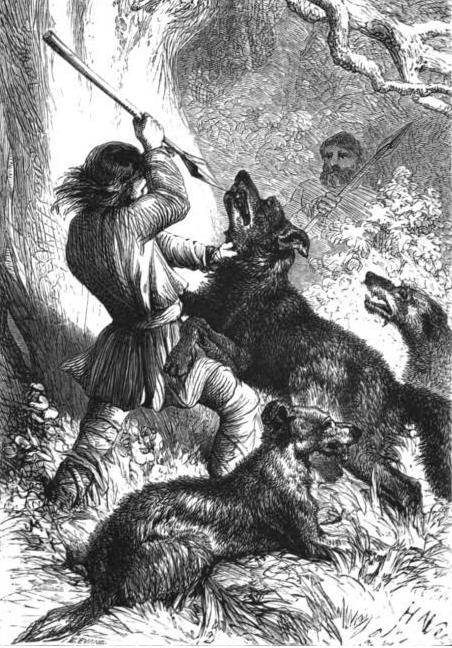
January and February is wolf mating season, and their howls haunted the nights more than usual, both in Europe and in North America. This nickname was shared by Europeans and Native Americans alike, though this full moon has other nicknames too, including the Snow Moon and Ice Moon.
British Wolf Hunt Public Domain
Also Tweeted
“Tonight’s lunar eclipse full moon in Cancer rises at 15:50 GMT (UK) or 2:21 ET and sets at 07.53 GMT (UK) Last night’s almost-full moon was spectacular. Excited cat playing & pouncing on things. This ‘watery’ lunar event typically signifies big changes at home. A lettinggo.”
That evening I said to Il Matrimonio, “I wonder who we will be hearing about tomorrow, who has ‘let go and left home’?”
Very many people will have ‘let go and left home’ of course. 2 people go out of this world every second and 4 come in, or if we want to be statistically exact, 1.8 go out, and 4.20 come in.
“The unborn are banging on the gates of the dock. What’s the limit on the shipping lanes?”- KT Kearns
But who would we be hearing about?
Which crab would quit his rock-pool?
Who would the wolf moon carry away in tonight’s meteor shower? (The Quadrantids)
It was the Sultan of Oman, Qaboos bin Said Al- Said, 79, a ruler for 50 years, ally of the UK and US and the longest ruling monarch in the Arab world.
Publicly at least, apart from three years of marriage which ended in divorce, after which his wife remarried, he lived to all intents and purposes as a hermit (crab) But his personal life has remained entirely private, protected by his shell of court and state.
Qaboos bin Said Al -Said
Excerpts from an Obituary in the Middle East Eye: (Link provided below)
“The sultan took the throne of an extremely underdeveloped country with a history of civil conflict and oversaw its transformation into a politically stable middle-income state during his half-century reign. Under a model of modernising absolute monarchy, he largely managed to steer Oman away from the extremes of consumerism of neighbouring Dubai and the religious conservatism of Saudi Arabia.
The concentration of political power and wealth in the sultan’s hands, combined with the absence of a clear route to succession, had led to fears that there could be a leadership crisis following his death.
The appointment of Haitham bin Tariq, Oman’s culture minister and the 65-year-old cousin of the late sultan, on Saturday appeared to put to rest lingering uncertainty over the country’s succession process.
Under Qaboos, political parties were banned and laws of lese-majesty created an all-pervasive system of surveillance and repression that ensured no organised opposition could emerge.
Still, there is no doubting the genuine affection in which the sultan was held by many Omanis and expatriates, seen as a visionary leader who had secured the welfare of Omanis and expatriates alike by leading the nation through its modernisation, and leaving a legacy that his successor will be hard put to equal.
Oman’s Sultan Qaboos is pictured at his palace in Muscat on 14 January 2019 (AFP)
The Sultan inherited a conservative, highly religious country riven by armed insurrection and tribal divisions, Valeri wrote, and over several decades, reduced the influence of the tribes, while incorporating their leaders in the political process.
Qaboos also championed the advance of women, gradually opening the way for many to enter education and the labour market in increasing numbers, despite Oman being a conservative society that traditionally segregated women in domestic roles.
Qaboos was also a big supporter of the arts with his government sponsoring the country’s first societies of artists and traditional music. As a lover of classical music, he played the organ and the lute, composed music and founded the Gulf’s first symphony orchestra in 1985, its players recruited from the towns and villages of Oman.
Qaboos was careful to maintain diplomatic ties even with those states, such as Iran and Iraq, which were in conflict with his western allies. As he explained to an Egyptian newspaper in 1985: “There is ultimately no alternative to peaceful coexistence between Arabs and Persians, nor to a minimum of agreement in the region.”
One of the world’s longest-serving heads of state, Qaboos began tentative moves toward a constitutional monarchy in the late 1990s and early 2000s, with the introduction of an elected consultative assembly and municipal council elections. However at the time of his death he remained head of state and prime minister, and commander in chief of the armed forces.
Qaboos’s successor will face the growing question of how to quell rising expectations of a new generation of internet-savvy young people no longer satisfied with the repressive paternalism that prevailed under half a century of Qaboos.
Now. Here is a very interesting piece of information, linking the Full Moon In Cancer with the Sultan Qaboos, or at least, I find this interesting. If not downright spooky.
Your Moon sign is an expression of your temperament and style of doing things. The natal chart of the Sultan shows that he was born with his Sun in deep and secretive, watery Scorpio and his Moon in the sign of almost equally deep and secretive sign of Cancer the Crab.
That was one enigmatic man of deep waters. That was one tough shell.
Two tough shells.
Now consider this image of the Moon card from The Gilded Tarot Royale, from the illustrator Ciro Marchetti, and the full moon uniting wolf and crab.
Revisiting an old blog. Similar issues afoot again.
Sprog Senior was unsettled by rumours at work. She works as a vet nurse and the vet owner was thinking of selling. Was she already facing redundancy, having been there only a very few months? She asked her boss directly, who answered that his plans were not finalised, and he would be letting everyone know in the next week or so.
Very unsettling. On Sunday Sprog Senior asked , when did the Tarot see her knowing for sure, and would it be welcome news for her, or unwelcome?
I asked ‘will it be Monday?’ and drew The Ace of Cups reversed.
‘It probably won’t be tomorrow. You look as if you are in for one of those harmless, slightly dull days where nothing particular happens.’
I asked, will it be Tuesday, and drew the Death card , signifying endings in general, as…
The Sun card in Tarot foresees sunny weather at its most literal. It’s respite from care, the gift of the moment, childhood and sometimes the imminence of birth. It’s also travel, particularly to hot places. It is the return of the sun after the winter solstice. It is the zenith of the sun in the summer solstice. It is glory.
Reversed it’s the setting sun, delays and lesser joys, the passing away of childhood, nostalgia, beautiful, bittersweet twilight. It may mean getting something less than you hoped for, but what you get is still something to be happy for.
The Star card on the other hand, can and often has indicated a recovery from depression, sickness and despair, a guiding light, someone sees a way ahead, they couldn’t see before.
Klytie was a figure in Ancient Greek mythology who fell in love with the sun god, Apollo. Each day…
Is this the start of WW3? This is the question on social media right now, talking about the possible consequences of the recent US drone strike on an Iranian convoy leaving Baghdad airport (to go where and do what?)
(Readers not familiar with Twitter, the character limit per tweet bulletin is 280 characters.)
IMPORTANT I looked in the cards first, and did the reading up afterwards.
Tweet posted 3 January 2020
” Imminent WW3 not detected. Iran’s rage, 8 Swords, but hamstrung. The incident? Drew Death RX & 4 Swords RX. The weaponry deployed? Drew The Tower. Iran challenged (tanker attacks=Ace Swords Rx & The Chariot RX= control of Hormuz) Outcome ‘Justice‘. More tit for tat. Bad. Not WW3.”
The cards are a mirror first and a crystal ball second. They reflect what is known and current. This provides the reader with their benchmark. Then in the haze, ‘through the glass darkly,’ the reader looks to see signs for which way the wind is going to blow in future time.
The reader does not know more than anyone else. They must look, and then decide what they are looking at, and try to do so without fear or favour.
This can be difficult. People almost invariably want THIS answer, not THAT one. They may ask, then pick holes in what you say, how you say it, and they usually know far more than you do about their question. It is their question you are discussing, after all, and often they will be a total stranger. And if you see one outcome and they see another, future developments may prove them absolutely correct, but the reader can only say what they see, and be glad to be wrong should it mean events turn out better than foreseen.
That is the point and potential value in doing the exercise.
Click here to read whatAlJazeera has to say about the current situation.
But for this reader, looking through the lens of cartomancy, this line of 5 cards is not a vision of the start of World War 3.
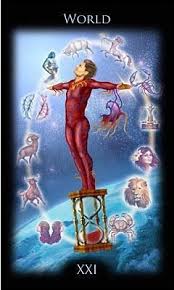
Had I drawn The Devil or The Tower or the World card Reversed, Ace or Ten of Swords in the outcome position, I might be interpreting differently.
Public Domain: Horsemen of the Apocalypse
General Qasem Soleimani was killed, and also Abu Mahdi al-Muhandis, whose presence in the convoy was a deciding factor for the US government, that this convoy represented a direct and imminent threat to the US embassy in Baghdad.
al-Muhandis apparently helped form Kata’ib Hezbollah, a powerful paramilitary group involved in the protests at the US embassy in Baghdad, and he was apparently a key suspect in previous hostilities. December 1983, two months after the 1983 Beirut barracks bombing, a truck bomb demolished half of one building of the US Embassy in Kuwait killing five people. It might have been a lot worse but the driver did not hit the more heavily populated buildings and only a quarter of the explosives ignited.
The Pentagon has issued a statement saying it took pre-emptive action to defend its Embassy and staff:
Such an attack has long been called for, openly, by Ayatollah Al-Khameini and leading Iranian newspaper KAYHAN, as discussed here in an article, October 2008. http://kayhan.ir/fa/news/171647
“Historical evidence has shown that US embassies in all countries, even in friendly and allied countries, are the focus of conspiracy. The US Embassy in Iran is a clear and exemplary example of this bitter reality. When the revolutionary youth of our country conquered the US embassy, they obtained documents that indicated that the most likely name for the US embassy was the “spy house”. The documents revealed the betrayal of some Iranian political figures and exposed numerous US crimes in Iran and other countries in the region. Now you have to ask the young and faithful Iraqi revolutionaries who have sacrificed and sacrificed dozens of great and exemplary epics in recent years. Why not end the presence of the US Embassy in Baghdad, the same espionage and conspiracy center against the oppressed Iraqi people ?!”
An author, and former investigator at Scotland Yard has commented on Twitter, and apparently received so much abuse for it, I won’t name him, that the US Embassy in Baghdad is so heavily protected that any assault on it would in any case, constitute an act of war, and that the evidence for such an attack was in hisview pretty solid. He commented that Abu Mahdi al-Muhandis was also on President Obama’s wanted list, and that war between the US and Iran now seems inevitable, while pointing out that there has been a cold war between them since 1997.
We can all see how it might escalate, no need for any psychic practitioner to try and tell anyone that, and as for any intuitive readers in Iran, or any astrologers who dare to practise as such, even in private, I pity them and worry for their necks.
Click on the link to read whatAlJazeera has to say.
But going forward, looking through the lens of cartomancy, this line of 5 cards does not paint the start of World War 3.
Had I drawn The Devil or The Tower or the World card Reversed, Ace or Ten of Swords in the outcome position, I might be interpreting differently.












 True Tarot Tales