The Moon in May 2020

The Full Flower Moon and what it means for you this month

Photo by Vedad Colic on Pexels.com

What is astrology and why do astrologers study The Moon?

Humans have been studying the Moon since at least 25 000 years ago, Luna, the Moon being the closest celestial body to Earth, exerting a physical gravitational effect on the tides, and on every living thing, though the exact nature and extent of that influence is open to debate. The word ‘Astrology’ comes from the early Latin word astrologia, which derives from the Greek ἀστρολογία—from ἄστρον astron (‘star’) and -λογία -logia, (‘study of’—’account of the stars’.)

It’s about the search for meaning on earth as seen in the sky, seeking to understand natural events and human behaviour through observing, the movements relative to Earth of planets and other celestial objects, and making correlations.

Symbolically – because it has no light of its own- The Moon represents our shadowy side, our dreams, hidden health, and the impulses that drive our behaviour whether or not we are consciously aware of them.

The things that we feel ‘in our water.’

More directly and practically, humanity began to measure, record, and predict seasonal changes by paying attention to astronomical cycles. They did this for practical planning purposes.

When would the Auroch arrive and they could organise a hunt?

When would the first lambs or kids arrive?

When would the salmon spawn?

When would the first grapes or berries be ripe enough to eat?

Early people used the skies searching for the first clues, using them as their first calendars and clocks, and nothing remotely laughable or ‘woo-woo’ about it, except for the stories that grew up around all this, and the impact of those stories on the collective psyche of the people making their living in their particular territory…their evolving cultures shaped, or rather driven by their imaginative preoccupation, emotional connection and working relationship with that landscape and its many natural wonders.

Early evidence appears as markings on bones and cave walls  recording the Moon’s influence upon tides and rivers and in time, building a body of knowledge which led in time to the creation of the first calendars.

Progress is not necessarily linear, and perhaps there is a modern tendency to underestimate the intellectual as well as technological prowess of more ancient societies.

There will be a partial solar eclipse on 21 June 2020. The next total solar eclipse will be 14 December 2020, but not viewable in the UK when the next solar eclipse will be August 2026.

The Moon in May: The Headlines

May 07, 2020    6:45 AM               Full Moon in Scorpio
May 14, 2020    10:03 AM             Last Quarter Moon (Waning)
May 22, 2020    1:39 PM               New Moon in Gemini
May 29, 2020    11:30 PM              First Quarter Moon (Waxing)

The New Moon is the first/last lunar phase when the Moon is located between the Earth and the Sun and the moon is largely invisible, hidden in the sun’s glare.

The Full Moon occurs when the Moon is on the opposite of the Earth from the Sun on the same celestial longitude and we can see the entire illuminated portion of the Moon.

What do the moon phases mean for you and me, symbolically?

In general terms, folklore suggests that the waxing Moon phase building up to the Full Moon is the optimum time to grow, build, add to, make or get something. It is all about bringing something new in, or bringing something to completion or fruition. Some may perform magical summoning rituals.

A Full Moon is the optimum time to take stock and evaluate, or to gather, collect, harvest or cash in on something.

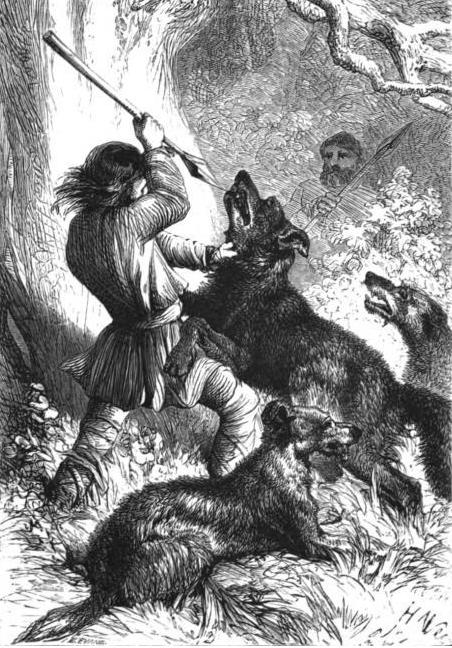
The Moon from The Gilded Tarot, illustration by Ciro Marchetti. Wolves bark during a Hunter’s moon, and crayfish move and spawn on the changing tides. The Moon card is also the card signifying contagion, disease and epidemics.

A Waning Moon is the optimum time for ending something, clearing out what’s no longer wanted or needed, including unhelpful or unhealthy habits. It may mean releasing something, or even getting rid of something (or someone) 

Some may perform banishing rituals, symbolically clearing out what’s no longer wanted or needed.

What is the Full Flower Moon?

These full Moon names were used during Native American and Colonial times to help track the seasons—and often came from the Algonquin tribes who lived in the same areas as the Colonists. Other such names are the Mother’s Moon, Milk Moon, and Corn Planting Moon.

The May full Moon means spring in high season with rising temperatures, a declining risk of late frosts, and plants and trees in first bloom. 

7 May: The Full Moon in Scorpio

Death card.jpg
Public Domain The Death card from the Rider-Waite Tarot

Scorpio is the sign of death, sex and regeneration and is represented in the Tarot by The Death card. Don’t let this worry you. It’s not saying that you or anyone close to you is going to die this month. But the Tarot covers all aspects of human experience. Death is part of life. Without death, there would be no space for new life. This is potentially a very highly charged sexy, and even baby-making moon.

Scorpio is known as a powerfully psychic sign. A Full Moon in Scorpio can be intense and its card in the Tarot is The Death card. This rarely refers to an actual person’s death, though it may do on occasion, in which case it is generally a peaceful death in old age. But far more often it refers to the end of a chapter in your life.  This may be a job, a business, a location, a relationship, an object or a habit.  It may be time to review a few things, close accounts, complete unfinished tasks, and gather your harvest. It is time to move on. This is not about rejecting others or hurting them in any way. It is simply that it is time to move forward, not allowing nostalgia or outworn loyalties to tie you down, holding yourself back from where you really need to go.

Scorpio is deep, secretive, intense, passionate…even obsessive. A little of what you fancy does you good. But this full moon could be a bit full on for comfort.

Sharp words may be said. Brooding silences may – brood. Conversely, and less quietly, crockery may sprout wings and go flying.

Scorpio has a sting. Secrets may be revealed at this time, or you may make unwelcome discoveries. Should you find yourself dealing with a situation of this kind, the advice for this full moon and the three days surrounding it either side is, do not act in haste. Take plenty of time to think about things. Don’t ignore your own needs and wishes. Listen to them, but be careful how you act on them. Take it easy around this full moon.

22 May: The New Moon in Gemini

Public Domain The Lovers from the Rider-Waite Tarot

The Lovers card is the Tarot card associated with air sign Gemini. This is a very different mood, and now that we have left the zodiac sign of Taurus and entered the zodiac sign of Gemini, we have an astrological double whammy; both the sun and moon are in Gemini.

This is a very different mood; lighter, sparkling, volatile, communicative and social.  Gemini is intellectually agile, curious and sociable like its planetary ruler, Mercury.  That Full Moon is Scorpio has been followed by a Gemini butterfly. Enjoy this lighter mood, but not every acquaintance is actually a friend and social media can become a snake pit if one is not careful how one treads. Gemini is friendly, everyone’s friend, but it keeps its distance.

The Lovers card is about love and romance of course, but above all, it’s about making choices. The problem is that here, the choices probably aren’t equal or straightforward. Will it be the apple or the orange? Or neither or both?

Or you may find yourself at a crossroads. This Tarot card advises you to look beneath the surface and be completely honest with yourself. Is this person or situation really right for you?  Which do you go with, your heart or your head? Is there something niggling at you? Some doubt? Something you don’t really want to believe or you can’t quite nail what it is, or you’ve got your suspicions but you’d rather tell yourself you’re imagining it.

Anything like that, you’ll do better to stay quiet, to watch, to wait, and to go with your head.

Click here to read about what’s coming up in the night sky this May. With all five of the ‘bright’ planets on parade, and with Venus in splendour, and in its closest conjunction with Mercury -there’s a lot to look out for.

Until next time 🙂
The Seasons in the Stars- Hey Toro! The Star-Bull Taurus

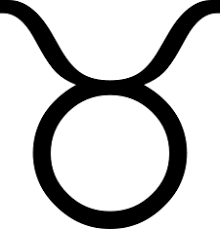
Taurus symbol.png
Taurus Symbol
250px-Taurus2.jpg
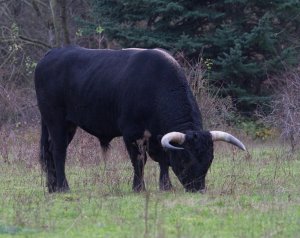
The Black Bull by George Bellows 1919

Common Associations

  • Dates: April 21-May 21 The cusp is April 19/20
  • Element: Fixed earth (mid spring)
  • Ruling planet: Venus
  • Body: neck, throat, tonsils
  • Birthstone: Emerald
  • Metal: copper
  • Flower: the Daisy; innocence, sanctity
  • Tree: the Apple Tree; youth, beauty, happiness, immortality. Avalon, resting place of King Arthur went was the ‘isle of apples’
  • Colours: pastel blue, green, pink
  • Famous for: strength, stamina, stubbornness, practicality, thoroughness, duty, honesty, sensuality, money sense, a pleasant speaking voice, artistic/singing ability, green fingers, good cooking, independence
  • Professions: Politics, Banking, (also think Bull markets) Agriculture, Construction, Arts, Musician, Entertainment, Beauty, Fashion, Restaurants
  • Tarot card: The Hierophant- Tradition, Received wisdom, Books

Astronomy

Wiki

Taurus (Latin for Bull) is a large and prominent constellation between Aries to the west and Gemini to the east. It ranks 17th in size of the 48 Greek constellations recorded by Ptolemy in his introduction to the Mathematics of the Heavens, the Almagest, written AD 150.

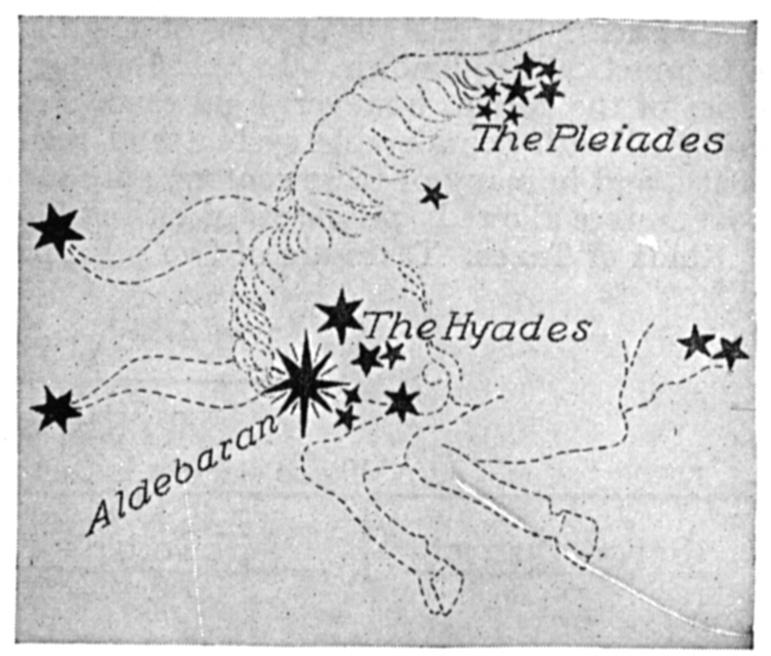
The stars of Taurus depict the face, horns and forepart of the bull’s body. His face is made up of a triangular cluster of stars called The Hyades. There are no legs. The bull is imagined half submerged. He is the mythical Bull from the Sea.  A second cluster of stars, The Pleiades, known as The Seven Sisters, swarm like bees above his back.

The best time to observe Taurus in the night sky is during the months of December and January. By March and April, you might see it in the west in the   twilight.

To find Taurus first the three stars of Orion’s belt. That’s usually easy on a clear winter’s night. Now look up to the right, looking north- east, See that bright orange-red star? That’s Aldebaran, ‘The Follower,’ a red giant, the biggest, brightest star in the constellation, the red eye of the Bull, glaring in the direction of Orion.

Should the Bull escape his heavenly pen, said an ancient Arabic legend, he would stampede the universe to pieces, and it would be the end of things for all time. Let’s hope nothing upsets him.

Wiki Commons: the horns, face and the giant red star, Aldebaran, the Eye of the Bull, glaring menacingly in the direction of Orion the Hunter  

Taurus has been recognized as a sky bull since at least the Early Bronze Age. Historians think the figure of a bull was first discerned in the stars by the Sumerians around 3000 BC and was recorded in cuneiform by the Babylonians.

Ancient History

In modern astrology Aries is the first sign of the western zodiac, ushering in the spring (vernal) equinox along with the first lambs.

However, 4000 years ago it was Taurus, not Aries that coincided with the vernal equinox, and for Babylonian astronomers Taurus was the first sign of the Zodiac, ‘the Bull in front,’- leading from the front.

The Bull was also the first sign for the early Hebrews, who called it Aleph, as in A, the first letter of the alphabet.

Taurus coincided with the start of the calving season.

The bull, like its ancestors, the wild aurochs, is a potent symbol of strength and fertility, but where Leo the lion, represents wild strength, Taurus the bull is domesticated, controlled strength, as harnessed in oxen or a bull with a ring through his nose. One of the several archetypes associated with Taurus is ‘The Farmer,’ and many a bull has worn a ring through its nose for the sake of the farmer’s safety. The dairy bulls, breeds such as the Charolais for instance, are especially to be handled with care where the famous black bulls used in bullfighting are by comparison, more easygoing.

The bull has exerted a magical influence on human imagination even before the dawn of agriculture. Aurochs, the fiercer, wild ancestors of the modern bull, were painted in the Lascaux caves in France, in paintings thought to date from 15000 BC.

The most famous section of the Lascaux caves in the Dordogne in France is the Hall of the Bulls, featuring four black bulls, or aurochs.  One of the bulls is 5.2 metres (17 ft) long, the largest animal discovered so far in cave art.

It is thought that the aurochs migrated at this time of year; a dangerous but potentially highly rewarding hunting opportunity. Not only did the aurochs provide the luxury of meat, but the horns and hide had many uses.

bull-in-lascaux-cave.jpg
Lascaux

Hunting gave way to farming of animals, guaranteeing supplies with less risk attached. The first ever cattle, goats, sheep, and pig- farming began in the so-called ‘Fertile Crescent;’ a region covering eastern Turkey, Iraq, and south-western Iran about 12000 years ago.

These farming practices spread westwards, and in time had a genetic effect on the human population, with the sudden appearance of a gene mutation that enabled humans to digest raw cow’s milk. It’s not known when this first occurred, but it probably happened first in Northern Europe and today 35 % of the global human population can digest the milk sugar, lactose. Click on this link to find out more on this subject.

The Cult of the Bull and related Worship

Bull Leaping in Knossos

The bull was considered a divine animal throughout antiquity and was a symbol of the moon, fertility, rebirth, and royal power, while today, the Lithuanian word ‘taurus’ means ‘noble.’

There is evidence of bull cults throughout the Mediterranean starting in Anatolia, dating from at least 70000 BC. From the worship of the Apis bull in Egypt, to bull-leaping in Knossos and the sacrificial portrayal in Roman Mithraism, the bull has been an integral part of many diverse and important religious traditions.

Greek legend associated Taurus with the legend of Zeus and Europa, in which the god Zeus, up to his sneaky tricks yet again, disguised himself as a beautiful, gentle white bull, coaxed the princess Europa into climbing on his back, then abducted her, swam away with her to Crete, and made her one of his mistresses. The many gifts Zeus gave Europa included a pet dog that later became the constellation Canis Major. Their children supposedly included Minos, King of Crete, the builder of the Labyrinth and the famous palace at Knossos where the bull games were held.

Bull worship, or rather, the concept of the bull as divine concept gradually migrated ever westwards and northwards. The Celtic druids held Tauric festivals at least 2000 years ago, and there is archaeological evidence of bull worship near Newcastle and York in the UK.

The Buddha was born when the Full Moon was in Taurus (Vesak) and his birthday is celebrated at the Vesak Festival which occurs on the first Full Moon in Taurus.

Beware of the bull

Like the Bull himself, the classic Taurus subject, male or female, is generally peaceable, pleasant, even placid. But Taurus will not be disrespected, pushed or driven. Other people can get a shock when Taurus suddenly sees red …and they don’t give a lot of warning.  The mistake of the other person was in underestimating them, taking their good nature for granted once too often.

Bulls cannot physically see red. It is the movement of the toreador’s cape that provokes them, and not the colour. But when the human bull ‘sees’ red, they  either dig in hard, or may charge head on.

Taurus in a full-on rage is a ‘bull in a china shop’ – the Earth sign that will withstand or demolish the opposition of  other more famous ‘fighting’ signs, Aries, Leo, and even lethal Scorpio, its opposite number in the zodiac.

Taurus doesn’t like to fight but doesn’t lose in a fair fight. The bull ring is not a fair fight; that’s the tragedy of Taurus. But if a Taurus is being unreasonable, misbehaving, or being a ‘bully’ quietly stand your ground.  It should pass. Taurus is not at all vindictive as a rule.

But why upset the Bull? Look at him, quietly grazing. Taurus is not a saint, and can be difficult or grumpy sometimes, but he’s really not looking for trouble. Do as you would be done by, and everything should be buttercups and daisies in your everyday dealings with the Taurus subject, man or woman.

Taurus_bull_Latino.jpg

Seen by The Light of the April Moon

Photo by Vedad Colic on Pexels.com

Astrology

Astrology is about the search for meaning on earth as seen in the sky; seeking to understand human behaviour through the influence of planets and other celestial objects, Luna, our Moon being the .

Astrology began as humanity made conscious attempts to measure, record, and predict seasonal changes by paying attention to astronomical cycles.

Early evidence appears as markings on bones and cave walls 25,000 years ago; an early step towards recording the Moon’s influence upon tides and rivers, and towards creating the first calendars.

Symbolically, because it has no light of its own, The Moon represents our shadowy side, our dreams, hidden health, and the impulses that drive our behaviour whether or not we are consciously aware of them.

Why do astrologers study The Moon?

Humans have been studying the Moon since at least 25 000 years ago as the closest celestial body to Earth, exerting a physical gravitational effect on the tides, and on every living thing. Our bodies are largely water, subject to the pull of the tides, and we are no exception.

This affects men and women alike, but is more is readily noticeable in women, through their menstrual cycles.

The Moon in April: The Headlines

There is a lot of lunar drama going on this month, just as there is down here right now during this coronavirus pandemic.

 This month’s Full Moon is a Super-moon, a Pink Moon, and it is also the Paschal (Easter) Moon

The Full Moon this month will be in the sign of Libra.

The New Moon this month will be in the sign of Taurus.

The New Moon is the first/last lunar phase when the Moon is located between the Earth and the Sun and the moon is largely invisible, hidden in the sun’s glare.

The Full Moon occurs when the Moon is on the opposite of the Earth from the Sun on the same celestial longitude and we can see the entire illuminated portion of the Moon.

Key Moon phases in April:

1 April First Quarter Moon (waxing moon)

7 April Full Moon (in Libra)

13 April Last Quarter (waning moon)

23 April New Moon (in Taurus)

29 April First Quarter Moon (waxing moon)

What is a Supermoon?

A supermoon is a full moon or a new moon that nearly coincides with perigee—the closest that the Moon comes to the Earth in its elliptic orbit—resulting in a slightly larger-than-usual apparent size as viewed from Earth.

What Is A Paschal Moon?

Easter is observed on the Sunday following the Paschal Full Moon, which is the first full Moon that occurs on or after the March equinox.

This year, the March equinox occurs on Thursday, March 19. The first full Moon to occur after that date is 7 April UK time.

So that Easter this year is the first Sunday after 7 April: Sunday, April 12.

What is a Pink Moon?

Historically, full Moon names were used to track the seasons and, for this reason, often relate closely to nature. The Moon names that we use today stem from Native American and Colonial-era sources and apply to the entire lunar month, not only the full Moon itself.

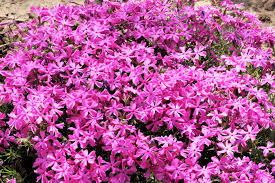
April’s full Moon coincides with the first appearance of the “moss pink,” or ground creeping phlox …early spring flowers.

ground-phlox pub dom.jpeg

Public Domain

What does this mean for you and me, personally?

In general terms the New Moon and waxing Moon phase building up to the next Full Moon is the optimum time to make a new plan, to initiate or apply for something, or to grow, make or get something.

A Full Moon is in general the optimum time to take stock and evaluate, or to gather, collect, harvest or cash in on something.

A Waning Moon is the optimum time for ending something, releasing something, or clearing out what’s no longer wanted or needed.

7 April: Full Moon in Libra

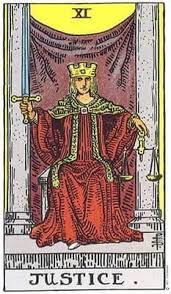
Justice card.jpg

The Justice card: Rider- Waite Tarot

This full Moon shines a spotlight on the rule of reason, law and order, fair play, give and take, diplomacy

It can suggest romance in personal relationships, or repairing a disagreement. The sign of Libra, ruled by the planet Venus, is all about creating balance, harmony, and keeping the peace.

Libra is associated with The Justice Card in Tarot, which is about respect and fair play, following procedure, and applying logic and reason to problem-solving.

This is an unsettling time but The Justice card says, above all do not panic.

The Justice card suggests there will be added paperwork or other personal administration for most people one way or another in direct consequence of this situation. This paperwork may be legal in nature, or it may be financial, business or personal administration. It may be related to consumerism and provisioning, online shopping etc.

For small businesses and the self employed, the Justice card suggests special  measures put in place in the next few weeks, according to each country’s own national decision-making processes.

The pendulum swings. A degree of disruption and anxiety is natural and inevitable. Uncertainty makes us anxious, but the only real illusion is certainty. Nothing is certain, as the old saying goes, but Death and taxes.

Let’s keep our cool, look out for one another, and pay attention to process, procedure and detail. Dot the i’s and cross the t’s to get the very best we can from this April Full Moon in Libra.

Professor Karol Sikora is Professor of Medicine at the Uni of Buckingham, an oncologist for 50 years, he tweets @ProfKarolSikora:

I can’t tell you how helpful the social distancing is. If we all keep it up, I think a feasible scenario is a return to some normality at the beginning of May. As long as we keep to the rules now, we’ll end up in a much better place after Easter than is feared. Social distancing works. The London School of Hygiene and Tropical Medicine estimate that before the lockdown one positive person would infect 2.6 other people. Now it is 0.62. This means the virus is cornered and will burn out.

23 April: The New Moon in Taurus

Hierophant Wiki.jpg

The Hierophant: Rider-Waite Tarot

The Hierophant card is associated with Taurus, a warm, earthy but creative, artistic and highly instinctive sign. It is about tradition, sticking with tried and trusted methods, creature comforts, and for many of us, these may have been in short supply, and there has been an unusual degree of extra stress and strain in recent weeks and months, with fire and flood wreaking havoc in 2019, all before Covid-19 showed its ugly face in December, and through its inexorable spread, reminding humanity that we are inextricably interconnected, and distance is no object.

Perhaps afterwards, when things have returned more to normal, as they will, it will be time to review a few of our global, national and personal practices, habits and expectations in respect of animal husbandry and global travel, and perhaps in time there will be some new normalities.

The Hierophant is the card of hospitals, publishers, universities and schools. Possibly things may enter a new phase, and in some cases, start to ease or start to return to normal in these sectors after this date.

In other news

A New Moon in Taurus suggests taking it easy. Don’t complain of boredom. Make an art out of staying home, making and doing new or quiet things, creating as the alternative to consuming.

For losing a little weight without a lot of effort, try working with the Moon, and limit your calorie intake for a 3-day diet once the New Moon begins.

This is also the card of formal studies, traditional crafts and universities and can signify a good time for starting a new study project or recreational group project, such as joining a choir for instance, or an art class.

Taurus is zodiac the sign of mid-spring, and everything alive and green. It is the ultimate zodiac sign of food and agriculture, matched only by the harvest time of Virgo. Why not discover your green fingers, or even experiment with growing a few of your own foodstuffs. You can always start small says the New Moon. A few seeds in a container, and see what happens.

People have been panicking. The supermarkets have been selling out of dried goods, but there will always other ways of doing things, or new recipes, or new ways of cooking or doing things to try out.

We can adapt. We can improvise. What did the Romans do before toilet paper had been invented? They worshipped Hygeia as the goddess of Health. And they had no loo paper, but still, they had ways….

And if that didn’t spoil your ‘bon appétit’, the April New Moon in Taurus says, ‘Eat your greens.’

Until next time 🙂

February, and a One-Card ‘Crystal Ball’ style reading

I am at pains to stress I don’t work as a fortune-teller. I work as an adviser, working to a brief, and I offer forecasting within a specific context, because otherwise, who am I reading for exactly? And I aim to deal in relevant specifics wherever possible.

Context is key for meaning, relevance and precision.

However, I also like to challenge myself. General ‘scrying’ of ‘the’ future, Nostradamus style, is part of a very ancient tradition, and I sometimes work with a well known astrologer, Jessica Adams, writing as a guest contributor for a monthly feature, Tarot Tuesday at JessicaaAdams.com.

The challenge is to pick just one card, and share my intuitive impressions triggered by this card for the coming month. But without benefit of any other context than this loose time frame. One or two other Tarot card readers also write up their one card readings for the month to come, and Jessica then correlates these Tarot findings with current astrology.

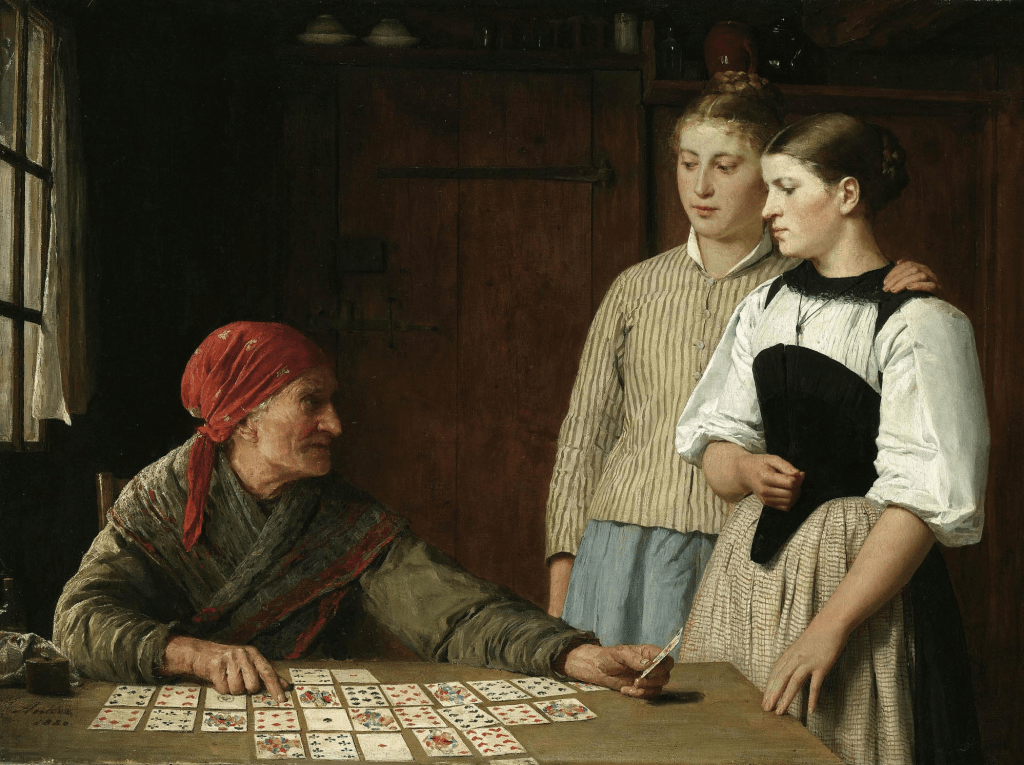
Artist Albert Anker 1880

My chosen card for this February 2020 was the Six of Swords.

Book meanings: relocation, progress, exploration, charting a new course, mourning, travel by water, self determination, east

From the Legacy of the Divine Tarot, Image by Ciro Marchetti.

Lick your finger, hold it up…what is the prevailing wind?

Winds are changeable of course, from day to day, even hour to hour, but still, it has been interesting for me as a reader, to correlate my previous one card ‘crystal ball’ readings with events of the ensuing month.

An earlier one card reading said ‘wild fire,’ (you can see previous readings via the link provided below) and it is still playing out, tragically; particularly the Australian wild fires, of which the first were actually in September, and now it is known that several of these were started deliberately.

These single card readings are actually drawn 2-3 weeks ahead of publication, so that I am drawing a card mid January for the first Tuesday in February, and mid February looking ahead to the first Tuesday in March and so on.

Logically, none of it ought to make any sense at all, unless by sheer coincidence. Except that isn’t how it works, when it works.

It works on animal sensing.

Click below to read February’s Tarot Tuesday feature, courtesy of Jessica Adams.

Tarot Tuesdays with psychic astrologer Jessica Adams

Until next time 🙂

Ophiuchus: The Thirteenth Sign of the Zodiac?

Dang. I meant to post this in November and forgot. I’ll blame it on Brexit. Why not.

Is there a missing thirteenth sign in the astrological zodiac? NASA, astronomers and mainstream media suggest there is, trotting out this story every few years, to the frustration of Tropical western astrology scholars and practitioners. Sidereal (eastern) astrologers may agree with NASA, but Tropical (western) astrologers absolutely do not.

So what’s all this about?

It hinges on the confusing of zodiac signs with the constellations after which they were named, treated them as mutually interchangeable which they are not.

There are 12 signs in astrology. Modern astronomy records 88 constellations covering the southern and northern hemispheres of Earth’s sky.

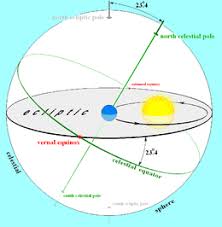
Thirteen of these constellations cross or touch the ecliptic – the trajectory of the Sun’s apparent path across the sky as seen from Earth.

ecliptic.jpg
Public Domain: the Plane of the ecliptic

These include the 12 constellations that inspired the names of the 12 zodiac signs plus a thirteenth constellation– Ophiuchus (Oaf-ih-YOU-kus)

Astronomers and NASA have presented this thirteenth constellation, Ophiuchus, as the thirteenth sign of the zodiac, while also pointing out that the zodiac itself…the section of sky directly overhead as viewed from Earth- has changed from when the ancient Babylonian astrologers first viewed it, so that, claims NASA, the generally accepted dates for the zodiac signs as supplied in horoscopes are now a month out of alignment.

This change in the skies has been the result of an effect called precession. The gravitational pull of the Moon and the Sun causes the Earth to ‘wobble’ and as the Earth orbits around the sun; a different constellation appears behind it each month.

So while the zodiac signs have remained in a fixed position, and their dates have remained the same, varying only by a day or two here and there, the constellations have drifted.

Based on this, astronomers have suggested the new astrological zodiac should more correctly look like this, with these new dates:

•Capricorn: 20 Jan – 16 Feb
•Aquarius: 16 Feb – 11 March
•Pisces: 11 March – 18 April
•Aries: 18 April – 13 May
•Taurus: 13 May – 21 June
•Gemini: 21 June – 20 July
•Cancer: 20 July – 10 Aug
•Leo: 10 Aug – 16 Sept
•Virgo: 16 Sept – 30 Oct
•Libra: 30 Oct – 23 Nov
•Scorpio: 23 – 29 Nov
•Ophiuchus: 29 Nov – 17 Dec
•Sagittarius: 17 Dec – 20 Jan

So you thought you were a Taurus sun sign, says NASA. No, actually, you are an Aries subject. So you thought you were an Aries sun sign? No, you are Pisces. So you thought you were a Sagittarius? No, you are Ophiuchus, and so on.

Whoa. But let’s not get too excited. As astronomers are quick to point out, astronomy is not astrology. And that works both ways.

First let’s take a brief look at the astronomy.

The Astronomy and the Constellation of Ophiuchus

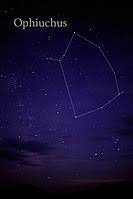
200px-OphiuchusCC.jpg
Wiki

Ophiuchus ([Oaf-ih-YOU-kus)  is one of the largest constellations but in general the least well known,  straddling the celestial equator northwest of the centre of the Milky Way, near the constellations Aquila, Serpens, and Hercules, and opposite Orion, the southern section lying between Scorpius to the west and Sagittarius to the east. Below Ophiuchus, down to the right, look out for a bright reddish star, Antares in Scorpio, for help in confirming that you have found it.

Right now -July- is the best time to see it in the northern hemisphere, mid-winter in the southern hemisphere.  Hence this story is in the news again right now.

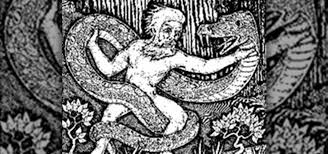
Its name comes from the Greek Ὀφιοῦχος Ophioukhos; “serpent-bearer,” and it is commonly represented as a man grasping a snake.  In medieval Islamic astronomy the constellation was known as ‘Al-Ḥawwa,’ “the snake-charmer.” It used to be called Serpentius, when the constellation counted more stars, including the constellation of Serpens, representing the snake itself. Marking the head of Ophiuchus, Alpha Ophiuchi has an older, Arabic name: Rasalhague, the “Head of the Snake Charmer”.

Ophiuchus contains notable features and objects, including Kepler’s Supernova, or Kepler’s Star, named for German astronomer Johannes Kepler.

It was by far the brightest star in the sky for over 3 weeks during 1604 and actually Kepler wasn’t the first to note the supernova, due to cloudy conditions, but he made observations over the course of an entire year and wrote about the “new star in the foot of Ophiuchus”.

Kepler’s Supernova continued visible for 18 months, and its remnants are still studied today, still the most recent supernova to be observed with the naked eye.

Mythology

To the ancient Greeks, the constellation represented the god Apollo struggling with a huge snake that guarded the Oracle of Delphi.

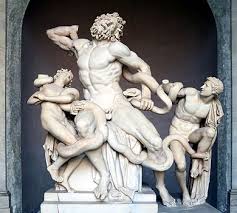
Later myths identified Ophiuchus with Laocoon, the tragic Trojan priest of Poseidon, who warned his fellow Trojans about the Greek’s wooden horse, and together with his sons, was killed by a pair of sea-serpents sent by Poseidon to shut him up, because clearly, Poseidon was on the side of the Greeks, or else under orders from Zeus, or else Laocoon had already annoyed him in some other way, and you know, nothing less than death by giant sea-snake would do.

Public Domain

Pluto (Hades) complained to Jupiter (Zeus) that Asclepius was interfering with death, an act of hubris which upset the natural order, and meant the end of the circle of life, with no room for new life.

Immortality would be a terrible evil. Life itself would die, stagnated, and Jupiter (Zeus) duly put a stop to it by killing Asclepius, hurling a lightning thunderbolt straight at his head, giving him an instant perm.  

Apollo was, rather understandably, we may agree, furiously upset, “you zapped my son you b*stard!” Jupiter tried to comfort him by placing Asclepius in the heavens to honour his good works, and the rod of Asclepius remains the symbol of western medicine to this day.

The rod of Asclepius is not be confused with the Cadeuceus, a symbol of medicine, but also of trade. The cadeuceus is assciated with Mercury, and has not one but two snakes twined round the staff, and it has wings.

rod of asclepius.png
Public Domain

So, is Ophiuchus the thirteenth zodiac sign? Or does your zodiac sign stay the same?

Sidney_Hall_-_Urania's_Mirror_-_Taurus_Poniatowski,_Serpentarius,_Scutum_Sobiesky,_and_Serpens.jpg
Image: Public Domain: The Snake-Wrangler in Urania’s Mirror, 1825. Above the tail of the serpent is a now ‘obsolete’ constellation, Taurus Poniatovii

If you are born between 29th November and 17th December, NASA, other astronomers and Sidereal astrologers may argue that your zodiac sun sign is technically Ophiuchus.

Key personality traits:

Humanitarian* Poetic* Hungry for knowledge* Intuitive* Psychic*Intense *Likes bright colours *High achievers *Prone to harbouring enemies without realizing *Lucky (so long as the enemies don’t succeed, obviously)

These are, not surprisingly, a mix of classic Scorpio and Sagittarius attributes in this profile.

But- there is a But here. And it is a blooming big BUT.

What astronomy is failing to recognize is the logic of the system which is the very basis of western (Tropical) astrology, and which makes a key distinction between the positions at any given time of the constellations themselves, and the zodiac signs named after them.

The signs of the zodiac as we know them today are based on Ptolemy’s twelve-fold division of the ecliptic, designed so that each sign spans 30° of celestial longitude, or roughly the distance the Sun travels in a month. 12 was a cleaner, tidier number to work with than was 13.

Ptolemy aligned these divisions with the seasons so that the March equinox always falls on the boundary between Pisces and Aries, whereas Sidereal (Vedic) astrology is based on the constellations themselves, as was western astrology way back at the time of the Babylonians, whose data Ptolemy worked with.

Tropical western astrology, with its 12 associated zodiac signs is a static, modelled system based NOT on the constellations themselves, but on the wheel of the seasons which also accord the signs of the zodiac their personalities, but the idea of the ‘missing’ thirteenth sign is nothing new.

“It was developed by Hipparchus in 130 BC,” says astrologer, Susan Miller, “but you don’t get your characteristics from the constellations. You get them from the planets, from the sun and moon. We measure everything by the degree to which the earth is rotated around the sun. So if you’re born at the beginning of the zodiac, which corresponds to the spring equinox and typically falls on March 20, you’re at the 0º point—or the point at which the sun is crossing directly over the earth’s Equator. If we didn’t have names like Virgo or Gemini we’d have to walk around saying, `Hi, I’m a 136º,’ and I’d say, `Oh, really? Well I’m a 352º and so on.”

In Summary

NASA’s supposed debunking may be logical in strictly astronomical terms. But that’s astronomy. It has nothing to do with western Tropical astrology as practiced today, and would only matter if the timing of the signs relied upon being tied to the actual positions of the constellations.

But they do not, and your zodiac sign, also known as your sun sign still stands, both as it is and where it is, based on the principle and according to the system on which it was first described.

The Saturnian Strangeness of the Winter Solstice

Saturn rules Capricorn, the zodiac sign which became associated with the dates of Christmas. Bright lights, good cheer, a nosh- up, a knees-up; the Romans celebrated Saturn as the god of agriculture, and also because, according to their theology, Saturn was the god who ruled the world during the long lost Golden Age, and they wanted it back, please.

The Saturnalia was celebrated 17 December, with festivities usually culminating round 23 December.

Public Domain

Outside of this context, Saturn is not usually so jovial in aspect. It is the planet of great virtues, but stern and serious. Life is a serious business, and requires effort, is the message of Saturn.

Caesar must be rendered to. The bottom line safeguarded. Nothing came from nowhere, nothing is for nothing. Even the birds don’t sing for fun. The birds especially do not sing for fun. They sing to win and stake a territory, and keep it. They sing to win a mate, they sing to ward off threats to their nests, but is their song less beautiful for that?

Saturn is all about the bottom line. Food is the bottom line, and the solstice meant the return of the sun for the new year’s crops. It wouldn’t do to take Saturn for granted.

The face of Janus, past and future, could be seen as another face of Saturn himself. Janus, the primordial god of beginnings, gates, transitions, time, duality, doorways, passages, is the god of endings. An ancient legend said the souls of the dead returned to their origin, rising through the gates of the constellation of Capricornus, where the souls of newborn descended to arrive on Earth through the gates of Cancer, zodiac sign of the summer solstice in a never-ending wheel of souls.

Public Domain

For all of us there comes a point where every year, a familiar face or name will leave the orbit of our lives, and we revisit the memories. Maybe it is a person, or maybe it is a place. Perhaps it is something we used to do, or used to wish for. The ghosts have their own pictures, particular songs, sounds and smells.

They are many, bittersweet, the ever-more crowding ghosts of Christmas past.

WHO WALKS THIS EARTH UNSEEN

The ghosts of the Displaced

Those who could have been

Those who never knew

What else where else

To whom they could belong

Not here or now where else

They could have been

What else around us all

The ghosts of Might Have Been

Behind the lives behind the claims

Their space not yet but come their time

Make way

Margaret Whyte, December 2019

Christmas 1972

The Why of Winter

Photo by Pixabay on Pexels.com

My mother turned 81 just before Christmas; wise, shrewd, beautiful, a mother of five; a gifted teacher, naturalist, poet, and for many years, a champion protector of women’s statutory right to give birth in their own home if they wished, not to become mandatory patients in a more or less public setting, rendered subordinates in their own care during what is a personal and family event.

An independent thinker possessed of moral and physical courage, self-discipline and fortitude; and with a keen sense of the absurd -without which there is no sense of humour, she could be described as a classical Capricorn Queen of Pentacles, born 23 December.

Both her parents were naturalists, and she in turn took her children to the wild places, beach combing and. hill- climbing. We climbed in the Lakes, in Glen Coe, on Mull. As teenagers, we were not always in the mood, but she would not leave us at home.

Nor could we always keep up with her, a smallish woman, 5′ 5…same height as me, and with the stamina of…well, a mountain a goat, trotting on ahead with her backpack, my stepfather, Pa, six foot five, toiling moodily at the rear with the biggest backpack.

Capricorn marks the winter solstice, so it marks the beginning of winter, but it also marks the returning sun.

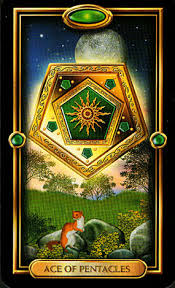
Capricorn is the cardinal sign of Earth in the western zodiac, and also in the storybook of the Tarot, and its associated cards are The Devil (Pan) the Ace of Pentacles (Earth) and the Queen of Pentacles.

Image from The Gilded Tarot, Ciro Marchetti


The Why of Winter

by Katie-Ellen

Sirius hard on the

Hunter’s heels

Stoats in ermine

Gain the field

Resting time

For sap-sunk trees

And earthed in dens

Some sleep

the hungry time

In deathly ease

Blackthorn points

The ancient tracks

Of chasing men

And panting beasts

Sweated salts

And bone-crack feasts

Oaks and sacred

Moons of mistletoe

Call down Life

Or conjure woe

When wolves at doors

Shall seek for more

As Gaia tilts

And wheeling skies

Spin winter stars

There is no other why.

The cosmic archer Sagittarius.

Most of us know our zodiac or sun sign, but what does it look like in the night sky, and what’s the story behind it? This month it’s the turn of Sagittarius.

Common associations

Symbol:

Date of Birth: Nov 22 to Dec 21

Ruling planet: Jupiter

Element: Fire

Key phrase:  I seek

Body: Thighs

Birth Stone: Topaz, Citrine, Turquoise 

Colour:  Light Blue

Tarot card:  Temperance

Temperance wiki rider waite.jpg

Public Domain:  Rider-Waite

The Astronomy

As with all of the Zodiac constellations, Sagittarius was recorded in the 2nd century by the Greek astronomer Ptolemy. The name is from the Latin for archer.

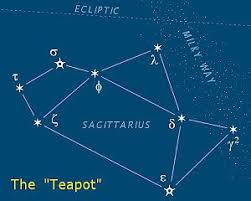
Sagittarius is a relatively large constellation which is mainly visible in the southern hemisphere. In the Northern hemisphere the constellation can be viewed low on the horizon from August to October. In the Southern hemisphere Sagittarius can be viewed from June to November. Star maps generally depict Sagittarius as a vaguely teapot-shaped star pattern or asterism.

Map sagittarius wiki.jpg

Sagittarius is near the centre of our spiral galaxy, the Milky Way. There is a massive star-forming region known as the Omega Nebula situated within its boundaries and Sagittarius is also home to the Pistol Star, one of the brightest stars, the fifth brightest discovered in the Milky Way. First discovered by the Hubble Space telescope in 1930, the Pistol Star is largely hidden in the dust of its own Pistol nebula, but is 100 times as massive as our Sun, and 10,000,000 times as bright.

Watch here for a mind-boggling representation of where the Pistol Star sits in the scale of size of stars in the Milky Way: https://www.youtube.com/watch?v=GoW8Tf7hTGA

The Myth

Sagittarius Celestial Atlas 1822.jpg

Public Domain: Celestial Atlas 1822

Sagittarius is the ninth sign in the Zodiac and represents those born between Nov. 22 and Dec. 21.

Greek myth saw Sagittarius the Archer shooting Scorpio the Scorpion, which had been sent to kill Orion the Hunter.

Sagittarius has long been mixed and confused with another centaur story, Chiron of the Centaurus constellation. Most interpretations conclude that Sagittarius refers to the the centaur, Chiron, who was accidentally shot by Hercules with a poison arrow.  

This story does indeed refer to a constellation myth, but it’s the myth behind Centaurus, a non-zodiac constellation, and not Sagittarius.

The myth behind Sagittarius probably refers instead to Krotos, a satyr who lived on Mount Helicon with the Muses. Krotos or Crotus was the son of Pan and Eupheme, and his mother had nursed the Muses.

Krotos was renowned for being both an excellent hunter, horse rider and a devoted adherent of the Muses and their arts. He is credited with having invented archery and being the first to use illumination for hunting animals. He is also said to have introduced applause, and used to clap his hands at the singing of the Muses, for whom this was a sign of acclaim preferable to any verbal ones. It was the Muses who asked Zeus to place him among the stars, which he did, transforming Krotos into the constellation Sagittarius.

Satyrs have human heads and torsos with two goat legs (and sometimes horns). Centaurs have four but the accounts and depictions of Krotos vary. But all the same, he was often depicted with four legs, as the excellent horseman he was.

The Astrology

Sagittarius is the ninth sign in the Zodiac and represents those born between Nov. 22 and Dec. 21. The archer is seen as a bridge between elements and worlds. The life lesson is seen as Temperance, as pictured in the Tarot card associated with this sign. The message is all to do with the quiet but enormous power of moderation, the art of expert timing, and also self-control, avoiding extremes and addictive behaviours.

The Astrological Personality

There is no such thing in reality as THE Sagittarius personality and the same goes for all the zodiac sun signs. Your sun sign is an archetype, a keynote but of course it is not and never could be the whole story.

The archetype of Sagittarius is brave, lively, warm, optimistic, rational and insightful. Sagittarius zodiac sign subjects need constant adventures and opportunities to grow to remain interested. Freedom is of the utmost importance to them, space and plenty of room for manoeuvre. Likewise they tend also to give lots of freedom to their partners.

They are generally very capable people but they need career flexibility, and they may refuse or fail to apply themselves if bored.  Like Gemini, they are prone to restlessness. They may then fail to stick at a job or a succession of jobs, and may struggle financially in consequence.

They tend to have lots of friends, and family and friends can feel neglected at times when Sagittarius goes go off and travels and shares experiences with strangers, but Sagittarians will always come home.

Next time, the cosmic goat Capricorn…

Who Built Britain

I have written on army supply and the history of British manufacturing. My quest now is to discover who built Britain.

IF BACON GREW ON TREES

The Nutrient Report and other essays on food, eating, diet, health and the state of our planet

Rex Factor

Reviewing all the Kings and Queens of England & Scotland

The World's Passenger Ships

Ship History site, a compendium of passenger ships 1858- today's new builds

Capricorn Astrology Research

Research into Astrology

WAR STORIES

WWII & its Aftermath - Jennie Mack Gray

Quintus Curtius

Fortress Of The Mind

Jessica Davidson

Astrologer ~ Mystic ~ Writer

Mythology Matters

Matters of Myth, and Why Myth Matters