Philip Bews and Diane Gorvin, British artists from Coleford, Gloucestershire (Website Bews-Gorvin).
Just for a change, I thought we might look at an alternative iconography for Virgo season and the mythology of Inanna, Shula, Ishtar, Isis, Aphrodite, Demeter, Ceres, The Hermit and The Empress.
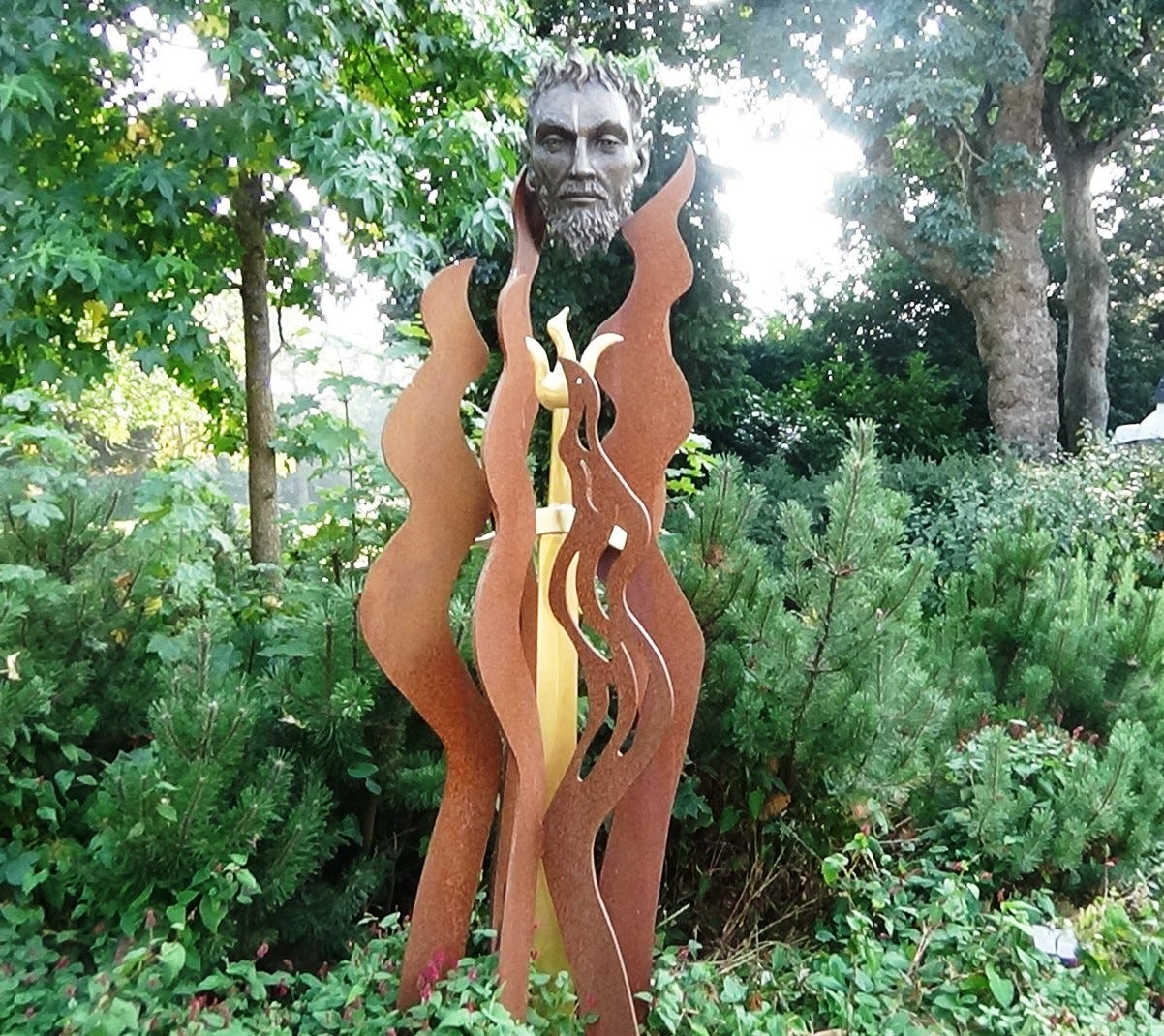
This is a sculpture of the Norse Fire Giant, Surtr, own picture taken on a trip to Grosvenor Park in Chester in September 2021.
Chester is a beautiful city famous for its Roman history, but it also has a Viking history. The Danes occupied it for a while during the reign of the Christian Saxon king Alfred, until he drove them out by seizing their cattle and laying waste to the surrounding farmland. And then Alfred strengthened the city walls to make sure they didn’t come back.
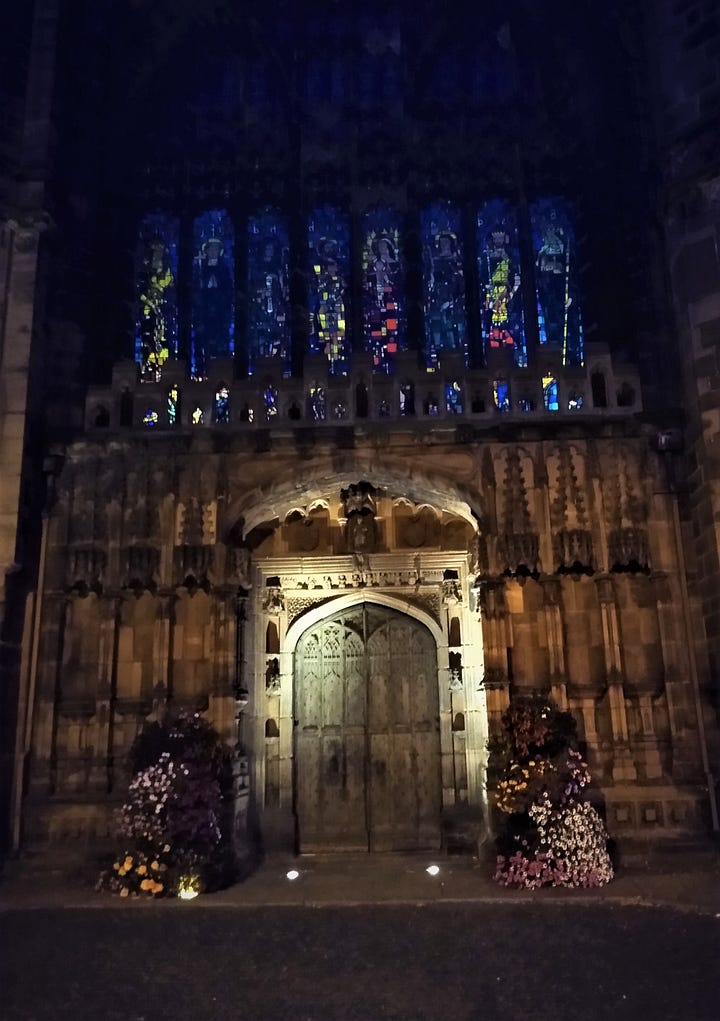
But still the Danes left their cultural footprint. Chester has a most beautiful cathedral.
Chester Cathedral, credit Don Hazeldine
But in Norse mythology, to those uninvited squatters, the Danes, the primordial being, the Ice Giant Ymir was the Almighty creator of the cosmos.
This being, the Ice Giant Ymir, himself born from a “yeasty venom” found in the glaciers, fashioned the Earth from his own flesh; the oceans from his blood; the mountains from his bones, trees from his hair; clouds from his brains; the heavens from his skull; and from his eyebrows, he created Midgard. That’s us. Home Sweet Home. The middle realm in which humankind lives.
Philip Bews and Diane Gorvin, British artists from Coleford, Gloucestershire
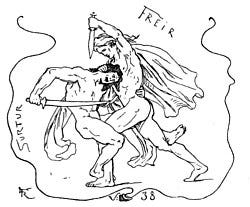
But the fire giant Surtr (Old Norse Surtr, “Black,” -possibly a reference to his charred appearance) would finally end this world, leading the other giants of Muspelheim…an ashen wasteland riven by rivers of lava…. into battle against the Aesir and the Vanir gods at Ragnarok, the destruction of the cosmos.
Ragnarok was foretold as series of future cataclysmic events, including a great battle in which great Norse mythological figures and many of the gods would perish during a catastrophic series of natural disasters, including the burning of the world, and culminate in the submersion of the world underwater.
After Ragnarok, the world would rise again, cleansed and fertile, the surviving and returning gods would meet, and the world would be repopulated by two human survivors
Surtr’s name, fiery black, could possibly be equated etymologically with the word “sooty.” His destiny was to kill the god Freyr, the great god of the Vanir, a group of gods associated with fertility, wisdom, and the ability to see the future. Freyr embodied kingship, peace, fertility, prosperity, fair weather…AND therefore by the same token of these things A GOOD HARVEST.
But Surtr was fated to kill Freyr, and to be slain by him in turn.
Lorenz Frølich
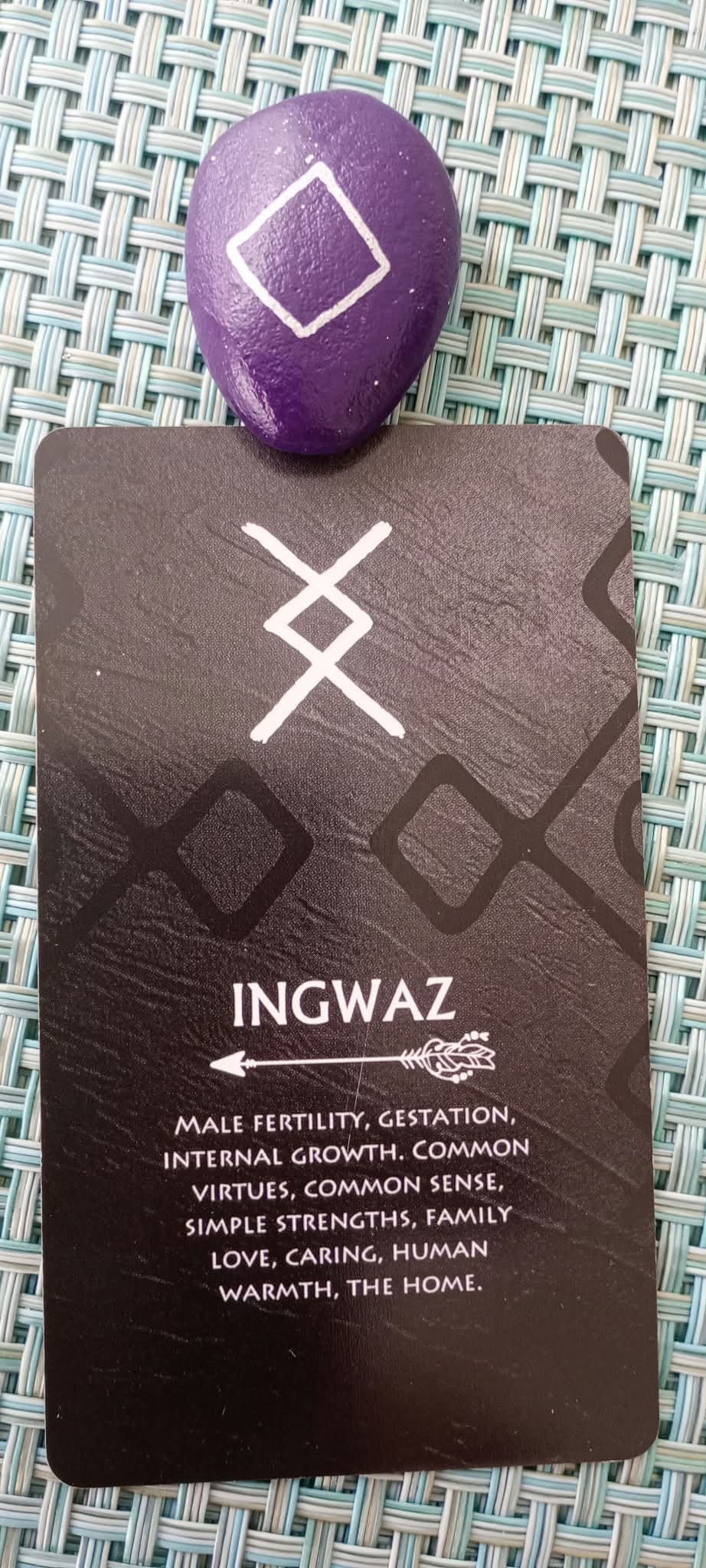
The old Norse rune associated with the god Freyr is ING or INGWAZ, signifying energy, drive, fire, seeds, germination, crops, and specifically masculine potency, can be connected to the words in English Ignition, Ingle-Nook.
The fire of ignition. The seeds of new life. This rune, associated with the god of the germination of crops, Freyr, is thereby pitting the eternal cycle, the fires of creation against Surtr’s fires of destruction.
While war, fire, drought and flood wreak havoc this El Nino season of mutable earth, this harvest time, 2026.
Most of us know our sun sign or sign of the Zodiac, but what does the constellation look like in the night sky, and what’s the story behind it? The season is the reason.
It’s time to meet Virgo again, and get to know her better.
Virgo Season 2023
We are entering the zodiac territory of Virgo 23 August and we’ll stay there until 23 September.
Virgo is a mutable Earth sign, representing the changing of the seasons as we approach the end of summer and the beginning of autumn in the northern hemisphere (or the end of winter and into early spring in the southern hemisphere.)
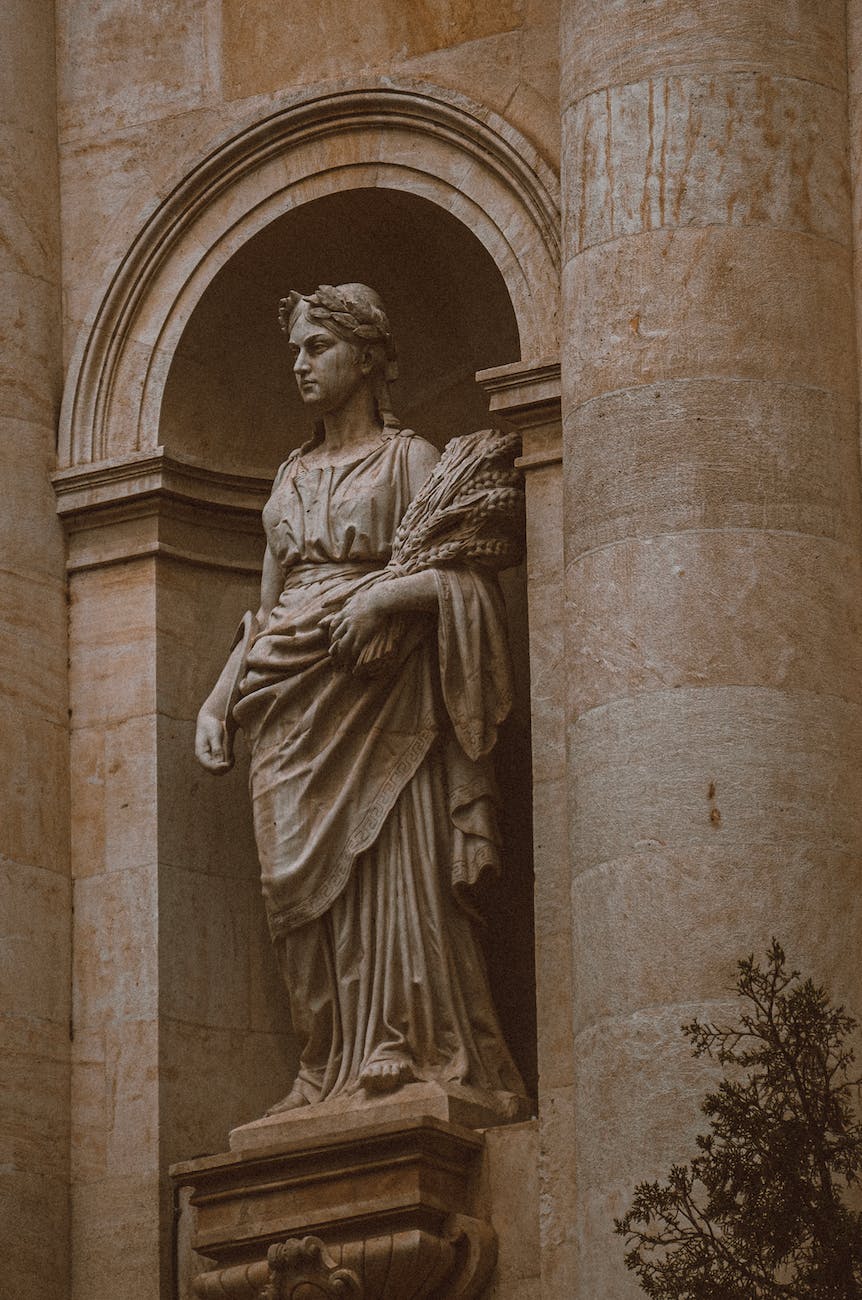
It is harvest time- ‘the season of mists and mellow fruitfulness’ (From An Ode to Autumn by English poet John Keats) Virgo represents the classical Hellenistic goddesses of wheat and agriculture. The brightest star in the constellation of Virgo, far brighter than our own sun, is Spica, aka ‘the ear of wheat’.
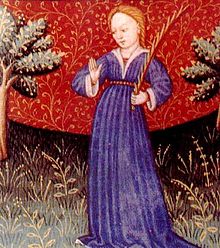
Virgo the Maiden, named after the constellation as shown in the illustration below, is the sixth sign of the zodiac, and rules the sixth house and the concepts of daily routines; work, service, order, analysis and analytics, food, harvests, health, digestion, hygiene- and crafts
Virgo is traditionally ruled by Mercury, planet of communications, inquiry, science, commerce, trade and travel. This symbolic planetary influence brings to the Virgo-born subject, an enlarged curiosity and a combination of analytical ability, but also a certain contemplative, humanitarian or even mystical quality.
Traditional Associations
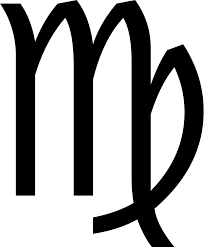
Zodiac symbol of Virgo
Date: August 23-September 22
Symbol: The Virgin
Element: Earth
Quality: Mutable (Sagittarius and Pisces are also Mutable, suggesting these subjects are capable and versatile; generally inclined to conform and go with the flow for the greater good.)
Ruling planet: Mercury (Travel and all forms of communication)
House: Sixth, ruling health, habits and routines
Colours: green, white and yellow
Body: The digestive system
Birthstone: Carnelian
Flowers: small bright flowers such as the buttercup
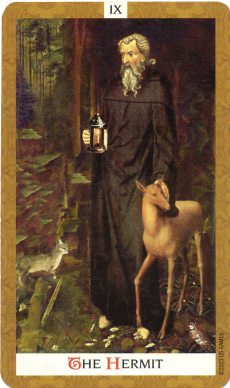
Tarot: Major Arcana card: The Hermit (introspection, perception, analysis, care for nature)
Minor Arcana cards: The 8,9 and 10 of Pentacles or Coins.
The Hermit from The Golden Tarot, Kat Black
Astronomy
Via Wiki: Credit Till Credner
The zodiac sign of Virgo gets its name from the constellation of Virgo; the second-largest constellation in the sky after Hydra, and the largest constellation in the zodiac.
It’s mind-boggling to consider that our own Sun is just one star of the Milky Way, and the Milky Way is part of a collection of galaxies known as the Local Group. This contains three large spiral galaxies: the Milky Way, Andromeda, and the Triangulum Galaxy, as well as a few dozen dwarf galaxies.
The Local Group is just one member of the Virgo Cluster. This is a collection of 1200-2000 galaxies that stretch across 15 million light-years of space. And the Virgo Cluster is just one cluster in the Virgo Supercluster.
The Virgo constellation is visible from all around the world. In the northern hemisphere, it’s most visible in the evening sky from mid-March – the start of the planting season- to late June. In the southern hemisphere, look for it in the autumn and winter.
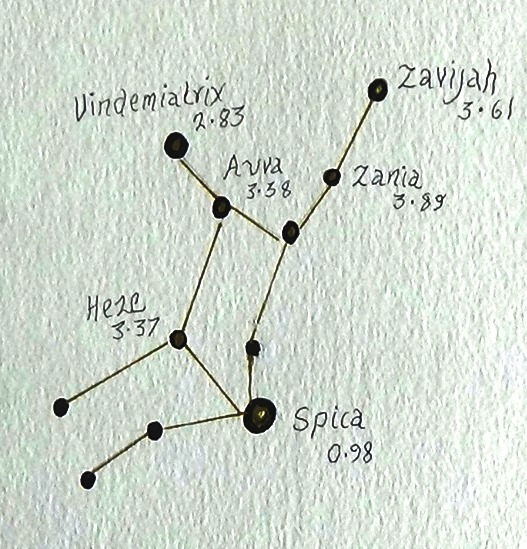
Own image. Free to share. Credit Katie-Ellen Hazeldine, True Tarot Tales.com
This may seem a bit of a stretch, trying to picture a person here, but add in a few more of her stars and imagine her lounging semi-recumbent, dangling a sheaf of wheat from one hand. This is the star Spica, a blue-white giant. Its name comes from the Latin, meaning an ‘ear of grain’- a sheaf of wheat.
The star Vindemiatrix, ‘the Grape-Gatherer,’ seen at daylight, was once upon a time a sign that now it was time to pick the grapes.
But if the constellation of Virgo is most visible late March- late June, why are the birthdates for the sign of the zodiac August 22-September 23rd?
The constellations of the zodiac are not to be confused with the signs which were named after them. Once upon a time, the dates of the signs reflected the constellations directly overhead, but they have since separated.
This drift away from real time matching of constellations and zodiac signs is due to the effect of the Earth’s wobble over a long period of time; every 26 000 years, creating an effect known as the precession of the equinoxes.
This does not change the symbolic link between the constellation and the sign named after it. Western or Tropical astrology is based on an arithmetic, not an astronomical model, as formalized in the second century AD by the Greek astronomer, mathematician and astrologer, Ptolemy.
History & Mythology
Virgo from Urania’s Mirror, Public Domain
Shala was an ancient Sumerian (Iraq) goddess of grain -and also compassion. Why link these two things? Famine is suffering. A good harvest was seen as a blessing of the gods. What is planted in the spring must yield a crop in the autumn or famine follows. But this cannot be guaranteed from one year to the next.
From early times, more than ten thousand years ago, Shala was associated with the constellation of Virgo and vestiges of symbolism associated with her continue, such as the naming of Spica, the ‘ear of grain’, even as the deity’s name changed from age to age, and culture to culture.
The Shala Mons is a mountain on Venus named after the goddess Shala.
In 10th century BC the Babylonians called part of this constellation, “The Furrow,” again, referring back to Shala.
While this is only one myth of the origin of Virgo, she is seen as a bringer of crops throughout all myths. In Egyptian mythology also, the arrival of Virgo in the night sky meant harvest time. Ceres (we think of the word ‘cereal’) or Demeter, the Greco-Roman goddess of the harvest, was the mother of Persephone.
It was the same with the Greeks and Romans “Spicifera est Virgo Cereris” — “The Virgin with her sheaf belongs to Ceres,” The Astronomica“, Manilius, 1st century AD.
When lonely Hades abducted Persephone to live with him in the underworld, her distraught mother, Demeter, went searching, and was enraged to discover that Zeus had known all along where Persephone was, but had turned a blind eye to Hades’ abduction.
Demeter demanded that Zeus help her bring Persephone home, and when he didn’t, she went on strike and the harvests failed. The people and the livestock starved. Humanity might have perished altogether had not Zeus finally intervened and insisted that Hades send Persephone home, and sent Hermes to collect her.
Hermes descended to the Underworld where he discovered Persephone, no longer a wretched, weeping homesick girl. She had become a woman, a wife. She was the radiant queen of the gloomy Underworld, the apple of Hades’s eye, and he had built for her the most beautiful gardens he could contrive, with underground pools, and gems and stalactites.
Persephone now loved Hades. But she missed her mother, Demeter, and she desperately missed the light, and if she hadn’t developed the most almighty vitamin D deficiency, she was either eating plenty of fish or the nutritionists don’t know their stuff.
So Hermes passed on the order from Zeus, “send the girl home, pronto”, and Hades agreed that Persephone could go home. But he had conditions. Persephone must not eat anything until she arrived home again to her mother.
Hades had no intention of giving up Persephone, Zeus or no Zeus, and he gave her a handful of pomegranate seeds, knowing how much she loved them. A few seeds didn’t count as food, he said. And Persephone believed him and ate some on her way home. Or who knows. Perhaps she knew perfectly well what he was up to.
Painting by Frederick Leighton, Public Domain
Persephone went home to her mother. But a deal is a deal, and because she ate the pomegranate seeds, she returns to Hades and her life in the Underworld for four months of the year, and then Demeter mourns her child’s absence, the winter returns and the land lies cold and fallow.
All zodiac signs are archetypes, meaning something that is considered to be a perfect or typical example of a particular kind of person or thing,
The signs of the zodiac paint a ‘typical’ portrait of a person born at a particular time of year, in a particular season. A baby born in the summer arrives into a different physical environment from a winter born baby. Different conditions; temperatures, available hours of daylight, seasonal foods available to the mother and so on, with potential physical and constitutional effects.
The archetype of Virgo is the Craftsman, paying careful attention to every detail, taking pride in doing the job, whatever it is, to the highest standard possible. There’s no substitute for skill and hard work, according to Virgo.
The major arcana card in the Tarot representing Virgo is The Hermit, as previously mentioned, denoting a deep-rooted sense of connection to Nature. Here is wisdom, maturity and the value of solitude and self-sufficiency. The Hermit represents work and the principle of service – the desire to help Humanity.
Virgo is ruled by agile Mercury, the fastest moving planet of communication. Virgo’s brain is in overdrive most of the time, but they stay anchored and grounded in common sense by their associated element, Earth.
Virgo is practical but artistically gifted. They are hard-workers who love to better themselves. They think deeply, they love to analyse, and their perceptiveness means that they can always find or create order within chaos. They are honest friends although, being discerning, and analytical, they might have a tendency to analyse you, and point out your strengths and also your mistakes and weaknesses. This can undoubtedly be annoying, though it’s well meant. They may also give great advice because of those same analytical abilities.
The Virgo appearance is generally neat and well groomed.”Slob” is not in their vocabulary. The quest of self-improvement includes personal presentation. They can be incredibly concerned about the impression they give, and even worry about it, but at the same time, they are very ready to help others, maybe sometimes even too generous. Others may try to take advantage of Virgo in a way they would not with, say, Aries, Leo or Scorpio..
But of course there is no such thing in reality as THE Virgo personality. We are all unique individuals. Your zodiac sign (sun sign) is a major clue, the keynote, the baseline, but doesn’t claim to represent the full picture in real life – or even in astrology.
But the Decans tell us just a little more.
What are the Decans?
The decans were a feature of Egyptian astronomy, later adopted by the Greeks and incorporated into astrology.
The visible area of sky as seen from earth is what we call the wheel of the Zodiac, and represents an imaginary circle of 360 degrees. This circle divided by arithmetic into twelve ‘slices’- the zodiac signs we know today.
Each of the zodiac signs represents a 30 degree slice of this imaginary ‘pie in the sky,’ as seen from Earth. Each zodiac sign can be further sub-divided into three blocks of ten degrees, equivalent to about ten days in length. This is not exact, and may vary by a day or two because not every month is the same length. These three sub-divisions of all the zodiac signs are what we call ‘decans,’ from the Greek word for ten.
The decans are nicknamed the ‘thirty six faces of astrology,’ and though they are not regarded as powerful influences in a horoscope chart, they do provide added insights and texture. The first ten days of your zodiac sign are the first decan. The second ten days or so are the second decan, and the last ten days are the third decan.
There is more than one decan system, depending on whether we are using traditional or Modern astrology, which uses the outer planets, not discovered at the time of the original model of Western astrology as recorded by Ptolemy in the second century AD.
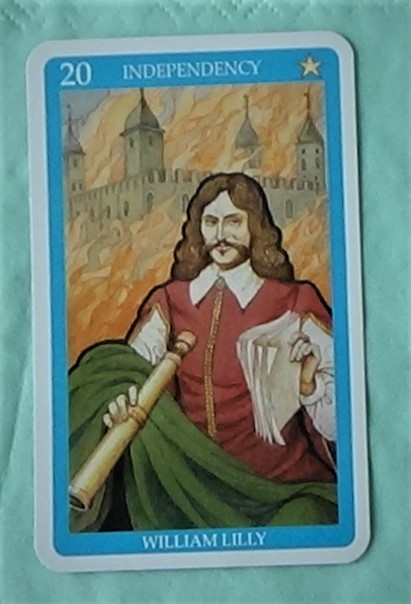
Astrologers dispute which approach works ‘best.’ But astrology is not an exact science. It is an Art with an element of science. They both ‘work,’ and it is worth bearing in mind, the great seventeenth century astrologer William Lilley used traditional astrology –correctly- to predict the Great Plague and Fire of London in a book published in 1651, years ahead of the actual events in 1665-1666, when the outer planets, Uranus, Neptune and Pluto had not yet been formally discovered (Uranus was recorded in 1690, Neptune in 1846 and Pluto in 1930).
Astrologer William Lilley from the Masters of Magic Oracle deck
For the avoidance of confusion, we are using the traditional system.
The Tarot cards shown below are from the Rider- Waite deck, which many Tarot practitioners now refer to as the Waite-Smith, in recognition of the artist, Pamela Colman Smith.
First Decan Virgo
Dates: 23 August-1 September
Planetary ruler: Sun
Tarot card: The Eight of Pentacles: ‘Lord of Prudence,’ art, craft, industry, skill, concentration, application, studiousness, apprenticeship, crafts, heritage, buildings
Look at him. This person is absorbed in his work, and he seems to be enjoying himself. This work has meaning and purpose for him. This is typical of this decan. There is a mixture of quiet warmth and a cool mind with a talent for acute observation and incisive analysis; however this is expressed artistically, commercially or scientifically or in administrative tasks. Virgo is a master of the spreadsheet.
They see more than they say, but they have a talent for communication via the spoken and written word; making many of these subjects potentially great teachers. They are hard-working, industrious. ‘We reap what we sow,’ goes the old saying. This is not necessarily always true or fair. Misfortune strikes plenty of people who have done nothing to ‘deserve’ it. And plenty of wrong-doers escape justice.
However, it is broadly true to say, we can’t reap what was never sown. Wild berries had to be first sown by the wind, or by birds. First decan Virgo understands this better than almost any other sign, except Capricorn and Taurus.
They are serious people but they are cheerful company, faithful friends and partners, devoted in their quiet way.
Second Decan Virgo
Dates: 2-11 September
Planetary ruler: Venus
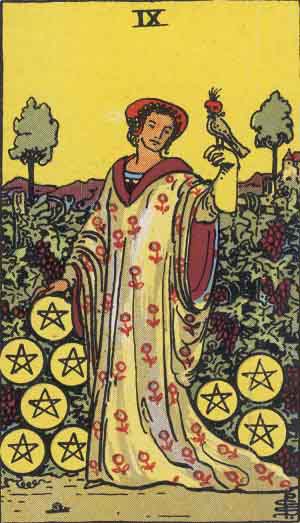
Tarot card- Nine Pentacles: ‘Lord of Material Gain’ beauty, luxury, hard work that pays off, horticulture, agriculture, viticulture, gardens, vineyards
This decan is traditionally associated with Venus, planet of love, beauty –and money. A perfectionist; conscientious, devoted, and above all focused, they can turn anything they do into an art form in its own right.
Notice the hooded falcon on her wrist. She has ‘tamed’ wildness – or chaos. She has cultivated a home, a garden, a business, and made it thrive, healthy and beautiful. She is financially self- reliant and self-sufficient, but this does not mean it came quick or easy. To achieve this she has learned to control the wild falcon representing her impulses, wants and desires. She has learned self-discipline and self-control, the power of deferred gratification.
A squirrel will have no nuts in the winter if it scoffs them all at once, or if it can’t remember where it hid them, because it wasn’t paying attention. This, the second decan of Virgo is often the most capable, conscientious provider for themselves and for others, and they enjoy spoiling their loved ones. But though they have learned how to do without (and at times, life, they have probably had no choice) still, they do crave and value beautiful things.
Third Decan Virgo
Dates: 12-22 September
Planetary ruler: Mercury
Tarot card- Ten of Pentacles:keywords: ‘Lord of Wealth,’ commerce, messages, deliveries, Hermes, home, homeland, ancestry, genetics, inter-generational relationships, inheritance, gifts, legacy, bequests, town planning, art, museums, banks.
Third Decan Virgo is both a creative and a practical thinker. These are proud people, not vain, but dignified – big difference. They need to be their own masters and it’s not about the money, or at least, not for its own sake. These people are careful, prudent, but they are not misers. They have a winning way with people and may work in the public eye; such is their talent for communication; personal, professional, artistic, written and spoken.
Notice the old man surrounded by family, adults, children, and dogs too. Virgo cares for animals. What he or she has built, was created in order to share, to pass on, seeing themselves as part of a bigger picture, a link in a chain of legacy. This could mean money. It could mean ideas. It could mean a place that means everything to them, their own home or their homeland, with a sense of belonging, of being in the right place – to feel this way is a treasure beyond price.
These are family minded people, realists with an optimistic temperament and a ‘can do’ approach. They enjoy family outings, a walk in the woods, or a trip to the seaside. They will organize it. Virgo are makers and menders, and usually good with animals too. Eco-warrior is not their style. But they do care about the environment. Virgo is about food for the mind and the spirit, as well as the body.
Virgo has both feet on the ground. And yet, it is something of an artist, something of a scientist. Like the Hermit himself, something of a sage.
Grounded, rooted in the earth, but looking inwards and upwards, moving to its own dance, steering by your quiet inner star.
“Even the upper end of the river believes in the ocean.”-said William Stafford.
But even if it doesn’t, that’s where it’s going anyway. Slowing, broadening and deepening as it goes. Like us, if we get the chance, if we are given the time. And the closer we get to the ocean, the less we strive, the more we carry, the more we reflect and the less we hurry.
Like The Hermit, who walks alone in the wild places, following a far-off light, or answering the ancient drum beat. The Hermit is feeling the weight of his years and experience but casts his own light all the same. He/she withdraws more from society, but the wild creatures draw near and cautiously welcome The Hermit home. He – us- humankind of the modern world left their path many years ago, branching away from the path of the wild.
The Hermit is airy Mercury in earthy Virgo; watchful, enquiring, creative but analytical, self-disciplined, seemingly aloof yet approachable,with a quiet warmth.
William Stafford died aged 79 at his home in Virgo Season, Lake Oswego, Oregon on 28 August, 1993. The morning of his death, he had written a poem containing the lines, “‘You don’t have to / prove anything,’ my mother said. ‘Just be ready / for what God sends.’
Ask Me
Some time when the river is ice ask me mistakes I have made. Ask me whether what I have done is my life. Others have come in their slow way into my thought, and some have tried to help or to hurt: ask me what difference their strongest love or hate has made.
I will listen to what you say. You and I can turn and look at the silent river and wait.
We know the current is there, hidden; and there are comings and goings from miles away that hold the stillness exactly before us. What the river says, that is what I say.
“The mind is not a vessel to be filled, but a fire to be kindled.”― Plutarch
There is what Life does to us. There is how we respond. But first there was always who we were to begin with, and the ways we are still becoming it.
Tabula rasa is the theory that individuals are born without built-in mental content, and therefore all knowledge comes from experience or perception. Epistemological proponents of tabula rasa disagree with the doctrine of innatism, which holds that the mind is born already in possession of certain knowledge. Wikipedia











 True Tarot Tales
