Pisces the Heavenly Fishes, the seasons in the stars, the reasons in the signs


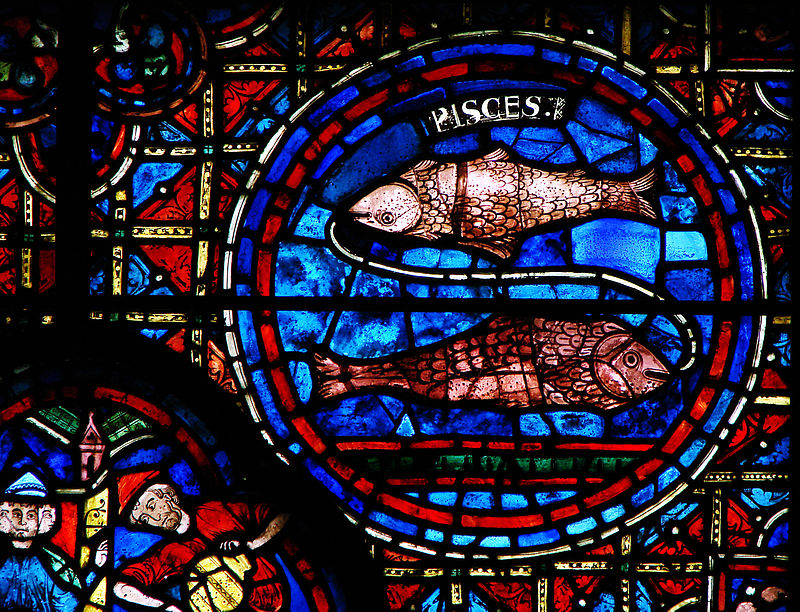
Chartres cathedral window, early 13 th century, photo by Vassil

Most of us know our zodiac sign but what does it look like in the night sky, and what’s the story behind it? Let’s get better acquainted with Pisces.

Common associations

Symbol:

Zodiac Sign placement: 12th and last sign, completing the wheel of the zodiac year

Date of Birth: 18/19 Feb to 20/21 March. Variable cusp depending on the leap year cycle

Ruling planet: Neptune (before Neptune’s official discovery in 1846 it was Jupiter)

Element: Water

Quality: Mutable – versatile, the ending of one season and the beginning of another

Lucky Days: Monday and Thursday

Energy: Yin -receptive

Key phrase: I believe (as in the ‘Fishers of men’, early Christianity adopted a fish as its symbol)

Body: Feet, eyes, bladder

Birth Stone:  Aquamarine especially, but also amethyst, ruby, bloodstone and jasper. Brazil is one of the best sources for this stone. Aquamarine (meaning ‘the water of the sea’) is a blue variety of beryl where Emerald is a green beryl. The aquamarine is a hexagonal crystal structure, sometimes confused with blue topaz, and was traditionally believed to enhance foresight and clairvoyance, and a sense of happiness, with the power to repel evil – or help you talk to the Devil (I wouldn’t give the bugger the time of day, personally)

Aquamarine-Wiki

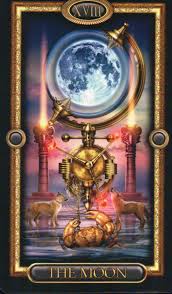
Tarot card: The Moon

Meanings: The Moon, literally, Mondays, tides, cycles, ebb and flow, feminine cycles, fertility, instinct, wildlife, walking on the wild side, hunting, fishing, visionary capabilities, psychics, ghosts, visions, dreams, delusions, madness, contamination, fever, food poisoning, uncertainty, danger, confusions with documentation, risks in travel.

The Gilded Tarot Royale, artist Ciro Marchetti

Note the wolves, hunting and howling by the light of the full moon, and the spawning crab, though this is often depicted as a crayfish instead, as in the Rider -Waite decks.

The minor arcana cards associated with Pisces are the 8, 9 and 10 Cups, ranging in interpretation from the melancholy to the sublime.

The 8 of Cups says you were ready to offer devotion. A door stayed shut, but you have learned something of value, not least about where you belong. Do not wait overlong outside any door that fails to open. The world is wide, new horizons beckon. Walk away, not looking back in anger.

The 9 of Cups is truth, grace, happiness-the Grail, and heart-felt wishes may be granted

The 10 of Cups is home sweet home, arrival.

The Astronomy

There are 88 constellations registered with NASA. The 12 of these that have given their names to the zodiac signs in Western ( Tropical astrology) have their earliest known origins in the ancient Indo-European civilizations located at the latitude 36 degrees north and 30 minutes.

Other constellations were named later, many of these later ones by Greek navigators.

Pisces, the Latin plural of fish, is a large but rather faint constellation, the 14th largest constellation overall, covering a large V shaped region in the part of the sky known as The Sea or The Water, possibly named by the Mesopotamians because they had learned to associate the appearance overhead of these heavenly bodies with their rainy seasons; Aquarius, Capricornus (the Mer-Goat).

Capricorn signifies the ibex and its mating season which starts in December, but it also has an ancient Sumerian origin story associated with it, where the goats came out of the sea to climb to the mountains, leaving behind the father of all the goats, a solitary mer-goat who was promoted to the skies.

So these three zodiac signs, Capricorn Aquarius and Pisces may have come to represent predictive seasonal co-ordinates for the rainy months at the thirty sixth Parallel, 36 and half degrees north.

The vernal equinox currently occurs during Pisces, 19-21 March, the astronomical marker of the start of spring.

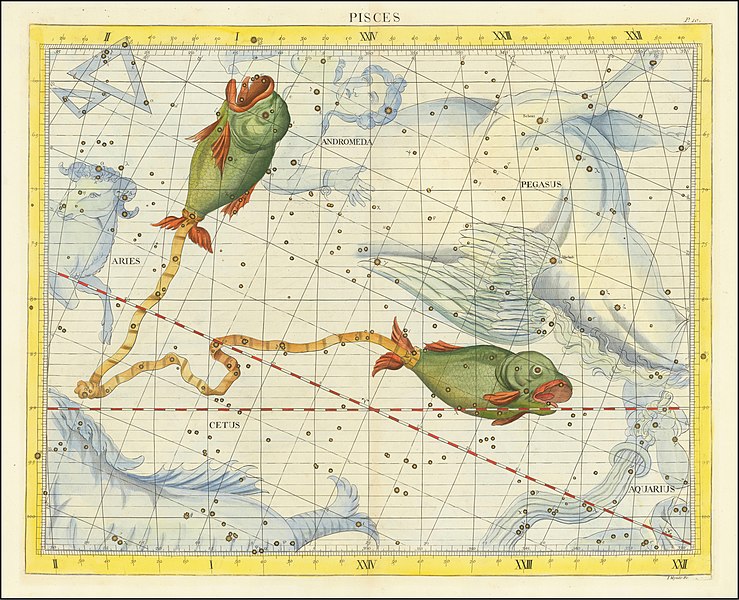
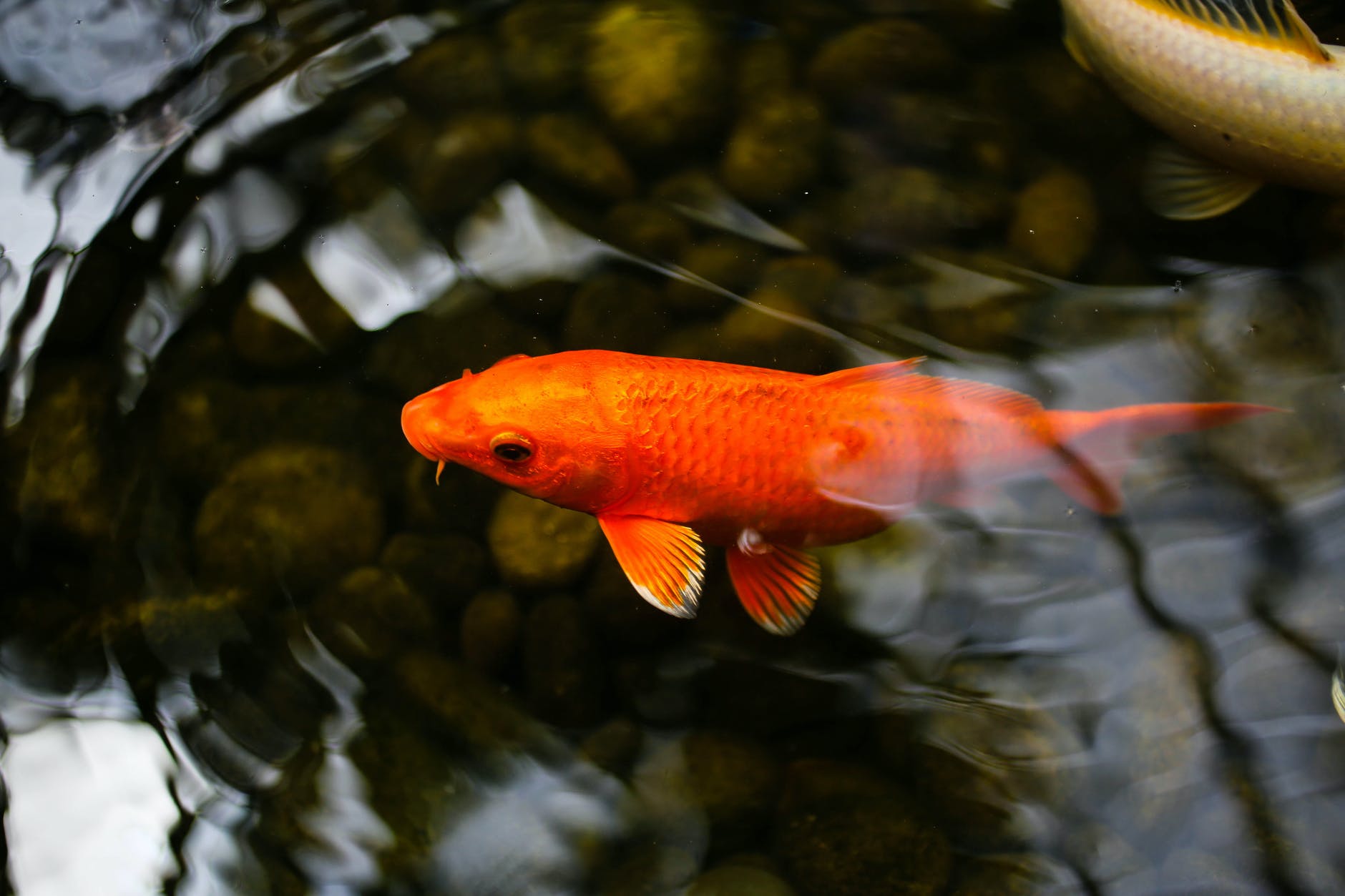
Pisces is represented as two fish swimming at right angles to each other, one to the north and one to the west and attached by a cord and are usually depicted as koi.

Its stars are faint — none brighter than fourth magnitude — and hard to see with the naked eye. But its brightest star, Eta Piscium, also known as Alpherg or Kullat Nunu, is a bright giant star (G class) 294 light-years from Earth and has a luminosity 316 times greater that of the sun.

Kullat Nunu is its Babylonian name. ‘Nunu’ means ‘fish’ and ‘kullat’ is a bucket.

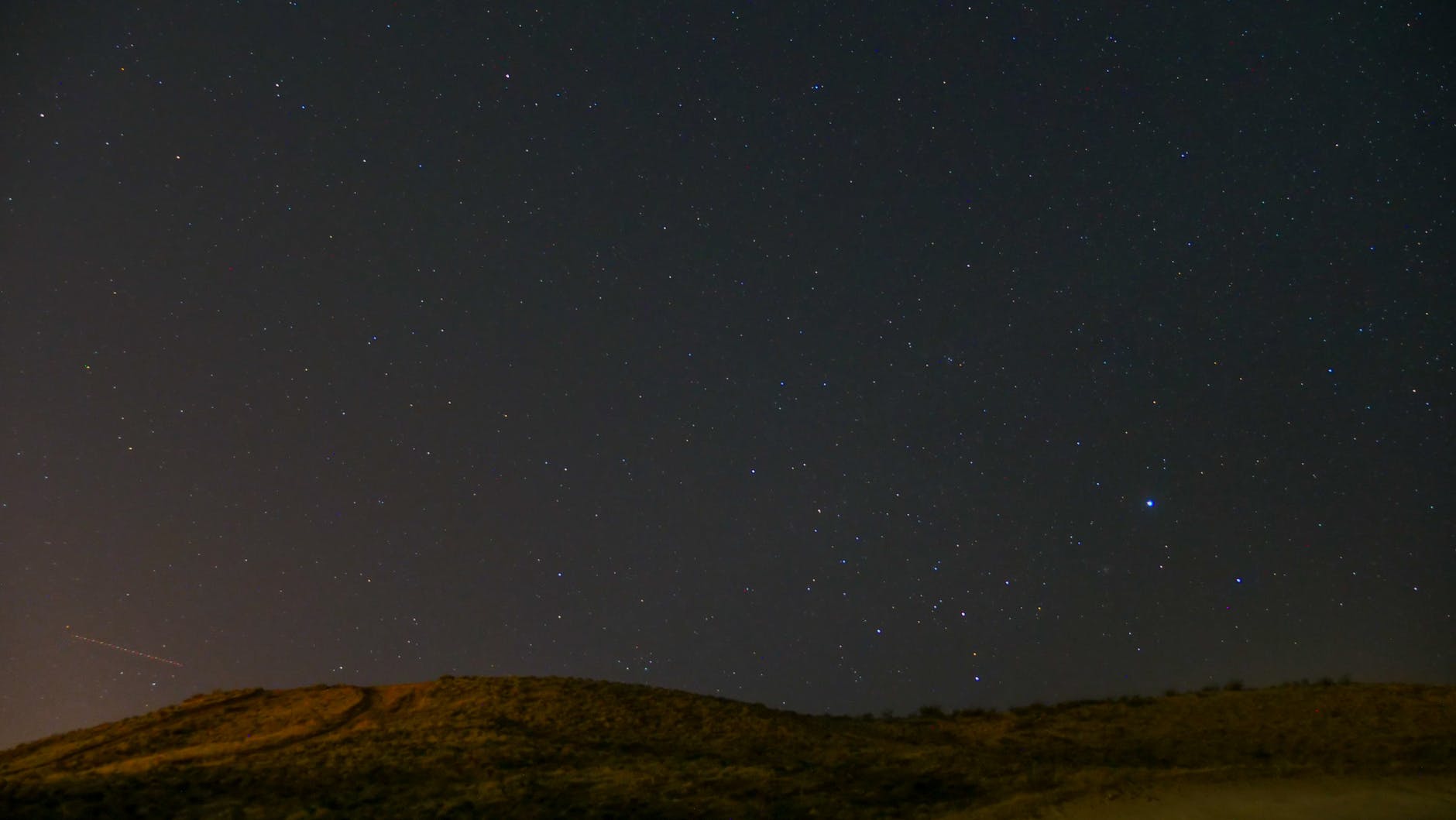
Photo by cottonbro on Pexels.com

Pisces second brightest star is a yellow giant about 130 light-years from Earth, Gamma Piscium. Alpha Piscium is the third brightest star in Pisces, and is made up of a pair of white dwarf stars in close proximity. Its other name is Alrescha (“the cord.”) and marks the spot where it appears that the tails of the two fish are joined or tied together.

The best time to see Pisces in the Northern Hemisphere is 9 PM between 6-9 November looking below the Square of Pegasus.

History and Mythology

The first spawning of most freshwater fish starts in the spring, from late March onward, but, depending on latitude and therefore temperature, some species may spawn from as soon as late February onward, and in the warmer Indus, this surely played its part in the rationale for the astronomical calendar slot historically allocated to Pisces the heavenly fish.

Pisces represents the principle of THE THAW, THE MELT. Fish may rise again to the top to feed. Frogs and Toads will spawn.

If you want to insult a Pisces subject, call them a MELT (but first, ask yourself if you are really sure about this.)

The fish of Pisces are attached by a cord of stars, just as life and death are conjoined and cannot be separated. Pisces is not only the last sign of winter, moving into spring; it is the last sign of the whole zodiac year, the culmination of all the signs that came before it.

The western signs of the zodiac are thought to origin from about 2900-2700 BC, emerging among the peoples living at 36 and a half degrees latitude. The 36th Parallel.

Click here to see the regions involved.

This latitude was the cradle of Indo-European civilization (you will also see that the 36 Parallel was of key symbolic significance to the American Civil War) Younger, later constellations that were not adopted as zodiac signs were often named for maritime navigational purposes, many of them by the Greeks.

The Egyptians

“It (Pisces) is one of the earliest zodiac signs on record, with the two fish appearing as far back as c. 2300  BC on an Egyptian coffin lid ” -(Wiki)

The two fish of the constellation Pisces were the offspring of the Great Fish. In Egyptian mythology, this fish saved the life of the Egyptian goddess Isis and she placed this fish and its descendants into the heavens as a star constellation.

India

In Hindu mythology Matsya is an manifestation or avatar of the Hindu god Vishnu the Preserver who rescued the first man, Manu from a great deluge. (…and here we are again, back to the great flood stories of Aquarius) The Matsya may be depicted as a giant golden fish or as a merman, half- fish half humanoid Lord Vishnu.

Vishnu is the second god in the Hindu holy trinity (Trimurti) This triumvirate consists of three gods who are responsible for the creation, upkeep and destruction of the world, Brahma was the Maker,god of creation and passion, Vishnu, the face of light and preservation, and Shiva, the face of the dark, and destruction.

Wiki

Greece

Pisces is often represented as a pair of koi carp. and the reason for this comes from Greek mythology. To the ancient Greeks, the fish were the goddess Aphrodite and her son, Eros, who were out walking by the Euphrates one day when a terrible monster, Typhon, suddenly rose up out of the water.

This monster had been terrorizing the gods of Olympus ever since the war with the Titans. Typhon was a Titan, a son of Gaia, and he hated the gods of Olympus as invaders and upstarts, the new kids of the block who had overthrown and dispossessed his own, more ancient race of Titans. He was as tall as the heavens and his eyes shot flames. Instead of fingers, he had 100 dragon’s heads sprouting from his hands -for which one could read ‘flames’ or magma.

None of the Olympians had the power to destroy Typhon, or confront him, not alone. For a time, all they could do was avoid him or flee for their lives, which they often did by transforming themselves into animals, and Aphrodite and Eros, in this case, transformed themselves into two fish (koi) and swam away.

The work of John Flamsteed the first Astronomer Royal. Image from the Atlas Coelestis, posthumously published by John Flamsteed, 1729, illustrator John Thornhill.

Ultimately, Zeus imprisoned the terrible Typhon beneath Mount Etna…but Zeus didn’t deal with him for good. He couldn’t, not even Zeus, and Typhon is still very alive down there and pretty disgruntled. A deeply alarming spectacle, as we have seen on the news these last few days, as of 16 February 2021 and there have been a number of related astrological and psychic prognostications, talking about such seismic activity as a potentially major global influence in 2021.

Rome and Early Christianity

Early Christians used the Fish as a symbol of their faith…and called the TWELVE apostles of Christ the Fishers of Men (Pisces as the twelfth sign.

The secret code name for Jesus- Yeshua Ben Joseph- was Ichthys

The so- called Age of Pisces began 1 AD and- depending on your source, will end in 2150 when we enter the so-called Age of Aquarius, though some astrologers say we are already in that Age. The Age of Pisces saw the rise of the Monotheistic religions, Christianity and Islam. The Age of Aquarius is supposedly a secular age, all about technology and collectivism.

Read more about the astrological ages HERE

But religion shows no sign of going away. Islam is currently on the rise in the west, Christianity on the wane, with vacuums filled by socio-political ideological transmutations of the religious instinct, and in another two thousand or so years, it will be succeeded by another ‘earthy’ chapter – a new Age of Capricorn. (This thing works ‘retrograde’, working backwards through the zodiac signs)

Pisces: The Astrological Personality

From The Golden Tarot, by Kat Black

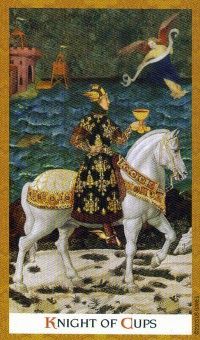
In Tarot, whether the subject is male of female, Pisces is embodied as The Knight of Cups. In Arthurian legend this would be Sir Percival or in later versions of the legend, Sir Galahad. This knight is a champion of the underdog, a protector, a lover, a bearer of grace and the healing chalice.

In a Tarot reading this generally translates as a happy situation, a new friend, an admirer, possibly a marriage proposal, news of a baby on the way, or a job offer or other good news is coming soon, and your cup ‘runneth over’.

Of course there is no such thing in reality as THE Pisces personality and the same goes for all the zodiac sun signs. Your sun sign is an archetype, a keynote, but of course it is not, and never could be the whole story, least of all in astrology. There is far more than just the sun sign in your own personal chart. You can find this out for yourself by looking up your own chart free online (obviously just be careful re spam etc).

Pisces combines imagination with the determination of a salmon fighting upriver, although, depending on the decanate, there may a certain quite marked passivity, even inertia. This may actually serve them very well at times, but could in some cases degenerate into darkness involving depression, alcohol or other substance misuse.

These individuals are talented natural artists, writers or musicians. They are famously loyal once committed, compassionate and sensitive. They adapt with ease, are spontaneous and full of surprises, but while their steel may be hidden, all the same, it is there. Not much is said about this scaly Pisces steel. They can be tough, even hard in a quiet way. They may not say much but watch the face harden, and cross the line once too often, you are gone, and that is it.

Where they demonstrate a lack of proper consideration for others, or undue stubbornness, it is not due to lack of goodwill, but they are not paying attention, too focused on their inner preoccupations.

Photo by Laura Porter on Pexels.com

Pisces needs variety, and structure must allow them room for a degree of autonomy. Desk based work, although Pisces can certainly do it, is not really their thing.

Pisces can make excellent and approachable team leaders with a reputation for loyalty to their staff. Passing the buck is not their style. They will take on injustice, take on those senior in status, but Pisces, unlike, say Aquarius, acts on an individual basis. Group actions, campaigns or crusades do not sit with their temperament, except just possibly for early Pisces, born on the Aquarius cusp. Later subjects, born close to the Aries cusp 20/21 April, are very much the ‘doers’ of Pisces.

Pisces is as brave as it is kind but these water sign denizens need to guard their physical energy. It can be erratic, and once depleted, is not always easily restored. If they are prone to headaches at the back of the head, there may be related bladder infections or other issues.

The Decans of Pisces

Each zodiac sign contains three decans, blocks of ten days or so, each with a different planetary ruler.

Pisces Decan 1 February 19 to February 28 (approximately) is ruled by Neptune. Those born within this decan will present as typical Pisces. Seldom aggressive or offensive, they conduct themselves with kindness and courtesy and very reasonably expect the same in return. Neptune, planet of illusion, is both their ruler and sub-ruler, emphasizing their imaginative capabilities. Pisces-Pisces readily connects with other people on an unconscious level, almost as if hearing what they are thinking, and able to anticipate their next moves, but they are likely to take a lot of detours before finding their own sense of direction. Tarot card: The Eight of Cups

Pisces Decan 2 March 1 to March 10 (approximately) The sub-influences for this decan are Cancer/MOON. Cancer – natural ruler of the fourth house of home base, family, and security – may keep them very close to family members, whether this is a positive or negative influence. They often bear a striking physical resemblance to a parent and may struggle to loosen break parental ties and become independent, but they must, if they are to develop their own potential, and often they are warm, well- balanced emotionally, cultured, artistically gifted, with charm and a keen sense of humour, from the zany to the dark or possible ingenious. They need plenty of quiet time alone. Tarot card: The Nine of Cups

Pisces Decan 3 March 11-March 20. A thinker, possibly even a visionary, the very last decan of all in the wheel of the zodiac year is a FINISHER. They are energetic, symbolized by the Mars influence on Scorpio.Pisces-Scorpio has an intensely practical side and often well-developed technical or scientific skills. They need activities, outlets for their physical energy and it matters a lot to them helping other people. This decan is considered fated to an unusual degree, and one day a calling may come to them in the form of a great challenge. Tarot card: The Ten of Cups

Famous Pisces in history

Michelangelo, Amerigo Vespucci, Copernicus, Vivaldi, Handel, George Washington, Elizabeth Barrett Browning, Albert Einstein, Nat King Cole, Elizabeth Taylor, Nina Simone, Harold Wilson, Yuri Gagarin, Sidney Poitier, Steve Irwin.

Photo by Pixabay on Pexels.com

‘No man is an island’. Yes we are. Islands in archipelagos.

But there are boats.

Until next time 🙂

February Feeling

I am running late with this Tarot reading, done 24 January, looking ahead at February but with no particular question, just fishing in the ether.

I felt drawn to pull two cards for February, and drew The Ten of Pentacles (Reversed) and The Eight of Cups from the Rider-Waite Deck.

Noah’s Ark in shown here in reference to another recent reading which mentioned precipitation, and the risk of flooding in the UK during February. This is nothing unusual for February, though some years are worse than others. February starts with Aquarius and ends with Pisces, and the Babylonians called Aquarius ‘the curse of rain,’ -or in northern latitudes, rain or snow.

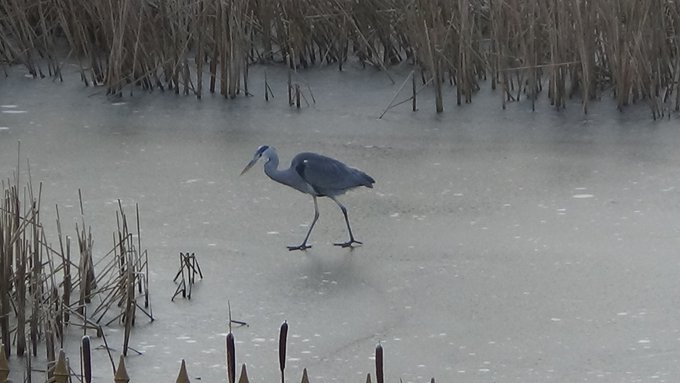
Il Matrimonio took this pic of the heron on a nearby pond, while Junior Sprog’s young fellow, Carpenter Henry, is in mourning for his beloved koi carp, which last week disappeared from the garden pond of their rental cottage, presumed dead, prey to their own hungry heron.

Back to the Tarot.

The Ten of Pentacles (Reversed)

From The Rider Waite Tarot

Keywords: Homeland, Family, Home, Money, Family Tree, Legacies, Continuity, Heritage, Family Business, Family Gatherings/Events/Celebrations, Businesses, Old Age

This card drawn reversed highlights particular challenges to do with these areas during the month of February 2021, from government level to an individual level.

The Ten of Pentacles is an earth suit card, to do with everything that we most need, value and treasure: security, belonging, homeland and the family home, money and inheritance, cultural heritage, wills, bequests and legacies of all kinds, financial, cultural, physical, and even genetic. So your middle name was given to you in memory of your great-grandfather? That’s the Ten of Pentacles. So, people say that you have your mother’s eyes? That’s the Ten of Pentacles.

It is the card of architecture, in every sense of the word, and the inter-generational relationships which make the bedrock of society.

In terms of planets and timings, the Ten of Pentacles correlates with the zodiac sign Virgo, and is ruled by Mercury, planet of communications, trade and travel, all of which continue to present a challenge during February 2021.

Late spring, late summer and late autumn look like the generally optimal months in 2021.

2020 was a dark year. 2021 does look brighter and better as Jupiter pulls away from Pluto, planet of the Underworld, but still, we all see there are major hurdles as the world’s governments struggle with a second wave of covid, and according to the Tarot, this may peak, or have passed its peak around 21 February in the UK.

This card of financial governance reflects the challenge of many Governments in raising or borrowing the finances to support their respective economies through this time of severely reduced economic activity. The Tarot has previously indicated to me that the global economy will recover perhaps surprisingly quickly, by or before early 2023. If only enough smaller businesses survive, not to have the giants ruling the roost any more than they do already.

History suggests global pandemics in general have been something of a once in a century phenomenon, and have tended to last between 1-3 years, and it is travel by ships, trains and planes which have carried them ever more swiftly around the world. Plane hopping = zero chance of eradication. And this is SARS, not flu.

Significantly, the Ten of Pentacles has been drawn reversed -upside- down – for February.

This puts the card in its less positive light, reflecting not only the extraordinary struggle of governments in so many countries, but at a personal and family level, the ongoing struggles of those small or family owned businesses, and the anxiety and frustrations of so many individuals and families unable to meet during lockdown measures.

This second wave has overtaken the first wave in terms of mortality. The UK second wave may possibly pass, or have recently passed peak mortality during February, after which, things will turn a corner again, and the new challenge is to keep that R rate down. I was unduly optimistic last year, and perhaps I am something of a glass half-full person and I need to watch that potential for bias. But right or wrong, the cards I get are the cards I get, no conscious control. That’s the entire point of this kind of exercise, and that’s the nature of this beast.

I was accurate in respect of timings in the UK, forecasting the end of the first wave and the release of that lock-down, but detected the risk of a significant second wave as roughly fifty- fifty or lower. Badly underestimated that one!

Good job I didn’t work for the Emperor Tiberius. He’d have had me chucked off the cliffs in Capri.

Astrology of The Ten of Pentacles

The Ten of Pentacles is ruled by Virgo, the Zodiac House of Health, which in turn is ruled by Mercury. This planet went retrograde 30 January and stays retrograde until 21 February, symbolically making this a time when misunderstandings may quickly arise, and making this a good time to rethink a few things, not only in respect of paying close attention to health and hygiene, but to be extra risk averse and vigilant in checking arrangements and information, for example, double- checking appointment times, important paperwork or travel plans, especially around 17 February when there may be an extra risk of (probably minor) mishaps.
Virgo is famously detail focused, very, and warns us not to relax our guard with things like distancing and frequent hand-washing, even though people may be, very naturally, fed up to the back teeth of hearing it.

Like that rock and roll classic by The Coasters, 1958

‘Yakety Yak.’

Take out the papers and the trash
Or you don’t get no spendin’ cash
If you don’t scrub that kitchen floor
You ain’t gonna rock and roll no more
Yakety yak (don’t talk back)Just finish cleanin’ up your room
Let’s see that dust fly with that broom
Get all that garbage out of sight
Or you don’t go out Friday night
Yakety yak (Don’t talk back)You just put on your coat and hat
And walk yourself to the laundromat
And when you finish doin’ that
Bring in the dog and put out the cat
Yakety yak (Don’t talk back) – Source: LyricFind

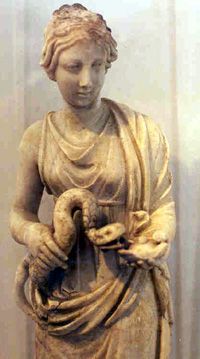
But the Roman Goddess HYGEIA is associated with Virgo, so there we have it.

Hygeia says ‘Yakety yak!’

(Don’t talk back.)

Hygeia

We want to protect our elders, but neither do we want to leave them lonely, afraid and isolated. This is a challenge highlighted by the Ten of Pentacles but this card reminds us, old age has value. Even as they may need our help, our older people can help and support us too,. They are not to be patronized as charity cases. They have many things to share and to teach, things seen and learned in their lived experience. Things understood.

RIP Captain Tom.

The Eight of Cups

From The Ride-Waite Tarot

Keywords:  moral courage, emotional courage, walking away, sadness, acceptance, resignation, disappointment, decisions, and hard lessons learned.

This card is about saying goodbye, and walking away. It’s about the things we leave behind; the people, the places, the situations, maybe even hopes and dreams that no longer mean what they used to. Maybe we have lost interest.

Donald Trump has left The White House. The UK has left the EU. They will not return. It seems unlikely that Donald Trump will want to run again for President in four years time, even assuming that the option will exist, which looks increasingly unlikely. Britain has much hard work ahead, but is setting her face firmly to the future and will not rejoin the EU under a future UK government. The showing of teeth in the recent near debacle in respect of the Northern Ireland border only makes that possibility less likely.

Astrology of The Eight of Cups

In terms of astrology and timing, the Eight of Cups correlates with the first decan of the zodiac sign of Pisces, February 19 to March 20.

Pisces, previously ruled by Jupiter, is nowadays largely considered as ruled by psychic, dreamy planet Neptune, identified as a planet in 1846.

This card is suggesting a calmer, gentler closing to the month. For many, there will be intense, vivid dreams and perhaps powerful religious or even psychic experiences.

22 Feb Update: I had such an experience during the night 18 Feb. I woke and reached for the water beside the bed, saw a grey glow to my right, and turned and saw an vaguely human like apparition. It was looking at me and the face was not pleasant, though it faded almost at once. I got a bit of a scare and prepared myself for worrying news in the coming days. The ‘explanation’ came within 2 days, a close family member in distress.

Or paranoia. Oh yes. There is plenty of that about, blooming nicely.

The virus too, is fighting for its life, and it does not do negotation of timetables, but month by month we draw nearer to the inevitable end of this pandemic situation, and spring is nearly here. The snowdrops are long since out already.

The Ace of Cups (summer solstice) and the King of Wands signal a return to much greater normality by or before Leo –late July-late August. More about that in a minute.

I’m still keeping my own travel plans inside in the UK this year regardless of progress, on the principle of not making oneself a hostage to fortune- and there speaks my Virgo ascendant, yakety yak.

The Chinese (Lunar) New Year

12 February – 31 January, 2022

In Chinese and other Far Eastern Asian astrology traditions, the Lunar New Year 2021 brings the Year of the Metal Ox, also called the Gold Ox; a Yin quality sign, receptive and inward.

The powerful Ox is practical, productive, traditional, hardworking, dutiful and orderly, placid unless provoked too far. (And really, why would any sensible person want to provoke it?)

We think of Bull markets. The Stock Markets could do better than expected in February.

The Ox represents you and me, the so-called ordinary citizen, the family person, and the working public.

This Chinese zodiac Sign has a lot in common with the ideas embodied in the family-minded, industrious, traditional Ten of Pentacles.

You were born in the year of the Ox if you were born in 1925, 1937, 1949, 1961, 1973, 1985, 1997 or 2009.

The Metal Ox and Health

The Metal Ox is especially associated with the lungs, which could be taken as a lucky sign, a good omen for the easing of this second wave of the pandemic by around 12 February.

The Ox says ‘small is beautiful’, and local is best for quality when it comes to fresh foods. The Ten of Pentacles suggests we support small, local family businesses and farmer’s cooperatives as much as possible during the lockdown, to preserve as many of these vital businesses as we can, who may otherwise be forced to shut up their shops and walk away, like the figure in the Eight of Cups.

The Ox is slow, but strong and surefooted.

Tweeted 19 January

#Tarot when will Cov Sars 2 be sufficiently under control for UK to ‘reopen.’ Issue: Strength card=benchmark. Winter now (Ace Coins) Struggle till after Pisces (late Feb/late March) Then 2 wave MAY have peaked & situation grad improves. King of Wands/Leo/July=Strength returns

From The Legacy of The Divine Tarot, Ciro Marchetti

Sod’s Law says I am now erring on the side of caution, and it will happen far sooner, or begin to. And it almost certainly will, big style, from late March onward (that Piscean Eight of Cups)

The King of Wands is the king of 23 July-22 August. He is THE King of Speed, Movement, PR and Travel, ruled by big, buoyant planet Jupiter.

Take care and stay safe.

Till next time 🙂

Aquarius: Stories of Mankind, Rain and Flood, Space and Spirit

Photo by Aleksandar Pasaric on Pexels.com

Most of us know our zodiac or sun sign, but what does it look like in the night sky, and what’s the story behind it? This month it’s the turn of Aquarius again, the rain-maker of the Zodiac; the cloud bearer, and therefore an Air sign despite the ‘aqua’ in its name…

‘It never rains but it pours.’

As we enter Aquarius again in 2022, poised right on the cusp today, 19 January, I look back at the flooding that was on the news here in the UK in 2021; Storm Christophe.

I had mentioned this possibility among other things including the trouble that followed the US Presidential Inauguration, in a piece written for Ask Astrology 27 December 2020, though this was hardly any great psychic hit for this time of year, though some years are definitely worse than others.

Aquarius is the eleventh astrological sign in the Zodiac, named after the constellation of Aquarius, recorded by the Greek astronomer and mathematician Ptolemy in the 2nd Century AD. 

Today, 19 January 2022, the greatest storms have been in the House of Commons at Prime Minister’s Question Time. The PM could go, of course, but the signs are, he won’t yet awhile. For all the thunder and fury, this die is not cast. Why not? Bigger storms heading our way in 2022.

Common Associations

Dates: Vary but typically January 19February 18

ElementAir

Quality: Fixed (meaning a sign that corresponds with the height of a given season) Ruling planetsSaturn the Taskmaster (originally) AND Uranus the Eccentric Upheaver.

Body: The circulatory system, shins, and ankles.

Birthstone: Amethyst

Tarot Card: The Star (Hope, Vision, Recovery, Equilibrium, Bridging, Searching, Exploration, Technology, Space Exploration)

Minor Arcana cards: the 5, 6 and 7 of Swords.

From The Gilded tarot, Ciro Marchetti

The figure is unclothed because The Star (Truth) has nothing to hide.

Astronomy

From the Earth’s perspective, the Sun actually passes in front of the constellation of Aquarius from February 17th to March 11th, a month later than the dates associated with its zodiac sign.

However, zodiac constellations are not to be confused with zodiac signs. The dates did used to coincide, but Western (Tropical) astrology is a fixed arithmetic system dating back to more ancient calendar systems.

The dates of the zodiac signs and the constellations after which they were named have separated over time due to the ‘wobble’ of the Earth – an effect known as precession.

Astronomers who deride astrology on these grounds are not taking into account the basis and history of western (Tropical) astrology as a mathematical, not an astronomical model of the heavens.

Aquarius the Water-Carrier is one of the oldest identified constellations of the Zodiac (the area of the sky as seen from Earth through which the sun, moon and planets all pass, occasionally or regularly)

Aquarius is the tenth largest constellation, a big though faint constellation in the southern hemisphere, and its appearance is almost universally associated culturally and historically with sky, clouds, water and therefore rain.

Aquarius lies in the dark region of the sky called The Sea, containing other ‘watery’ constellations; Pisces (the fish), Eridanus (the river), Cetus (the whale), Capricornus (the Sea-goat), Delphinus (the Dolphin), and Hydra (the Water serpent).

Via Wiki

Helped out here by those added lines, we see the pitcher, pouring out water.

The brightest stars in Aquarius are two yellow super-giants, several times more massive than the Sun; Alpha Aquarii (Sadalmelik) and Beta Aquarii (Sadalsuud) 537 light-years distant.

Sadalsuud is the brightest star in Aquarius, with a mass six times that of the Sun. It’s 2,200 times more luminous than the Sun and its name comes from the Arabic phrase sa’d al-suud, meaning the “luck of lucks.”

Other deep-sky objects include the Aquarius Dwarf Galaxy and the quirkily named Atoms for Peace Galaxy.

Aquarius also contains the Saturn Nebula and the Helix Nebula, the remnants of dying stars, and these are the closest planetary nebulae to Earth, 400 light-years away.

The Saturn Nebula
The Helix Nebula

(Talk about The Eye of Sauron)

Aquarius is home to at least 3 meteor showers. The Eta Aquariids, 5th and 6th of May, are the strongest with up to 35 meteors per hour coming from materials shed by Comet Halley as it travels through the solar system. The less active Delta Aquariids peak twice: on the 29th of July and again on the 6th of August. The weakest is the Iota Aquariids, peaking August 6th each year. 

The constellation of Aquarius is large but faint, complicated and not easy to spot, though it can be seen from almost anywhere on Earth. The best time to see is 9-10 PM in October but you will need a dark sky to pick it out.

History and Mythology

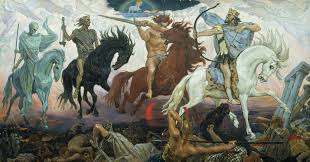
Throughout the whole of human history, arguably the number one danger to Man has been the threat of flood, knocking spots in terms of the sheer scale of threat off even the Biblical Horsemen of the Apocalypse; War, Famine, Pestilence and Death.

Aquarius overhead meant winter rain was coming to the lands of Mesop0tomia, and this meant the waters of life itself- aqua vitae -but it wasn’t all good news.

The water carrier, the cloud, can also be an agent of death, destruction, flood and disease, and the oldest flood stories underpinning the zodiac story of Aquarius arose in the Middle East. The story of Noah’s flood came much later.

For the Sumerians, Aquarius was a frightening figure. He held the vessel from which a great flood flowed from the heavens onto the earth to ravage the entire planet, while the Babylonians called Aquarius’ appearance in the night sky ‘the curse of rain’.

Aquarius to the Babylonians was the god Ea, or GU.LA , ‘The Great One’ in the Babylonian star catalogues, often shown holding an overflowing vase. During the Early Bronze Age, the appearance of Aquarius or the ‘Way of Ea’, corresponded to the period of 45 days on either side of winter solstice, when the Babylonians regularly experienced destructive levels of flooding.

In Ancient Egypt, their own version of Aquarius, the god Hapi, God of The Nile, was associated with the annual flood of the Nile when Hapi put his jar into the river, and this marked the beginning of spring, replenishing their farming soil. But their flooding season was June.

Greek mythology describes three floods, the flood of  Ogyges, the flood of Deucalion, and the flood of Dardanus. The Ogygian Deluge, they said ended the  Silver Age, and the flood of Deucalion ended the First Bronze Age, ‘parting the mountains of Thessaly’. 

The ancient Greeks naturally feared fire, and the ever present threat of earthquakes ‘convulsions’ and recorded events where fire and water they happened together (tsunamis, and we have of course, just witnessed the Tongan tsunami, 15 January following an undersea volcanic eruption, just days ahead of Aquarius.)

Photo by RF._.studio on Pexels.com

The Greeks said that Aquarius caused a great flood which inundated the Earth during the Bronze Age, of which only Deucalion, son of Prometheus and his wife Pyrrha survived by variously climbing in a chest and toughing it out, or building a great boat stocked with provisions, just as later in the Old Testament, Noah built his Ark.

Ancient Greeks avoided living near lakes and rivers, it’s thought, for hygiene reasons as well as protection from floods. There are apparently, impressive remains of hydraulic anti-flooding works; dams, walls, and channels in cities and other settlements in the Minoan era, and the Archaic, Classical, Hellenistic and Roman periods. 

Another very different Greek legend, associated Aquarius with the beautiful Trojan prince, Ganymede, carried off by that arch-sexual predator Zeus (Did Zeus ever give it a rest?) This time, he disguised himself as an eagle, and Ganymede, like it or not, became his lover and protégé, and the cup-bearer of the Gods.

Public Domain, Ganymede

The ‘Age of Aquarius’

Is it here? What does it mean? What might it portend? There has been a lot of discussion about this, and much excitement surrounding the Great Conjunction of Saturn and Jupiter in Aquarius that occurred 21 December 2020.

The Age of Aquarius has become synonymous with a mythical new Golden age of Mankind, but when was it? Or when will it begin? There is no consensus and no definite answer.

In astrological terms, an age lasts roughly 2200 years and is identified by the name of the constellation in which the Sun appears in on the first day of spring (the vernal equinox). To know when the age of Aquarius begins, we would need to agree the start date for the previous/present Age of Pisces- but astronomy and astrology don’t agree, even among themselves.

Some, but not all astrologers say the Age of Aquarius is already here, that it began in 2012. To arrive at this, they are using the star Regulus, the heart of the Lion in the constellation of Leo as the marker of the ancient border between the constellations Leo and Cancer.

Regulus moved to within 30 degrees of the September equinox point in 2012, Working with the arithmetical model of constellations as calculated by Ptolemy in the second century AD, this places the border of the constellations Pisces and Aquarius at 150 degrees west of Regulus, or at the March equinox point. By this reckoning, the Age of Aquarius started in 2012.

Alternatively, according to the Belgian astronomer and mathematician, Jean Meeus, the sun at the March equinox passed from being in front of the constellation Aries to being in front of the constellation Pisces in 68 B.C.

This would mean that the March equinox will cross over into the constellation Aquarius in 2597 but once again, these are the astronomical, not astrological dates.

The Age of Aquarius denotes or predicts on the one hand the space age, the age of super-technology, and on the other, the age of the human collective, The Brotherhood of Man as opposed to the age of the One, and the individual as in the current Age of Pisces which is associated with the rise of the monotheistic religions; Judaism, Christianity and Islam.

Space Technology 2021

Saturn and Jupiter conjunct in sci-fi Aquarius on 21 December 2020 prefigured hi-tech space adventures to come during 2021.

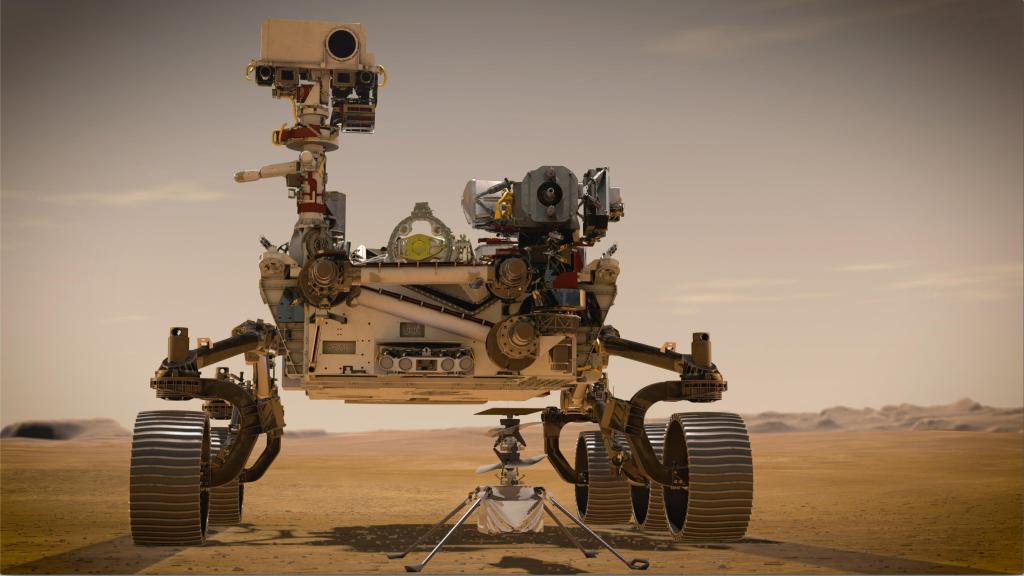
Mars was having visitors -us.  Oh yes. Put the kettle on, Mars peeps. And we don’t suppose you’ve got any biccies? Sarnies? Cake? No? OK, OK, well, we know we weren’t invited, but you could have just…you know.

Well, never mind. For a month or so, Earth and Mars lined up in a way that made it viable to land a probe. Miss that window, and it would have meant waiting two years for the next opportunity.

The United Arab Emirates, China and the United States all launched in July 2020, all three due to arrive starting with NASA’a mission, scheduled to land Thursday 18 February 2021.

NASA landed its rover, Perseverance in the Jezero crater, an ancient river delta.

The NASA Rover via Wikimedia Commons

 China and the United Arab Emirates sent their own exploration missions to Mars…all due to arrive February 2021.

China sent the Tianwen-1 Rover. After sending a rover to the far side of the moon, this mission was called Tianwen-1, meaning ‘quest for heavenly truth,’ and aimed to be the first Mars mission to drop a landing platform, deploy a rover, and send a spacecraft into the planet’s orbit all at once. The rover has been equipped with a radar system that can detect underground pockets of water and will help China prepare for its own mission to return a sample from Mars to Earth in the 2030s.

The UAE sent The Hope Orbiter, the Arab world’s first mission to another planet, to study the Martian atmosphere.

Russia was planning to send a mission to Mars, as was The European Space Agency, but the Covid pandemic demanded a postponement.

The European Space Agency likewise had to delay the first flight of its new Ariane 6 launcher which was rescheduled to launch during the second half of 2021, and has since had to be rescheduled again for the second quarter of 2022.  

NASA is also working to return to the Moon – robotically. The Artemis Project is using commercial delivery services to send science investigations and technology demonstrations to the Moon twice per year, with the first such flight currently scheduled for a flight in 2024.

The Moon in The Space Age

Photo by Alex Andrews on Pexels.com

Yes, it is exciting. But one feels conflicted. The Moon is a goddess, sacred, mysterious. Humanity needs its ancient mysteries for its happiness, health and sanity. It needs the siren lure of the ever inaccessible.

This need cannot be explained away nor measured except by an entire history of story-telling, which says we need stories, that we are hard-wired for this need, and that the effects of what we might call sacrilege of the natural world, will only become known by its despoiling, negation or denial.

We need a hill, a star, a shore and a moon to dream on. Free of our footprints.

Photo by Adrian Lang on Pexels.com

Let’s hope therefore, that humanity is successful in these explorations, but not too successful, for the sake of its ultimate sanity, which is not a co-factor of reason or science, but the immeasurable spirit, which is the divine spark for which there can be no calculation, no formula, no equation.

We need to beware hubris and behave with respect. If only for our own happiness. Hence, NASA’s Artemis Accords.

Will this be enough? here is a partial list of the artificial objects already now up there on the Moon.

The Artemis Accords

With numerous countries and private sector players conducting missions and operations in cislunar space, it’s critical to establish a common set of principles to govern the civil exploration and use of outer space.

Via the Artemis program, NASA will land the first woman and the next man on the Moon by 2024, heralding in a new era for space exploration and utilization.

While NASA is leading the Artemis program, international partnerships will play a key role in achieving a sustainable and robust presence on the Moon while preparing to conduct a historic human mission to Mars.

The Artemis Accords will describe a shared vision for principles, grounded in the Outer Space Treaty of 1967, to create a safe and transparent environment which facilitates exploration, science, and commercial activities for all of humanity to enjoy.

UPDATE

Eight countries had signed up at the time of posting this blog last January 2021: The United Kingdom, Italy, Australia, Canada, Japan, Luxembourg, the United Arab Emirates and the US . Other countries had not done so as yet for a variety of reasons, these including Russia, Germany, France and India.

Israel is apparently set to sign the Artemis Accords next week, 23 January 2022, and if they do so they will become the fifteenth signatory.

 “Mexico was the previous most recent signatory to the pact in December. Thirteen other countries that have embraced the Artemis Accords are Australia, Brazil, Canada, Italy, Japan, Luxembourg, New Zealand, Poland, the Republic of Korea, Ukraine, the United Arab Emirates, the United Kingdom and the United States.”

READ HERE

The Moon Agreement of 1979 was an attempt to to prevent commercial exploitation of outer-space resources, but only a few states have ratified it – these have not included the US, China and Russia.

Read more HERE

Photo by luizclas on Pexels.com

As previously mentioned, in 2024, Artemis III will mark humanity’s return to the surface of the Moon – landing astronauts on the lunar South Pole, the next man and the first ever woman.

Meanwhile OSIRISREx is currently on a NASA asteroid-study and sample-return mission. The mission’s primary goal has been to obtain a sample of at least 60 g (2.1 oz) from the near-Earth asteroid Bennu.

It is due to land back on Earth in 2023 with its samples.

Bennu is carbonaceous and large enough to be potentially hazardous to Earth. (It won’t hit)

Russia was planning to return to the Moon in 2021, the first moon mission since 1976Russia’s Roscosmos space agency aims to launch its robotic Luna-25 moon landing craft in October 2021, and had drafted a deal with the U.S. space tourism company Space Adventures to fly the first two commercial two passengers to the International Space Station in 2021. NASA says it is not interested in private spaceflight, but 2021 saw the first tourists on board the ISS

Russia plans to launch a new space station of its own in 2025

So. The Age of Aquarius, what will it bring whenever it arrives? What is to be expected?

What is the story of humanity and what does that tell us? It took over 2 million years of human  history for the world’s population to reach 1 billion, and only another 200 years to reach 7 billion though it is slowing now.

‘The world population growth rate declined from 2.2% per year 50 years ago to 1.05% per year’. See SOURCE

Earth will be our only home. If alien visitors, ‘The Greys’ are here, they are travelling either way back in time, or way forward. Yes, the cosmos is unimaginably huge, but if they are here, are they us, either what we will become far, far in the future, or that we once were, back in the days of the ‘gods?’

Could they be from Mars, but not Mars as we see it now, but a far, far future Mars? If so, they are still us, in far future exile, and perhaps Mars will be greener by them, red and brown and green and blue. But ‘the words of the prophets’ are not only written on the subway walls.

“We’ll all miss her so”.

Astrology; the Aquarius Personality/ Archetype

Aquarius is a Fixed, Masculine Air Sign. The Tarot court card to watch for here is The King of Swords though the Queen may also represent an Aquarius born subject.

Of course there is no such thing in reality as THE Aquarius personality, and the same goes for all the zodiac sun signs. Your sun sign is an archetype, a keynote, but of course it is not and never could be the whole story.

The archetypal persona, male or female, is keenly observant, very sharp, clever, firm, fair, analytical logical, legalistic, brave, amusing and charming. They are often musically gifted, numerate, and very often work in teaching, or in Law, or music, medicine or dentistry in technical, forensic or surgical consultant roles. This is someone who uses logic and reason to cut through confusion. But they need plenty of personal space and fresh air, and if emotionally challenged, they are more likely to administer advice or medicine than take it themselves. They can be quietly ruthless.

Aquarius is ruled by two planets, Saturn, known to the ancients, planet of duty and conformity, but also Uranus, ‘discovered’ 1781, designated the planet of upheaval and rebellion, and therefore, as you might imagine, this is a sign potentially containing acute paradoxes.

There is on the one hand the authoritarian Aquarian, prone to dogma, and the freewheeling Aquarian archetype. Either way, Aquarius is radically independent in their thinking, often for good, but not always. Even a rebellion may become just another kind of dogma.

Aquarius is generally kindly, humane, refined, civilized and honourable in dealings. They set great store on friendship and loyalty, and need to belong and be of service, just as their symbol is the water-bearer or cup-bearer, a person pouring water for another.

This symbol can be interpreted to imply a destiny to serve others, but by the same token Aquarius may carry water to ‘cleanse’ the world of ‘errant’ thinking. Taken to extremes, Aquarius therefore represents a communal potential for fundamentalism.

 Aquarius excels at cerebral thinking, dealing in abstracts, but does not necessarily see the the individual in front of them. Where they make a false step it may be because they trust to their cerebral processes at the expense of their instinct.

Aquarius may be moody, prone to bouts of depression, or they may sparkle with the brilliance of diamonds, when their chart is warmed by the  courage warmth, honour and charisma of their opposite sign, their alter ego, or possibly their nemesis…the zodiac counterpart contained within Aquarius – Leo.

Famous Aquarius subjects

Galileo Galilei

Abraham Lincoln, Ferdinand Magellan. Galileo Galilei, Thomas Edison. Charles Darwin. Frederick Douglass, Franklin D. Roosevelt, Virginia Woolf, John Travolta, Oprah Winfrey, Shakira

Photo by cottonbro on Pexels.com

Till next time 🙂

Capricorn the Cosmic Sea Goat, Warrior Ibex and the Gate of the Gods

Photo by Pixabay on Pexels.com

Common associations

Symbol:

Date of Birth: 21 Dec to 20 January

Ruling planet: Saturn

Lucky Day: Saturday    Lucky Numbers 2 and 8

Energy: Yin

Element: Earth

Quality: Cardinal (the start of the season of winter)

Key phrase:  I build, I use

Body:  Skin, knees, skeletal system

Birth Stone:  Red Garnet and Black Onyx

Colour:  Deep red

Herbs/Flowers: Wintergreen, Ivy, Carnation

Tarot card:  The Devil (Pan/Nature, Earth, Will-Power, Determination, Mystery, Fascination, Charisma, Need, Hunger, Entrapment)

The Devil from The Gilded Tarot

The Astronomy

Wiki Capricorn: The Gate of The Gods

Capricornus is thought to be the oldest recognized constellation, just as its subjects are known for being born as old souls, wise beyond their years. Its name is Latin for ‘horned goat’ or ‘having horns like a goat’s,’ and it is commonly represented in the form of a sea-goat: a mythical creature half-goat, half-fish, Pricus, the son of Chronos (Time.)

The constellation of Capricornus from which the zodiac sign gets its name is located in an area of sky known as ‘The Sea’ or ‘The Water’, containing other water-related constellations including Aquarius, Pisces and Eridanus, the Celestial River, which is the sixth largest of the 88 modern listed constellations.

Capricornus is best seen in the northern hemisphere in the southern sky, early evenings in September. Capricornus is the smallest constellation in the zodiac, with no first magnitude stars. Not easy to find, you will need clear skies. Even so, its brightest star, The Tail of the Goat, or Deneb Algedi (Delta Capricorni A) is a white giant with a luminosity 8.5 times that of our Sun.

Capricornus has three stars with known planets, and contains a Messier object, Messier 30, a globular cluster 28,000 light years distant and about 90 light years across in size. This cluster is approaching us at the speed of 181.9 km/s and was one of the first deep sky objects discovered by Charles Messier in 1764.

Five meteor showers are associated with Capricornus: the Alpha Capricornids, the Chi Capricornids, the Sigma Capricornids, the Tau Capricornids, and the Capricorniden-Sagittarids.

The planet Neptune was discovered in the constellation Capricornus, near Deneb Algedi, the brightest star in the tail of the goat, on September 23, 1846.

Neptune is not visible to the naked eye. Galileo saw it first, in 1612 -13 but he mistook it for a fixed star as it was retrograde at the time of viewing. Read more about Neptune and its discovery here

By Justin Cowart – https://www.flickr.com/photos/132160802@N06/29347980845/, CC BY 2.0, https://commons.wikimedia.org/w/index.php?curid=82476611

It is curious that this Neptune connection was so recently discovered, in the face of an existing ancient mythic connection between Capricorn the Sea-Goat and Pisces the Fishes.

History and Mythology

Even though Capricornus is the second faintest constellation in the sky, the faintest after Cancer, its imagery is very ancient indeed, associated with myths that go back to the 21st century BC and which centre on various sun gods supposedly nursed by a she-goat.

Goats, and their relatives, ibex, were the inspiration, as depicted in Ice Age paintings.,

In the early Bronze Age, the arrival overhead of the constellation Capricornus coincided with the winter solstice and, in modern astrology (as distinct from astronomy) we enter the zodiac sign of Capricorn’s rule on the turning point of the winter solstice.

Male ibex start fighting and mating during early winter, December and January, coinciding with the dates first ascribed to Capricorn. The constellation of Capricorn itself is no longer overhead at the time of the winter solstice due to the wobble of the earth, an effect known as precession,and now appears overhead in late January, during the dates of the next zodiac sign, Aquarius.

The Sumerians

Before 1000 BC the Sumerians knew Capricorn as the goat-fish, or SUHUR-MASH-HA. There appears to be a connection between Capricorn as a seagoat and Enki, the Sumerian god of wisdom and waters,  who also had the head and upper body of a goat and the lower body and tail of a fish. Enki, Later known as Ea in Akkadian and Babylonian mythology, was the god of intelligence (literally ‘ear’), creation, crafts; magic; water, seawater and lake water.

The Greeks

Pricus was king of the mer-goats in a Greek evolution myth. The children of Pricus left the sea to dwell on the mountains, leaving him alone in the oceans, very sad and alone with no-one to care for or teach any more- and Pricus was a great teacher.

Zeus placed him in the Sea of the Stars so that he could see his children again, and they could look up and see him.

But the constellation is nowadays more widely associated with two mythical creatures from Greek legends: the deity Pan, and the she-goat Amalthea who suckled the baby Zeus, although these legends, like the other Greek legends, came in turn from far more ancient stories.

Photo by Niklas Jeromin on Pexels.com
Pan-Bacchus, a set of pipes, and the terrible Typhon

Pan, so the legend said, was placed in the sky by Zeus in gratitude after he came to the rescue of the Olympian gods when they sought refuge in Egypt after an epic battle with the monster Typhon, son of the Titan Tartarus and Earth.

Typhon wanted revenge on the Olympic gods because they had overthrown his own race, the Titans who had ruled before Zeus defeated them, and he was one terrifying adversary, a fearsome fire-breathing creature, higher than mountains and with dragons’ heads instead of fingers. He had the gods of Olympia on the run, and they tried to escape by adopting various disguises: Zeus, a ram – Hera, a white cow, and Bacchus (or another version of the myth suggests Pan)- a goat.

Zeus had the unpleasant experience of being caught and dismembered by Typhon, who was presumably not fooled by the ram disguise, or otherwise had worked up an appetite, with all that raging, and just fancied lamb chops for tea.

Happily for Zeus, Bacchus/Pan played a sound on his pipes, ‘panikos’  -from which we get the word ‘panic’ – and this earsplitting sound disorientated or ‘panicked’ Typhon long enough for an agile Hermes to collect the limbs and restore Zeus to life, and he was so grateful not to be served up with mint sauce that he raised Bacchus/Pan to the heavens as the constellation Capricornus.

And so, thanks to the magic of the pan-pipes, Zeus lived to fight another day. He eventually managed to trick Typhon, and trapped him beneath Mount Etna…though he still tries to escape.

The Gate of The Gods

Neo-Platonic/Chaldean philosophy said that while the souls of those about to be born descended to Earth through the constellation of Cancer, the gate of the summer solstice, arriving through M44, the star cluster known as the Beehive Cluster, the souls of the newly dead return to the cosmic sea, ascending through the Gate of the Gods, the star-gate of Capricorn.

Beehive Cluster

The Astrology

There is no such thing in reality as THE Capricorn personality and the same goes for all the zodiac sun signs. Your sun sign is an archetype, a keynote but of course it is not and never could be the whole story.

The archetype of Capricorn, the tenth sign of the zodiac, and the House ruling material affairs, is shrewd, wise, even Gnostic. They are profound thinkers, deeply inquiring, and with a wry sense of humour, self-reliant, stoic in the face of adversity, hard-working, determined and resilient.

They have high standards, and expect much of themselves but also others, which, depending on other aspects of their astrological portrait, can make them stern, demanding or even overbearing task-masters, holding others to their own very high standards of conduct, or their own preferred way of doing things.

They are sometimes accused of dourness, lacking a sense of humour but this is absolutely not the case. It is just that they are choosy of their company. Capricorn has a dry wit, a keen sense of the absurd, and loves a good joke.

Conversely, the Saturn influence can make them seem somewhat downbeat, cynical and suspicious, seeing traps and problems everywhere, quick to issue corrections, or to douche cold water, viewing the enthusiasm of others as ill advised or naïve.

Capricorn is no-one’s fool. Capricorn carries its own weight, and very often the weight of others too.

But however far it climbs, Capricorn is dignified, canny, circumspect, proud but not vainglorious. Capricorn climbs the mountain to see the world. It does not climb so that the world will see Capricorn.  

However many are watching.

“Duties are what make life most worth the living. Lacking them, you are not necessary to anyone. And this would be like living in an empty space. Or not being alive at all.”- Marlene Dietrich, born Dec 27, 1901

Season of Sagittarius, celestial archer of the sinking sun

Photo by Pixabay on Pexels.com

Why is this time of year associated with Sagittarius the Archer? Two thousand years ago and more, the ancients looked up at this time of year and studied a constellation overhead that they decided represented the image of a man with a bow and arrow.

But the zodiac signs were cast in stone by Ptolemy in the 2 century AD and these dates remain unchanged, based on his arithmetic model of the zodiac. The astrology has parted company with the astronomy which inspired it, due to the wobble of the earth,and the effect known as the precession of the equinoxes.

The constellation of Sagittarius is now visible in the northern hemisphere in summer until September, and is visible in the winter in the southern hemisphere.

To find out where and how to see the constellation VIEW HERE.

But the zodiac dates endure, and the story and the meaning endure.

This was the time of year when the men of the family group went a hunting, to to catch, to kill, to cure and to store meat for the coming winter.

Common associations

Symbol:

Date of Birth: Nov 22 to Dec 21

Ruling planet: Jupiter

Element: Fire

Key phrase:  I seek

Body: Thighs

Birth Stone: Topaz, Citrine, Turquoise 

Colour:  Light Blue

Tarot card:  Temperance: Timing, Moderation, Education, Solstice, Healing of Chiron

Public Domain: Rider-Waite

More about the Astronomy

Source :Wiki

Sagittarius, the zodiac sign inspired by the constellation of Sagittarius, from the Latin meaning Archer, was recorded in the 2nd century by the Greek astronomer Ptolemy.

The constellation of Sagittarius is near the centre of our galaxy, the spiral Milky Way, mainly visible in the southern hemisphere June-November. In the Northern hemisphere the constellation is low on the horizon from August to October.

Sagittarius has a nickname, ‘The Teapot’ on account of its vaguely teapot-shaped star pattern, or asterism.

To find The Teapot

The best time to look is in August or September, somewhere really dark. Locate the hazy band of The Milky Way stretching right across the sky. Looking in the northern hemisphere, the Milk Way seems to bulge as it descends to the southern horizon. This ‘bulge’ is roughly about the middle of the Milky Way and is contained within the boundaries of the constellation Sagittarius.

Photo by u200bu0468u0477u047bu048f u046au0454u0459u0469u04e1u04c4u047bu0487u0477 on Pexels.com

Sagittarius contains a massive star-forming region, the Omega Nebula, home to the bright blue hyper-giant Pistol Star, one of the brightest stars in the Milky Way. The Pistol Star was discovered with the Hubble Space telescope in 1930, and is largely hidden in the dust of its own nebula.

It is 100 times as massive as our Sun, and 10,000,000 times as bright.

Mythology

Sagittarius is the ninth sign in the Zodiac, not to be confused with the constellation itself, and represents those born between Nov. 22 and the advent of winter solstice, Dec. 21.

Sagittarius is nowadays generally associated with the ancient Greek story of Chiron. But the story is far, far older, and goes back to a Babylonian god, Pabilsag, and even further back than that.

Public Domain: Celestial Atlas 1822

Pabilsag and the Solstice

Pabilsag was the ancient Babylonian name for what we now call Sagittarius, handed down to the Greeks through the Sumerians and Kassites.

The Sumerian word ‘Pabil’ means ‘ancestor or relative’. Combined with the final element sag, meaning ‘chief, head, tip or foremost,’ his name can be translated as the ‘Chief Ancestor’ or ‘Forefather’.

Just as we were hunters at the dawn of human civilization.

Here, 3 millennia BC, we we have a winged centaur type figure, and yes, he is an archer too, and his arrow points at the heart of Scorpio, the red star Antares, but he also has a scorpion’s tail as the wheel of the Zodiac turns, and as Sagittarius gallops in, we leave Scorpio behind.

The distinction of Sagittarius, though, is that he is a solitary hunter. He does not work as one of a team to being down the really big prey. He is an individualist, working alone, just as many a hunter or trapper still hunts alone in winter.

Sagittarius – Psychopomp

The constellation of Sagittarius-Pabilsag is within the Milky Way, rising from the southern regions close to the horizon into the higher reaches of the skies.

This section of the Milky Way represents a symbolic bridge or a rainbow for the souls of the dead on their way to the afterlife, as the arrival of Capricorn draws near, marking the advent of the winter solstice. so that Sagittarius, or Pabilsag, is a psychopomp; a guardian and a guide to the dying year, and also to the souls of the dying as the sun sinks ever lower.

Chiron the wounded Centaur

Most modern versions of the story refer back to much later, classical variants of the old Babylonian myths, and say that Sagittarius represents the gentle, cultured centaur, Chiron, who was accidentally shot by Herakles with a poison arrow.

The centaurs in general were a rough lot, hard drinking, hard fighting, not remotely glamorous. It has been suggested that the legend of the centaurs rose from perfectly mortal, mounted ancient Greek cowboys.

But whatever the centaurs were, Chiron ‘the wisest and justest of the centaurs’ was something very different, representing a hope for the centaurs, and for Humanity itself, as collectively it strives to rise above the ever present tyranny of the Id and its own worst nature.

Here he is, trying to teach Achilles to control his temper, learning to play the lyre. Chiron had many other pupils, as well, including Asclepius, Ajax, Achilles, Theseus, Jason, Peleus, Perseus, and Phoenix. And Herakles, who brought about his death, when he was sent there to be schooled with Chiron.

Herakles had previously lost his temper with Linus, his music tutor back home. Linus, criticised his playing, and Herakles responded by smashing his lyre over the teachers head, killing him. Though in some accounts it was a stool.

Now Chiron, wounded by the poison arrow, was left in terrible pain. He was wise in the ways of medicine, none wiser, but he could not heal himself, and none could help him. Nor could he die, being Immortal.

Still, he carried on until he could bear it no more, and he asked Zeus to release him from Immortality so that he could die and be free of pain.

Zeus placed him in the heavens and the story goes, placed him there as Sagittarius.

However, Chiron already has another constellation, Centaurus, and in addition, there is another classical version of the story of Sagittarius, referring instead to Krotos, a satyr who lived on Mount Helicon with the Muses.

Krotos the Cultivated Satyr

Krotos was the son of Pan and Eupheme, and his mother had nursed the Muses. He was a renowned archer, hunter, horse rider – hence a possible source of confusion with the centaur, and besides all this, a devotee of his childhood companions, The Muses and their arts.

By Aratus – Leiden University Library Catalogue, Public Domain, https://commons.wikimedia.org/w/index.php?curid=7660666

Krotos means ‘One who Claps his hands.’ He was credited by the Greeks with not only having invented archery, but introducing the convention of applause at artistic performances.

In this version of the story it was the Muses who, when Krotos died, asked Zeus to place him among the stars, which he did, transforming him into the constellation Sagittarius, says this variant of the zodiac story.

So Sagittarius is either the cultured wounded healer, Chiron, already represented in the constellation Centaurus, or he is the cultured satyr, Krotos; goaty, horse-riding archer, culture vulture and hunter extraordinaire.

There is a secondary link here, Krotos the Satyr linking Sagittarius with Capricorn, the next sign coming up, sun sinking to the winter solstice.

Chiron or Krotos?

Take your pick.

Or you can go Babylonian with Pabilsag.

The Muses

Sagittarius is keenly intuitive, and usually has a marked talent, a gift, in the field of the Arts. Winston Churchill for example, was a Sagittarius subject and probably psychic. He was certainly subject to visions and feelings of premonition, and he also painted.

Delphi said there were three Muses. But c 600 BC Hesiod wrote in his Theogony that there were Nine Muses, the daughters of  Zeus and Mnemosyne (Memory personified) and this is the version that has generally stuck.

The Muses were not necessarily benign. They were touchy, sensitive to human hubris, and liable to exact vengeance of anyone they decided was getting too far above themselves.

Image via Greekmythology.com

  • Kalliope ‘She of the Lovely Voice’ was the muse of epic poetry. Also of Diplomacy.
  • Klio ‘She Who Proclaims’ was the muse of history.
  • Erato ‘The Lovely One’ was the muse of love poetry.
  • Euterpe ‘She Who Pleases’ was the muse of music.
  • Melpomene ‘She Who Sings’ was the muse of tragedy.
  • Polyhymnia ‘She of the Many Hymns’ was the muse of sacred poetry.
  • Terpsichore ‘She Who Delights to Dance’ was the muse of dance.
  • Thalia ‘The Cheerful One’ was the muse of comedy
  • Urania ‘The Heavenly One’ was the goddess of astronomy, astrology, and later, Christian poetry.

Sagittarius: The Astrological Personality

Of course there is no such thing as THE Sagittarius personality. Everyone is unique. We are speaking here of an archetype.

Sagittarius is ruled overall by the planet Jupiter, and rules the Ninth House of philosophy, law, travel, higher study, and the second life partner when we have one. The seventh house rules the choice of a first life partner. In any second choice we are looking to learn more, and to expand our inner horizons from meeting with a mind that is very different to our own. A third choice of life partner is said to be ruled by the eleventh house of group identity.

Sagittarius zodiac sign subjects need constant adventures to stay interested. Freedom is of the utmost importance to them. Movement. Travel. Space and room for manoeuver. Likewise they allow space and freedom to their partners.

The archetype of Sagittarius is brave, lively, warm, optimistic, curious, adventurous, rational, but also insightful, even visionary.

Photo by Belle Co on Pexels.com

These are generally astute, clever and capable people. But they need career flexibility, and they may refuse to fail to apply themselves if bored.  Like Gemini, they are prone to restlessness. They may fail to stick at a job or a succession of jobs, and may struggle financially long term in consequence.

Hence their challenge, but also their guiding light is the idea of Temperance,personified in the Tarot and symbolising patience, prudence, and the art of good timing.

They can do ‘domestic’. It’s not that. But you wouldn’t really call it how they roll.

And they do tend to roll, place to place, job to job, and a rolling stone gathers no moss. The problem being, other things it doesn’t gather either, like a steady home life, or steady income, or savings or other means of security in old age, if Sagittarius does not balance the need for freedom , space and independence with prudence and good timing.

Sagittarius tends to have lots of friends. More than almost anyone else, so much so, family and friends can feel neglected at times, forgotten, when Sagittarius goes off yet again, devil may care, to share experiences with new best friends.

Sagittarius must have inspiration, and the freedom to follow it, and to roam. But this humanitarian, kindly, if restless rolling stone sooner or later almost always comes rolling home again, expecting to find their loved ones exactly where they left them. And usually, they are. Though others do not enjoy being taken for granted, and this may need care.

Sagittarius will be the star of this show. But what they really need for domestic happiness, is a quietly confident, self-reliant partner who has plenty of interests themselves; and much life experience.

Who will be their rock but who will not roll.

Who will be above all, their best friend.

Till next time 🙂

Samhain…Halloween…It started in the stars

Photo by Nick Bondarev on Pexels.com

Like everything, it started in the stars, and then we started telling stories, mapping the movements of the skies on the walls of the caves, planning our own movements, ensuring provision for our survival, tracking the tilting of the seasons as the Earth went round the sun, and the seas warmed and cooled.

The modern festival of Halloween began as a marker of the darkest of the four so-called cross-quarter days in the Northern Hemisphere. A cross-quarter day marks the half-way point between an equinox and a solstice and in the case of Halloween, obviously this is between the autumn equinox and winter solstice, reversing these if you are in the Southern Hemisphere.

Click Here to read more

Halloween began as a Bronze Age festival, Samhain (pronounced Sow-in) Though it may well be far older. The name meant ‘summer’s end’ and its signal was the sighting of The Pleiades seen overhead at midnight.

This midnight zenith of The Pleiades now occurs 21 November owing to the Earth’s tilt and the wobble on its axis, an effect called precession, and in addition, the Julian calendar was replaced by the Gregorian calendar and further added to the discrepancy in dates.

But this astronomical event did apparently once coincide with the days around 31 October as recorded during the 11th and 12th centuries.

Samhain was a period rather than a single day and marked the start of the winter for Celtic societies, ending one planting cycle and beginning another. Seeds for the next year were often planted at this time.

It began about a week after the modern Halloween or All Hallows Eve, and it was believed that all those who had departed this life the previous year were finally freed from all their earthly ties.

Photo by Jo Kassis on Pexels.com

The Pleiades

The Pleiades or The Seven Sisters is a star cluster in the north-west region of the constellation of Taurus the Bull. Classicists debate the origin of the name  which may derives from πλεῖν (plein -“to sail”) because of the cluster’s importance for the sailing season in the Mediterranean: “the season of navigation began with their heliacal rising” (Wiki)

Here is how to locate them:

The Pleiades feature as prominent stars of winter in the ancient agricultural calendar of the northern hemisphere, and the Greek poet Hesiod wrote:-

And if longing seizes you for sailing the stormy seas,
when the Pleiades flee mighty Orion
and plunge into the misty deep
and all the gusty winds are raging,
then do not keep your ship on the wine-dark sea
but, as I bid you, remember to work the land
.— Works and Days 618–623

Celtic mythology

A bronze disk, 1600 BC, from Nebra, Germany, is one of the oldest known representations of the cosmos. You can see the seven dots of The Pleiades top right.

By Dbachmann, CC BY-SA 3.0, https://commons.wikimedia.org/w/index.php?curid=1500795

For the Bronze Age Celts, and probably going back far earlier the Pleiades were associated with mourning and with funerals. At that time in history, on the cross-quarter day the cluster rose in the eastern sky as the sun’s light faded in the evening and this association has persisted even though The Pleiades no longer mark the festival.

Other Stories

Every culture has had its own names and stories about the Pleiades.

 The Blackfoot called them the Lost Boys and while they rose high, the buffalo were not available, so that the setting of the Pleiades was a signal for the Blackfoot to travel to their hunting grounds culminating in the buffalo slaughters or ‘ jumps’, that sustained their whole way of life.

Photo by Pixabay on Pexels.com

In the ancient  Andes the Pleiades were associated, not with death or deprivation, but abundance, returned to the skies of the Southern Hemisphere at harvest time.

But for those of us for whom home is the Isles of Britain, this time of year is Scorpio, and in Tarot, its card is the Death card; Transformation and Resurrection when the veil between realities is at its thinnest.

It is ghosts, memories; those who are gone but will endure as long as memory lasts, and will talk with us there, in that place, and walk with us until it is our own time to become memories, and to leave, returning to the stars, ascending through Capricorn and the Gate of The Gods.

Traces

All is lost, in death, they say.

Not all, nor straightaway.

Records of state and memory last a while.

For some, memorials, for others work in word or form,

Sustain their name.

For many, genes still stalk the pool,

Promises of progeny,

If not the immortality

Of Gargantua’s heartfelt plea.

And for all, there’s particle subsistence,

As material laws require.

But if that wasn’t all?

If walls have ears, have they memory too?

If the pendulum distinguishes one

hurled in anger, in a heap of stones,2

And if creatures all had souls, as Pythagoras claimed,

If all we did, or felt, or thought, lived on,  

In cyberspace or noo-sphere

Oblivion would not hold true.

Or is the good all lost

And all the evil too?

PJW

Photo by Mat Reding on Pexels.com

Till next time 🙂 Meanwhile I’ll leave you with this from Enya: numinous and timeless; The Humming.

Libra The Celestial Scales- Weighing the Balance in the Stars

Photo by JJ Jordan on Pexels.com

Read on for the story of Libra…

Common Associations

Symbol

Quality: Cardinal

Element: Air

Affirmation: I (seek to) Balance

Ruling planet: Venus

Body: Lower back, buttocks, kidneys

Colour: Indigo Blue

Flower: Rose, Hydrangea

Birthstones: Sapphire- September birthdays. Opal- October birthdays

Lucky Number: 6 (community, childhood)

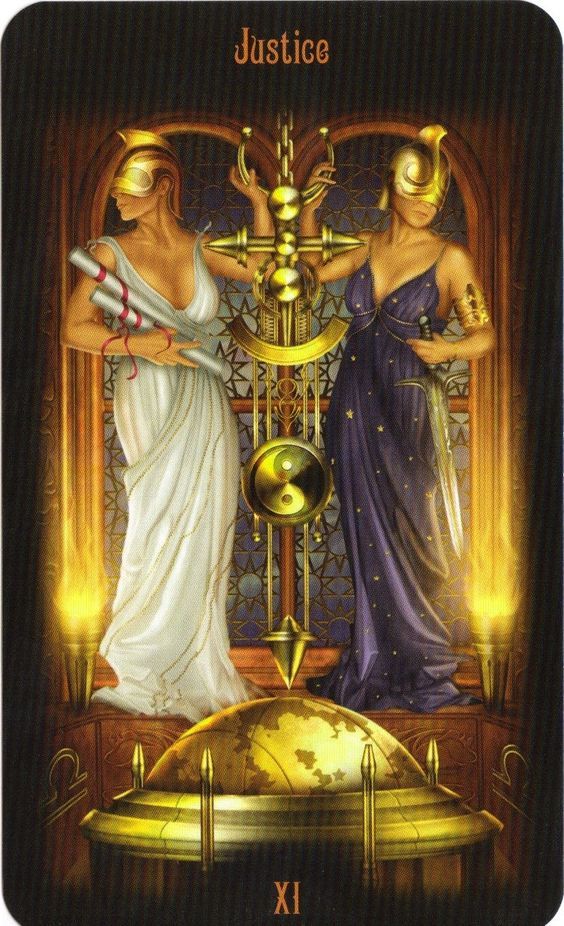
Tarot card: Justice

Justice from The Legacy of The Divine Tarot, Ciro Marchetti

Astronomy

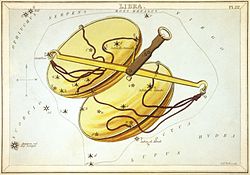
Libra (technically, it is correctly pronounced Ly-bra as in Library) is a small but distinct constellation, 29th in size of the 88 constellations, next door to the constellation Virgo. It’s been described as looking like a lop-sided diamond and is visible in the northern hemisphere between April and July.

Libra used to be regarded, not as a constellation in its own right, but as part of its neighbouring constellations Scorpio and Virgo. The stars representing the scales of Justice are the same stars representing the claws of the Scorpion.

Libra, like Cancer, is faint in comparison with other constellations, and contains no spectacular first magnitude stars, but contains a very old galaxy cluster, possibly around 10 billion years old, the same age as our own galaxy, The Milky Way.

There also is a red dwarf star Gliese 581 with three orbiting planets, two of which may possibly be suitable for life, about 20 light years from Earth.

The brightest star in Libra is a binary star about 77 light years from Earth. α Librae. or Zubenelgenubi, meaning “the Southern Claw” in Arabic.

The second-brightest star in the constellation of Libra is β Librae, or Zubeneschamali, from the Arabic for “The Northern Claw.”

Mercator

Equilibrium and Equinox

Since 2002, the Sun has actually appeared in the constellation of Libra from October 31 to November 22.

This is different to the dates used for this sign in your media horoscope, which is based on modern western or tropical astrology, and says Libra begins around 23rd of September, coinciding with the autumn equinox (in the northern hemisphere).

But astronomy is not astrology, which is a symbolic language, and zodiac signs are not to be confused with the constellations after which they were named.

The Sun did indeed used to be in the sign Libra from the northern autumnal equinox (c. September 23) to on or about October 23, when the hours of night and daylight were the same- hence the Libra’s concept of natural balance.

The zodiac sign of Libra ceased to coincide with the actual placement of the constellation in AD 730 because of the wobble of the Earth, and the resulting effect known as precession – the movement of the equinoxes relative to Earth.

This fact of astronomy does not invalidate your horoscope. The astrological concept still stands, based on the arithmetic model of the zodiac as designed by the mathematician Ptolemy in the 2nd Century.

Mythology and History

Photo by cmonphotography on Pexels.com

We have the Romans to thank for the name of this constellation, as well as the sun sign or zodiac sign of Libra as we understand it today.

It is a complicated history. Libra began as part of Scorpio, and was known in Babylonian astronomy as MUL Zibanu (the “scales” or “balance”) but with an alternative name, the Claws of the Scorpion, while in ancient Greece Libra was also seen as the Scorpion’s Claws.

The scales were sacred to the Babylonian sun god Shamash, the patron of truth and justice, and ever since these very early times, Libra has been associated with law, fairness and civility.

Because 3000 years ago, the Sun entering Libra marked the equinox, when days and nights were of equal length, i.e. balanced, Roman astrologers considered that the constellation of Libra represented the principle of natural balance, equality, equilibrium and hence, justice.

In ancient Rome Libra was associated with the scales of justice held by the pre-Greek goddess Astraea, or her Roman counterpart Dike, although in Greek mythology she had always been associated with Virgo.

Claws, scales. Virgo, Scorpio. Confusing? Typically elusive Libra!

Photo by Petr Ganaj on Pexels.com

According to the Roman writer and poet Marcus Manilius, the best Roman judges were born under the sign of Libra.  The Moon, which in astrology governs temperament, was said to be in Libra when Rome was founded, in a historical passage, which states “qua condita Roma.” 

The early born Libra may therefore be expected to have much in common with Virgo and Astraea, but the later born Libra may be expected to have quite a lot of Scorpio going on.

This same principle applies to all the zodiac signs, of course, whether you were born early or late in your sign, but is particularly acute in the case of Libra, on account of its shared/borrowed stars and very particular history as a relative newcomer to the zodiac story in its own right.

The Libra Archetype

Photo by Anderson Miranda on Pexels.com

Libra is one of the three zodiac air signs, the others being Gemini and Aquarius.

 Libra is the only zodiac sign that is not represented by a human or animal, but the scales signify the collective and enduring human hunger for justice, as well as Libra’s own especially keen personal need for balance, order, and equality.

Many astrologers view Libra as an especially lucky sign because it occurs during the peak of the year when the rewards of hard work are harvested.

Libra is suave, clever and extremely easy to like. The classic Libra subject has charm and can be a great listener with sharp observation skills and acute perception.

Because Venus, the goddess of love, rules Libra, as it also rules Taurus, the Libra subject is especially, even acutely sensitive to beauty in anything, whether it is a person, nature, art, or music.

Libra intensely dislikes loud or sharp noises, cruelty, nastiness, and vulgarity, as they are naturally kindly and civilized people, and also, may we observe, a teensy bit delicate at times.

Born diplomats, but also anything for a quiet life, Libras try to co-operate and compromise with everyone around them. They can sometimes be a little tiring to be with as they are constantly re-assessing and adjusting their thinking, while remaining emotionally distant, or playing Devil’s advocate and this may be infuriating at times, or even seem to call their personal loyalties into question.

They are not averse to keeping secrets, and can be more changeable even than Gemini. Those Libran scales are after all, seeking balance, which is not the same as attaining it or maintaining it.

Botticelli: The Birth of Venus, ruler of Libra

Libra may not receive or handle criticism as dispassionately as they dispense it. They can show jealousy when they are not the centre of attention, and may at times be moody; a practitioner of passive aggression, or they may be something of an ‘iron fist in a velvet glove’ – smoothly vengeful, or even ruthless.

But lovely Libra, charming, smiling, sophisticated, civilized. Sunny side up, what on earth’s not to like?

Till next time 🙂

The Fool and the Return of Orion

The Fool and the return of Orion...
Photo by Frank Cone on Pexels.com

Orion The Hunter returns, and in the northern hemisphere can once again be seen bestriding the east at sunrise. So when we say return, where has he been, then? The answer is, he has been invisible, hidden in the glare of the sun since May.

But now he is back and will rise earlier each day until he is visible all evening during the winter months. As a girl I used to like to go out on cold frosty evenings to fill the coal scuttle from the coal bunker in the back garden. Looking up at him. I knew his name. I knew he was The Hunter but wondered about him, and what he was hunting up there.

Those winter evenings still have that same kind of magic.

Orion is only the 26th largest constellation, sitting on the celestial equator, facing the constellation next door, the oncoming, charging, Taurus the Bull. So it’s far from being the biggest, and it’s smaller than another Greek hero, Perseus but Orion’s got more brilliant stars, commanding the impression of its vastness.

(The biggest constellation of all is Hydra, and the biggest constellation of the twelve included in the Zodiac is Virgo.)

Orion’s two brightest stars are the blue-white star Rigel, representing the Hunter’s left foot, and the red supergiant Betelgeuse, Orion’s right shoulder. They’re both thought to be to be about ten million years old, which makes Betelgeuse quite young to be a red supergiant, but it’s evolved faster due to its enormous mass. It is expected to go supernova in the next million years and when it does will be brighter than the Moon and the brightest supernova ever to have been visible from Earth.

Orion’s third brightest star is Bellatrix, his left shoulder, and Orions’s Belt is one of the most easily recognized asterisms with its three stars.

You can read them east to west or left to right; Alnitak (girdle), Alnilam (string of pearls) and Mintaka (area) They have many other names across the world; The Magi, the Three Mary’s, and the Mayans called them The Fire Drill, invoking them in an annual fire ceremony to delay the onset of the end of the world.

‘No other constellation more accurately represents the figure of a man,’ said Germanicus Caesar

Orion is identified as a human figure in every culture at every latitude, with countless variations of different names and legends.

Orion, also called Nimrod, was the son of Poseidon and was the most handsome man ever to walk the earth. He was a great hunting buddy and friend of Artemis. Her twin brother, Apollo glowered, seeing that Artemis fancied Orion something rotten, although she had taken a vow of perpetual chastity.

Orion could be a bit of a sex pest, chasing the Pleiades, so that Zeus confiscated them to the sky for their own peace and quiet. And a fat lot of good it did them, because when Orion was killed by a scorpion (THE scorpion) Artemis in her grief, asked Zeus to post Orion upstairs to the heavens, which he did, right next door to the Pleiades, who also represent the celestial bull pen of Taurus. Thanks Zeus. You didn’t think that one through, did you?

Should Taurus ever break free of his pen, said an ancient Arabic legend, it will be the end of all things. Let’s hope he’s happy up there, and that Orion doesn’t chase the Pleiades away.

Orion bravely strides towards the Bull but although he killed the scorpion that also killed him, he still fears it, and dreads its appearance fleeing west as the autumn wears on and Scorpius rises (Scorpio)

Orion in his eternal battle with Scorpius

The stand off between Orion and Taurus the Bull, its red eye, Aldebaran glaring at him, daring him to come nearer, does not fit the Greek legend of Orion, and a question has been raised in some quarters over the identity of Orion, and whether he has become confused with Herakles/Hercules at any time in his identification with this constellation.

The reasons are likely historical. The constellation as recognized by the Greeks originated with the Sumerians, who saw in it their great hero Gilgamesh fighting the Bull of Heaven. The Sumerian name for Orion was URU AN-NA, meaning light of heaven and Taurus was GUD AN-NA, bull of heaven.

Gilgamesh was the Sumerian equivalent of Heracles, the greatest hero of Greek mythology, and one of the labours of Heracles was to catch the Cretan bull, but Orion was never in a fight with a bull. Heracles, it has been suggested, deserves a magnificent constellation such as this one, but has been consigned to a much more obscure area of sky. So has there been a mix-up, or perhaps we could see it as a mash-up, Orion and Heracles in mutual diguise?

Orion and The Tarot

The Golden Tarot by Kat Black

The Tarot card most commonly associated with Orion is The Fool. The most numinous card in the deck, its element is Air and it is ruled by the planet of revolution, Uranus.

It is the portal of the number Zero.

The Fool or as some called him, The Jester, is both beginnings and ending.

In a real life reading it may detect or forecast a birth of a child, or a new offer or a launch or opportunity of some kind. And change happens all the time but this is always major or significant in scope. But although is not associated with Death, unlike the famous Death card, it can mean a death too, representing infinity, the ouroboros.

An ouroboros

The Fool lives in the moment. He may be fun, he may be joy, or he may be frightening. There’s every reason a lot of people are scared of clowns as the living embodiment of The Fool. He represents the wisdom of innocence, or mistakes made through impulsiveness or ignorance rather than stupidity. But he may represent a threat, whether direct or existential, clearly sensed but not as yet clearly identifiable. The fear is visceral, not lightly to be dismissed.

He may be a shamanic, gnostic figure; the stranger, the outcast, the wise Fool or the Fool on the Hill. He dances to his own tune. He takes chances, risks, and sometimes these pay off, but sometimes he steps over the edge of the cliff, heedless of his dog’s most urgent warning.

The dog in the card is not biting the Fool, but desperately trying to get his attention. If someone asks the Tarot’s advice and then I draw this card reversed….someone needs to draw back from the precipice and look again before they leap.

I may bark like the Fool’s dog but will they act on this advice? CAN they? Will they even really hear it, let alone find a way to use it? We are who we are, and we do what we do, based on who we are. It is a rare person who can step back and see things anew once they are committed to Opinion A or B or they are emotionally invested in outcome A or B.

Advice, to be heard, must be sufficiently timely, before the paint dries.

Everywhere the Fool goes, his dog follows, just as Orion is followed in the skies by his two hunting dogs, Canis major and Canis minor. Sirius, the Dog Star is in the constellation of Canis Major and is THE brightest star in Earth’s night sky.

The only objects that outshine Sirius in our skies are the sun, moon, Venus, Jupiter, Mars and Mercury – and Sirius will usually outshine Mercury too.

All Mankind is Orion.

We were hunters at the dawn of man (The Fool) And gatherers too, but we were never gorillas, and never herbivores on our ancestral line.

“We were risen not of fallen angels but risen apes, and they were killer apes besides” – Robert Ardrey, in African Genesis.

Hunting was what brought us together in teams, then communities. Co operation meant compassion.

Fatboy Slim tells a version of that story here (except that we were apes but not on the gorilla branch). See Orion in the final frame of the video.

Until next time 🙂

Rex Factor

Reviewing all the Kings and Queens of England & Scotland

The World's Passenger Ships

Ship History site, a compendium of passenger ships 1858- today's new builds

Capricorn Astrology Research

Research into Astrology

WAR STORIES

WWII & its Aftermath - Jennie Mack Gray

Quintus Curtius

Fortress Of The Mind

Jessica Davidson

Astrologer ~ Mystic ~ Writer

Mythology Matters

Matters of Myth, and Why Myth Matters

The Sanctuary of Vindos

Brythonic Polytheism and Shamanism